
Reviewed · BUDA CASTLE HILL TOURS
A Self-Guided Audio Tour of Budapest’s Castle District
Budapest’s Castle District tells stories on the move. This self-guided GPS audio tour guides you along the Buda Castle area with local details from Vince Bur, born and raised in Budapest, while you spot the architecture that makes the neighborhood feel like a living set. I especially like how the route is set up so the narration works with where you are, not against you.
You’ll also get offline access to audio, maps, and geodata, so you can keep walking without panicking about signal. One possible drawback is simple: you need your own smartphone and headphones, and if you dislike any self-navigation, you might feel a bit on your own.
Key highlights you should care about
- GPS follow-along audio, with playback designed to start when you reach each stop
- Offline listening, including maps and geodata, so your day stays smooth
- 1000-year-long storytelling, including quirks like the House of Houdini and Dracula-linked tales
- A route built around big sights like Matthias Church and Fisherman’s Bastion
- A night-and-day contrast between glamour views and darker corners like the Hospital in the Rock
In This Review
- Price and timing, and why this format can be good value
- What you need before you go (and what’s included)
- Why the Castle District route feels like a treasure hunt
- Starting at the Museum of Music History: get your bearings fast
- Mediaeval Jewish Chapel: reading culture through buildings
- Vienna Gate: a strategic entry point you can still sense
- Memorial to Abdi Abdurrahman: where memory meets city layers
- Church of Saint Mary Magdalene tower: a skyline marker
- Hospital in the Rock: caves, survival, and a darker turn
- Matthias Church: architecture that carries meaning
- Fisherman’s Bastion: big views, best when you time it right
- Statue of St. Stephen I: a clear cultural anchor
- Holy Trinity Park: the calm pause you actually need
- Labyrinth of Buda Castle: legends and hidden passages
- House of Houdini: Budapest’s magician link
- Archduke Joseph’s Palace: restoration while you look
- Hunyadi Courtyard and the Fountain of King Matthias
- Finishing at Buda Castle and the Hungarian National Gallery
- Should you book this Budapest Castle District audio tour?
- FAQ
- How much does the Budapest Castle District self-guided audio tour cost?
- How long is the audio tour?
- Where does the tour start and end?
- Is this tour GPS-based?
- Do I need my own smartphone and headphones?
- Is offline access included?
- Can I listen to the tour like an audiobook from anywhere?
- Is the tour reusable after I book it?
- Is cancellation free?
- Is it suitable for most people, and are service animals allowed?
Price and timing, and why this format can be good value

At $14.99 per person, this is priced like a modern add-on, not a full-service guided bus tour. The key value is that you control the pace. You can linger for views, stop for a pastry, or slow down when a building catches your eye.
The timing is about 1 hour 20 minutes to 1 hour 40 minutes. That’s a sweet spot for Castle District time. It gives you structure without eating your whole morning or afternoon.
Also, you’re not paying for a one-time event. The tour includes unlimited, lifetime use before your booking date and after it. If you want to repeat just a portion later, you can. For a place like Buda Castle, that matters.
Other ways up Castle Hill:
- Budapest: Buda Castle Cave Tour
★ 4.7 · 5,677 reviews - Budapest: Buda Castle District Vampires and Myths Night Tour
★ 4.6 · 3,830 reviews - Budapest: Buda Castle Walk with Saint Stephen’s Hall
★ 4.5 · 3,012 reviews
What you need before you go (and what’s included)
This is self-guided, so you bring the tech. The experience does not include a smartphone or headphones. You will want a charged phone, plus wired or Bluetooth headphones that stay comfortable while walking.
What’s included is the part that makes the tour work well:
- Directions to the starting point, so you can get set up fast
- Unlimited playback access around your booking window
- A virtual playback option, so you can listen like an audiobook from anywhere
- Offline access to audio, maps, and geodata
I like the logic here. You can preview, then go out in the real world with less stress.
Quick practical tip: put your headphones in before you start walking. It helps you avoid that first-minute scramble where you’re still pairing audio while your feet are already moving.
Why the Castle District route feels like a treasure hunt
The best part of this kind of audio tour is not just what you hear. It’s when you hear it. The narration follows you via GPS, and it’s designed to start when you’re at the next attraction. That turns ordinary sightseeing into something closer to a scavenger hunt.
The feeling is playful, and it’s also useful. When you’re climbing around a historic district with lots of turns, a GPS cue helps you stop guessing. You can focus on the buildings and views, instead of constantly checking your map.
And yes, the stories lean into the fun side of Budapest. You’ll get Dracula-linked material, references to a House of Houdini, and wartime accounts tied to the Hospital in the Rock. The mix keeps the walk from becoming one long facts dump.
Starting at the Museum of Music History: get your bearings fast

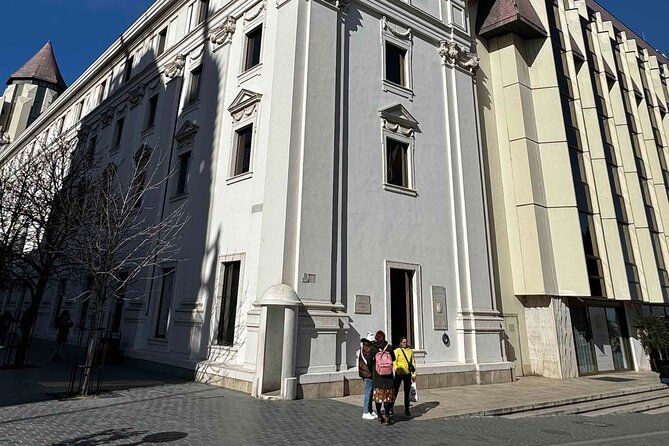
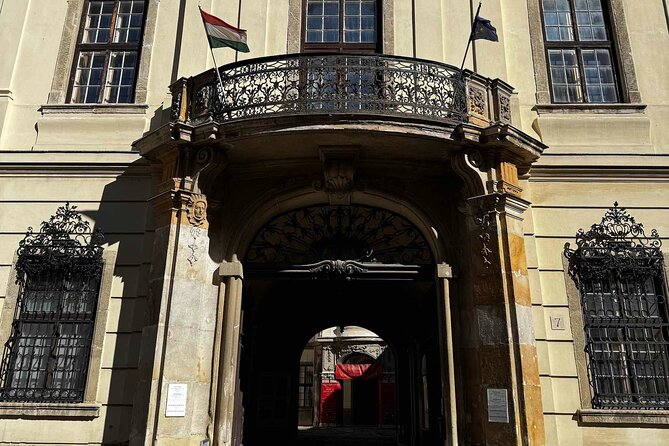
Your walk begins at the Museum of Music History (Táncsics Mihály u. 7). This is a smart starting move because it places you right in the Castle District energy without forcing you to start from a random parking lot or public square.
From here, the tour quickly sets the tone: Budapest isn’t just pretty viewpoints. It has layers, and those layers show up in religion, architecture, and even the folklore you see carved into stone.
What to do at the start:
- Give yourself a minute to confirm GPS has locked in
- Hit play, then let the first stop narration orient you
- Expect the pacing to be walking-friendly, not stop-and-stare museums only
Mediaeval Jewish Chapel: reading culture through buildings
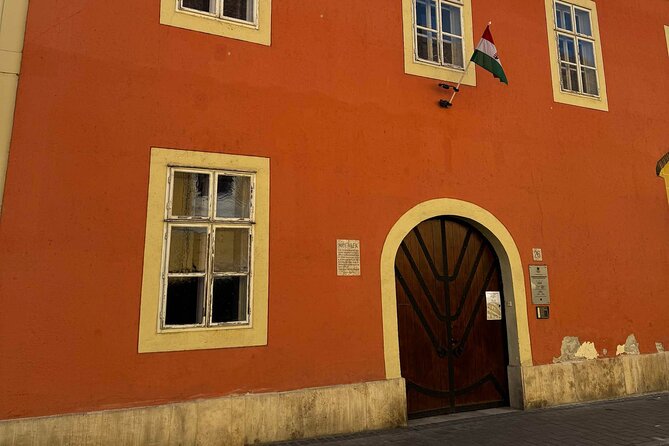
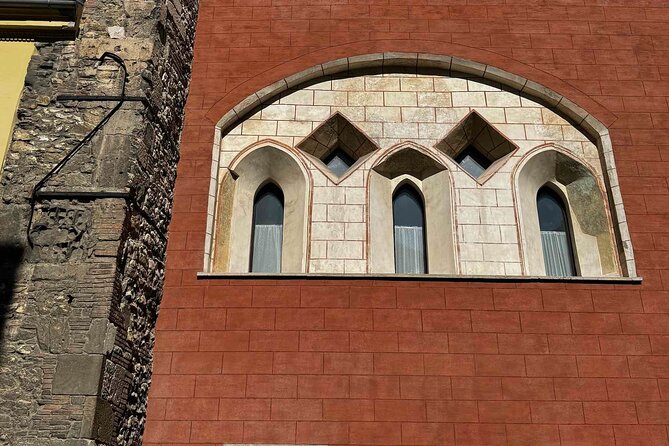
Next up, you pass the Mediaeval Jewish Chapel. Even if you only catch it from outside, the narration frames it as a reminder that Budapest’s historic center has never been one-note.
This stop is valuable because it slows you down in a good way. Instead of treating the Castle District like a single postcard, you see how different communities shaped what still stands.
A small consideration: chapels can be quiet, and street views can be tight. If you’re on a busy hour, plan for a short wait so you can read what you need and listen comfortably.
Some other Danube days worth pricing up





Vienna Gate: a strategic entry point you can still sense
Then the tour takes you to the Vienna Gate, a historic entry point into the Castle District. Gates are underrated in sightseeing. You usually walk past them without thinking, but they tell you how people moved and how places were defended.
What I like here is that the audio gives the gate a purpose. It’s not just a wall with a name. It connects the physical space to the idea of control and access, which is a theme you’ll see again and again around Buda Castle.
Memorial to Abdi Abdurrahman: where memory meets city layers
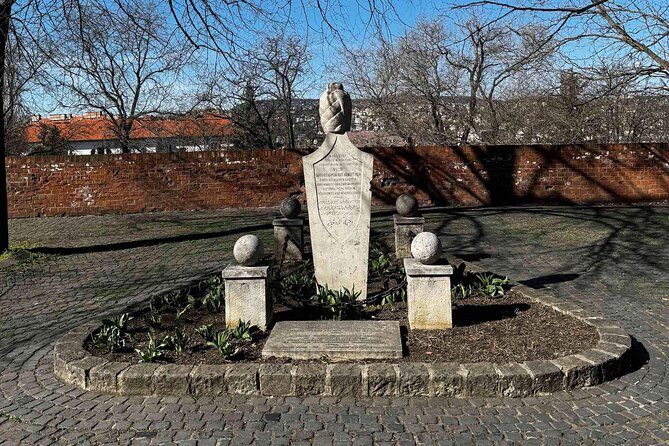
You’ll also pause at the Memorial to Abdi Abdurrahman. This stop is more reflective than scenic, and that balance is helpful. The Castle District can feel like non-stop looking, so it’s good to have a moment that asks you to notice the cultural interplay rather than only the architecture.
I find memorial stops work best when you don’t rush them. Stand still, listen closely, and let the story land before you move on. You don’t need long, but you do need a calm minute.
Church of Saint Mary Magdalene tower: a skyline marker
As you continue, the tour spotlights the tower of the Church of Saint Mary Magdalene. Towers act like landmarks, even when you’re not going inside. They help you orient yourself and notice how the district rises.
This is the kind of stop that makes sense with GPS audio. You don’t have to remember where you are. The narration helps you connect the tower to the surrounding sights.
Hospital in the Rock: caves, survival, and a darker turn
One of the most compelling stops is the Hospital in the Rock, a wartime medical facility located in caves under Buda Castle. The tour’s focus here is on survival, resilience, and what life could look like underground during the Second World War.
This is also where I think the audio format shines. At many sites, you can read a sign but still miss the human scale. Audio can slow time. It can make the place feel less like a random cave and more like a story you can picture.
Practical note: caves and rock spaces often feel cooler and can be damp. If you plan to spend time near the entrance or in sheltered areas, a light layer can help, even in warmer months.
Matthias Church: architecture that carries meaning
Next, you’ll reach Matthias Church, described through its details and symbolism. This is one of those stops where the audio does two jobs. It gets you to look closely, and it explains why the details matter.
If you like photo stops, this is a good candidate. If you’re more of a texture-and-design person, even better. Either way, don’t just glance. Take a few seconds, then listen to the narration while you look.
Fisherman’s Bastion: big views, best when you time it right
Then comes the Fisherman’s Bastion, a panoramic terrace with views over Budapest and the Danube River. This is the “wow” moment on the route, and it’s good that it’s not the first thing you see. You’ve built context by then.
The practical advantage of this audio format is that you can pause on the terrace without worrying you’ll miss a guide’s explanation. Just keep the narration going, look up when the story shifts, then snap your photos.
If you’re trying to avoid crowds, aim for a time when you’re not competing with every tour group at once. The Castle District can get busy, and a few minutes can change the feel completely.
Statue of St. Stephen I: a clear cultural anchor
You’ll also see the Statue of St. Stephen I, tied to Hungary’s founding father. This stop works as a cultural anchor. After all the architectural stops and the wartime story, it gives you a firmer sense of national identity that’s tied to visible public monuments.
If you like connecting symbols to stories, this is a good one to pay attention to. If you don’t, it’s still a quick way to ground the walk.
Holy Trinity Park: the calm pause you actually need
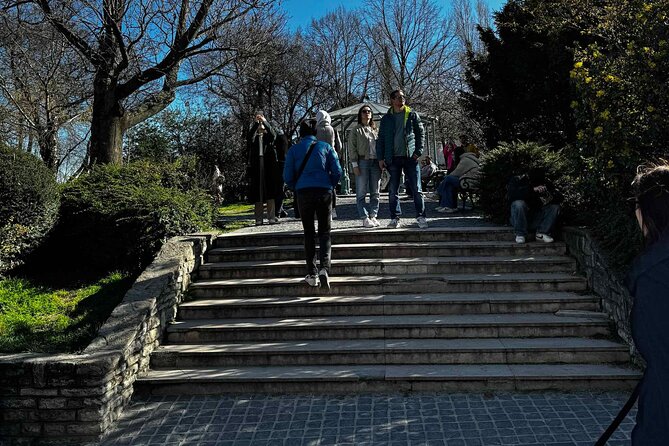
Right after the big viewpoint energy, the tour gives you Holy Trinity Park, a quieter pocket inside the Castle District. This is where you reset your brain. You can sit, breathe, and let your feet cool down.
Even if you skip the bench moment, the audio framing helps you treat the park like a destination, not just a passageway.
Labyrinth of Buda Castle: legends and hidden passages
Then you learn about the Labyrinth of Buda Castle, described as a network of caves and folklore. This is the kind of stop where you either love mystery or you roll your eyes. Either way, it’s a fun mental shift because it turns the district into a place of secrets rather than only monuments.
The value is in imagination. When you walk through old districts, you feel the complexity, but you can’t always tell what’s real and what’s legend. The narration gives you a way to hold both.
House of Houdini: Budapest’s magician link
Next is the House of Houdini, a tribute to Harry Houdini, with ties to Budapest described as mysterious and intriguing. This stop is pure character. It’s not something you can miss if you want playful oddball history in your day.
I like it because it stops the walk from becoming only grand architecture and heavy themes. It’s a palate cleanser, and it adds variety to the storytelling voice.
Archduke Joseph’s Palace: restoration while you look
The tour passes Archduke Joseph’s Palace, noting it is undergoing restoration. This is a useful detail to include in your expectations. Restoration can affect what you can see, how much is covered, and how the building reads visually.
If parts are obscured, don’t treat it as a disappointment. Treat it as proof that these places keep living. The palace isn’t a frozen museum piece. It’s a building with an active present.
Hunyadi Courtyard and the Fountain of King Matthias
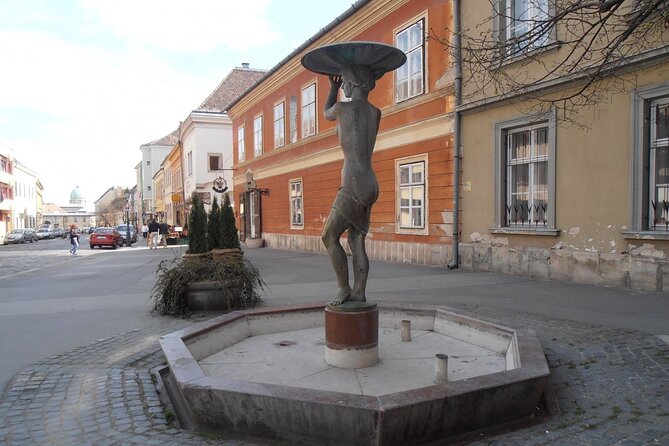
You’ll then go through the Hunyadi Courtyard, described as a charming enclave where past echoes mix with everyday life. After that, there’s the Fountain of King Matthias, a whimsical medieval-era-feeling spot.
These are the stops that make the audio tour feel more human. Courtyards and fountains are where you naturally slow down, where you can listen without craning your neck at huge views. If you like small scenes, you’ll enjoy this part.
If you want photos, this is a great stretch to get them. The setting tends to look more “lived-in” than the terraces do.
Finishing at Buda Castle and the Hungarian National Gallery
You wrap up in the Buda Castle area and end at the Hungarian National Gallery in the Royal Palace, where you can look at masterpieces of Hungarian art. The tour ends at Szent György tér 2, 1014 Hungary.
This finale matters because it turns your day from outdoors to a cultural payoff. You started with a music-focused museum, moved through architecture and folklore, and ended with a museum that matches the broader idea: Budapest is a place where art and history are intertwined.
One last practical point: since your endpoint is a gallery, you might want to check how much time you have left after the audio finishes. The tour gives a conclusion, but the museum experience is the kind where you can stay longer if it grabs you.
Should you book this Budapest Castle District audio tour?
Book it if you want GPS-led walking structure with quirky, story-driven stops, and you like the freedom to pause, look, and keep moving on your schedule. The $14.99 price is a solid value when you factor in offline use, lifetime access, and the route length that fits nicely into a Castle District day.
Skip it if you hate self-navigation or if you plan to travel with low-tech limits. You must bring a smartphone and headphones, and you will be doing the walking without a group guide to herd you along.
If you’re balancing multiple things in Budapest, this is a smart “anchor activity.” It gives you a coherent loop through the district, from gates and churches to caves and views, ending with a museum finish.
—
FAQ
How much does the Budapest Castle District self-guided audio tour cost?
It costs $14.99 per person.
How long is the audio tour?
It takes about 1 hour 20 minutes to 1 hour 40 minutes.
Where does the tour start and end?
It starts at the Museum of Music History, Táncsics Mihály u. 7, 1014 Hungary, and ends at Szent György tér 2, 1014 Hungary.
Is this tour GPS-based?
Yes. The tour is GPS-based and follows your location as you walk so the audio can start when you reach each stop.
Do I need my own smartphone and headphones?
Yes. You need to bring your own smartphone and headphones.
Is offline access included?
Yes. Offline access includes audio, maps, and geodata.
Can I listen to the tour like an audiobook from anywhere?
Yes. There is a virtual playback option that lets you listen from anywhere.
Is the tour reusable after I book it?
Yes. You get unlimited, lifetime use of the tour before your booking date and after it.
Is cancellation free?
Yes, free cancellation is available. You can cancel up to 24 hours in advance for a full refund.
Is it suitable for most people, and are service animals allowed?
Most people can participate, and service animals are allowed. The meeting point is also near public transportation.
More Self-Guided Tours in Budapest
- Sightseeing Cruise on the Danube with Audio Guide in Budapest
★ 3.5 · 229 reviews - Budapest Danube 1 Hour Sunset or Night Cruise with Audio Guide
★ 4.0 · 204 reviews - Szentendre: self-guided bicycle tour from Budapest
★ 4.4 · 29 reviews - Budapest Guided City Tour and Danube Cruise Audio Guide
★ 4.0 · 28 reviews
Newest from the Danube banks
- Gödöllö Royal Palace Privately with full board★ 5.0 · 1 review
- Private Budapest Tour with Thermal Bath or Market Visit★ 5.0 · 1 review
- Private Budapest walking tour – 4 hours★ 5.0 · 1 review
- Budapest Half Day Car Tour with Guide★ 5.0 · 1 review
- Budapest Private Transfer from Budapest city centre to Budapest Airport★ 3.0 · 1 review
- Magic Theme Team Adventure Game in the Streets of Budapest★ 5.0 · 1 review
- Budapest: Eat the Street, food tour with wine, 16+ tasting★ 5.0 · 1 review
- Private Transfer Budapest Airport BUD to Budapest by Car or Van★ 5.0 · 1 review
Buda Castle Hill Tours, compared.

Budapest: Buda Castle District Vampires and Myths Night Tour
Read our review →
Budapest: Buda Castle Walk with Saint Stephen’s Hall
Read our review →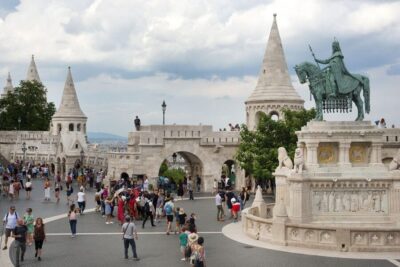

Budapest: 3-Hour Grand City Tour and Castle Walk
Read our review →
Buda Castle District Dark History, Legends and Vampire Night Tour
Read our review →
Budapest: Buda Castle District Walking Tour with a Historian
Read our review →
Browse the lists this tour appears in