Reviewed · PRIVATE
Art Nouveau Treasures of Budapest – Exclusive Private Tour
Art Nouveau in Budapest hits like a well-timed surprise. This private tour mixes expert art-historical storytelling with walkable Secession architecture highlights, ending in a private apartment to see a stained-glass work by Miksa Róth. One thing to consider: it is mostly about design viewing and interpretation, so if you want long museum time or lots of stops inside paid attractions, this schedule may feel tight.
I love how the pacing is built for seeing details up close without rushing. You spend focused time at major buildings, plus you get context for what you are actually looking at, not just where it is. My only heads-up is budget: Central Market Hall entry is not included, and that can add cost depending on what you choose to do there.
In This Review
- Quick hits on what makes this tour worth it
- Art Nouveau in Budapest: what you will learn to spot fast
- Your guides: how the art historian changes the walk
- Central Market Hall as the launch point, and what to budget
- Crossing toward Gellért Hill: the bridge walk that sets the mood
- Hotel Gellért and its Secession character, plus a free admission pause
- Postal Savings Bank on Hold utca: where Ödön Lechner’s tile work steals attention
- Gutenberg Square’s art deco building and Miksa’s glass stair
- The finale in a private apartment to see Miksa Róth stained glass
- Price and timing: value, pacing, and how to plan your day
- Who should book this Art Nouveau tour, and who might pass
- Should you book this tour?
- FAQ
- How long is the Art Nouveau Treasures of Budapest private tour?
- How many people are in a group?
- Is pickup available, and where does the tour start?
- Which stops have admission fees?
- Does the tour use public transportation?
- Is free cancellation available?
- Are service animals allowed, and is it suitable for most people?
Quick hits on what makes this tour worth it
- Private, small group size (up to 5) means you can ask questions and actually track the design details.
- Art historian guidance helps you connect motifs, materials, and style, instead of just admiring facades.
- Hotel Gellért stop gives you a Secession-flavored breather tied to one of Budapest’s best-known bath addresses.
- Ödön Lechner and the Postal Savings Bank puts colorful tile work and folk motifs front and center.
- Finale in a century-old apartment lets you view a stained-glass window by Miksa Róth that you would not stumble into on your own.
Some other Danube days worth pricing up
- Private Budapest TukTuk Tour: Custom Route, Hotel Pickup
★ 5.0 · 1,307 reviews - Budapest Essentials Private Tour Highlights and Hidden Gems
★ 5.0 · 861 reviews - Budapest Private Tuk Tuk Half-Day Tour
★ 5.0 · 606 reviews
Art Nouveau in Budapest: what you will learn to spot fast
Budapest is one of Europe’s best places to train your eyes on Art Nouveau and its Hungarian cousin, often called Secession style. On this tour, you do not just look at pretty buildings. You learn how architects and artists used curves, tiles, and symbolic decoration to turn everyday streets into visual stories.
The big win is that you start learning a way of seeing. When you pause at each stop, you focus on repeated design tools, like how ornamental patterns relate to the building’s function, or how craftsmen translated folk culture into modern city architecture. Once you pick up those cues, the rest of Budapest becomes easier to read, even on days you are not on a tour.
If you are the type who loves design but feels overwhelmed by names and dates, this itinerary stays practical. It keeps returning you to what is visible right in front of you, then explains why those choices mattered.
Your guides: how the art historian changes the walk
This is set up as a team experience, with a local guide plus a professional art historian and a professional guide. In practice, that means you get two kinds of help: someone keeps the route flowing and the story grounded, while the art historian helps you interpret the look of things.
One detail that really matters on a style tour is tone. Here, the guidance is described as articulate and passionate, and it feels personable rather than like a lecture. That is what keeps the walk fun when weather turns or when you are standing in one spot longer than you planned.
You should expect your guide to connect style choices to the city around them. For example, you will see buildings that are easy to recognize from the outside, then learn what to notice in the materials and ornament. You also get a finish that is more “how did they find this?” than “been there, done that.”
Central Market Hall as the launch point, and what to budget
The tour starts at Central Market Hall, a loud, colorful place where food, crafts, and city life overlap. Your scheduled time here is short, about 20 minutes, and it is listed as admission not included. So you should budget for market entry if you plan to go inside.
This opening stop matters because it sets your expectations. Art Nouveau in Budapest often blends with practical urban life. Market halls, shops, and public spaces were the stage where designers could turn daily routines into something more expressive.
One practical tip: since the entry is on you, decide in advance whether you want to focus only on the architecture and immediate surroundings, or if you want to spend that 20 minutes going deeper into the market. Either way, this stop is a warm-up for the rest of the day’s design focus.
Crossing toward Gellért Hill: the bridge walk that sets the mood
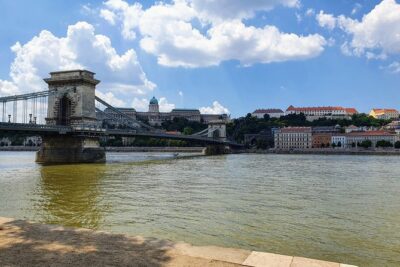
After the market, you walk across one of Budapest’s most beautiful bridges. That is not filler. A bridge is where you get instant context for how the city is staged, with banks, hills, and major landmarks visible in a single sweep.
Then you arrive at the foot of Gellért hill, setting up the next stop with the right atmosphere. You get the sense of scale, and you start noticing how different architectural styles coexist across the river.
It is also a smart moment for photos. Even if you are not chasing sunsets, the bridge walk gives you a clean visual line before the tour moves into more detailed architecture viewing.
Other ways an evening in Budapest can go:





Hotel Gellért and its Secession character, plus a free admission pause
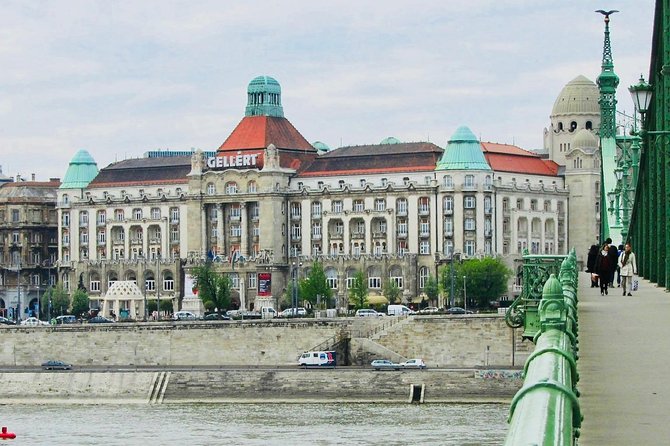
Next up is St. Gellért Thermal Bath and Swimming Pool, tied to Hotel Gellért. This is an iconic bath and hotel address on the western bank of the Danube, and the style is described as dominantly Secessionist. Your scheduled time is about 20 minutes, and admission is listed as free.
This stop is worth it for two reasons. First, it is a real Budapest institution, not a generic tourist prop. Second, bath architecture in Secession style often uses decorative planning to make the building itself feel like part of the experience, not just a container for water.
A time note: 20 minutes is not enough to treat it like a full spa day. Think of it as a design and atmosphere break. You are there to see and absorb, then move on while the rest of the route stays sharp and focused.
Postal Savings Bank on Hold utca: where Ödön Lechner’s tile work steals attention
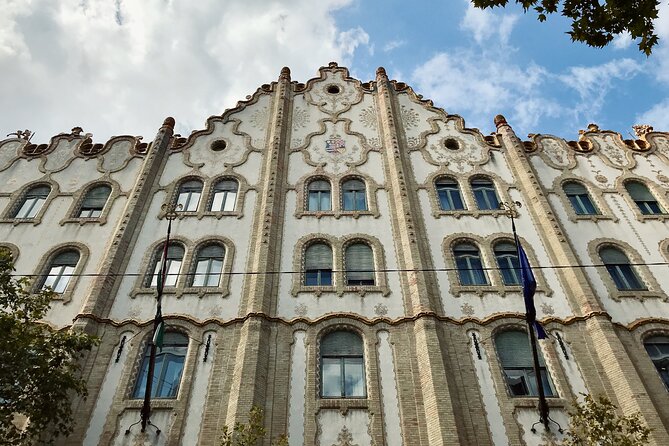
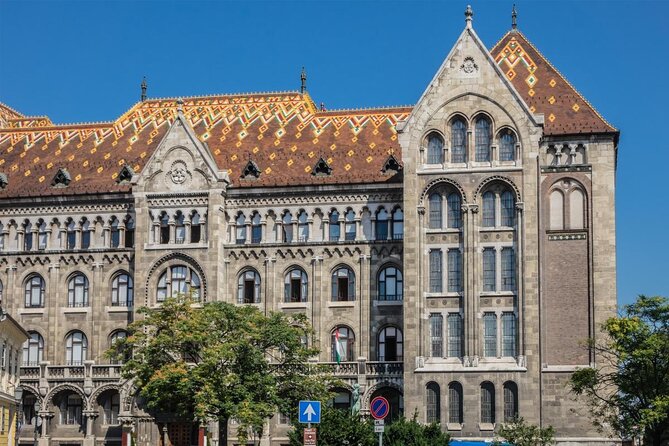
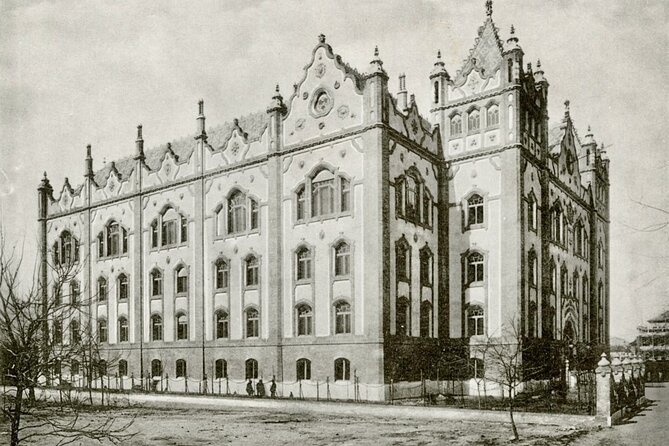
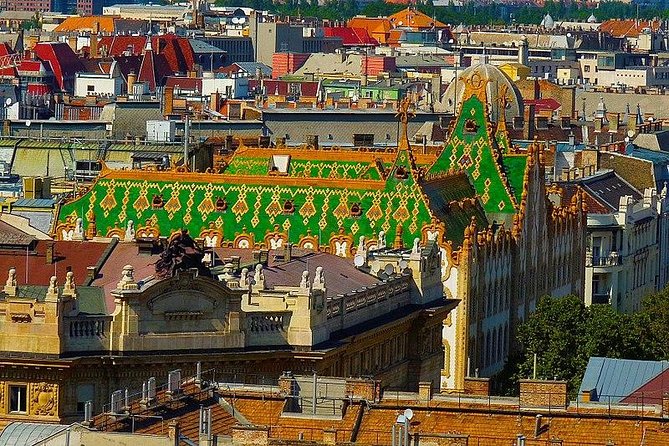
One of the best things about this tour is the stop centered on the Postal Savings Bank on Hold utca, designed by Ödön Lechner in 1901. Your schedule lists time for this building as multiple stops, both with admission listed as free, and the repeated attention makes sense: the details take effort to see.
What you will focus on here is exactly what makes Lechner’s Secession style recognizable. Expect colorful tiles and folk motifs, arranged with an almost narrative feel. This is where you learn how “ornament” is not just decoration. It is part of how a building communicates identity.
This is also a great stop if you like patterns. Tile work rewards slow looking, and a good guide helps you know what you are looking at, like the way motifs appear across surfaces or how the decoration balances with the building’s structure.
If you have limited time in Budapest and you care about design more than museums, this stop alone can justify a chunk of your schedule.
Gutenberg Square’s art deco building and Miksa’s glass stair
Later, you move to Gutenberg Square for about 15 minutes. The building here is described as a fabulous Art Deco historic building in the 8th district, in the Palace area, with a magnificent stairway featuring lead-glass by Miksa.
Even with only a short pause, this kind of stop is useful because it widens the design conversation. You are not locked into one style. Budapest’s architecture shifts through eras, and you start seeing the city as a timeline of how taste changed.
This is the kind of place where the design feature is the star, so you will want to stand where you can actually see the stairway and glass effects. Since the tour time is brief, it helps to go in ready to look and not expect a long sit-down moment.
The finale in a private apartment to see Miksa Róth stained glass
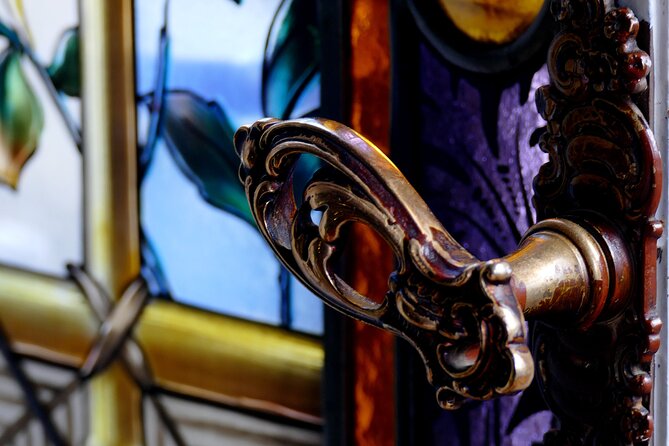
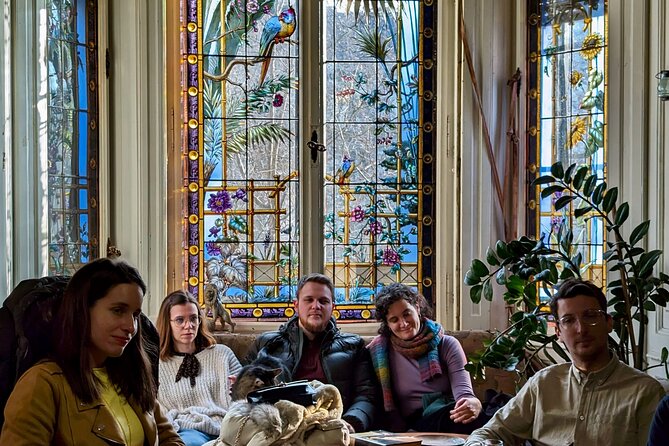
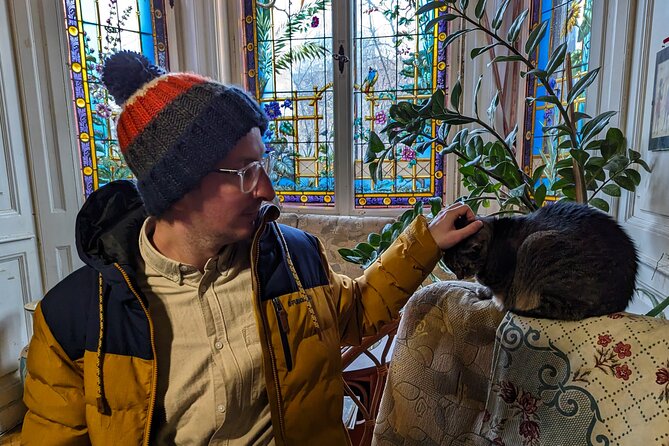
The tour finishes in a century-old private apartment, and that is where this experience becomes special. You get an exclusive opportunity to admire a real stained glass window by Miksa Róth, described as an invaluable work by one of the leading stained-glass artists of his time.
This is not the usual “view it from the street” experience. It is a controlled, respectful kind of access that you simply cannot replicate by wandering. And it changes how you understand the whole day’s architecture. Stained glass is where Art Nouveau often turns symbolic, emotional, and intensely crafted in a way that facades can only hint at.
This is also a nice way to end the tour if you are the type who remembers experiences by moments, not by checklists. A private interior look, especially into stained glass, tends to stick with you longer than another exterior shot.
Price and timing: value, pacing, and how to plan your day
The price is $261.67 per group, up to 5 people, for a duration of about 2 hours 30 minutes to 3 hours. That means the cost is realistically shared if you travel as a small group. Even if you are solo, you should compare it to the cost of paying for guides separately plus entry fees and transit time. Here, you get a guided route designed around free-admission stops, plus one paid-admission component at the market.
It also helps that start time is customizable on request, so you can fit it around meals and your other plans. The tour is offered in English, and you get a mobile ticket, which is convenient.
One small planning detail: it is designed to be done on foot with public transportation, and there is no private transportation included. That is not a problem for most people, but it does mean you should wear comfortable shoes and be ready for a walk-and-hop rhythm.
Finally, this tour is booked about 63 days in advance on average, so if your dates are fixed, I would not wait until the last minute.
Who should book this Art Nouveau tour, and who might pass
This tour is a strong fit if you:
- love Art Nouveau and Secession design and want help identifying what you are seeing
- enjoy expert explanation more than solo exploration
- like small-group tours where you can ask questions
- want a memorable ending in a private setting featuring Miksa Róth stained glass
You might want to choose something else if you mainly want hands-on time at paid attractions, or if you expect a longer museum-style experience. The schedule is built for focused viewing and design interpretation, not a slow, all-day wander.
Should you book this tour?
If you care about architecture as a language, yes, book it. The route is compact, the guidance is art-focused, and the finish in a private apartment viewing Miksa Róth stained glass is the kind of access that adds real value.
If you are tight on budget, plan around the one admission item at Central Market Hall and keep your expectations aligned with a style tour. Think of it as a fast, high-quality education walk, capped with an interior moment you cannot easily recreate.
FAQ
How long is the Art Nouveau Treasures of Budapest private tour?
The tour runs about 2 hours 30 minutes to 3 hours.
How many people are in a group?
It is a private tour for your group, with a maximum group size of up to 5.
Is pickup available, and where does the tour start?
Pickup is offered. You can meet your guide at your hotel in Budapest or at a central point agreed with you. The tour starts at Central Market Hall in Budapest.
Which stops have admission fees?
Admission is not included for Central Market Hall. The stops at St. Gellért Thermal Bath and Swimming Pool, the Postal Savings Bank locations, and Gutenberg Square are listed as free admission.
Does the tour use public transportation?
The tour is designed to be conducted on foot, using public transportation as needed, and no private transportation is included.
Is free cancellation available?
Yes. You can cancel up to 24 hours in advance for a full refund.
Are service animals allowed, and is it suitable for most people?
Service animals are allowed. Most travelers can participate.
Newest from the Danube banks
- Pub Crawl Through The Ruin Bars in Budapest with T-shirt Included★ 4.5 · 14 reviews
- Rudas Bistro Premium Brunch★ 3.5 · 14 reviews
- Wine Tasting in the Countryside from Budapest★ 5.0 · 14 reviews
- Buda Castle District and Matthias Church Private Tour★ 5.0 · 14 reviews
- Pest side stories with a Historian★ 5.0 · 14 reviews
- Recirquel Company: Walk My World Immersive Show Entry Ticket★ 4.6 · 14 reviews
- Ram Gorge Hiking Adventure★ 5.0 · 14 reviews
- Budapest Rafting – Sunset Cruise★ 5.0 · 14 reviews
Private, compared.

Private Budapest TukTuk Tour: Custom Route, Hotel Pickup
Read our review →
Budapest Essentials Private Tour Highlights and Hidden Gems
Read our review →
Budapest One Way Private Transfer to or from Airport
Read our review →
Budapest Private Luxury Sightseeing Tour with Guide and Transport
Read our review →
Private Budapest City tour with Classic Russian Jeep or G-Wagon!
Read our review →
Budapest Private Full Day City Sightseeing Tour Walking or by Car
Read our review →