
Reviewed · MUSEUMS
Budapest: Budapest Retro Interactive Museum Ticket
Step into communist Budapest, one click at a time. I like how the Budapest Retro Interactive Museum turns the 1970s and 80s into an interactive walk through everyday life, with real artifacts and room after room of period details, not just generic photos.
My second favorite part is the tech for the era, especially the TV studio with functioning cameras and the Lada police car simulator. The main drawback is practical: some exhibits are not fully in English, and the museum can feel hot on warm days if you are sensitive to indoor temperatures.
In This Review
- Key Highlights You Should Know Before You Go
- What the Budapest Retro Interactive Museum Ticket Gets You
- Three Floors of Communist-Era Everyday Life (1970s and 80s)
- Period News Studio, TV Cameras, and Original Broadcasts
- Soviet Vehicles, Motorbikes, and the Lada Police Patrol Simulator
- A Typical Apartment, Pioneer School Life, and Functionality First Design
- Space in 1980, Goulash for Salyut 6, and Lake Balaton Summer Life
- Plan Your Visit for Time, Crowds, and Indoor Comfort
- Retro Bistro, Jukebox Coffee, and What to Do After
- Should You Book the Budapest Retro Interactive Museum Ticket?
- FAQ
- How long does the Budapest Retro Interactive Museum visit take?
- What is included with the ticket?
- Is food or drink included?
- Where do I present my voucher?
- Is the museum suitable for families with kids?
- Is it wheelchair accessible?
- Do seniors get any perk during the week?
Key Highlights You Should Know Before You Go
- Three floors of themed rooms showing everyday life in the 1970s and 80s, built around thousands of real items.
- A vintage TV news studio where you can read original communist-era broadcasts using authentic, functioning TV cameras.
- A Lada police car simulator that puts you on virtual patrol in Gazdagrét, a famous Budapest housing estate.
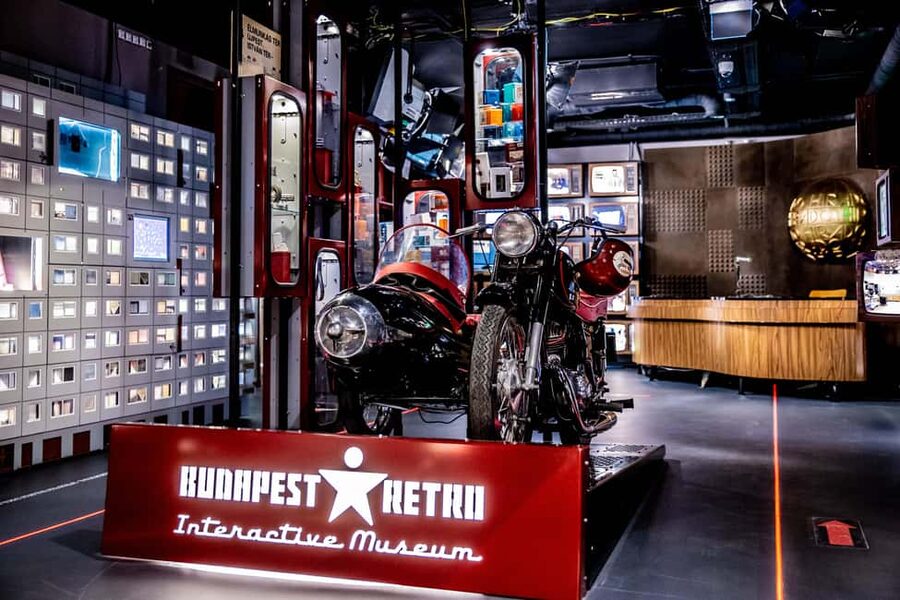
- Classic vehicles and motorcycles including nine motorcycles and three renovated Soviet cars, plus a black Volga.
- A typical apartment and a functionality first layout with shared, repeat-design furnishings across square apartment blocks.
- Family-friendly interactivity, including an interactive mirror for trying vintage outfits.
More Budapest collections out of the weather:
- Budapest: Cat Museum Budapest Entry Ticket
★ 4.4 · 2,210 reviews - Budapest: Light Art Museum Skip-the-Line Entry Ticket
★ 3.9 · 1,531 reviews - Budapest: Van Gogh Immersive Exhibition Ticket
★ 4.2 · 399 reviews
What the Budapest Retro Interactive Museum Ticket Gets You
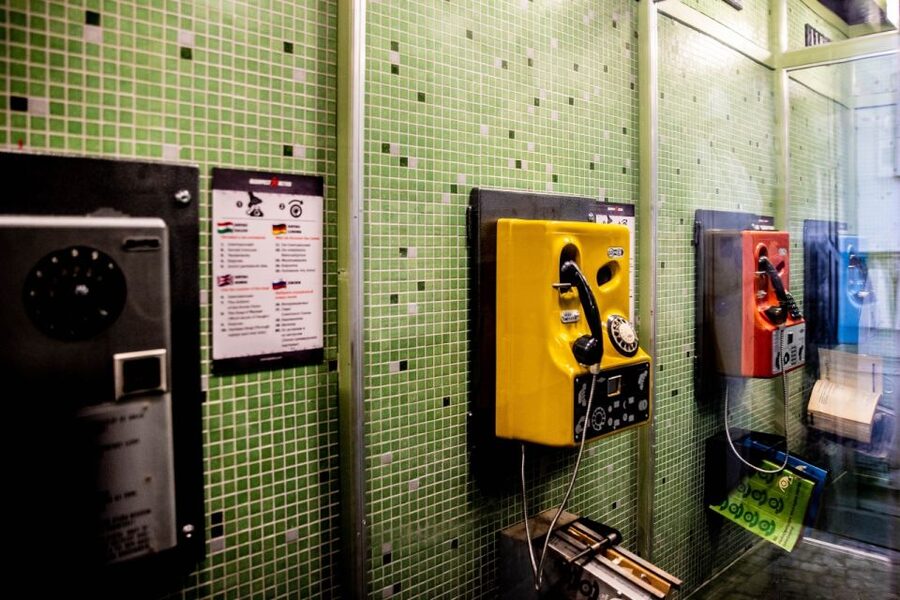
This ticket is for a skip-the-line entry, and you can plan for a 1 to 2 hour visit at a comfortable pace. At about $17 per person, the value comes from the fact that you are not just looking, you are touching, reading, and interacting in multiple spots.
You’ll move through three floors with period scenes built from real objects. One thing to know up front: food and drink are not included, but there is a retro bistro after your visit.
If you want a smooth visit with less waiting, this is one of the easier options in Budapest. It is also wheelchair accessible, so you should not have major access headaches once inside.
Three Floors of Communist-Era Everyday Life (1970s and 80s)
The core idea is simple. You walk through themed rooms that recreate day-to-day life during Hungary’s communist era, with a tone that feels more human than heavy-handed.
You’ll see everything from school life and community routines to the home set-up that defined everyday comfort. The museum leans into what people call goulash communism, a mix of strict systems and very real people trying to live their lives anyway.
What I like about this format is how it avoids turning history into a lecture. Instead, you get to connect details, like household items and school traditions, with the larger political world they sat inside.
A practical tip: plan to read the room labels slowly at least once. The museum is designed so the small items matter, and skipping the text makes some rooms feel like a collage instead of a story.
Period News Studio, TV Cameras, and Original Broadcasts
One of the most memorable parts is the period news studio. It is set up with two authentic, functioning TV cameras, and you can read original communist-era news broadcasts right there in the space.
This is more than a themed room. It helps you grasp how information moved through daily life, because you are not just reading about media, you’re standing in the production environment.
If you have even a passing interest in how TV looked in the past, this section pays off fast. It also works well for families, because kids tend to enjoy the visual angle of the cameras and the imitation of a real studio scene.
Soviet Vehicles, Motorbikes, and the Lada Police Patrol Simulator
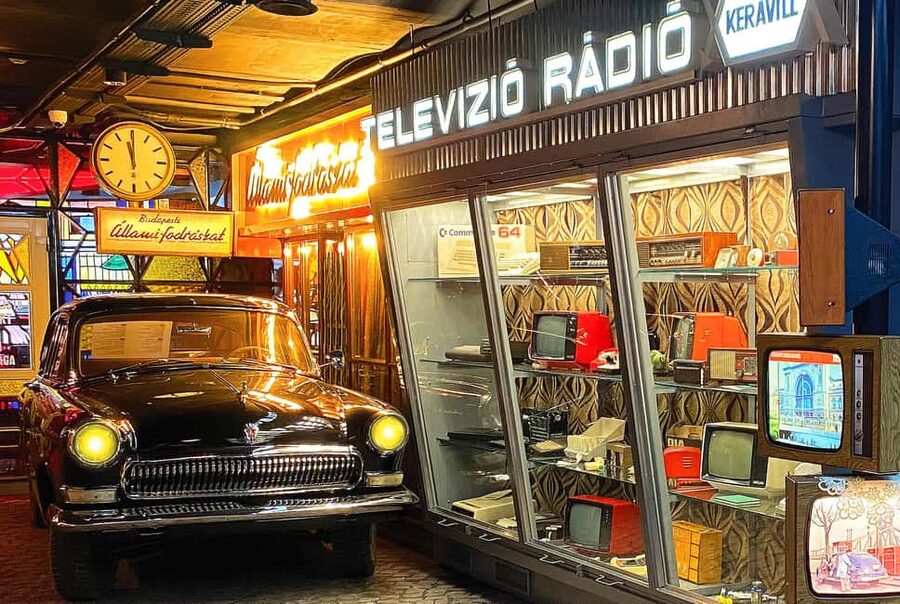
Cars and bikes are big here, and that is part of why the museum stays fun. You’ll encounter nine motorcycles and three renovated vintage Soviet cars, including a black Volga that feels straight out of an older film.
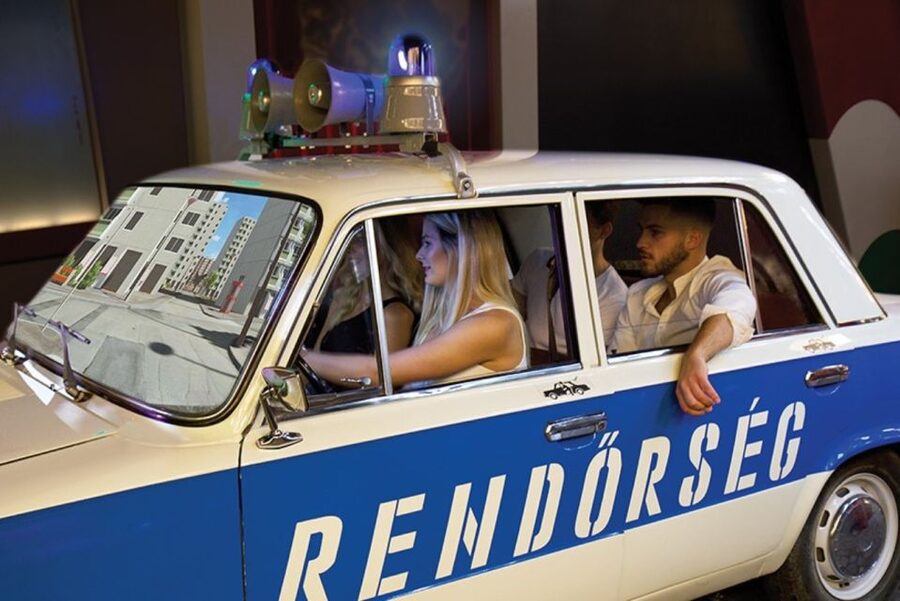
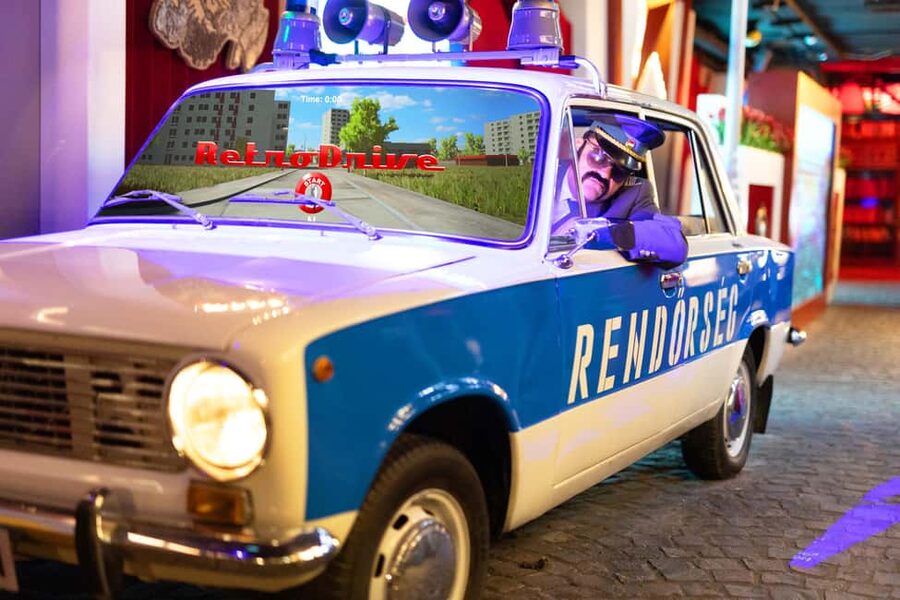
Then comes the star action moment: the Lada police car simulator. You patrol a virtual version of Gazdagrét, the iconic Budapest housing estate known for long rows of nearly identical apartment blocks.
This simulator changes the mood. Instead of standing still in a display, you get to act, react, and drive through a visual version of the city’s built environment. It’s one of the clearest ways the museum connects daily life to urban design and surveillance-era routines.
If you are visiting with kids, this is often the section they want to return to. If you are visiting for history, it still works, because it shows how daily movement could be monitored and organized.
Some other Danube days worth pricing up




A Typical Apartment, Pioneer School Life, and Functionality First Design
The museum’s apartment block displays explain the era’s “functionality first” design thinking. You see square apartment blocks and how the same style of carpets, furniture, fridges, and TV sets could repeat across units.
The practical payoff is that you leave with a clearer mental picture of home life. It is easy to imagine politics from posters, but the museum does a better job showing how policy and budgets shaped what people lived with, room by room.
You can tour a typical apartment filled with everyday household items from the period. There is also an interactive mirror where you can try on vintage outfits, which is great for photos and also for understanding the visual culture of the time.
School life gets special attention too. You’ll learn how education worked in practice, including the distinctive red pioneer scarves and propaganda songs tied to the system.
One careful note: this section can feel a bit “information heavy” if you read everything in one pass. If that is your style, slow down, but if you prefer quick scanning, focus on the artifacts that look most familiar to you.
Space in 1980, Goulash for Salyut 6, and Lake Balaton Summer Life
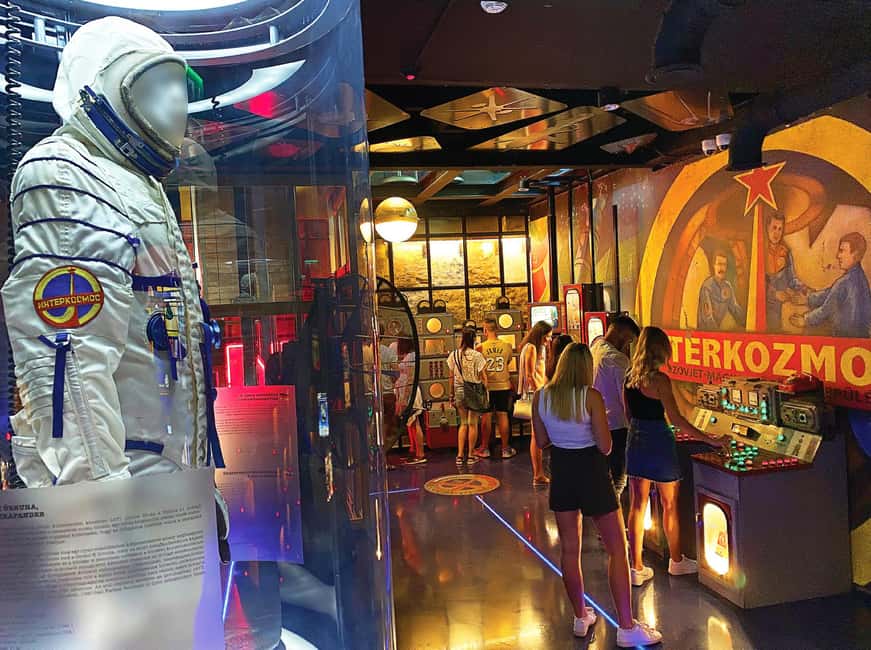
The museum doesn’t only stay grounded in streets and apartments. It also includes a room on Hungary’s space milestone in 1980, when Hungary became the seventh nation to send an astronaut to space as part of a Soviet mission.
You can see a spacesuit and a very specific gift story. There’s a depiction of Hungarian folk art-patterned canned goulash that was presented to the Salyut 6 space station crew.
This kind of detail matters because it shows how national pride and international collaboration could share the same stage, even under Soviet influence. It’s also a fun contrast after the more repetitive apartment block scenes.
And yes, there is room for leisure life too. You’ll see how students experienced community activities and summer camps at Lake Balaton, with the museum framing both organized fun and everyday freedom.
Plan Your Visit for Time, Crowds, and Indoor Comfort
Most people can finish in around one hour, but the museum itself suggests closer to 1 to 2 hours to take it all in. If you want time for the simulator, the studio, and the interactive mirror, I recommend building in extra minutes rather than rushing.
Crowds are a real possibility. On busier days, you may need to wait a little to access certain hands-on spots, especially the areas that involve viewing or interaction.
Indoor comfort is another practical factor. I’ve seen feedback about air conditioning, with at least one visit noting that it can feel hot on warm days. If you get uncomfortable easily in museums, plan for that and wear breathable layers.
Language support is worth flagging. Some sections may not be fully in English, so if you want every room to land, go in with patience, and be ready to rely on the visuals.
Retro Bistro, Jukebox Coffee, and What to Do After
When you are done, you can hang around at the retro bistro. It offers coffee, drinks, and pastries, and the space is paired with a jukebox vibe that matches the museum’s theme.
This is handy because the ticket does not include food. If you are planning a half-day in Budapest, the bistro gives you a natural stopping point without having to find a place at the last minute.
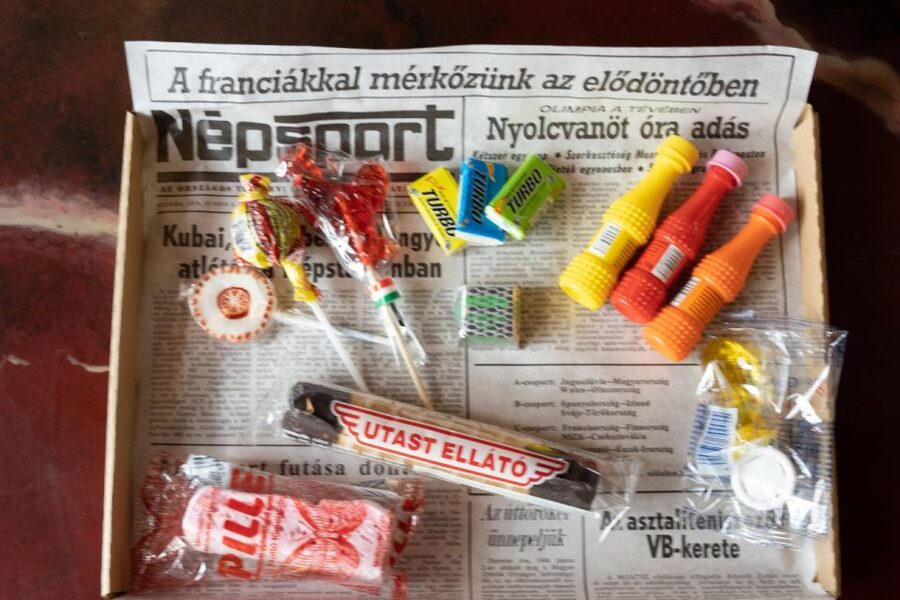
Don’t forget to browse the souvenir selection too. It’s not just generic shop stuff, and it helps you take a piece of the theme home, especially if you are traveling with kids who like “I was there” keepsakes.
Should You Book the Budapest Retro Interactive Museum Ticket?
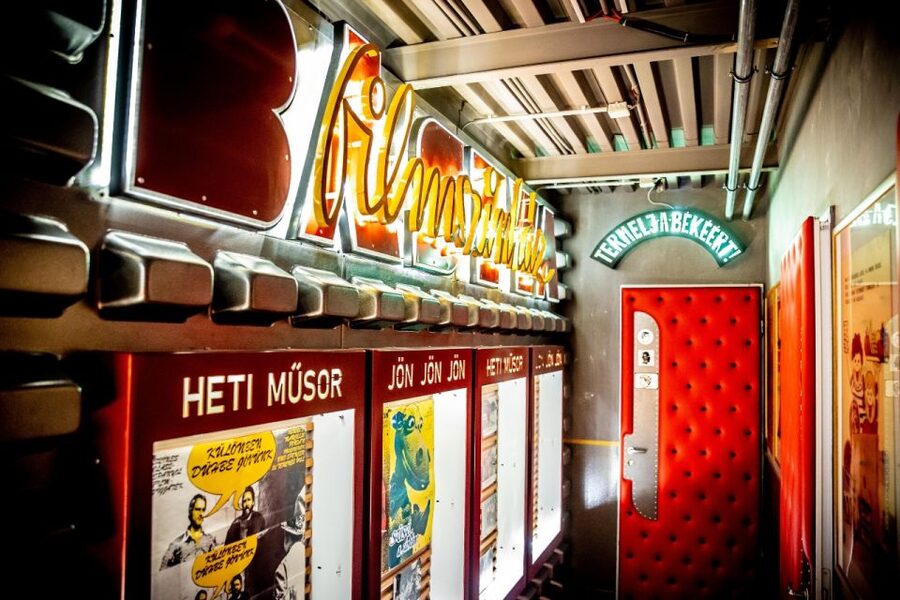
Book it if you like museums where you do things, not just read. The Lada simulator, the functioning TV studio, and the chance to walk through a typical apartment make this feel built for hands-on curiosity.
It also makes sense for families. The mix of cars, bikes, interactive mirrors, and kid-friendly visuals can keep multiple ages engaged, even if you don’t all want to read the same text length.
Skip it if you only want a traditional museum with quiet galleries and deep academic context. This place is designed for experience and interaction, so the value is in the “try it, watch it, stand here” moments more than in long explanations.
If you are short on time in Budapest, it’s also a strong choice because you can keep it to 1 to 2 hours. That means it fits neatly alongside other city highlights without hijacking your whole day.
FAQ
How long does the Budapest Retro Interactive Museum visit take?
Plan for about 1 to 2 hours to experience the museum at a comfortable pace.
What is included with the ticket?
The ticket includes skip-the-line admission, so you can enter without waiting in the main line.
Is food or drink included?
No, food or drink is not included. There is a retro bistro on site where you can buy coffee, drinks, and pastries.
Where do I present my voucher?
Present your voucher at the Budapest Retro Interactive Museum desk.
Is the museum suitable for families with kids?
Yes. The museum is suitable for all generations, including families with kids.
Is it wheelchair accessible?
Yes, the museum is listed as wheelchair accessible.
Do seniors get any perk during the week?
Seniors (65+) who purchase a senior ticket receive a complimentary coffee every Wednesday.
Newest from the Danube banks
- Pub Crawl Through The Ruin Bars in Budapest with T-shirt Included★ 4.5 · 14 reviews
- Rudas Bistro Premium Brunch★ 3.5 · 14 reviews
- Wine Tasting in the Countryside from Budapest★ 5.0 · 14 reviews
- Buda Castle District and Matthias Church Private Tour★ 5.0 · 14 reviews
- Pest side stories with a Historian★ 5.0 · 14 reviews
- Budapest Rafting – Sunset Cruise★ 5.0 · 14 reviews
- Recirquel Company: Walk My World Immersive Show Entry Ticket★ 4.6 · 14 reviews
- Ram Gorge Hiking Adventure★ 5.0 · 14 reviews
Museums, compared.

Budapest: Light Art Museum Skip-the-Line Entry Ticket
Read our review →
Budapest Card: Free Public Transport, Spa & Museums with Delivery
Read our review →
Budapest Dohany Synagogue & Hungarian Jewish Museum & free extras
Read our review →
Skip the Line: Budapest Pinball Museum Admission Ticket
Read our review →

Trash Art Museum: Hungary’s First Scrap Metal Exhibition
Read our review →Browse the lists this tour appears in