
Reviewed · CITY TOURS
Budapest: City Center Tour & Folk Music Performance
Budapest feels layered, and this tour is built for that. You get a focused city-center walking route that mixes architectural storytelling with a real Hungarian folk music moment at the end. Two things I especially love: the guide’s street-level history stories that make the buildings feel personal, and the Hungarian folk songs and dance steps in a garden finish.
You’ll also enjoy the big view moments, especially from the UNESCO World Heritage Site Pest Danube Promenade, where the Castle District looks picture-perfect on the Buda side. I like how the walk keeps moving between famous landmarks and quieter atmospheres like coffee-house energy and decorative facades.
One consideration: this is a true walking experience over 3 hours, and entry tickets are not included. If you want to go inside every major site, you’ll likely need extra plans and money.
In This Review
- Key points to know before you go
- Kálvin tér to Március 15. Square, a history starter you can feel
- UNESCO Pest Danube Promenade: the Castle District view you’ll remember
- Vörösmarty tér and the turn-of-the-century atmosphere you’re looking for
- St. Stephen’s Basilica: exterior time plus construction and architecture talk
- From the Champs-Élysées of Budapest to Dohány Street Synagogue
- The Károlyi kert finale: folk music, singing, and dance steps
- Price and value: why $76 makes sense for this mix
- Who this Budapest walk fits best
- Quick practical tips so the 3-hour walk feels easy
- Should you book Budapest: City Center Tour & Folk Music Performance?
- FAQ
- How long is the Budapest City Center Tour & Folk Music Performance?
- Where does the tour start?
- What sites do we see on the route?
- Is the tour done mostly outside?
- Is the folk music performance included?
- What is included in the price, and are entry tickets included?
- What language is the tour offered in?
- Is the tour wheelchair accessible?
- What should I bring and what is not allowed?
Key points to know before you go
- Meeting at Kálvin tér, then hitting the National Museum first so you start with context fast
- UNESCO Pest Danube Promenade panoramas aimed directly at the Castle District
- Vörösmarty tér area details like elegant coffee-house culture and festive city cues
- St. Stephen’s Basilica stop with a guided architectural story and time to look around
- Dohány Street Synagogue exterior viewing with world-famous scale in context
- Károlyi kert finish featuring Hungarian folk songs and dance steps by your guide
Other circuits taking both banks in one go:
- Budapest: City Highlights Sightseeing Cruise
★ 4.6 · 43,981 reviews - Budapest: Nighttime or Daytime Sightseeing Cruise
★ 4.2 · 21,062 reviews - Budapest: By Night Sightseeing Cruise with Welcome Drink
★ 4.3 · 15,533 reviews
Kálvin tér to Március 15. Square, a history starter you can feel
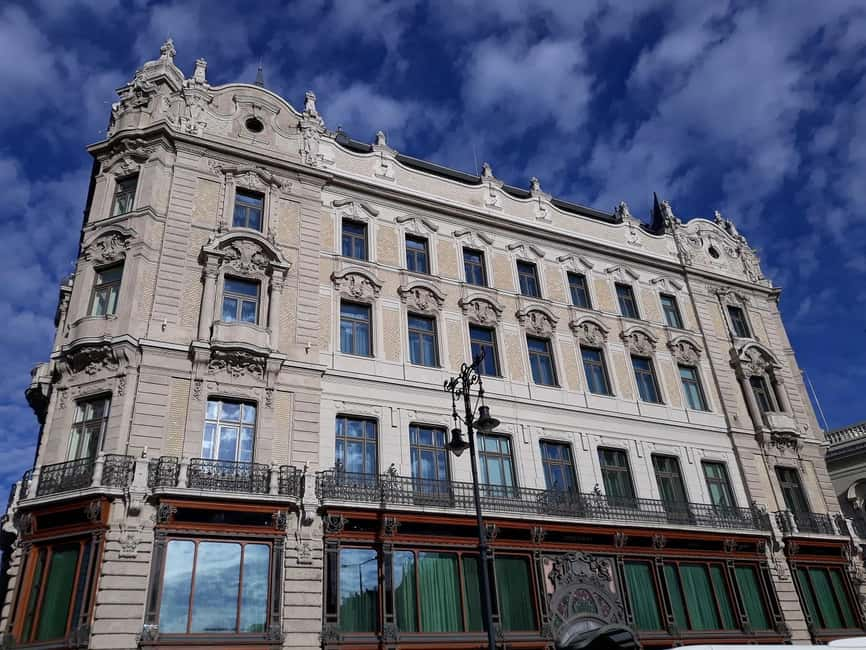
Your tour begins in the middle of Kálvin tér, right in front of the ALFA Insurance Company building. Look for the guide holding a board with the Maggino logo, a dark blue stork with an orange musical note. It’s a simple way to avoid the usual “Where is the group?” stress.
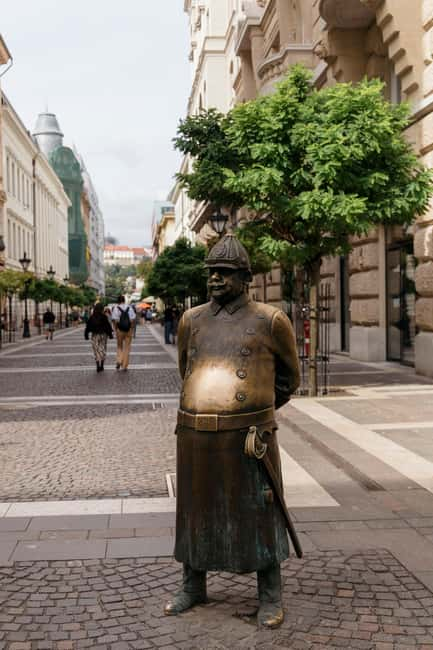
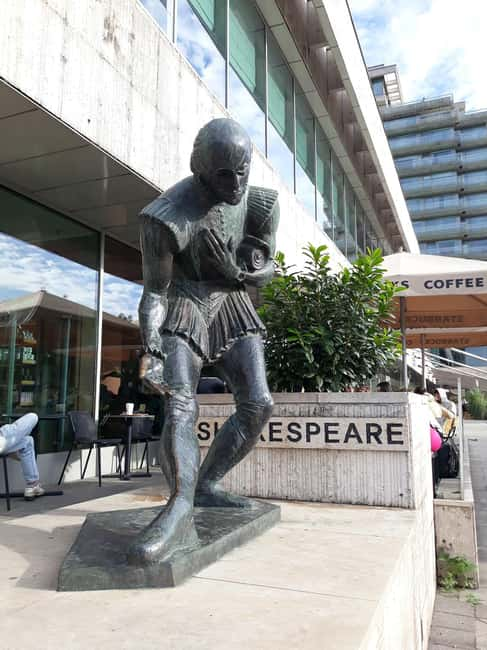
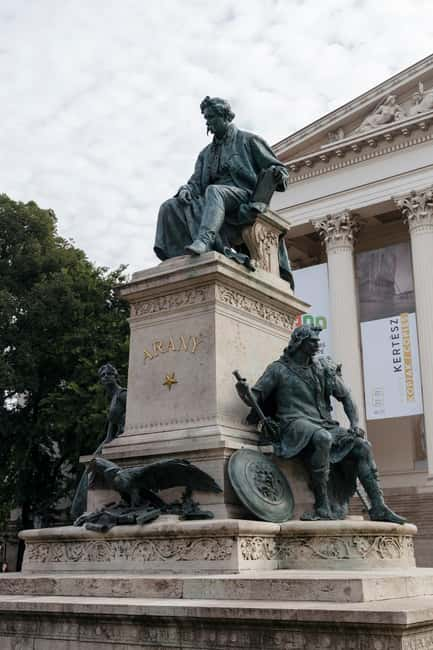
The first stretch is where I think the tour earns its value. You start by looking toward the Hungarian National Museum with the statue of the so-called Hungarian Shakespeare standing out front. Even from the outside, the museum gives you a useful frame for understanding why Budapest’s identity was so intensely tied to culture and national pride. Your guide’s stories are meant to help you read the city like a text, not just a photo backdrop.
From there, you continue toward Március 15. Square. This is one of those Budapest moments where you start noticing how different eras overlap in the same neighborhood. The guide keeps the pace at a walking pace, with short timed stops, so you don’t feel lost or rushed.
Practical tip: if you like street photography, this early hour is where you’ll build your “visual library.” Take a few photos of facades and signage before the tour gets more view-focused later.
UNESCO Pest Danube Promenade: the Castle District view you’ll remember
Next comes one of the tour’s headline moments, the Pest Danube Promenade, a UNESCO World Heritage Site. This is the part where you stand back, tilt your head up, and suddenly the rest of Budapest clicks into place.
The payoff is panoramic views across the Danube toward the Buda side, especially the Castle District and its key landmarks: the Royal Buda Palace, Matthias Church, and Fisherman’s Bastion. The guide points out what you’re looking at and ties it to the broader story of how Budapest developed, so it’s not just a scenic stop.
I also like that the route is designed to give you a “view break” before the architecture gets more focused. That matters because a city-center walk can otherwise turn into nonstop gawking. Here, you get a planned pause, and you’ll feel your legs and your attention reset.
Photo tip: bring your camera ready before you arrive at the best sightline. If the light is changing quickly, you’ll be glad you didn’t spend that moment digging for your phone.
Vörösmarty tér and the turn-of-the-century atmosphere you’re looking for
After the promenade, the tour shifts back into city detail around Vörösmarty tér. This is one of the places where Budapest feels like it’s wearing multiple outfits at once, and the guide leans into that.
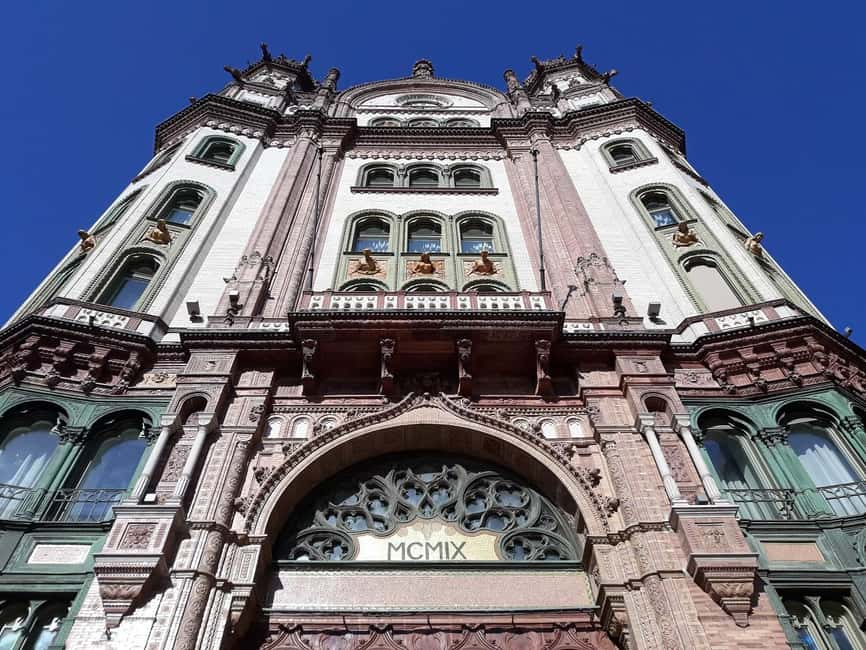
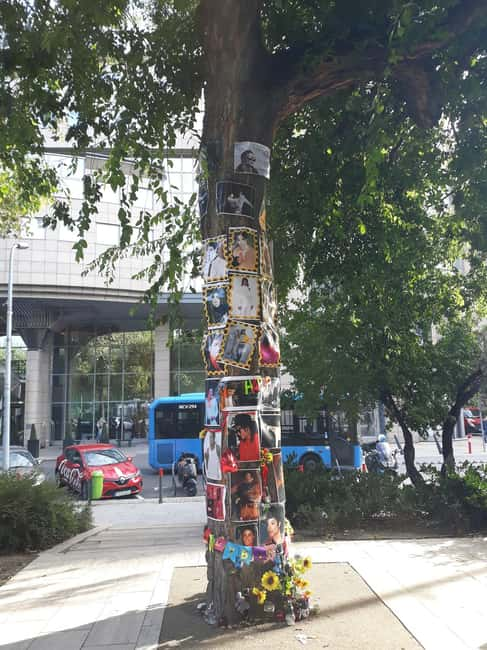
You’ll pass Art Nouveau-style palaces, along with churches that help you spot the older layers of the city. The tour also includes one of Budapest’s historic coffee-house atmospheres, plus a look at a fashionable confectioner connected with the Europe’s best Christmas market. You’ll also catch a few fun landmarks tied to modern memory and city life, including a tree in memoriam of the King of Pop and a square where Budapest youth often gather.
One more lively detail: you’ll walk by the Ferris Wheel of Budapest. Even if you don’t ride it, it’s a useful visual cue for the city’s modern entertainment side.
What I like here is the balance. The guide doesn’t only talk about “famous buildings.” You get the sense of how people in Budapest actually lived, shopped, celebrated, and met each other around these spaces. That is the difference between a checklist tour and a tour that helps you understand the place.
If you’re visiting in a season with more outdoor events, this stretch can feel especially “Budapest,” because the city’s public squares do a lot of storytelling on their own.
St. Stephen’s Basilica: exterior time plus construction and architecture talk
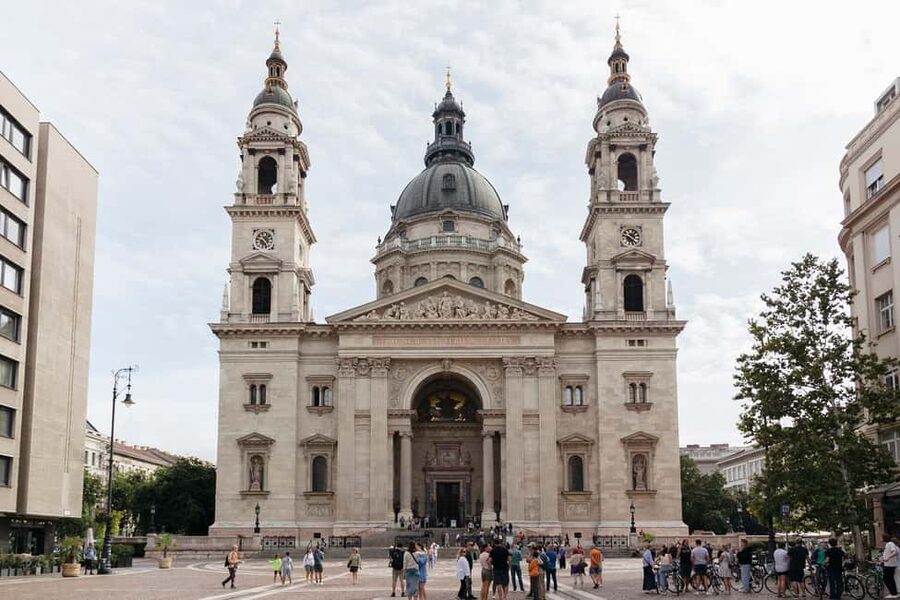
Then you head toward St. Stephen’s Basilica, Budapest’s big Catholic landmark on the tour route. You get about 25 minutes of sightseeing time. The stop is paced to let you look closely at the building from the outside and still hear the guided story without feeling like you’re on a conveyor belt.
Your guide frames it as Hungary’s third largest Catholic church and spends time on the construction story and a full architectural description. That matters because, on your own, a basilica can look like “a large church.” With a guide, you learn what features to notice and why the building’s form and details make sense in context.
This is also where the guide brings in Hungary’s invaluable national relics, connecting the building to national meaning rather than just religious architecture. I like that the tour treats this as a cultural landmark, not only a faith stop.
A consideration: since the tour is an exterior-focused visit and entry tickets are not included, you should assume you’ll mostly be seeing the basilica from outside. If interior views are a priority for you, plan for separate tickets.
Other ways an evening in Budapest can go:





From the Champs-Élysées of Budapest to Dohány Street Synagogue

After the basilica, the tour touches the starting point of the Champs-Élysées of Budapest, a reference to the city’s elegant long boulevard vibe. The point here is orientation. Budapest has huge “main streets,” but this one has a particular grand feel, and the guide uses it to help you connect one zone to the next.
Then you arrive at Dohány Street Synagogue, where you’ll spend about 20 minutes sightseeing. The guide highlights that it’s the world’s second largest synagogue, which gives you instant context for why this building matters.
Even without entering, the exterior is impressive, and the guide’s stories help you understand scale and significance. The stop works well for two kinds of travelers: those who want architectural and cultural meaning, and those who prefer to see major landmarks without spending extra time in lines.
One more thing I appreciate: the tour includes legends and stories about kings and saints and the former famous residents of Budapest. So even when the walk is aimed at big set pieces, you’re still hearing human-scale narratives along the way.
The Károlyi kert finale: folk music, singing, and dance steps
Every good tour needs a memorable ending, and this one puts that ending where it belongs: in a garden.
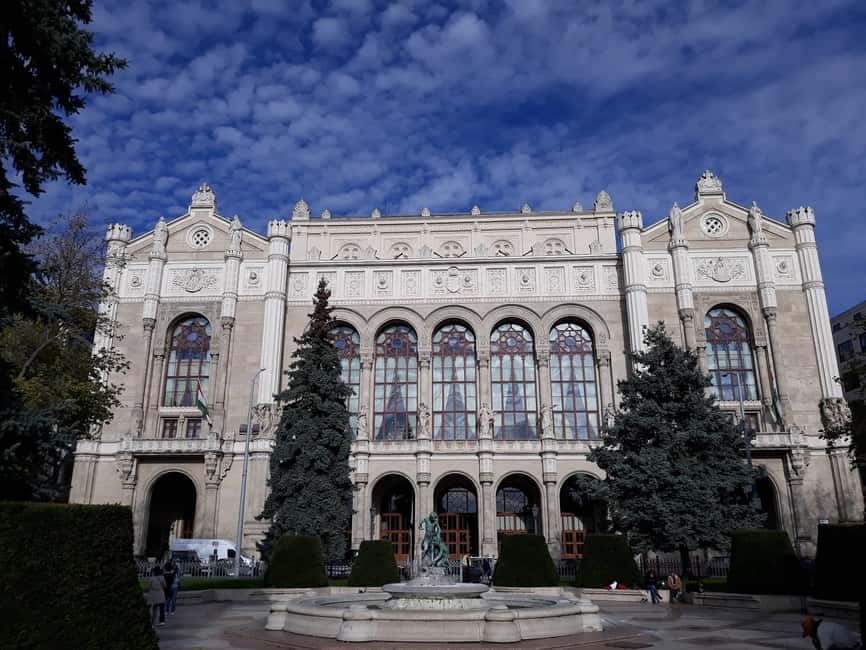
You finish at Károlyi kert, and your guide lets you “taste” Hungarian culture through Hungarian folk songs and traditional Hungarian folk dance steps. This is not background entertainment. The guide is actively involved, singing and teaching the basic movement so you can follow along and feel the rhythm.
I like this approach because it changes the whole tone of the day. The earlier part of the tour is about monuments and architectural interpretation. The finale is about embodied culture, sound, and easy participation.
If you’re the kind of traveler who remembers trips better through moments you can physically join, this ending is a strong selling point.
Price and value: why $76 makes sense for this mix
At $76 per person for 3 hours, this tour sits in the mid-range for guided experiences in central Budapest. Here’s the value logic I see.
You’re paying for three things that are hard to replicate on your own:
- A licensed Hungarian guide who connects many sites with stories, not just directions.
- A route that combines multiple major exteriors, including big-name landmarks like St. Stephen’s Basilica and Dohány Street Synagogue, plus scenic view time at a UNESCO promenade.
- A real cultural extra: Hungarian folk music performance, followed by singing and dance steps.
Also, you should know what you are not paying for. Entry tickets are not included, so if you plan to go inside buildings, you’ll need to add that cost separately. The tour is designed for exterior viewing and guided narrative, so your time is spent efficiently.
For many people, the combination of landmarks plus a guided cultural performance is what makes the price feel reasonable rather than expensive.
Who this Budapest walk fits best
This tour is a good match if you want:
- A structured 3-hour plan that still leaves you with energy at the end of the day
- A guide-led mix of architecture, legends, and modern city details
- A memorable cultural moment beyond sightseeing, namely the folk music and dance steps
- A tour that keeps you moving through the city center without requiring you to study routes
It’s also a smart option if you like your Budapest experience to feel more “local life” than “stand and stare.” The coffee-house vibe, the festive city cues, and the youth-gathering square details help the city feel lived in.
If you prefer totally self-directed travel, this might feel structured. But if you want the benefit of one person putting the pieces together for you as you walk, it’s the kind of tour that pays off quickly.
Quick practical tips so the 3-hour walk feels easy
A few things will make this experience smoother:
- Wear comfortable shoes. The tour includes walking between city-center spots, and your legs will notice it by the end.
- Dress for the weather. You’ll be outside for the promenade views and multiple stops.
- Bring water if it’s warm, especially since you’ll want to keep your energy for the final garden performance.
- Use the meeting point landmarks to find your group. The guide’s Maggino logo board makes it easier than guessing.
- Note the tour rules: no smoking indoors, and no alcohol or drugs. (Not a big drama, but it’s good to know.)
Because it’s wheelchair accessible, the pacing and route are designed to accommodate mobility needs better than many all-day walking tours. Still, you should expect to spend time outdoors and navigating streets.
Should you book Budapest: City Center Tour & Folk Music Performance?
I’d book this if you want a one-afternoon Budapest experience that mixes landmark viewing with storytelling and ends with something cultural and participatory. The UNESCO promenade views plus major exteriors like St. Stephen’s Basilica and Dohány Street Synagogue are a strong core, and the folk music and dance steps are the kind of ending that turns “sightseeing” into a memory.
Skip it or rethink it only if your top priority is going inside monuments. Since entry tickets are not included, you’ll likely need extra stops on your own if interiors matter most to you.
If you want to learn how Budapest’s different eras overlap, hear the guide’s stories, and finish with Hungarian folk culture in a garden, this tour is an efficient, good-value way to do it.
FAQ
How long is the Budapest City Center Tour & Folk Music Performance?
The tour lasts 3 hours.
Where does the tour start?
You meet at Kálvin tér, in the middle of the square, in front of the ALFA Insurance Company building. The guide will be holding a board with the Maggino logo.
What sites do we see on the route?
You’ll stop for exterior sightseeing at St. Stephen’s Basilica and Dohány Street Synagogue, and you’ll also enjoy views from the UNESCO Pest Danube Promenade. The tour ends in Károlyi kert.
Is the tour done mostly outside?
Yes. The tour includes exterior visits of monuments and sightseeing time at stops.
Is the folk music performance included?
Yes. The tour includes a Hungarian folk music performance made by your tour guide, and the experience ends with singing and traditional folk dance steps in a garden.
What is included in the price, and are entry tickets included?
Included: professional licensed guide, exterior monument visits, and the folk music performance. Entry tickets are not included.
What language is the tour offered in?
The live tour guide speaks English.
Is the tour wheelchair accessible?
Yes, the tour is wheelchair accessible.
What should I bring and what is not allowed?
Bring comfortable shoes and weather-appropriate clothing, and it’s recommended to bring water. Smoking indoors is not allowed, and alcohol and drugs are not allowed.
Newest from the Danube banks
- Gödöllö Royal Palace Privately with full board★ 5.0 · 1 review
- Private Budapest Tour with Thermal Bath or Market Visit★ 5.0 · 1 review
- Private Budapest walking tour – 4 hours★ 5.0 · 1 review
- Budapest Half Day Car Tour with Guide★ 5.0 · 1 review
- Budapest Private Transfer from Budapest city centre to Budapest Airport★ 3.0 · 1 review
- Magic Theme Team Adventure Game in the Streets of Budapest★ 5.0 · 1 review
- Budapest: Eat the Street, food tour with wine, 16+ tasting★ 5.0 · 1 review
- Private Transfer Budapest Airport BUD to Budapest by Car or Van★ 5.0 · 1 review
City Tours, compared.

Budapest: City Highlights Sightseeing Cruise
Read our review →
Budapest: Nighttime or Daytime Sightseeing Cruise
Read our review →
Budapest: By Night Sightseeing Cruise with Welcome Drink
Read our review →
Budapest: 1-Hour Evening Sightseeing Cruise with Drink
Read our review →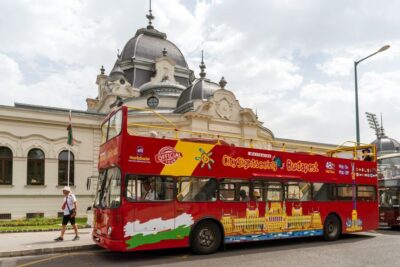
Budapest: City Sightseeing Hop-On Hop-Off Bus Tour & Extras
Read our review →
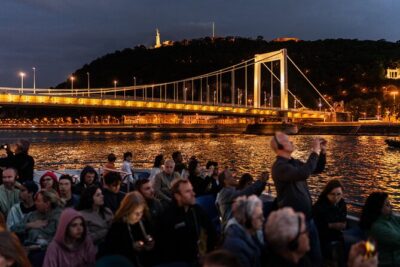
Budapest Danube River Sightseeing Night Cruise with Drink
Read our review →
Budapest: Premium Sightseeing Cruise with Tokaj Frizzante
Read our review →Browse the lists this tour appears in