
Reviewed · FOOD & DRINK
Budapest Essential Walk&Food tasting
Budapest tastes better with a smart route. This private walk-and-food outing strings together the city’s biggest sights with real local flow, and I like that the tour uses public transport to cut across neighborhoods. I also like the free-entry approach for the stops on the plan, so you can spend your time learning instead of waiting in ticket lines. One thing to consider, though, is that the schedule leans on walking and being outside, so rain or strong wind can make pacing feel tighter.
What makes it especially enjoyable is the way the route tells one story at street level. The guide you get for this tour, often Gabor, tends to keep the narrative clear, moving from royal buildings and thermal-bath culture to Parliament-era politics and the Danube’s memorials. You’ll meet at Deák Ferenc tér and finish on the Castle Hill side near Szentháromság tér, just off Matthias Church, with a strudel-and-coffee break along the way.
In This Review
- Key highlights I’d plan around
- What this Budapest Essential Walk and Food tasting is really like
- Deák Ferenc tér, then Elizabeth Square and the Opera on the outside
- Heroes’ Square, City Park, and Vajdahunyad Castle via the Millennium Underground
- Széchenyi Baths and pool glimpses, then back toward St. Stephen’s Basilica
- St. Stephen’s Basilica and Hungary’s founder King Stephen
- Szabadság tér, strudel and coffee break, and the Cold War layer
- Hungarian Parliament, Kossuth tér, and the Shoes on the Danube Promenade
- Castle Hill to Fisherman’s Bastion, with Metro 2 and panoramic views
- Széchenyi Chain Bridge and the funicular ride down
- Price, pacing, and what $90.11 gets you
- Should you book Budapest Essential Walk and Food tasting?
- FAQ
- How long is the Budapest Essential Walk and Food tasting?
- Where do we meet, and where does the tour end?
- Is this tour private?
- Are entrance fees included for the sights on the itinerary?
- What food will we taste?
- Do we use public transportation during the walk?
- How does the tour handle bad weather?
- Is a mobile ticket used, and are service animals allowed?
- What is the cancellation policy?
Key highlights I’d plan around

- Private group time so you can ask questions without hearing other people in your ear
- Transport links built into the walk, including the Millennium Underground and Metro 2
- Major sights with free entry on the itinerary, which helps the overall value
- A focused food break, with strudel and coffee along the route
- Architecture-first storytelling, from Opera-area façades to Parliament’s political symbolism
- Danube memorial stops, including Shoes on the Danube Promenade near Parliament
More of Pest crossed at walking pace:
- Budapest: Buda Castle Walk with Saint Stephen’s Hall
★ 4.5 · 3,012 reviews - Big Bus Budapest Hop-On Hop-Off Bus and Walking Tour
★ 3.5 · 2,206 reviews - Budapest: Buda Castle District Walking Tour
★ 4.6 · 2,108 reviews
What this Budapest Essential Walk and Food tasting is really like
This is not a “hit every photo spot” marathon. It’s a 3 to 4 hour, private, afternoon-to-early-evening walk that stitches together central Budapest into one connected loop: Deák Ferenc tér, Heroes’ Square and City Park, Széchenyi Baths, St. Stephen’s Basilica, Szabadság tér, Hungarian Parliament, Fisherman’s Bastion, and finally Széchenyi Chain Bridge.
The value is in how the route is built. Many of the listed stops are “admission ticket free,” which means your money goes to the guide and the walking plan rather than to entry fees at every stop. Add in the built-in use of transit, and the pacing feels more efficient than doing it all by foot on your own.
The other thing you should know up front is that this tour works best when you’re comfortable walking and moving between neighborhoods. You’ll be on streets, stairs, and steps, then using the underground and a funicular segment on Castle Hill. If you want a slow, sit-everywhere style tour, this probably won’t match.
Deák Ferenc tér, then Elizabeth Square and the Opera on the outside
You start at Deák Ferenc tér, at the stairs of the Lutheran church (Deák tér 4). From there, the plan is a short walk toward Elizabeth Square and the Opera house, mostly to see and understand them from the outside.
This is a smart first move because Deák Ferenc tér is one of Budapest’s most central meeting points. You get your bearings fast, and you avoid the “first hour fatigue” that happens when you start too far from transit. The outside viewing also sets the tone: the guide can explain why these buildings look the way they do, without turning your morning into a queue.
Practical note: because the meeting point is specific (the Lutheran church stairs), you’ll save yourself stress by arriving a few minutes early and taking a quick photo of where you’re standing relative to the church. The tour time for this stop is about 20 minutes, so you’re not stuck waiting around.
Heroes’ Square, City Park, and Vajdahunyad Castle via the Millennium Underground
Next comes Heroes’ Square. The tour frames what you’re seeing with notes on opulent buildings you’ll spot from the outside, then moves you toward Heroes’ Square and City Park. A key transport detail here is the Millennium Underground, described in the plan as Europe’s first underground, which helps connect neighborhoods quickly.
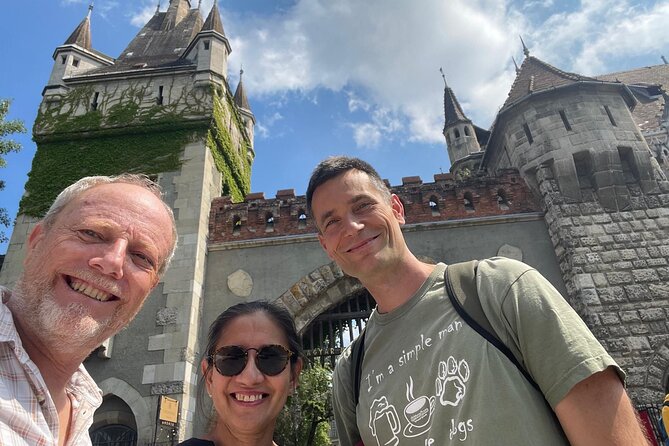
In City Park, you visit Vajdahunyad Castle. This is one of those stops where architecture talk pays off. Castle-style façades, layout, and details become easier to recognize when someone gives you the “what to look for” version instead of just pointing at stone.
Time is about 30 minutes here, and that’s a realistic window for a first pass. If you’re hoping for a deep, hour-long museum experience at Vajdahunyad Castle, this tour is not that. Think of it as architectural orientation and context, not a full dig.
A small consideration: City Park is open and can feel exposed. If the weather turns, you may want to keep a light layer ready and plan to stay flexible.
Széchenyi Baths and pool glimpses, then back toward St. Stephen’s Basilica
Szechenyi is Budapest’s most famous thermal bath, so this stop has built-in wow value. The plan is to get acquainted with its history, and if possible, to take a glimpse of the outdoor pools by entering via a side entrance.
This is a great place to learn how Budapest’s bath culture works beyond the postcard. Even if you only get a quick look, the guide can connect why thermal baths became central to city life and why the architecture and layout matter.
Then you take the underground back toward downtown and reach St. Stephen Basilica. The plan calls for about 20 minutes total at this stage, so again, think orientation and storytelling rather than a full soak. The guide’s job is to keep you moving while still making the bath stop feel meaningful.
One drawback to consider: you might be rushing through this compared with a dedicated bath visit. If you want long pool time, you’ll likely need a separate thermal-bath outing later. This tour gives you understanding and a look, not a spa schedule.
More Budapest borozok, cukraszdak and counters:



St. Stephen’s Basilica and Hungary’s founder King Stephen
At St. Stephen’s Basilica (Szent Istvan Bazilika), you learn about the birth of Catholic Hungary and King Stephen, the state founder. The tour also introduces other major Hungarian figures, including Ferenc Puskás.
This is one of the best stops on the route for turning the city’s political and religious story into something you can actually picture. From the outside, you might see a big church. With a guide, you start connecting it to the idea of state-building and identity, then linking it to personalities you’ll hear about elsewhere in Hungary.
The planned time is about 15 minutes. That makes it fast, but it’s also why it works inside a larger walk plan. You get a framework, then you move on before the tour becomes too repetitive.
If you’re a person who loves reading plaques and wants to linger, you may feel slightly “on the clock” here. Still, the benefit is that you’ll have that knowledge in your head for the next stops.
Szabadság tér, strudel and coffee break, and the Cold War layer
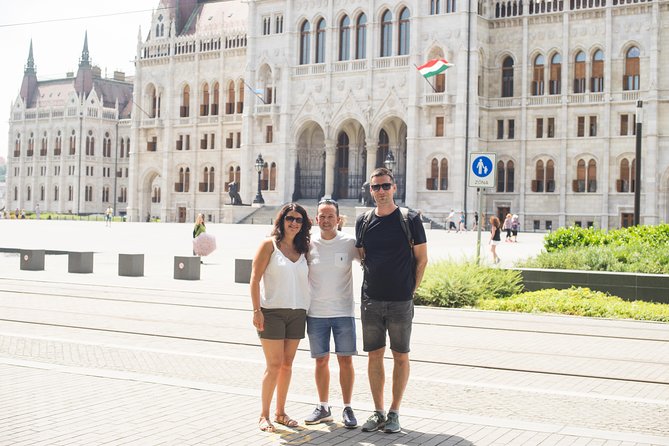
Stop five is Szabadság tér. Here, the tour includes a short break at a strudel house where you spend your strudel and coffee, then you walk toward the bank district.
The guide also points out major markers of 20th-century history in the square area, including what’s described as the last remaining Soviet Statue, the American embassy, and a memorial related to the German occupation. It’s a reminder that Budapest history is not only kings and castles. It’s also 20th-century power struggles and shifting influence.
This part feels especially valuable because it shifts you from “looks like art” sightseeing into “why this place matters.” You can see the buildings, you can stand in the square, and you can understand why these symbols are placed where they are.
The time here is about 20 minutes. That’s enough for the break and a short walk through the key points, but not enough to linger for a long meal. If you want a slow café break, you can always add your own stop after the tour.
Hungarian Parliament, Kossuth tér, and the Shoes on the Danube Promenade
Then you reach Kossuth tér, with the Hungarian Parliament building next. The guide speaks a lot about architecture, history, and both past and recent politics. You’re not just looking at a grand façade. You’re learning how a building can represent national power and how that power has changed over time.
Near the Parliament building, you also visit the Shoes on the Danube Promenade. This is one of those memorials that makes the Danube feel heavier, in a good way. It gives emotional context to the sightseeing, and it fits the tour’s broader theme of history you can stand beside.
The planned time is about 20 minutes. That’s short, but because the memorial is a concentrated experience, you’ll still get the main message without rushing.
Possible drawback: if you’re visiting on a day with crowds, this stop can feel busy. The tour’s private nature helps, but you’ll still share sidewalks with other visitors.
Castle Hill to Fisherman’s Bastion, with Metro 2 and panoramic views
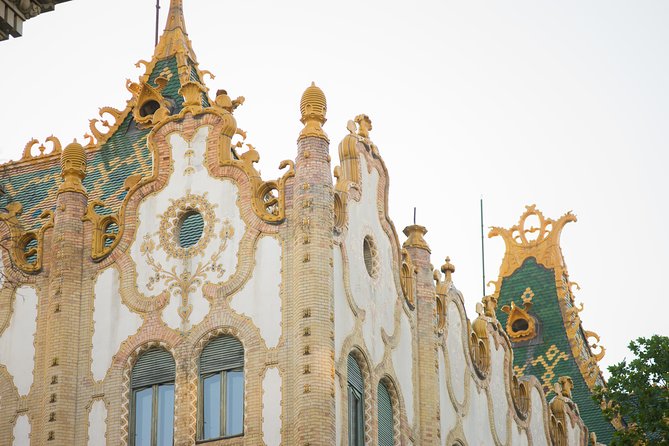
After Parliament, the plan is to take Metro 2, described as the red line under the Danube, and then continue up to Castle Hill. From there, you start walking and the tour moves into a more panoramic phase.
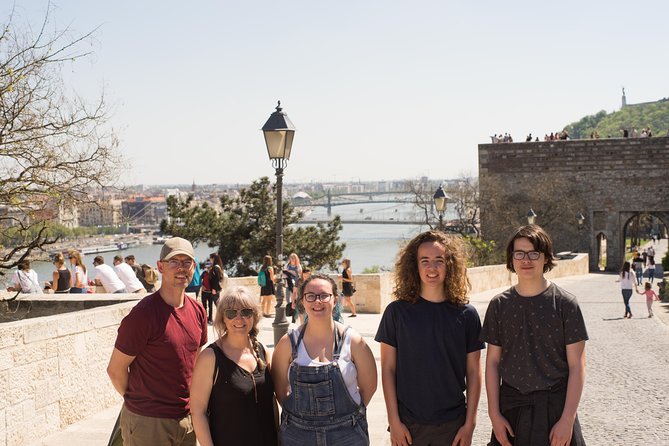
You begin at Fisherman’s Bastion, starting with a panoramic view from the lookout terrace. This is where Budapest’s geometry becomes obvious. The Danube bends, the city spreads, and the contrast between historic hills and modern streets becomes very clear.
From Fisherman’s Bastion, you walk toward the Royal Palace area. This is the part where architecture and city planning stories start to “click” because you can see how everything connects from above.
The planned stop time is about 30 minutes, including the Castle Hill walk segment. That’s a good window for a first look and photos, but the hills do add effort. If you’re not keen on stairs and slopes, you should plan for a bit of exertion.
Széchenyi Chain Bridge and the funicular ride down
The final leg brings you to Széchenyi Chain Bridge. You walk down Castle Hill along the funicular, and you hear stories about Budapest’s iconic first permanent bridge and its lions.
This ending works well because it’s visual and symbolic. You started near Deák Ferenc tér, moved through squares and grand civic buildings, then climbed back up and finally came down to the bridge that ties the city together physically. It’s a clean wrap-up.
The plan calls for about 30 minutes for this segment. That gives time for views and for the guide to point out details you might otherwise miss, like the lion sculptures and the bridge’s role in the city’s identity.
A consideration: you’ll probably end while other visitors are still arriving in waves for evening plans. If you like quiet photos, aim to stay alert to timing once you reach the bridge area.
Price, pacing, and what $90.11 gets you
The tour price is $90.11 per person for about 3 to 4 hours. That may sound like a lot until you think about what’s included: a private guide, a route connecting a lot of major sights, and transit built into the itinerary.
The best value angle is the free-entry nature of the listed stops. In a normal self-guided day, you end up paying for entries at multiple landmarks, or you end up skipping them to keep costs down. Here, you’re getting a “greatest hits” path with the admission fees minimized on the plan.
Pacing is the other part of value. Stop times are short enough to keep energy up, but long enough for the guide to explain what you’re seeing. That’s why the tour works as a first Budapest deepening day, especially if you like architecture and political context, not just scenery.
Who it suits most:
- Couples and solo travelers who want a private narrative
- First-time visitors who want one afternoon route that covers Deák tér to the Castle and back down
- People who enjoy learning while walking, including Cold War era context and memorials
Who might not love it:
- Travelers who want a long thermal bath session
- Anyone who hates stairs and hills, since Castle Hill is part of the route
- People looking for a strictly food-focused tasting menu, because the food part centers on strudel and coffee rather than a multi-stop tasting flight
Should you book Budapest Essential Walk and Food tasting?
If you want an organized, story-led Budapest route that connects the city’s grand buildings to the human events behind them, I’d book this. The private setup, the use of public transport like the Millennium Underground and Metro 2, and the fact that the plan hits major landmarks without a pile of entry fees make it a practical way to get oriented fast.
I’d especially consider booking if you like the idea of stopping at big symbols like the Hungarian Parliament and the Shoes on the Danube Promenade, then finishing with panoramic views at Fisherman’s Bastion and the Chain Bridge lions.
If weather is shaky, keep your expectations flexible. The plan needs good weather, and this is a walking tour, so you’ll feel the outdoors more than you would on a fully indoor itinerary.
If your goal is maximum thermal-bath time or a longer food itinerary, you’ll probably want something else. But for a half-day style “learn Budapest, taste a bit, see a lot” experience, this one is easy to recommend.
FAQ
How long is the Budapest Essential Walk and Food tasting?
It lasts about 3 to 4 hours.
Where do we meet, and where does the tour end?
You meet at the stairs of the Lutheran church at Deák Ferenc tér, Budapest (Deák Ferenc tér 4, 1052 Hungary). The tour ends at Széchenyi Chain Bridge, near Széchenyi Lánchíd (1051 Hungary), in the Castle district near Szentháromság tér, just off Matthias Church.
Is this tour private?
Yes. It’s a private tour/activity, so only your group participates.
Are entrance fees included for the sights on the itinerary?
The itinerary lists each stop with admission ticket free, meaning the stops are part of the plan as free entry locations.
What food will we taste?
The itinerary includes a break at a Strudel house, with strudel and coffee.
Do we use public transportation during the walk?
Yes. The plan includes using the Millennium underground (Europe’s first underground) and Metro 2, plus walking down Castle Hill along the funicular.
How does the tour handle bad weather?
The experience requires good weather. If it is canceled due to poor weather, you’ll be offered a different date or a full refund.
Is a mobile ticket used, and are service animals allowed?
You get a mobile ticket. Service animals are allowed.
What is the cancellation policy?
You can cancel for a full refund up to 24 hours in advance of the experience’s start time. If you cancel less than 24 hours before, the amount paid is not refunded.
Hungarian Plates Worth Ordering
- Budapest All in One Small Group Walking Tour with Strudel Stop
★ 5.0 · 1,277 reviews - Budapest Guided Food Walking Tour with Drinks Included
★ 4.8 · 472 reviews - Budapest Food Tour: Market to Tavern with 14+ Tasters & Wines
★ 5.0 · 434 reviews - Budapest: Food Tour Market to Tavern: 14+ Tasters & Wines
★ 4.9 · 375 reviews
Newest from the Danube banks
- Rudas Bistro Premium Brunch★ 3.5 · 14 reviews
- Wine Tasting in the Countryside from Budapest★ 5.0 · 14 reviews
- Pub Crawl Through The Ruin Bars in Budapest with T-shirt Included★ 4.5 · 14 reviews
- Buda Castle District and Matthias Church Private Tour★ 5.0 · 14 reviews
- Pest side stories with a Historian★ 5.0 · 14 reviews
- Recirquel Company: Walk My World Immersive Show Entry Ticket★ 4.6 · 14 reviews
- Ram Gorge Hiking Adventure★ 5.0 · 14 reviews
- Budapest Rafting – Sunset Cruise★ 5.0 · 14 reviews
Food & Drink, compared.
Budapest: Unlimited Prosecco, Beer and Aperol Spritz Cruise
Read our review →
Budapest: Unlimited Prosecco, Beer & Aperol Spritz Cruise
Read our review →
Budapest Food Walking Tour: Eat, Sip & Explore Like a Local
Read our review →Budapest Centre Food Tour with 10+ Tastings, Wine & Street Food
Read our review →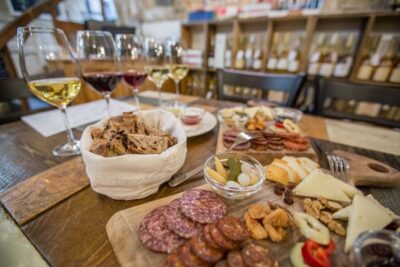
Budapest: Wine, Cheese, and Charcuterie Tasting
Read our review →
Hungarian Wine Tasting (with Cheese and Charcuterie) in Budapest
Read our review →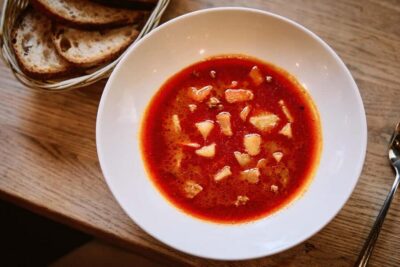
Budapest Guided Food Walking Tour with Drinks Included
Read our review →
Budapest: Hungarian Wine Tasting with 8 Wines and Tapas
Read our review →Browse the lists this tour appears in