
Reviewed · CITY TOURS
Budapest: Exoskeleton Robotics Powered City Walk
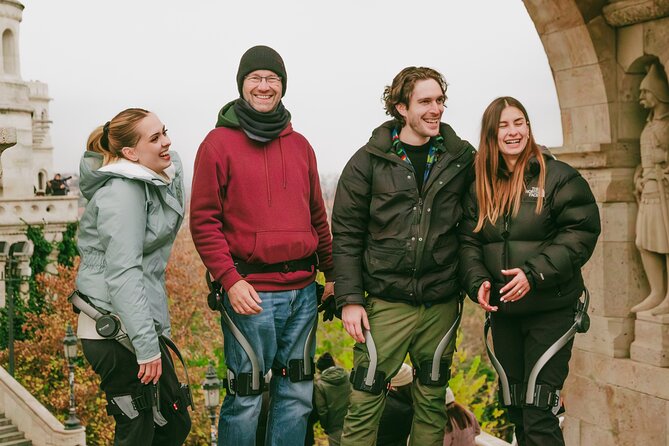
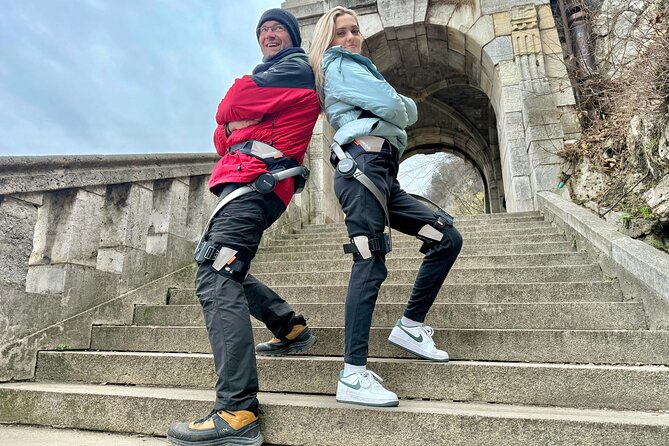
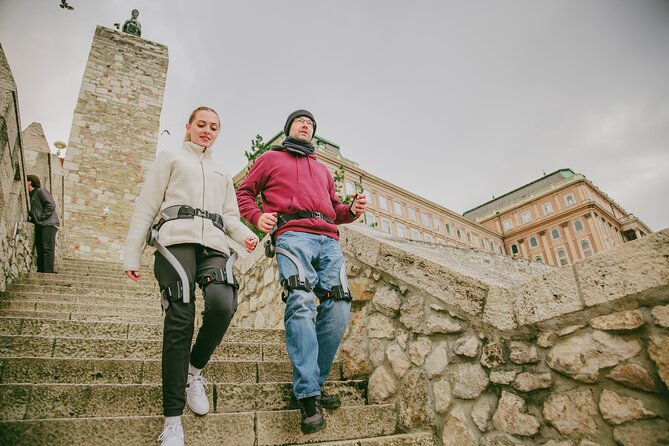
Hills feel different when your legs get powered. This world-first exoskeleton city walk uses an Electric Hypershell setup to give you torque-assist support on Budapest’s steeper climbs, while you chase top viewpoints like Gellért Hill and the Castle area with a very sci-fi vibe.
I especially love how the exoskeleton makes the walk feel natural, not like you’re being hauled around.
What I love most, though, is the combo of small-group pacing and included guide-taken photos, so you can focus on the views instead of fiddling with your camera. A potential drawback: the experience has clear limits, so it is not suitable for pregnant women, people with heart problems, or wheelchair users.
In This Review
- Key takeaways before you go
- Why the Hypershell exoskeleton makes this city walk worth your time
- The 2.5-hour route: from Várkert rkp. 16 to Buda Castle viewpoints
- Gear-up at E-Magine Rides Store, then a safety-first fitting
- Gellért Hill (1 hour): your first big “wow” moment
- Fisherman’s Bastion (15 minutes): quick photos and a lighter approach
- Matthias Church (15 minutes): a focused stop, not a rushed sprint
- Chain Bridge (10 minutes): a quick pivot in scenery
- Castle-bazaar (10 minutes): closing the circuit around the Castle area
- The big thing the tour gets right: you stay active, not just assisted
- What the guide does for you, beyond pointing the way
- Small group size changes the whole vibe
- Price and value: what you get for about $48
- Who this Budapest exoskeleton city walk is best for
- Booking and timing notes that help you enjoy the ride
- Should you book this exoskeleton city walk?
- FAQ
- Where is the meeting point and where does the tour start?
- How long is the exoskeleton city walk?
- Is the tour guided, and what language is it in?
- How many people are in the group?
- What’s included in the price?
- What should I bring with me?
- Who is the tour not suitable for?
- Is personal travel insurance included?
- Can I cancel for a refund?
Key takeaways before you go
- World-first powered city climbing in Budapest with torque-assist support for hills
- Hypershell exoskeleton + AI support modes that aim to match your needs as you walk
- Photo stops built into the route, and your guide takes photos for you
- Gellért Hill and Castle Hill area viewpoints, with enough time to slow down and enjoy
- Small group size (max 8) for calmer check-ins during fitting and breaks
More of Pest crossed at walking pace:
- Budapest: Buda Castle Walk with Saint Stephen’s Hall
★ 4.5 · 3,012 reviews - Big Bus Budapest Hop-On Hop-Off Bus and Walking Tour
★ 3.5 · 2,206 reviews - Budapest: Buda Castle District Walking Tour
★ 4.6 · 2,108 reviews
Why the Hypershell exoskeleton makes this city walk worth your time
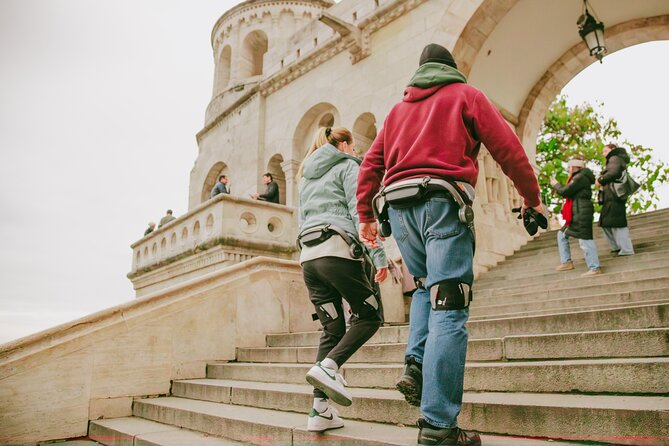
Budapest is one of Europe’s great walking cities, but the Buda side comes with payback hills. This tour solves that problem with wearable robotics that support your legs while you keep walking. You’re still active, but the steep parts feel less like a battle and more like a challenge you can enjoy longer.
The biggest practical win is how you get access to viewpoint energy without turning your day into a recovery session. The route is built around higher lookout points, and the exoskeleton support makes it realistic to cover them while keeping your legs fresher for the rest of your day.
It also has a rare kind of fun. This isn’t a staged theme-park gimmick. The vibe is tech-curious and playful, but the foundation is still a standard guided sightseeing walk with short stops. If you’re the type who likes experiences that feel a bit futuristic while still getting real travel moments, this hits the mark.
The 2.5-hour route: from Várkert rkp. 16 to Buda Castle viewpoints
The total time is 2.5 hours, and the itinerary is structured as a series of photo stops and brief guided visits. That matters because it keeps the pacing from dragging. You’re not stuck on long stretches of steep climb with no breaks, and the tour gives you time to look around instead of power-walking through everything.
The route starts and finishes around Várkert rkp. 16, with the key stops spread across Buda’s classic sights. The highlights are hill viewpoints and Castle-area scenery, plus a few central icons that reset the scenery from hilltop to city panorama.
Even with the power assist, you’ll feel like you’re walking a real sightseeing loop. It is not described as a lazy ride. Expect to spend real time on your feet, just with support that reduces strain on steeper sections.
Gear-up at E-Magine Rides Store, then a safety-first fitting
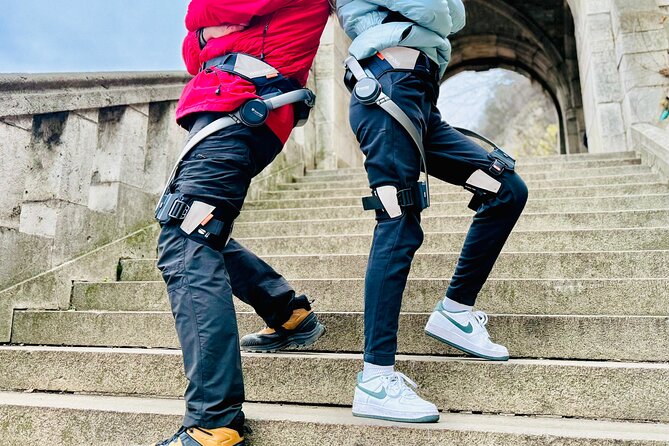
Before you head out, you get the part that makes the whole experience work smoothly: fitting, testing, and a safety briefing. The tour includes the exoskeleton device itself, plus the help of a professional, certified local guide.
From a rider perspective, this is not a quick grab-and-go. The fitting and testing step is what helps you feel in control from the first meters. When you understand how the support feels and how to move in it, you stop thinking about the technology and start thinking about the city again.
You’ll also get an English-speaking guide, which is a big deal here. Exoskeleton use is physical, and clear instructions help you stay comfortable and confident as you transition between flat stretches and hill climbs.
Gellért Hill (1 hour): your first big “wow” moment
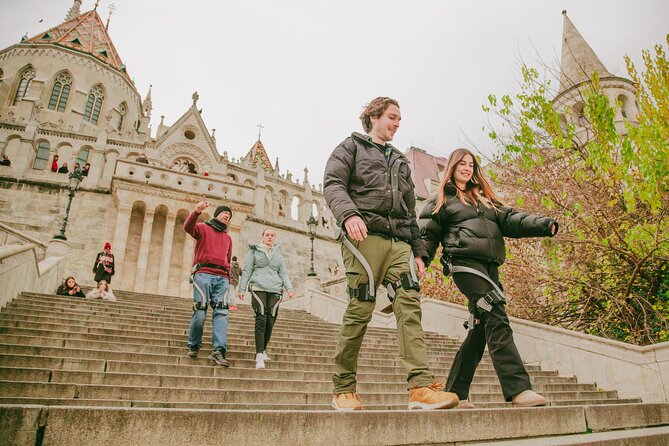
Gellért Hill is the tour’s main opening test, and that’s a smart choice. It’s also where the exoskeleton’s benefits become obvious fast. The plan here is a photo stop plus a guided tour, for a full hour.
This is the segment where you’re most likely to feel the difference between normal walking and powered support. The description of “conquer hills with ease” is not vague. The point is that steep walking becomes much more manageable, so you can keep your energy for viewpoints instead of spending it all on the climb.
Practical tip: treat the first climb as a warm-up. You want your body to learn how to step with the support on, and you want to build trust before you go higher. If your guide checks your comfort and pace at the beginning, listen and adjust right away.
Other circuits taking both banks in one go:





Fisherman’s Bastion (15 minutes): quick photos and a lighter approach
Next up is Fisherman’s Bastion, with a short photo stop and guided sightseeing, plus a brief walk that includes scenic views along the way. The time is tight on purpose, about 15 minutes.
This is where the exoskeleton changes your options. Without support, steep approaches can limit how long you linger. With support, you can spend more of your time looking and less time bracing yourself for the next uphill patch.
Because it is a short stop, focus on the photos and the guided context. Don’t turn it into a long solo wander, unless your group pace allows it. The tour works as a series of quick wins, and this is one of them.
Matthias Church (15 minutes): a focused stop, not a rushed sprint
Then comes Matthias Church for another brief visit and guided sightseeing, about 15 minutes. Again, it’s short, but the stop is paired with photo time and guidance.
A helpful way to think about this section is as a mental reset. You’re moving between hill energy and classic landmark focus. Even with the exoskeleton, your legs still get a workout from walking, so these short landmark pauses are valuable for both attention and recovery.
If you like to read details slowly, do it here. The guided component is the time to ask quick questions, because later stops go even faster.
Chain Bridge (10 minutes): a quick pivot in scenery
Chain Bridge is next for a photo stop, guided tour, and sightseeing, around 10 minutes. This stop is brief, which makes sense in a 2.5-hour loop.
What I like about this structure is that the bridge stop helps you connect the whole Budapest story. You’re not just stuck on hilltops. You get a quick central-sight moment, which helps your brain map the city while you keep moving.
Since this is a short window, plan your photos quickly. Use the guide’s instructions for angles and timing, then keep walking with the group. The tour is built to flow, not to pause for long stretches.
Castle-bazaar (10 minutes): closing the circuit around the Castle area
The final sightseeing stop is Castle-bazaar for about 10 minutes, with a photo pause, visit, and guided sightseeing.
This is the wrap-up section, and it matters because it anchors the whole exoskeleton idea. The powered walking is at its best when it lets you reach the Castle Hill area with enough energy to actually enjoy it.
You’ll likely feel the “I can’t believe I’m actually doing this” effect here, described in the tour experience style: the idea that the climbs felt manageable enough that you’re surprised by your own stamina. That can be motivating if you came into Budapest planning a lot but worrying about getting worn out.
The big thing the tour gets right: you stay active, not just assisted
A lot of “tech tourism” can feel like you’re watching something happen to you. This one is different. Even though the exoskeleton provides support, you are still walking the city. The goal is to keep you fully active while reducing fatigue on steep climbs.
The exoskeleton is described as having AI-powered support that adjusts modes and assistance levels based on your needs. In plain terms, the system is meant to feel natural rather than harsh or sudden. That’s exactly what you want for a sightseeing walk, because your attention should stay on streets, stops, and viewpoints, not on wrestling the gear.
Also, there’s a psychological trick to the experience that’s worth knowing. Once you finish, walking without the support can feel harder than you expected. That’s not a bad sign. It usually means you got real benefit from the powered support during the tour.
What the guide does for you, beyond pointing the way
This experience includes photos taken by your guide, and that makes a real difference. You don’t need to plan photo runs between group pauses. You can use the stops for looking and stepping into position, then let someone else handle the capture.
The guide also plays a safety and comfort role. You’re dealing with wearable robotics, so it helps to have someone who checks how you’re feeling at transitions. One guide name that shows up in descriptions is Gabor, noted for keeping track of comfort and pace during climbs. That kind of active check-in is exactly what you want in a small group.
In practical terms, the guide’s job is to keep the tour moving at a pace where the exoskeleton feels like help, not like a distraction.
Small group size changes the whole vibe
This is limited to 8 participants, which is a sweet spot for an experience like this. It keeps the fitting and explanation time from feeling chaotic. It also gives your guide a realistic chance to adjust pacing when someone needs a pause.
With a smaller group, photo stops are less crowded and easier to manage. That’s useful on viewpoint-heavy routes, where your best angle depends on where everyone stands.
The result is a tour that feels like a guided walk with tech help, not a mass operation. If you like personal attention, this size matters.
Price and value: what you get for about $48
At $48 per person for a 2.5-hour experience, you’re paying for more than a normal guided walk. You’re getting the exoskeleton rental, the professional certified guide, and the fitting, testing, and safety briefing, plus photo capture.
So the value isn’t just the distance covered. It’s the fact that the price covers gear and guidance in one package. If you wanted to recreate this on your own, you would likely spend time and money lining up equipment, then figure out how to use it safely.
This tour also buys you extra comfort on hills. That can turn a “we’ll see what we can manage” day into a “we actually reached the viewpoints and still felt okay” day. When a tour helps you do more of the sightseeing you came for, the value becomes easier to justify.
Who this Budapest exoskeleton city walk is best for
You’ll probably love it if you fit one of these profiles:
- You want classic Budapest viewpoints but you hate getting wiped out by steep climbs
- You’re tech-curious, and you enjoy trying “real world” sci-fi gadgets
- You like guided sightseeing with short stops and photo opportunities
- You prefer small groups and direct guidance rather than large crowds
It may feel like the wrong fit if you strongly dislike physical gear adjustments, or if you’re not comfortable following equipment instructions. The tour is also explicitly not suitable for pregnant women, people with heart problems, and wheelchair users, so be sure to check suitability before you book.
Booking and timing notes that help you enjoy the ride
This experience runs for about 2.5 hours, so it fits well into a half-day planning block. If you schedule it in the middle of your day, plan the rest of your itinerary with the idea that you might still want an easy pace after.
You get an English live tour guide, and the start point is around E-Magine Rides Store at Várkert rkp. 16. Wear comfortable shoes and comfortable clothes, and dress for the weather. Since you are physically walking, weather-appropriate layers are your friend.
Should you book this exoskeleton city walk?
I’d book it if your main Budapest goal is viewpoints on the Buda side and you want a fun way to make hills feel manageable. The strongest reasons are the powered support for steep sections, the included photo help, and the small group size that keeps the experience calm.
Skip it if you fall into the listed unsuitability categories, or if you don’t want any wearable tech as part of your sightseeing. If that’s not you, this is one of those rare tours that feels like a smart way to see more, with a genuine wow factor built into the walking itself.
FAQ
Where is the meeting point and where does the tour start?
The meeting point is at E-Magine Rides Store. The tour start location is listed as Várkert rkp. 16.
How long is the exoskeleton city walk?
The duration is 2.5 hours.
Is the tour guided, and what language is it in?
Yes, it includes a live tour guide, and the language is English.
How many people are in the group?
The tour is a small group with a maximum of 8 participants.
What’s included in the price?
Included items are the Electric Hypershell exoskeleton, a professional, certified, local guide, fitting, testing, and a safety briefing, a guided small-group city adventure, and photos taken by your guide.
What should I bring with me?
Bring comfortable shoes and comfortable clothes, and wear weather-appropriate clothing.
Who is the tour not suitable for?
It is not suitable for pregnant women, people with heart problems, or wheelchair users.
Is personal travel insurance included?
No. Personal travel insurance is not included.
Can I cancel for a refund?
Yes. You can cancel up to 24 hours in advance for a full refund.
Newest from the Danube banks
- Gödöllö Royal Palace Privately with full board★ 5.0 · 1 review
- Private Budapest Tour with Thermal Bath or Market Visit★ 5.0 · 1 review
- Private Budapest walking tour – 4 hours★ 5.0 · 1 review
- Budapest Half Day Car Tour with Guide★ 5.0 · 1 review
- Budapest Private Transfer from Budapest city centre to Budapest Airport★ 3.0 · 1 review
- Magic Theme Team Adventure Game in the Streets of Budapest★ 5.0 · 1 review
- Budapest: Eat the Street, food tour with wine, 16+ tasting★ 5.0 · 1 review
- Private Transfer Budapest Airport BUD to Budapest by Car or Van★ 5.0 · 1 review
City Tours, compared.

Budapest: City Highlights Sightseeing Cruise
Read our review →
Budapest: Nighttime or Daytime Sightseeing Cruise
Read our review →
Budapest: By Night Sightseeing Cruise with Welcome Drink
Read our review →
Budapest: 1-Hour Evening Sightseeing Cruise with Drink
Read our review →
Budapest: City Sightseeing Hop-On Hop-Off Bus Tour & Extras
Read our review →
Budapest Danube River Sightseeing Night Cruise with Drink
Read our review →
Budapest: Premium Sightseeing Cruise with Tokaj Frizzante
Read our review →Browse the lists this tour appears in