
Reviewed · DANUBE SIGHTSEEING CRUISES
Budapest Night Tour in Spanish and Danube Boat Ride (optional)
Night in Budapest is when the city feels most cinematic. This Spanish-guided Budapest night tour turns the big icons into a story, starting at St. Stephen’s Basilica and working outward into the squares and monuments that define modern Hungary. I like that it is practical and walkable, and that you learn what you are looking at instead of just snapping photos.
You will also get real “see it from the water” value with the optional Danube boat ride, using headphone audio as you pass major sights on both banks. The one thing to consider is the cruise can feel more view-led than explanation-led, since the experience relies heavily on audio rather than onboard visuals.
In This Review
- Key Points to Know Before You Go
- Nightfall in Budapest: why this route feels different
- Meeting at Szent István tér, right where the lights start
- St. Stephen’s Basilica at night, and why the first stop matters
- The Policeman stop: public art that makes you look twice
- Szabadság Square and Liberty Square, where the monuments come with controversy
- Parliament area sights: Imre Nagy, Rákóczi II, and the questions you will feel
- Finishing on the Danube bank, with bridges as your visual map
- Optional Danube cruise: panoramic sights, headphone audio, and seat choice
- Price and value: what you get for $14
- Practical details that affect your night (and your comfort)
- Who this tour is best for
- Should you book this Budapest night tour?
Key Points to Know Before You Go
- Spanish-speaking guide keeps the walk easy to follow, with context for the main illuminated sights
- Start at St. Stephen’s Basilica (Szent István tér), a night-friendly anchor right in the center
- Szabadság Square and Liberty Square monuments are the tour’s most thought-provoking stops
- Parliament area plus Imre Nagy and Rákóczi II helps you connect people to places
- Optional Danube cruise adds wide panoramic views of both sides of Budapest
- Headphones are important, and the boat portion offers covered and uncovered seating
More boats along the Danube:
- Budapest: City Highlights Sightseeing Cruise
★ 4.6 · 43,981 reviews - Budapest: Unlimited Prosecco, Beer and Aperol Spritz Cruise
★ 4.8 · 37,304 reviews - Budapest: Nighttime or Daytime Sightseeing Cruise
★ 4.2 · 21,062 reviews
Nightfall in Budapest: why this route feels different
Budapest after dark is not just lights. It is also perspective. The same buildings and statues that can feel like background noise in daylight turn into landmarks with mood, scale, and story once the city glows gold.
This tour is built for that night effect. The walking route focuses on the main lit highlights in the Pest area, then finishes on the Danube so you can switch from walking views to long-water panoramas. If you pick the boat option, you see Budapest from the river, where the city lines up in a way it never does on land.
The price also makes the timing easier to justify. At $14 per person, you are mostly paying for a guide, a structured route, and the built-in timing for a nighttime circuit. Since monument tickets are not included, it stays lightweight and good for travelers who want context without stacking extra costs.
Meeting at Szent István tér, right where the lights start
You begin at Szent István tér, next to the obelisk between the Basilica and Starbucks. The guide shows up with a teal flag labeled Paseando por Europa, so you can confirm you are in the right place fast.
Arrive 15 minutes early. This is not negotiable, and it matters because night tours run on tight schedules once everyone is gathered. Being on time keeps the group together and prevents the guide from rushing the first stops.
If you have headphones, bring them. The tour specifically asks you to have headphones, and the boat audio is delivered through headphones as well.
St. Stephen’s Basilica at night, and why the first stop matters
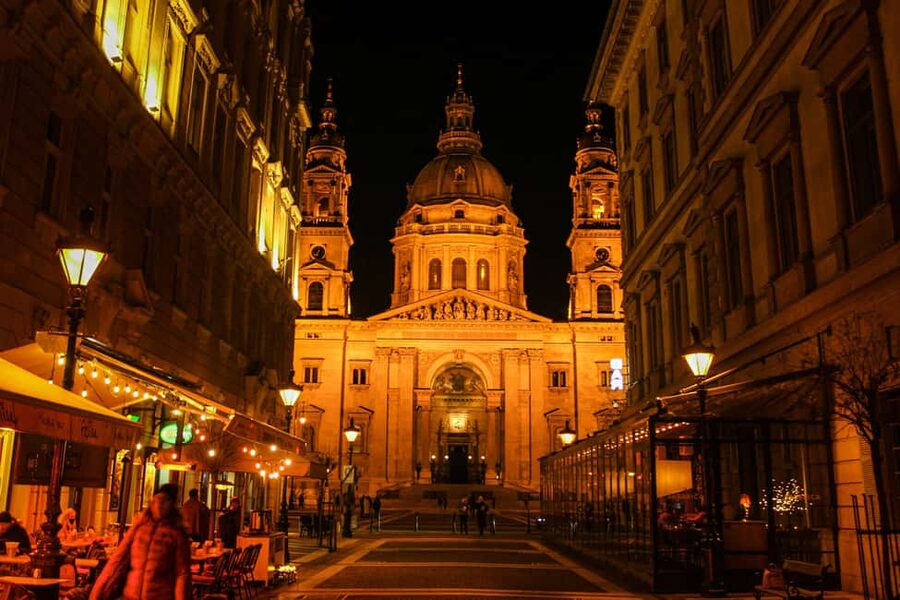
You kick things off at St. Stephen’s Basilica, dedicated to King Stephen I and presented as Hungary’s patron saint. Starting here is smart because it gives you a clear landmark to orient around immediately, and it also sets the tone for the rest of the walk.
In daylight, a church like this can feel like just a building you pass. At night, the lighting makes the façade and dome read differently, and the guide’s framing helps you understand why it matters nationally. Even if you do not go inside, the exterior stop is part of the tour’s storytelling engine.
From there, you move on to other central points where architecture, monuments, and public art start to connect with the country’s more recent history.
The Policeman stop: public art that makes you look twice
One of the scheduled stops is The Policeman, Budapest. That might sound like a random name, but in a nighttime tour it is a useful kind of break. Statues and sculptures like this are often ignored during daytime sightseeing, because people think they are either obvious or unimportant.
Your guide’s narration helps you treat it as a clue, not a photo prop. You get a chance to slow down, read the details, and use the night lighting to pick up shape and placement in the square.
This kind of stop is a big reason I like walking tours. You can skip it and still see Budapest, but you would lose the chance to understand what you are seeing.
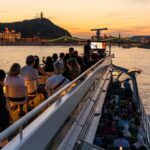
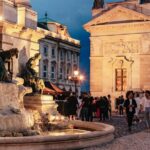
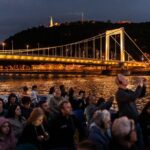
More of Budapest once the bridges light up:


Szabadság Square and Liberty Square, where the monuments come with controversy
The tour goes into Szabadság Square and Liberty Square, and this is where it becomes more than pretty lights. These areas are full of memory work, including monuments described as controversial within the narrative the guide shares.
At Liberty Square, you will learn about monuments tied to the Victims of the German Occupation and the Soviet Memorial. That is not “extra trivia.” It changes how you read the space. Instead of seeing concrete forms, you see a message meant to last, and you understand why people still react to those messages.
This is also where the tour leans into the theme of the country’s most recent history. Hungary’s public spaces do not just commemorate. They argue, reflect, and remind.
If you are the type who likes history without turning it into a lecture, this is the sweet spot. The guide keeps the focus on what is visible, while giving you enough context to make the monuments intelligible.
Parliament area sights: Imre Nagy, Rákóczi II, and the questions you will feel
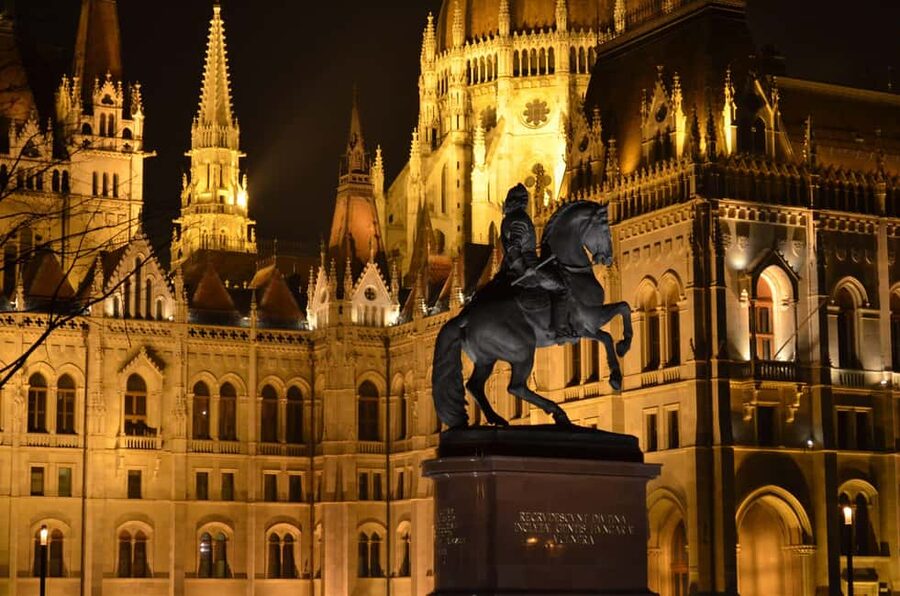
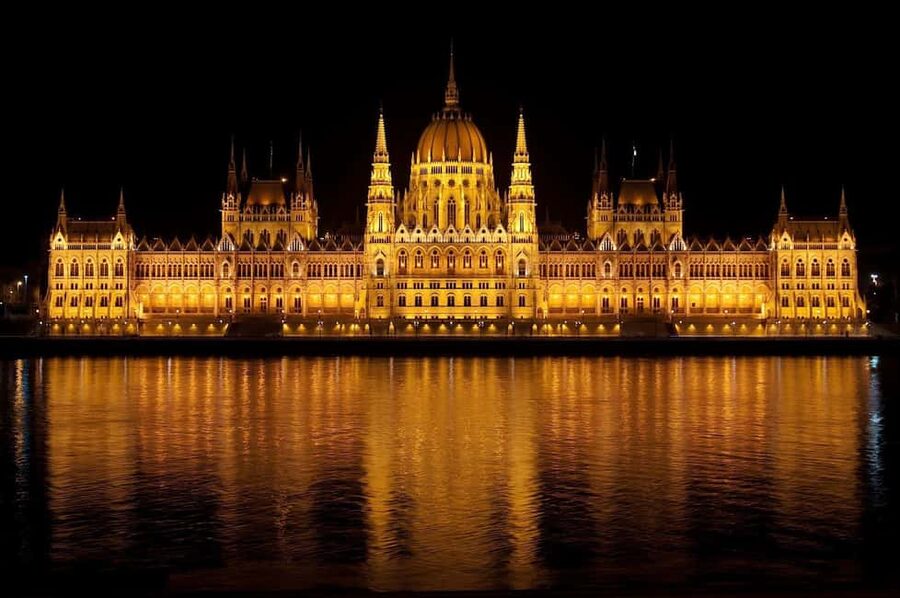
Near the Hungarian Parliament, you learn about key figures such as Imre Nagy and Rákóczi II. The tour specifically calls out the controversy surrounding the Monument of National Unity and the peculiarities of the equestrian statue of Rákóczi II.
That combination is why this walk works so well at night. When landmarks are lit, you notice silhouettes and scale, and the guide’s explanation helps those visible shapes become meaning. The Parliament area can look like a postcard, but the tour nudges you past the postcard and into the “why” behind the setting.
Imre Nagy is framed as symbolic for Hungarian society in the way the guide connects his story to what you are seeing. You are not just collecting names. You are learning the human layer behind the monuments.
Also, watch for the equestrian statue details. The tour notes that there are peculiarities worth paying attention to, and your guide will point them out so you do not miss the nuance.
Finishing on the Danube bank, with bridges as your visual map
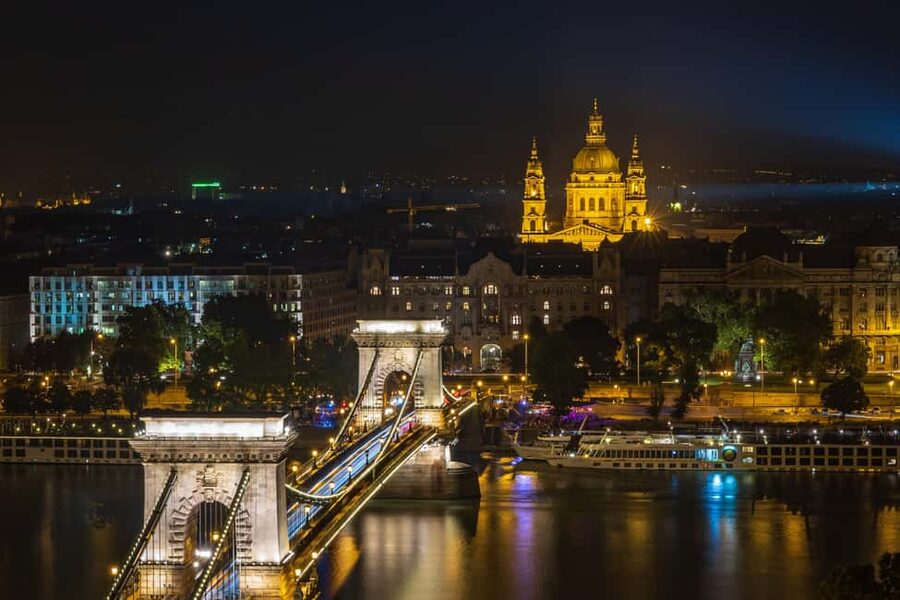
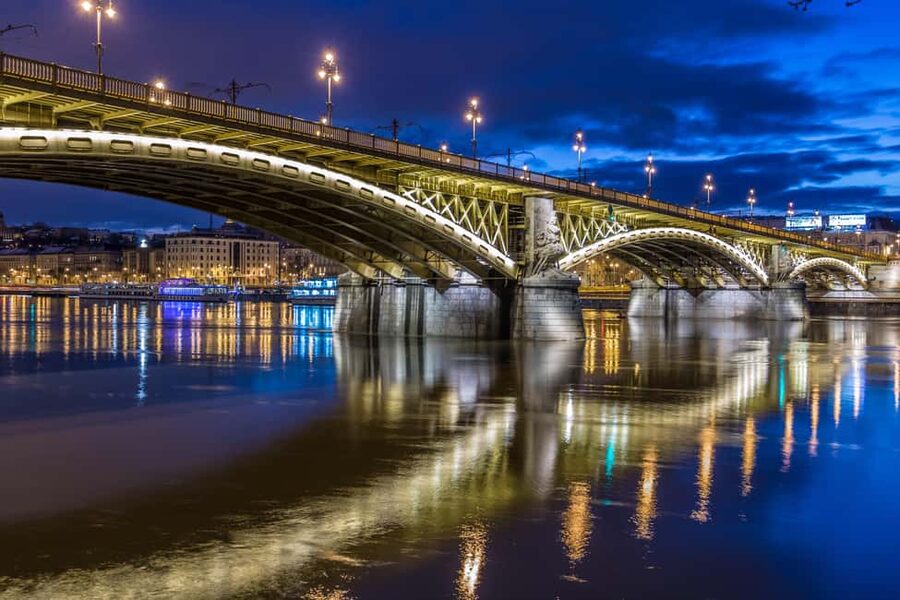
Your walking tour culminates on the banks of the Danube River, and you make at least one important bridge stop along the way, including Margaret Bridge. Bridges are not random add-ons here. They act like visual routing, showing you how Pest and Buda relate and how the city’s major landmarks line up across the water.
This is the moment when the tour design really clicks. You go from walking near monuments to standing where you can look at the river and imagine the same views from a boat.
If you are choosing the cruise, this ending is a built-in preview. It helps you recognize what you will see next, so the boat does not feel like a separate experience. It feels like the next chapter of the same night.
Optional Danube cruise: panoramic sights, headphone audio, and seat choice
If you add the Danube boat ride, it is about an hour on the water, assuming service availability. This is the best add-on for people who want wide perspectives and symmetry, the kind you just cannot get from the sidewalk.
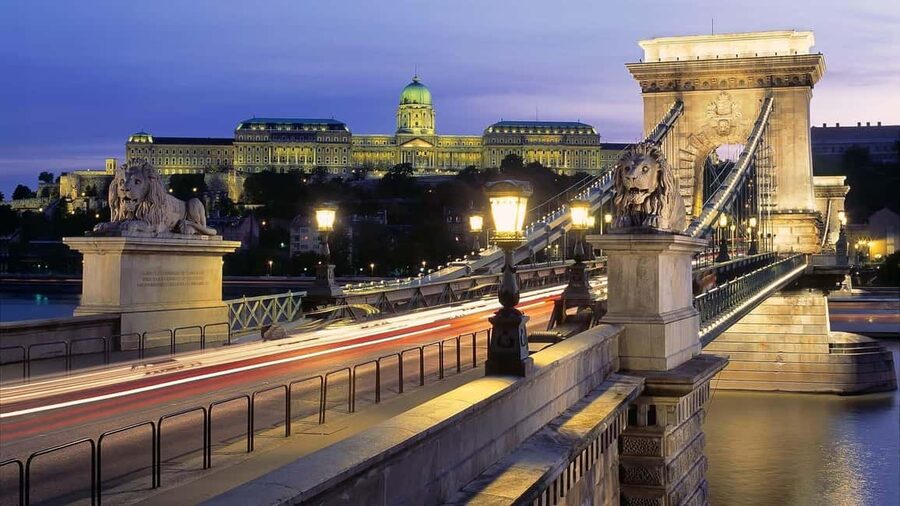
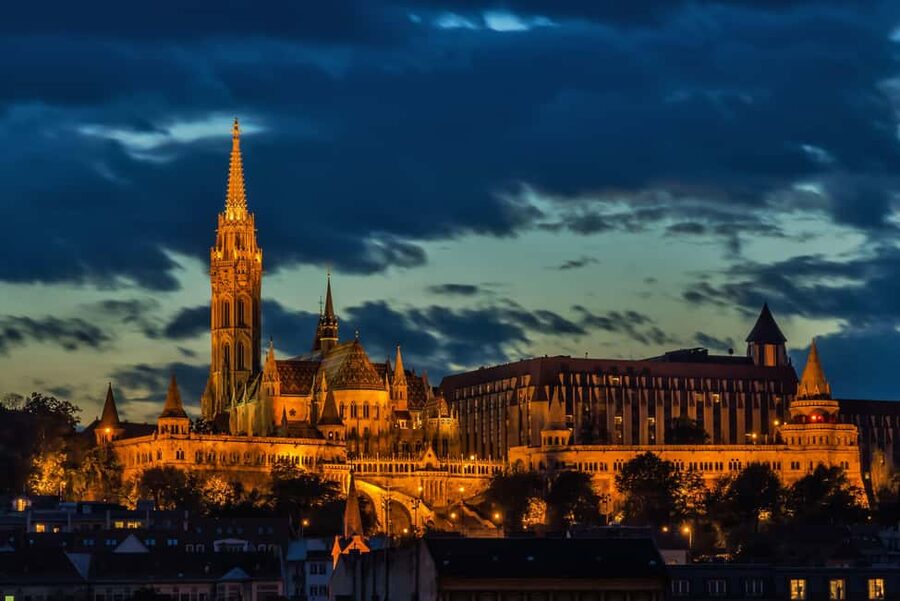
The cruise route is packed with major illuminated landmarks on both banks, including the Budapest Parliament, Fisherman’s Bastion, the Chain Bridge, Buda Castle, and Gellért Hill among others. That list tells you the intent: you are not doing a short loop for the sake of it. You are doing a “see it all at once” night moment.
There is audio as well. During the boat ride, you use headphones and access the audio guide through laperlapp.com. The tour also notes that the boat has covered and uncovered options, so you can choose based on how you handle cold and wind.
One consideration from a prior experience is that some people may expect more onboard visuals and find the experience more audio-focused. If you prefer a lot of live narration or screen-based explanations during the cruise, you might want to plan your expectations around the headphone audio and the view doing most of the work.
Price and value: what you get for $14
At $14 per person, this tour is positioned as a low-cost way to get structured night sightseeing with a Spanish-speaking guide. You are paying for guidance and a route that hits the most central illuminated areas without requiring you to plan the connections yourself.
What you get included is straightforward:
- Official Spanish-speaking guide
- Walking tour
- Boat ticket only if you choose the cruise option
Not included keeps the cost down:
- Transport
- Food and drinks
- Tickets to monuments
That matters if you are trying to manage your total budget. This tour is most valuable when you treat monuments as photo and context stops, not as paid attractions you stack during the same evening.
Practical details that affect your night (and your comfort)
Night tours go smoother when you handle the basics up front. Here is what I would plan around.
First, be punctual. The guide needs everyone to arrive, and the group has to move through the city without delays. The meeting point is in a busy area, so give yourself time to find the obelisk, then the teal flag.
Second, bring headphones. The tour specifically calls this out, and the boat portion uses headphone audio during the cruise.
Third, plan for weather. The tour does not cancel just because it rains, so comfortable layers and a small rain plan can make a big difference. Since you are outside on the walk and then on the boat, being prepared keeps the night from feeling cold and uncomfortable.
Fourth, the boat depends on availability. If the cruise is important to you, it is smart to book when you have some flexibility.
Finally, the tour is wheelchair accessible. That is a helpful factor if you need an accessible night plan in a central area.
Who this tour is best for
This is a strong fit if you:
- want a Spanish-guided night walk that explains what you are seeing
- like big-city illumination, plus public monuments with meaning
- want the option to add a Danube cruise for panoramic views
- prefer guided structure over trying to stitch the stops together on your own
It may be less ideal if you:
- expect lots of onboard visuals during the cruise rather than headphone audio
- want a tour that includes entrance tickets to major monuments
If you like your sightseeing with context, this one hits a nice balance. It takes you through the central highlights while still talking about controversial monuments and the figures tied to them.
Should you book this Budapest night tour?
I would book it if your goal is simple: see Budapest at night with a guide who can explain the landmarks as you go, then add the Danube cruise if you want the wide-water perspective. The meeting point is easy to find, the route is built around central illuminated sights, and the optional boat ride is the kind of add-on that often turns a good evening into a memorable one.
Skip it or adjust expectations if you are hoping for a boat experience that is heavy on screens and constant live commentary. Here, the emphasis is on the views and the headphone audio.
If you are traveling in Spanish or want the clarity a Spanish guide gives you at night, this is a practical value pick at $14. Just show up on time, pack your headphones, and decide in advance whether you want the covered seat on the boat.
Newest from the Danube banks
- Gödöllö Royal Palace Privately with full board★ 5.0 · 1 review
- Private Budapest Tour with Thermal Bath or Market Visit★ 5.0 · 1 review
- Private Budapest walking tour – 4 hours★ 5.0 · 1 review
- Budapest Half Day Car Tour with Guide★ 5.0 · 1 review
- Budapest Private Transfer from Budapest city centre to Budapest Airport★ 3.0 · 1 review
- Magic Theme Team Adventure Game in the Streets of Budapest★ 5.0 · 1 review
- Budapest: Eat the Street, food tour with wine, 16+ tasting★ 5.0 · 1 review
- Private Transfer Budapest Airport BUD to Budapest by Car or Van★ 5.0 · 1 review
Danube Sightseeing Cruises, compared.
Budapest: City Highlights Sightseeing Cruise
Read our review →
Budapest: Unlimited Prosecco, Beer and Aperol Spritz Cruise
Read our review →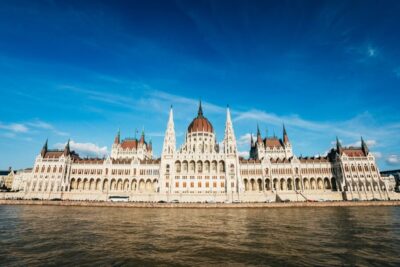
Budapest: Nighttime or Daytime Sightseeing Cruise
Read our review →
Budapest: By Night Sightseeing Cruise with Welcome Drink
Read our review →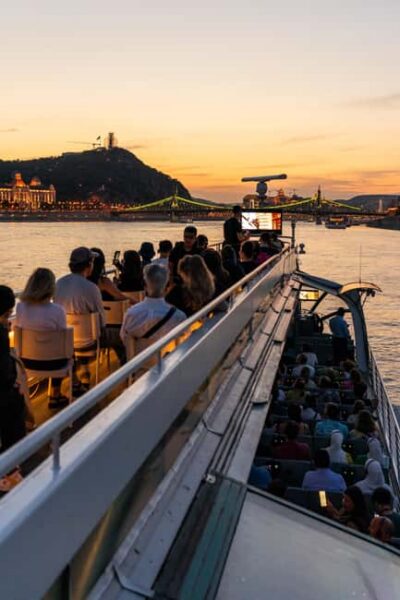
Budapest: 1-Hour Evening Sightseeing Cruise with Drink
Read our review →
Budapest Danube Cruise and Dinner Options, Live Music and Dance
Read our review →
Budapest: Evening Cruise including Drink Options
Read our review →
Browse the lists this tour appears in