Reviewed · GUIDED
Budapest: Official Guided Tour of the House of Music,Hungary
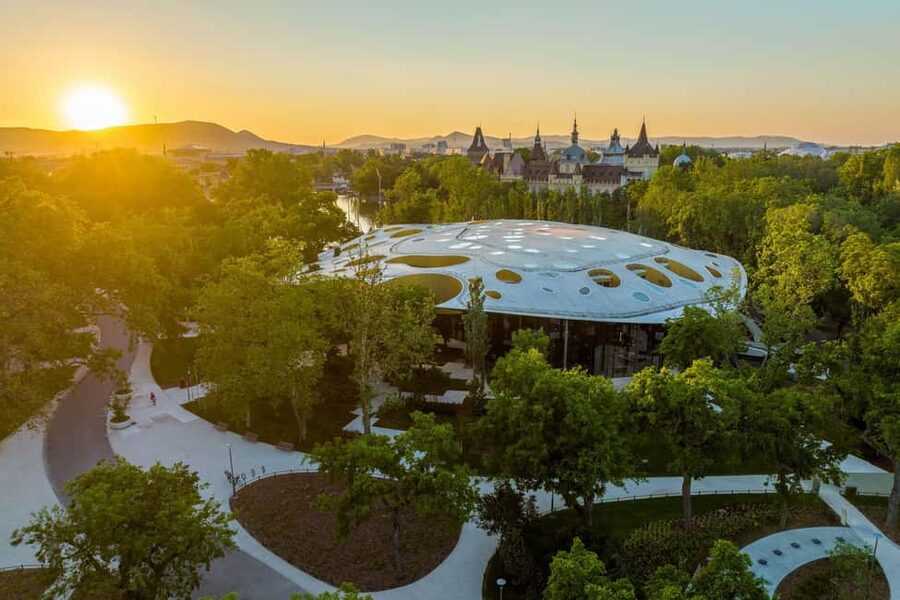
Budapest has a music building that you can feel. This guided tour is all about the House of Music’s architecture and how it flows with City Park. I especially love the undulating, leaf-like metal roof outside and the way the interior uses glass to pull the park into your view. One thing to consider: this is a design-first tour, so if you want exhibitions, the most hands-on areas are not part of this ticket.
You start in the foyer and move through the big, bright public spaces where sound and materials are explained in plain terms. If you are lucky, the guide may even point out a rehearsal moment happening in the background, which turns the acoustics talk into something you can hear. I do think the one-hour format is tight, but it also keeps you focused on the best parts.
In This Review
- Key highlights you will care about
- Why this House of Music tour is worth your 1 hour
- Meeting in the foyer, then getting oriented fast
- Outside first: the undulating roof and leaf-like canopy
- Inside the glass volumes: the park comes in with you
- The spiral staircase: not just a route, a piece of art
- Concert hall and library areas: what you see, and what you cannot
- Acoustics talk that makes sense without a performance
- The building behaves like part of the park
- Sustainability features: geothermal and rainwater, explained simply
- Price, group size vibe, and how to time it
- Who should book this House of Music tour?
- Should you book this guided tour?
- FAQ
- How long is the House of Music guided tour?
- Where do I meet the guide?
- Is the tour offered in English?
- What is included in the tour?
- What is not included?
- Is the tour suitable for children?
- Are pets allowed?
- Is cancellation possible, and can I pay later?
Key highlights you will care about
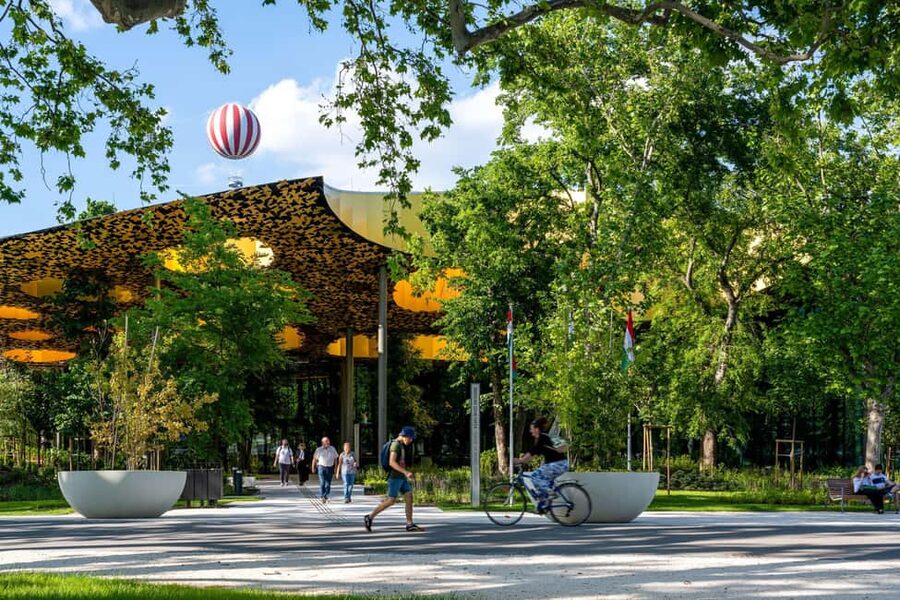
- Sou Fujimoto design, including the roof that looks like it is floating and the circular openings that change how you see the space
- A staircase that feels like sculpture, not just a way up
- City Park views inside and out, with glass walls that make you feel connected to the trees
- Acoustics explained through structure, so sound makes sense even without a live concert
- You can tour real spaces, like the concert hall and library areas, plus outdoor zones
- Sustainability details included, including geothermal energy and rainwater harvesting
Some other Danube days worth pricing up
- Budapest: Parliament Building Entry Ticket and Audio Guide
★ 4.5 · 3,844 reviews - Budapest: Guided Pub Tour to Ruin Bars with Games & 6 Shots
★ 4.7 · 1,641 reviews - Budapest: Opera House Guided Tour
★ 4.6 · 1,533 reviews
Why this House of Music tour is worth your 1 hour
The House of Music in Budapest is not your typical museum stop. It is architecture that treats music like a physical element. The guide helps you see why the building is shaped the way it is, why the materials feel warm instead of cold, and why the roof and plan matter for sound.
This tour is also good value for what it gives you. At about $13 for an English 1-hour guided visit, you are paying for expert interpretation of a famous building by Japanese architect Sou Fujimoto. That is a lot of context for one short session, especially if you are the type who likes to understand what you are looking at, not just snap photos.
The smart part is that you are not expected to wait around. You get a guided walk that points your eyes to specific design choices, from the roof outside to the glass and concrete inside. Then you get a clear idea of what the building is trying to do for music and community.
Meeting in the foyer, then getting oriented fast
Your visit begins inside the foyer. That matters because the foyer is not a bland waiting room. It is spacious, bright, and gives you a quick read on the building’s scale and flow. From there, the tour naturally moves outward toward the architecture and back inward toward the main public spaces.
The staff keep it simple: you follow the guide, you look where they point, and you stay in the areas you are allowed to enter. The tour is designed to be straightforward, with a live guide speaking English and a pace that works well for seeing the main elements without getting lost.
If you have mobility needs, this tour is listed as wheelchair accessible, so you can plan on moving through the spaces with assistance of your group and guide.
Outside first: the undulating roof and leaf-like canopy
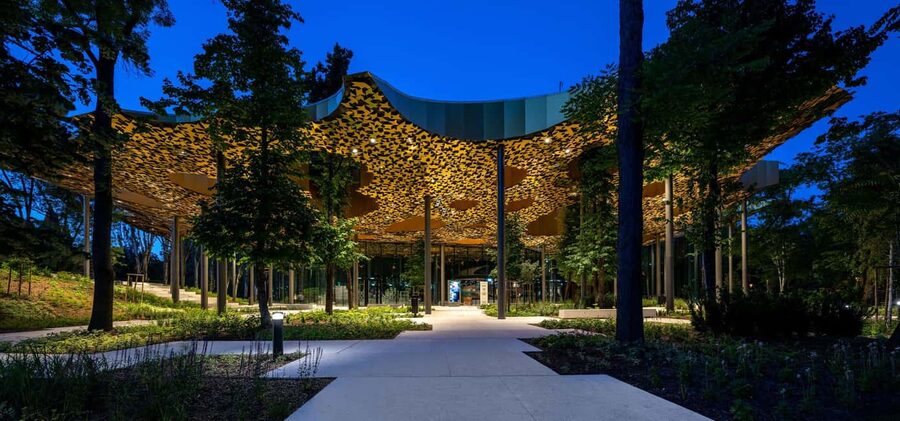
The best cold open is stepping outside and seeing the undulating roof. It looks sculptural, like a wave caught in metal. Your guide will point out how the roof is made of thousands of leaf-like elements, creating that canopy effect.
This is where the building’s design logic starts to click. The roof is not only for looks. The guide ties it to acoustics and natural light, explaining how the structure shapes what you hear and how the building breathes with daylight. Even if you do not know acoustics vocabulary, you will leave understanding the basic idea that form affects sound.
You might also notice circular openings called out during the walk. They are small details, but the guide’s explanations help you see them as part of the overall acoustic and visual rhythm, not random decoration.
Inside the glass volumes: the park comes in with you
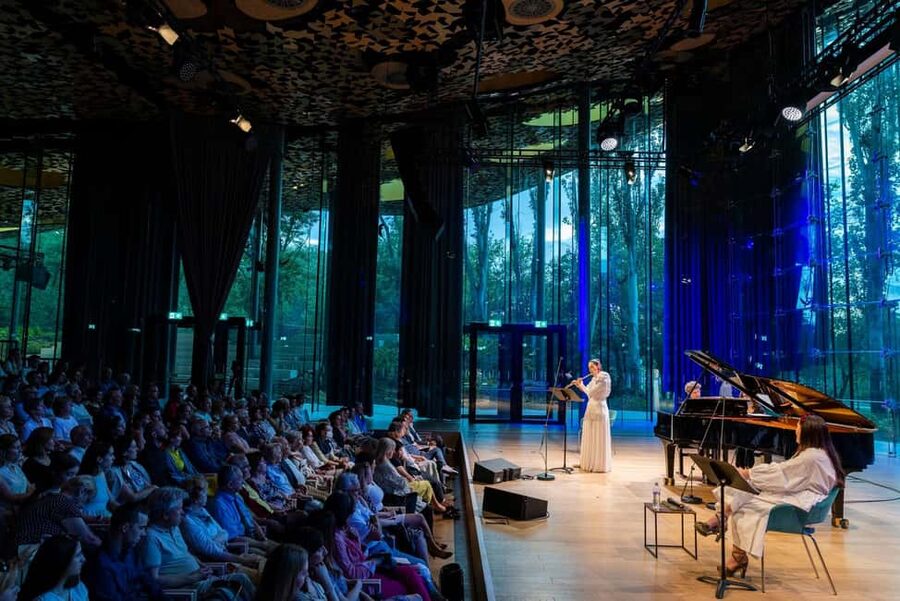
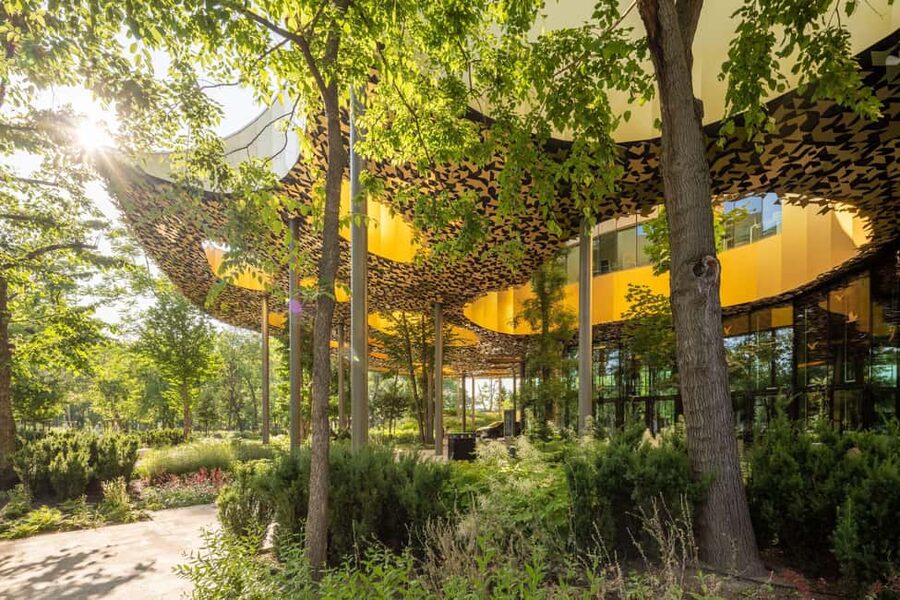
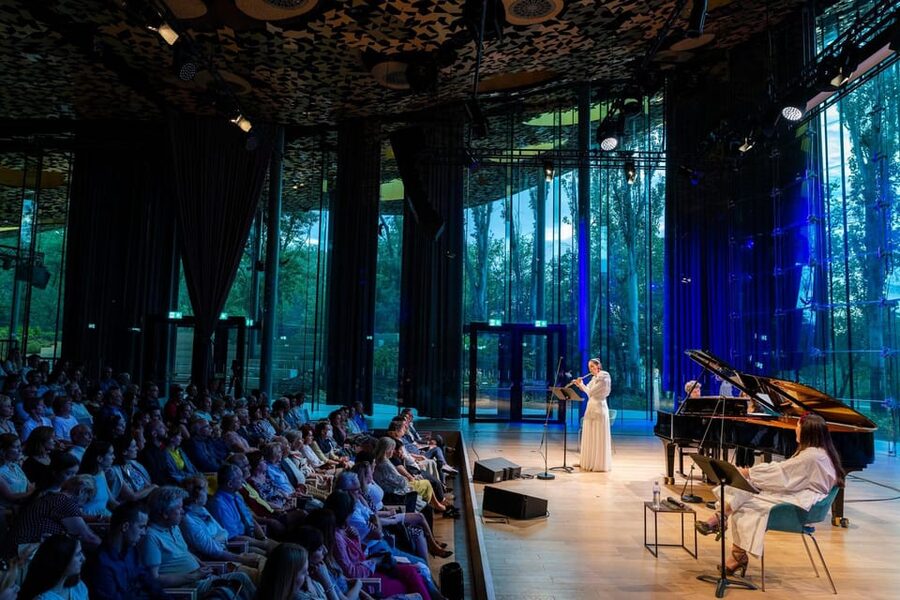
Once you enter, the tour shifts from exterior drama to interior clarity. Expect open spaces, lots of glass, and views that keep pulling your attention outward. The building’s layout is designed so you feel like the park is part of the interior experience.
A guide will typically point to the warmth in the materials too. You will see exposed concrete surfaces and wooden elements that help the space feel inviting. This contrast is important: concrete can feel harsh in museums, but here the warmth of wood and the spread of light keeps it human.
You also get a sense of how the building is meant to be used. The guide explains the different levels and open areas that support community engagement and music education. Even without exhibition access, you still learn how the building functions as a learning and gathering place.
Other ways an evening in Budapest can go:





The spiral staircase: not just a route, a piece of art
One of the most loved moments is the impressive spiral staircase. This is not only a climb. It is a visual event. As you move, the staircase helps you understand the building’s geometry and how different areas connect.
In practice, this stop is great because you get a chance to slow down. The guide can walk you through what makes the staircase special: its sculptural quality, its role in guiding movement, and how it fits into the building’s overall design language.
If you like architecture, this is a prime photo moment. If you are not an architecture person, it still works because it is dramatic and easy to appreciate without technical background.
Concert hall and library areas: what you see, and what you cannot
This tour includes a look at several real program spaces. You can expect a visit to the concert hall, plus access to areas described as the library and archives. There are also mentions of outdoor spaces and time at the gift shop.
This is a key point for planning your expectations. The tour does not include entry to exhibitions, and it also excludes specific interactive areas such as the Sound dome and the Creative sound space. So you will not get the full museum experience in this one-hour guided format.
Still, the included spaces matter. Seeing the concert hall and being guided through how sound is treated in the building helps you understand the House of Music as a music instrument in architecture form. Even without a performance, the guide’s explanations make the design feel purposeful instead of abstract.
If you are deciding between this tour and a more exhibition-heavy visit, think of this as the architecture and music-design primer. It is the best choice when you want to understand the place itself before you choose how you want to spend the rest of your time.
Acoustics talk that makes sense without a performance
Sound is the big theme here, and the guide focuses on acoustics in a very practical way. You will learn how the building’s shape, materials, and roof structure were designed to optimize sound quality in performance spaces and public areas.
What I like about this approach is that it does not require you to sit through a concert. You get the logic first. Then, if you happen to be there on a day when a rehearsal is taking place, it turns into a bonus moment where you can hear the building at work.
The tour description makes it clear that you might not experience a performance during your visit. That is normal. The value is in understanding why the building is built the way it is, and why the acoustics are part of the visitor experience.
The building behaves like part of the park
One of the most compelling ideas behind this place is the idea that the museum continues the park. The guide will highlight how the building blurs lines between inside and outside, and how open areas support community music education.
This is more than poetic design talk. When you are actually there, you can feel the difference. The amount of glass and the layout mean the exterior greenery is not just something outside your walls. It becomes a visual component of the interior space.
If you are doing a day in Budapest’s parklands, this tour is also a great way to connect “nature time” with “culture time.” You are not rushing from one site to another. You are appreciating how the city’s landscape influences a major cultural building.
Sustainability features: geothermal and rainwater, explained simply
The tour also mentions sustainability features, including geothermal energy and rainwater harvesting. You may not get a technical engineering session, but you do get the basics and context for why those choices fit a modern cultural building.
I like including this in a design tour because it reminds you that architecture is more than shape. It is also systems. When the guide ties energy and water systems back to the building’s purpose and daily operation, it makes the whole place feel more real.
Price, group size vibe, and how to time it
At about $13 for 1 hour, this is priced for people who want a concentrated experience. You are not buying a long museum marathon. You are buying a focused guided interpretation of a flagship building.
Because the duration is short, the pacing matters. You will likely feel like you are seeing the important parts in a curated sequence. If you like to linger and read every label, you may want to plan extra time afterwards on your own for the areas you enjoyed most.
A practical approach for timing: fit it into a morning or early afternoon slot when your eyes can enjoy the light coming through the glass. Late in the day can still work, but the roof and interior daylight effects are easier to appreciate when the sun is higher.
Who should book this House of Music tour?
This tour is ideal if you:
- care about architecture, especially a modern landmark by Sou Fujimoto
- enjoy sound as a concept and like hearing how design affects listening
- want a short, structured way to see the House of Music without jumping into exhibitions
It is not a great fit if you:
- want only hands-on exhibits or deep museum browsing, since exhibitions and key sound areas are excluded
- are traveling with kids under 15, since it is not suitable for children younger than that
- are bringing pets, since pets are not allowed (assistance dogs are allowed)
English is the language, so if you prefer another language, you will need to check what options are available. The listing notes English, and the tour is built around a live guide keeping you moving through the building.
Should you book this guided tour?
Book it if you want the best “first look” at Budapest’s House of Music. For the price and the short time, you get strong architectural interpretation, a focus on acoustics, and access to the concert hall, library and archives areas, plus outdoor space and the gift shop. It is an efficient way to understand why the building is famous before you decide whether to spend more time elsewhere.
Skip or reconsider if you are mainly hunting for exhibition time and hands-on sound spaces, because those parts are not included. In that case, you might prefer a museum-focused ticket that includes the Sound dome and Creative sound space.
If your idea of a good travel day is seeing how a place works, not just how it looks, this one-hour tour is a solid bet.
FAQ
How long is the House of Music guided tour?
It runs for 1 hour.
Where do I meet the guide?
You meet inside the foyer.
Is the tour offered in English?
Yes, the live guide is listed as English.
What is included in the tour?
The tour includes a guided look at the building’s architectural features, the concert hall, the library and archives, beautiful outdoor spaces, and the gift shop.
What is not included?
Entry to exhibitions, the Sound dome, and the Creative sound space are not included.
Is the tour suitable for children?
It is not suitable for children under 15 years old.
Are pets allowed?
Pets are not allowed, but assistance dogs are allowed.
Is cancellation possible, and can I pay later?
Free cancellation is available up to 24 hours in advance for a full refund. You can also reserve now and pay later to keep your plans flexible.
Newest from the Danube banks
- Pub Crawl Through The Ruin Bars in Budapest with T-shirt Included★ 4.5 · 14 reviews
- Rudas Bistro Premium Brunch★ 3.5 · 14 reviews
- Wine Tasting in the Countryside from Budapest★ 5.0 · 14 reviews
- Buda Castle District and Matthias Church Private Tour★ 5.0 · 14 reviews
- Pest side stories with a Historian★ 5.0 · 14 reviews
- Recirquel Company: Walk My World Immersive Show Entry Ticket★ 4.6 · 14 reviews
- Ram Gorge Hiking Adventure★ 5.0 · 14 reviews
- Budapest Rafting – Sunset Cruise★ 5.0 · 14 reviews
Guided, compared.

Budapest: Parliament Building Entry Ticket and Audio Guide
Read our review →
Budapest: Guided Pub Tour to Ruin Bars with Games & 6 Shots
Read our review →

Budapest Small-Group Guided Tour on MonsteRoller e-Scooter
Read our review →

Budapest: Guided Tour of the Parliament Building in Spanish
Read our review →
Budapest: 3-Hour Live Guided Sightseeing Tour
Read our review →