
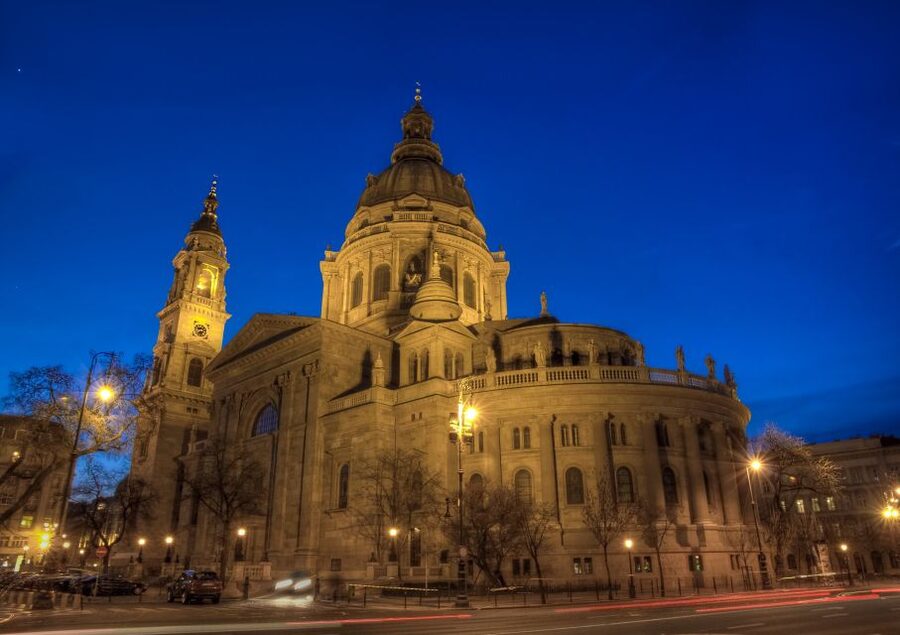
Reviewed · ST STEPHEN'S BASILICA TOURS
Budapest: Organ Concert in St. Stephen’s Basilica
One basilica. One hour? Not sure, but the music lands fast. The Budapest: Organ Concert in St. Stephen’s Basilica pairs a stunning neo-classical venue with performers that bring real stage credibility to an evening concert.
I like the way the program mixes famous names across eras, from Mozart to Bach, without feeling random. I also love the human touch: Kolos Kováts handles the arias, and Eleonóra Krusic adds a flute performance that makes the sound feel less like pure organ duty and more like a full mini-cast.
The main thing to plan for is logistics. Pick-up and drop off are not included, so you’ll want your own way to arrive on time for the 19:40 meeting at St. Stephen’s Basilica.
In This Review
- Key things that make this concert worth your evening
- St. Stephen’s Basilica, the perfect shell for organ sound
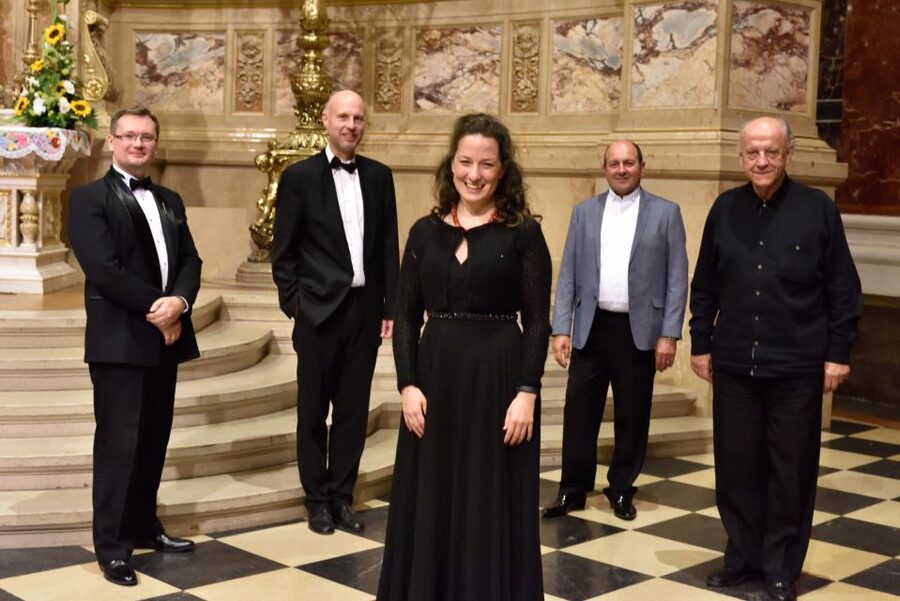
- The performers: Kováts, Krusic, and Teleki on one stage
- The music list, what it means for your listening
- Ticket categories and how to pick without overthinking
- Timing your arrival: meeting point at 19:40
- Logistics you should not ignore: what’s included and what isn’t
- Who this concert is best for (and who might want something else)
- Should you book Budapest’s St. Stephen’s Basilica Organ Concert?
- FAQ
- Where does the organ concert take place?
- What time should I arrive?
- Who performs in the concert?
- What role does Kolos Kováts have?
- Is there flute music during the concert?
- What ticket categories are available?
- What is included with the booking?
- Is pick-up or drop-off included?
- Who is the experience provider?
- What composers and pieces are on the program?
Key things that make this concert worth your evening
- St. Stephen’s Basilica as the stage, using a neo-classical Budapest landmark as more than just a backdrop
- Kolos Kováts performing the program’s arias, backed by major Hungarian honors including the Liszt Ferenc prize and Kossuth Prize
- Eleonóra Krusic on flute, adding a clear melodic contrast to the organ sound world
- A program that spans styles, including Mozart (Fantasie in F minor), Verdi (Prayer of Fiesco), and Bach (Toccata and Fugue in D minor)
- Ticket options by seating zone, with Category I rows 1-6 through Category III rows 17-26
More visits to St Stephen's:
- Budapest: St. Stephen’s Basilica Entry with Options
★ 4.6 · 12,322 reviews - Budapest: Classical Music Concerts in St Stephen’s Basilica
★ 4.7 · 1,479 reviews - Organ Concert in the St. Stephen’s Basilica
★ 4.0 · 173 reviews
St. Stephen’s Basilica, the perfect shell for organ sound
St. Stephen’s Basilica is one of those places in Budapest that looks important even when you’re just walking past it. Neo-classical design means it has clean lines and a big, formal feel. For a concert, that matters because you’re not just watching notes happen, you’re listening inside a space built for dramatic sound.
This experience leans into that setting. The whole point is an organ concert inside the basilica, and the program flows from composer to composer instead of staying locked in one musical style. If you like evenings that feel cultural but not complicated, this is a straightforward choice. You show up, you listen, you let the building do its job.
The performers: Kováts, Krusic, and Teleki on one stage
The headline talent here is Kolos Kováts. He’s not just a name on a program page. He’s described as one of Hungary’s most famous and talented concert and oratorio singers, and he’s received major recognition including the Liszt Ferenc prize, Merit of Art, and the Kossuth Prize. That set of awards signals a singer who is used to serious repertoire and big-audience work.
Kováts is also tied directly to what you’ll hear. He performs the arias from the program. That detail is important because it changes the concert’s texture. Instead of everything being purely instrumental, you get vocal lines built into the evening’s musical arc.
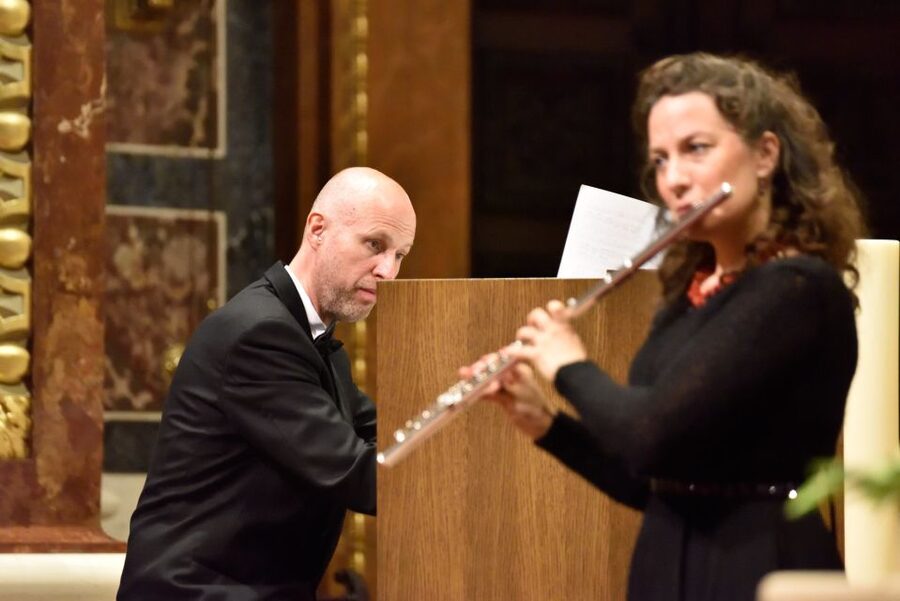
Then there’s Eleonóra Krusic on flute. The flute doesn’t replace the organ idea. It works like a color change. You get extra clarity and a lighter, more agile sound layer that keeps the concert from becoming one long, uniform texture.
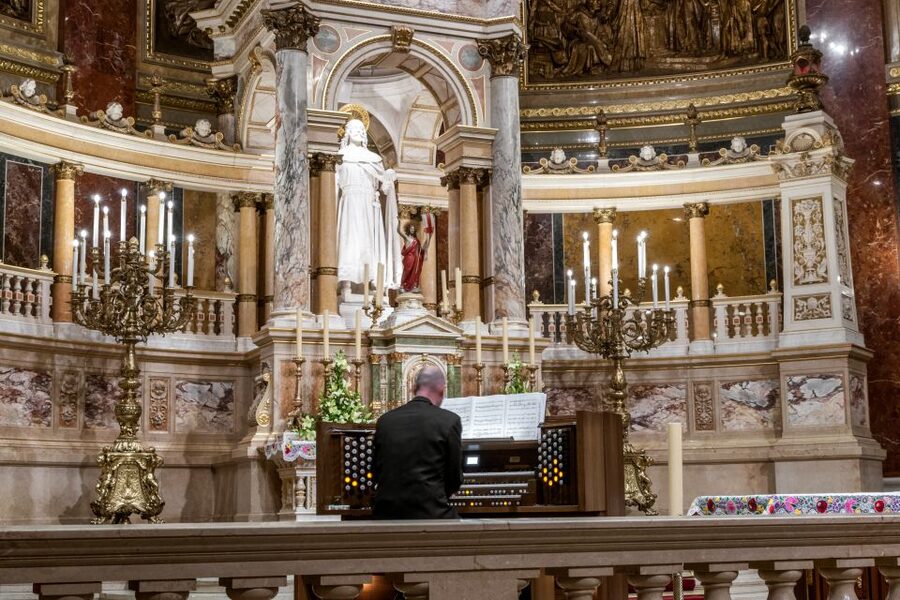
Finally, Miklos Teleki is part of the performer lineup. Since this is an organ concert, his presence is a key reason the evening is what it is. You’re getting an on-stage team rather than a solo-instrument show with guest cameo rules.
The music list, what it means for your listening
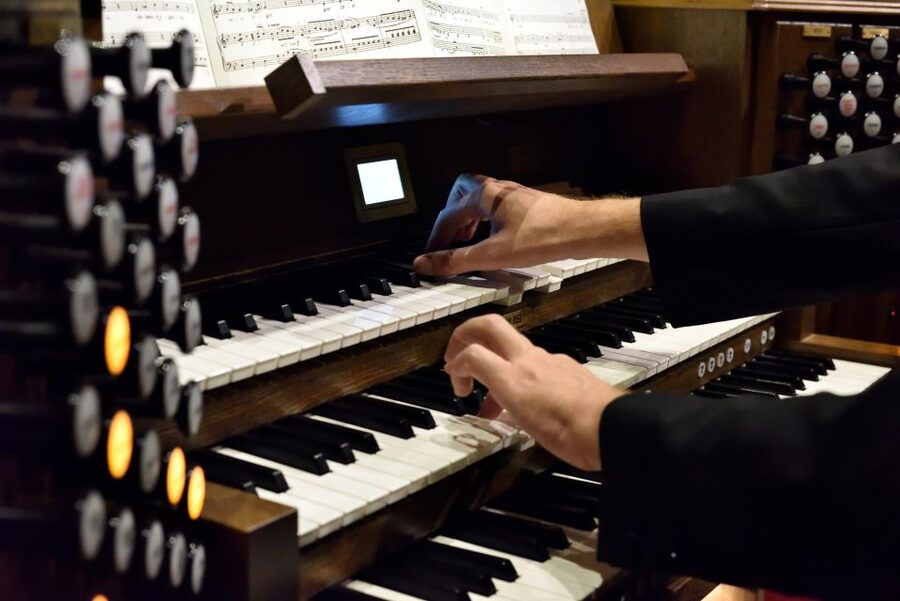
Here’s the order of the program pieces, and what they tend to feel like when you listen straight through.
You start with Wolfgang Amadeus Mozart: Fantasie in F minor K 506. Mozart in F minor usually hints at a darker, more stormy mood than his everyday “bright” reputation. “Fantasie” also suggests a freer form, so your ear gets used to shifts in mood early on.
Next is Alessandro Stradella: Pietà Signore. This is an aria title, which matters because it slots into the vocal component of the evening. If you enjoy melody and text-driven emotion, this is where the singer’s voice has room to shape the atmosphere.
Then comes Tomaso Albinoni: Adagio. An Adagio is slow and measured. It can be a great reset moment after more expressive vocal material. Think of it as a sustained breath in the middle of the program.
After that, you hear Liszt Ferenc and Camille Saint-Saëns: Legend in A major (St. Francis of Assisi’s Sermon to the Birds). The subtitle tells you the emotional goal. It’s not just about harmony, it’s about a scene. If you like music that paints pictures without turning into a lecture, this kind of piece does that well.
Then: Giuseppe Verdi: Prayer of Fiesco from opera Simone Boccanegra. Verdi’s vocal writing is dramatic and human. Even if you do not know the opera plot, the style carries emotion. It’s also a strong continuation from the earlier aria moments.
You then move into Bach. First is Johann Sebastian Bach: Polonaise, Minuet and Badinerie from Suite in B minor BWV 1067. Those movements are dance-related, but the point in a concert setting is elegance and control. You get rhythmic personality without needing stage action.
Finally, the program closes with Johann Sebastian Bach: Toccata and Fugue in D minor BWV 565. This ending is a classic “big finish” move. You get momentum and tension built through structure, so the final sounds tend to stick with you on the walk out.
Also note a practical detail: the program includes flute as well. Even though the program list you have is mostly named by composer and piece title, the highlight specifically calls out a flute performance by Eleonóra Krusic. So you can treat the flute as part of the musical arc, not just background.
Ticket categories and how to pick without overthinking
You choose a ticket category by seating row.
- Category I: rows 1 to 6
- Category II: rows 7 to 16
- Category III: rows 17 to 26
If you want the simplest decision rule, base it on what you care about most: closeness of view versus saving money. Front rows are the front section by definition, and you pay for that proximity. Category III is the farthest of the three, but still within the same concert and venue. You’re not choosing a different program, just a different place to sit.
One more thing to keep in mind is time. This is not a “sometime this evening” plan. You’re scheduled around a specific arrival time.
More nights with music in Budapest:





Timing your arrival: meeting point at 19:40
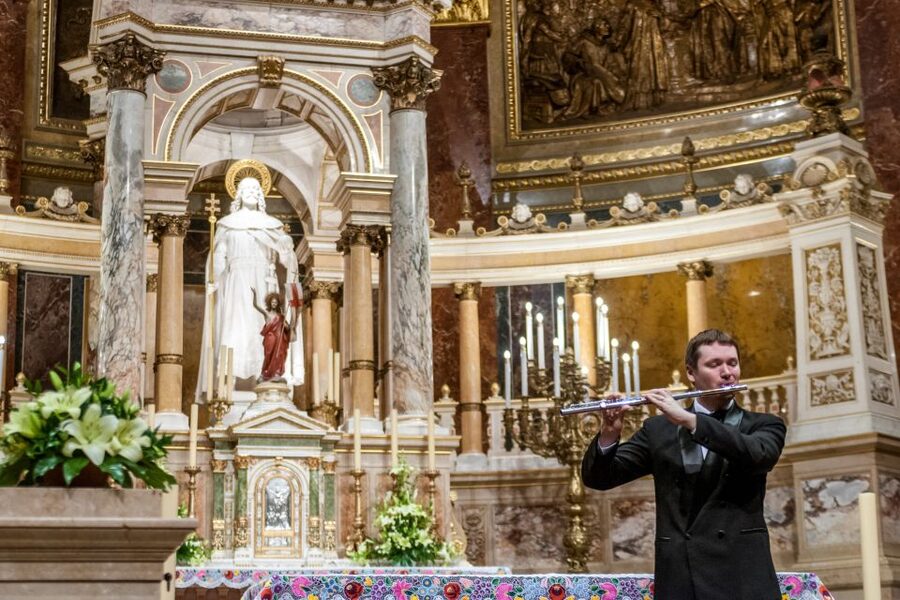
You’re asked to come to St. Stephen’s Basilica at 19:40. That’s the best piece of hard logistics you have, so build your plan around it. In a city like Budapest, getting turned around is easy, especially if you’re mixing dinner and a cultural event.
I recommend giving yourself extra buffer, not because the concert is complicated, but because getting inside a major venue smoothly is always easier when you arrive early rather than rushing in at the last second. Plan on 19:40 being your start line, not your “we’ll figure it out” moment.
Logistics you should not ignore: what’s included and what isn’t
This experience includes concert tickets. That’s clean and simple. What is not included is pick-up and drop off, though they are available at an additional cost.
So you’re responsible for how you get to the basilica. If you’re using public transport or walking, you’re set. If you rely on a driver, you should confirm the extra-cost option ahead of time so you don’t end up stranded at the wrong time.
The provider is Hungaria Koncert Ltd. If you need to reference your organizer for any reason, that name is the one to look for.
Who this concert is best for (and who might want something else)
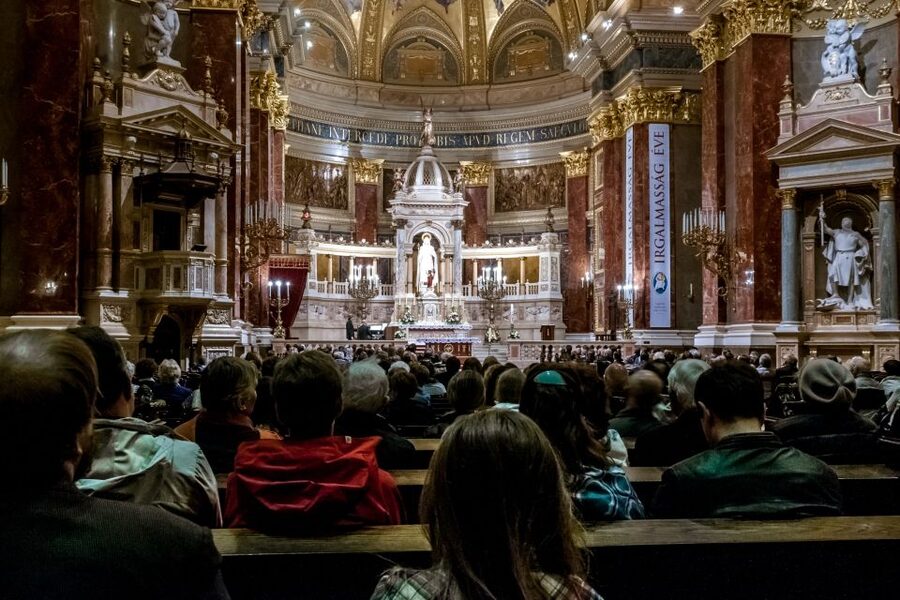
This fits best if you want a Budapest night that is culture-forward but still easy to execute. You get a top venue, a performer lineup with serious credentials, and a music program that spans big names and styles in one sitting.
You’ll probably enjoy it most if:
- you like organ concerts that also include voice and flute
- you want an evening plan that does not require another ticketed attraction
- you enjoy classical music with a recognizable range, including Mozart and Bach
It may not be the best fit if you strongly dislike being tied to a specific arrival time. Or if you want “door to door” convenience, because pick-up and drop off are only available for an additional cost.
Should you book Budapest’s St. Stephen’s Basilica Organ Concert?
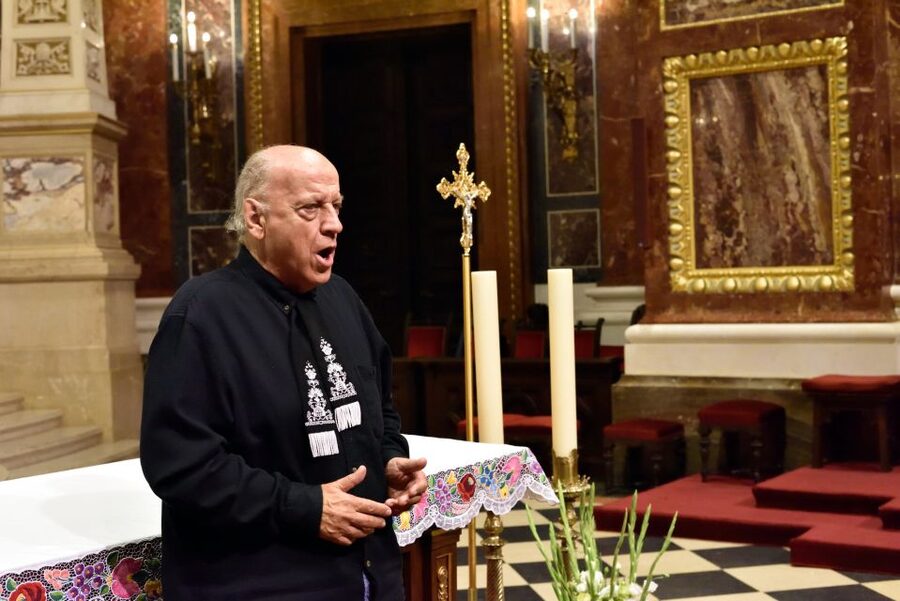
Yes, if you want a straightforward, high-signal cultural evening with real performance talent and a well-chosen program. The big selling point is the blend: Kováts for the arias, Krusic on flute, and Teleki as part of the core performer lineup, all inside St. Stephen’s Basilica.
Before you book, do two quick checks. First, confirm your seat category based on rows 1-6 versus 7-16 versus 17-26. Second, make sure you have a plan to arrive by 19:40 without depending on included pick-up.
If you line those up, this is exactly the kind of Budapest experience that feels rewarding without adding hassle.
FAQ
Where does the organ concert take place?
It takes place at St. Stephen’s Basilica in Budapest.
What time should I arrive?
You should come to St. Stephen’s Basilica at 19:40.
Who performs in the concert?
The performers listed are Miklos Teleki and Kolos Kováts, plus flute by Eleonóra Krusic.
What role does Kolos Kováts have?
Kolos Kováts performs the arias of the program.
Is there flute music during the concert?
Yes. Eleonóra Krusic performs on flute as part of the concert.
What ticket categories are available?
There are three categories: Category I (rows 1-6), Category II (rows 7-16), and Category III (rows 17-26).
What is included with the booking?
The booking includes concert tickets.
Is pick-up or drop-off included?
No. Pick-up and drop-off are not included, but they are available for an additional cost.
Who is the experience provider?
The provider is Hungaria Koncert Ltd.
What composers and pieces are on the program?
The program includes music by Mozart (Fantasie in F minor K 506), Stradella (Pietà Signore), Albinoni (Adagio), Liszt Ferenc and Camille Saint-Saëns (Legend in A major, St. Francis of Assisi’s Sermon to the Birds), Verdi (Prayer of Fiesco from Simone Boccanegra), Bach (Polonaise, Minuet and Badinerie from Suite in B minor BWV 1067, and Toccata and Fugue in D minor BWV 565).
Newest from the Danube banks
- Pub Crawl Through The Ruin Bars in Budapest with T-shirt Included★ 4.5 · 14 reviews
- Rudas Bistro Premium Brunch★ 3.5 · 14 reviews
- Wine Tasting in the Countryside from Budapest★ 5.0 · 14 reviews
- Buda Castle District and Matthias Church Private Tour★ 5.0 · 14 reviews
- Pest side stories with a Historian★ 5.0 · 14 reviews
- Recirquel Company: Walk My World Immersive Show Entry Ticket★ 4.6 · 14 reviews
- Ram Gorge Hiking Adventure★ 5.0 · 14 reviews
- Budapest Rafting – Sunset Cruise★ 5.0 · 14 reviews
St Stephen's Basilica Tours, compared.

Budapest: St. Stephen’s Basilica Entry with Options
Read our review →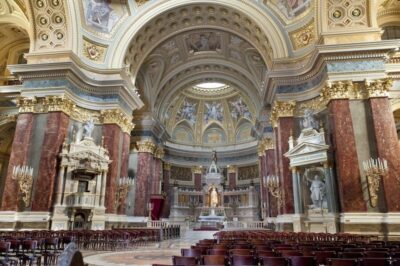
Budapest: Classical Music Concerts in St Stephen’s Basilica
Read our review →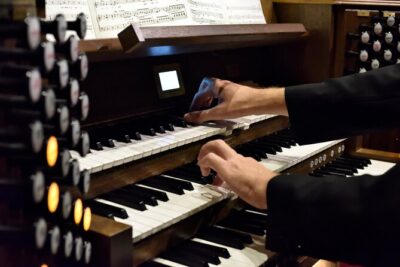
Budapest St. Stephen’s Basilica Skip The Line Tickets
Read our review →
Budapest Super Saver: Spa, Basilica Tour, and Danube Cruise
Read our review →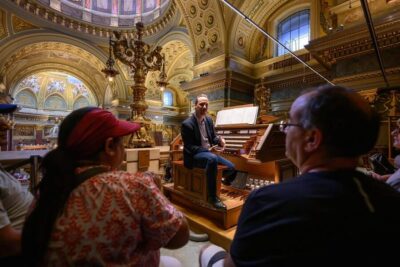
Budapest: St.Stephen’s Basilica Grand Organ Concert Tickets
Read our review →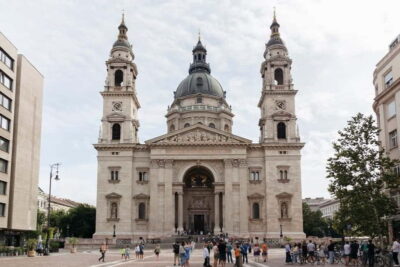
Budapest: St. Stephen’s Basilica Tour & Music Performance
Read our review →Browse the lists this tour appears in