Reviewed · TOURS
Café Wandering: An Excursion through Budapest’s Belle Epoque
A café tour in Budapest feels like a time machine. This 3-hour walk strings together 19th and early 20th-century architecture with the café culture that powered Imperial Budapest, with an art historian turning the buildings into stories. I especially loved how the guide made the interiors readable, and I liked the smooth mix of classic coffee houses and one very different finale at the Kazinczy Street Synagogue. One thing to consider is that tastings are not included, so if you want cakes and coffee at multiple stops, budget a bit extra.
The route is designed for small groups, up to 8 people, and it’s led in English. Expect a professor-level approach, since the guides are often professors, doctoral students, historians, journalists, art critics, and published authors, and the vibe is more study-walk than hit-and-run sightseeing. If you’ve had great museum tours in the past, this will match that level, just with espresso instead of headsets.
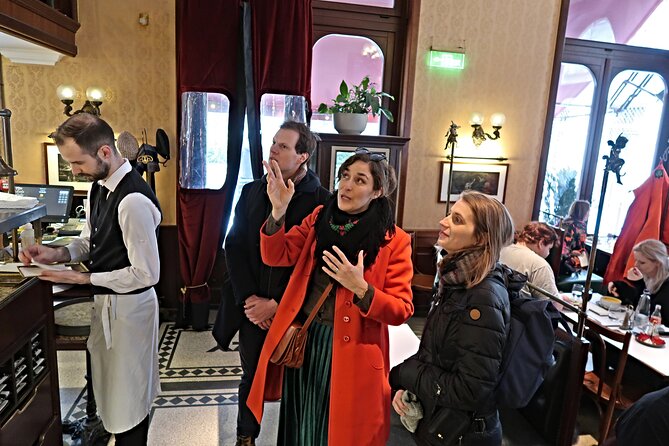
One past group specifically praised the guide Kota for clarity, which fits with what this tour is aiming for: you leave with better eyes. Not just photos. You’ll know what you’re looking at, and why it mattered.
In This Review
- Key highlights you will actually remember
- Starting at Café Gerbeaud, right where the Belle Epoque mood begins
- Gerbeaud Cafe: Imperial Budapest told through rooms, not plaques
- Central Cafe and Restaurant 1887: dignity at peak Habsburg cultural power
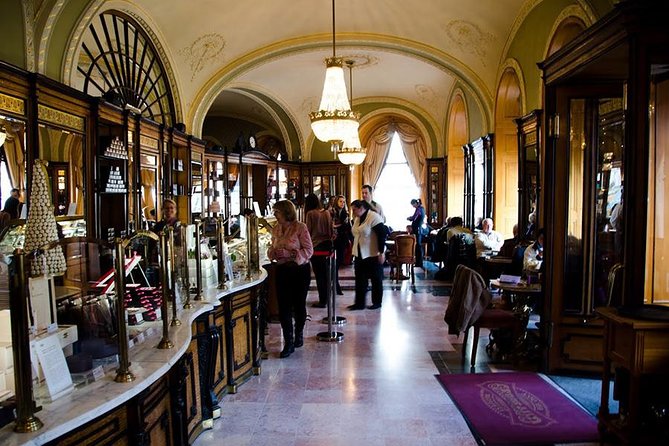
- Café Astoria: classic European grandeur, served at café tempo
- Művész Coffee House: where the artist mindset shows up in the space
- Urania Cafe on Rakoczi street: ideas culture with an old film theater
- New York Palace Café and the Museum Cafe walls: design with Asian motifs
- Kazinczy Street Synagogue: an art nouveau Orthodox finale
- Price and value for $123 per person
- What the small group size changes in practice
- Who should book this café-and-architecture walk
- Should you book Café Wandering in Budapest?
- FAQ
- Where is the meeting point for Café Gerbeaud?
- How long is the tour?
- What does the price include?
- Are refreshments, cakes, or coffees included?
- What group size is this tour?
- What language is the tour guide?
- Can I cancel and get a full refund?
- Is there flexibility to book now and pay later?
- Is the tour only for architecture lovers?
Key highlights you will actually remember
- Gerbeaud Cafe first impression: an early taste of Imperial Budapest social life in an interior built for lingering.
- Tram + Danube connection: you’re not stuck in one bubble, you travel briefly along a major city axis.
- Café Astoria style: classic European coffee-house grandeur, worth seeing even if you skip dessert.
- Artist and film-intellectual stop: Művész Coffee House and Urania Cafe bring the story beyond architecture.
- Museum Cafe walls and Asian motifs: design details you can spot once you know what to look for.
- Art nouveau Orthodox Kazinczy Street Synagogue finish: a memorable curveball ending that changes the tone.
Still choosing? These run on the same stretch of Budapest:
- Budapest: City Highlights Sightseeing Cruise
★ 4.6 · 43,981 reviews - Budapest: Unlimited Prosecco, Beer and Aperol Spritz Cruise
★ 4.8 · 37,304 reviews - Budapest: Széchenyi Spa Day Ticket with Optional Upgrades
★ 4.3 · 23,911 reviews
Starting at Café Gerbeaud, right where the Belle Epoque mood begins
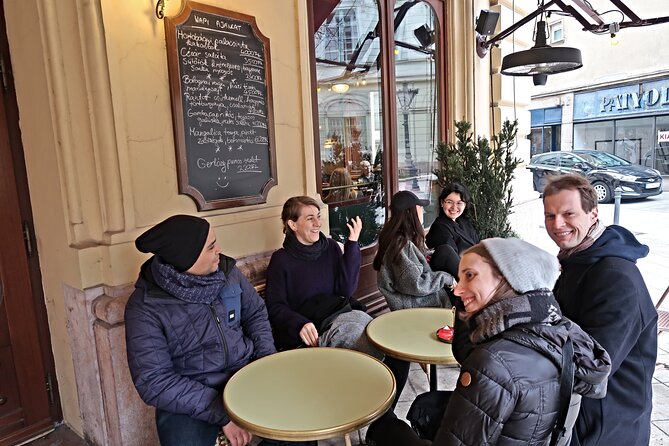
Your tour meets at Café Gerbeaud on Vörösmarty tér, a smart choice because it puts you in the center of Budapest’s historic pedestrian flow. From here, the walk is built to move at a comfortable pace while staying close enough to keep that “one era” feeling.
I like tours that start with a place people still use, not just ruins. Gerbeaud is a working café, so the architecture and decoration are not museum props. They still function as social space. That matters, because this tour is not just about facades. It’s about how cafés shaped conversation, art, and public life.
A practical note: you are walking for about 3 hours, and you’ll include a short tram segment later. Wear shoes you trust. Also, if you want to sit down and take your time at one stop, you should do it early or plan for a quick look later, since the itinerary is structured.
Gerbeaud Cafe: Imperial Budapest told through rooms, not plaques
The first real stop is Café Gerbeaud, where you get a guided start that frames the entire walk. The interior is described as exquisite, with more than a century of history behind it, and the point is not just beauty. The guide connects the décor to the late 19th century, when cafés served as central social hubs for both visitors and locals.
What I love about starting here is how quickly it teaches your eye. Once you understand the café as a stage for public life, details start to matter more. You start noticing how spaces invite lingering, how a formal interior signals status, and how decoration helps a place feel like a meeting point for the world.
If you care about design, this is also where you’ll get an early lesson in why interiors are part of architecture. You’re not only looking at buildings. You’re looking at human behavior, shaped by ornament, light, and layout.
Possible drawback: if you’re hoping for a strict “architecture-only” tour, you may find that the café culture stories keep pulling you back to people and daily life. For me, that is the point, but it’s worth knowing.
Central Cafe and Restaurant 1887: dignity at peak Habsburg cultural power
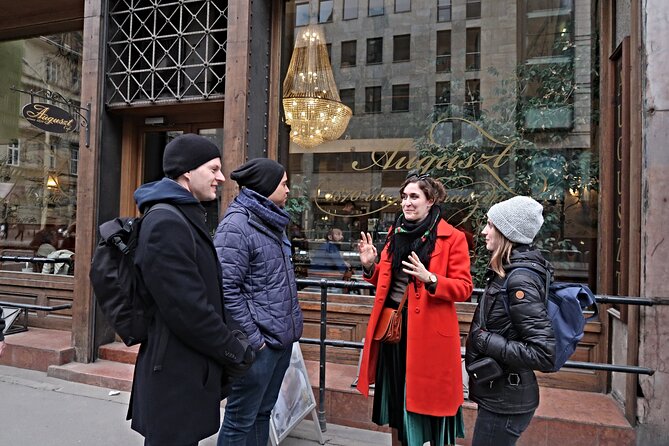
From Gerbeaud, you take a tram along the Danube to Central Cafe and Restaurant 1887. This is a great pacing choice because it prevents the tour from feeling like a nonstop march. The tram ride also helps you keep the city in view, so the café stops feel connected rather than random.
At Central Cafe, the guide emphasizes a dignified atmosphere that epitomized café culture during the pinnacle of Habsburg Empire economic and cultural power. Translation: this is not a cozy neighborhood café. It’s a grand civic room where food, drinks, and decoration all work together to suggest importance.
You’ll want to pay attention to how the guide describes the decor, meals, desserts, and drinks as part of the ambiance. That sounds like a lot of “everything,” but it helps you understand why cafés were so influential. They were entertainment, social networking, and status display, all at the same time.
If you want practical value here, you can use this stop to practice your own “read the room” approach. Look at how the space is designed for seeing and being seen. Once you notice that, the rest of the tour’s interiors become easier.
Café Astoria: classic European grandeur, served at café tempo
Next comes Café Astoria, described as lavish and more than a century old. This is one of the stops where I’d say you can enjoy it in two ways. One, as a beautiful interior. Two, as a symbol of how European coffee-house culture exported style, ritual, and atmosphere across cities.
The guide’s job here is to keep you from treating Astoria as just a photo spot. You’ll learn how European coffee houses became cultural magnets, which helps explain why Budapest’s Belle Epoque figures would want a place like this for daily conversation.
If you’re a person who reads captions slowly, Astoria is where you’ll likely spend a bit longer. Even if you don’t order anything, it’s worth looking closely at how the interior supports that “grand room” feeling.
One consideration: because you’ll likely take in several major interiors in one afternoon, fatigue can creep in. If you feel that, focus on fewer details at each stop. Pick one theme per café, like ceiling work, wall design, or lighting, and let that keep things crisp.
Other ways an evening in Budapest can go:





Művész Coffee House: where the artist mindset shows up in the space
After the bigger, more formal coffee-house stops, you shift to Művész Coffee House, also known as the Artist Cafe. The itinerary includes this point as a distinct visit, and it matters because it changes the social map.
This stop is about the café as a creative workshop in public. Instead of only thinking about cafés as status and meeting points, you get a sense of how artists and intellectuals used these spaces to connect ideas, show work, and build communities.
I find this part especially useful if you’ve ever visited a grand museum and felt a bit disconnected from real life. Café culture is real life, only staged in an elegant room. Művész helps bridge that gap.
Practical tip: if you plan to taste something later, this is a good time to decide where. Since refreshments are not included, you’ll likely want to choose one or two “must tries” and skip the rest so you don’t end up eating on autopilot.
Urania Cafe on Rakoczi street: ideas culture with an old film theater
On Rakoczi street, you visit Urania Cafe, which has the oldest film theater in the city. That detail alone pulls the tour beyond café-only nostalgia. The café becomes a crossroads for film, lectures, and public discussion.
The tour describes it as known for lectures given by prominent intellectuals before large audiences. In other words, this is where the café story becomes public culture: not just poets meeting poets, but thinkers speaking to crowds.
This stop is valuable because it gives you a different lens on Belle Epoque Budapest. Architecture was one language, cafés were another, and entertainment and lectures were a third. Together they explain why these spaces were so important.
If you like learning how to “place” an era, this is the part where it clicks. You start seeing cafés as part of a broader cultural ecosystem, not isolated rooms.
New York Palace Café and the Museum Cafe walls: design with Asian motifs
The itinerary includes New York Palace Café as a guided visit, and the highlights point you to the Museum Cafe and its lavish, more than century old walls. This is also where you’ll be looking for Asian motifs and elements used by designers.
I’m glad the tour calls this out, because this is the kind of detail you would normally miss. Once a guide tells you what to look for, you can see design choices as a conversation between styles. It’s not random decoration. It’s part of the visual vocabulary of the time.
This stop is also a reminder that café interiors were marketing, identity, and art all at once. The lavish walls are not only there to look expensive. They communicate sophistication and cosmopolitan taste, the same way a city’s public architecture does.
Where this becomes practical for you: if you’re going to visit the area afterward on your own, you’ll recognize the design language faster. And if you’re shopping for souvenirs like prints or books, you’ll know what style to look for.
Kazinczy Street Synagogue: an art nouveau Orthodox finale
You end the walk at the Kazinczy Street Synagogue, described as an art nouveau Orthodox synagogue. This is a strong ending because it changes the emotional tone from café glamour to sacred architecture.
Finishing here helps you take the café story and widen it. You’ve spent the afternoon seeing how Budapest’s 19th and early 20th-century culture expressed itself through ornament and social space. The synagogue finale puts that same idea into a different context, so you leave with a more complete sense of what Belle Epoque aesthetics meant in everyday life.
I’d treat this ending as your moment to slow down. Look for patterns, line work, and the way the building shapes your attention. It makes the rest of the tour’s architectural lessons feel less abstract.
Price and value for $123 per person
At $123 per person for a 3-hour guided walk, you’re paying for a guided narrative plus entry-time access inside multiple major interiors. Refreshments are not included, so your total out-of-pocket cost can rise if you order cakes and coffees at each stop.
Here’s how I’d think about value:
- You get an art historian guide, and the guide background is explicitly serious, often tied to academia, criticism, and published writing.
- The tour covers several iconic café spaces rather than just one.
- You also get a cultural change-up at the end with the synagogue.
If you’re the type who likes to understand what you see, this is usually worth it. If you only want a quick photo loop, you might decide to DIY and spend less. But with this format, the guide is doing the heavy lifting.
Budget strategy tip: pick one café where you actually sit and order, and keep the rest as observation stops. That way you get the experience without overspending.
What the small group size changes in practice
The tour is limited to 8 participants, which is a big deal for a walk that includes detailed interior viewing. With fewer people, you are more likely to hear explanations clearly and ask follow-up questions without the guide rushing.
This matters most on the stops where the emphasis is on design motifs and architectural meaning. If you like to ask why certain elements were used, a small group setting makes it easier.
Also, it keeps the pacing human. Instead of being swept along, you can pause, look up, and return to the guide’s thread.
Who should book this café-and-architecture walk
This tour fits you if you:
- love architecture and interior design more than big scenic viewpoints
- want café culture explained, not just photographed
- enjoy walking tours with an educated guide in English
- like the idea of a themed route that ends somewhere unexpected
It might not be the best match if you:
- want an itinerary where you spend most of the time outside
- have no interest in architecture or café history at all
- want a food-centered crawl where tasting is included
Should you book Café Wandering in Budapest?
I think you should book it if you want your Budapest day to come with explanations that make interiors and details feel purposeful. The biggest strength is the pairing of architecture and café culture, plus a guide who can connect design to people and public life. If you’ve ever felt like you only captured the surface on a previous trip, this tour is built to fix that.
The only reason to skip is if you’re strictly budget-first and want zero extra spending for drinks and cakes. Otherwise, for a 3-hour window, this is a smart way to see a slice of Belle Epoque Budapest in a way that stays fun, not academic-robotic.
FAQ
Where is the meeting point for Café Gerbeaud?
The meeting point is Café Gerbeaud, Budapest Vörösmarty tér 7-8, 1051.
How long is the tour?
The experience lasts 3 hours.
What does the price include?
The price includes a 3-hour guided walk and an art historian guide.
Are refreshments, cakes, or coffees included?
No. The cost of refreshments, cakes, and coffees selected at the cafés visited is not included.
What group size is this tour?
It is a small group limited to 8 participants.
What language is the tour guide?
The tour is offered in English.
Can I cancel and get a full refund?
Yes. Free cancellation is available up to 24 hours in advance for a full refund.
Is there flexibility to book now and pay later?
Yes. You can reserve now and pay later.
Is the tour only for architecture lovers?
The focus is architecture and café culture, guided by an art historian, but it also includes cultural stops like Urania Cafe and ends at the Kazinczy Street Synagogue, so it suits people who like history and design connections too.
Newest from the Danube banks
- Gödöllö Royal Palace Privately with full board★ 5.0 · 1 review
- Private Budapest Tour with Thermal Bath or Market Visit★ 5.0 · 1 review
- Private Budapest walking tour – 4 hours★ 5.0 · 1 review
- Budapest Half Day Car Tour with Guide★ 5.0 · 1 review
- Budapest Private Transfer from Budapest city centre to Budapest Airport★ 3.0 · 1 review
- Magic Theme Team Adventure Game in the Streets of Budapest★ 5.0 · 1 review
- Budapest: Eat the Street, food tour with wine, 16+ tasting★ 5.0 · 1 review
- Private Budapest Christmas Market guided tour and Danube Evening cruise package★ 5.0 · 1 review
Tours, compared.
Budapest: Big Bus Hop-On Hop-Off Tour by Open-top Bus
Read our review →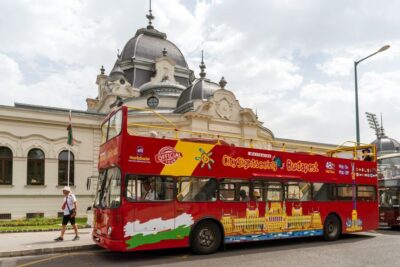
Budapest: City Sightseeing Hop-On Hop-Off Bus Tour & Extras
Read our review →
Budapest: Buda Castle District Vampires and Myths Night Tour
Read our review →
Budapest: Floating Bus Tour by Land and Water
Read our review →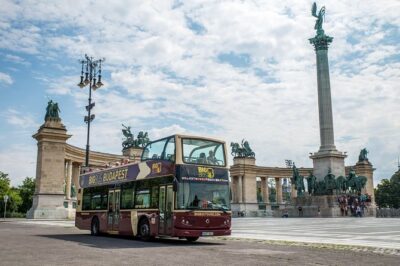
Big Bus Budapest Hop-On Hop-Off Bus and Walking Tour
Read our review →