Reviewed · PRIVATE
Capital Budapest – Half Day Private Tour (4hr)
Four hours, and Budapest starts to click.
This private half-day route strings together Danube sights, Buda Castle District viewpoints, and major Pest-side landmarks, using the city’s public transport so you spend more time looking and less time figuring things out. You also get hotel pickup options and an English-speaking guide.
I especially like the private-group pace, where you are not squeezed into someone else’s schedule, and the walking feels manageable for a 4-hour morning or afternoon. I also like the built-in pause: a Kamara Café terrace drink near the synagogue area, which keeps the last stretch from feeling like a sprint.
One consideration: the tour is weather-dependent, since the highlights you will want to linger at are mostly outdoors.
In This Review
- Key points worth knowing before you go
- Half-day logistics: where the tour starts and how the 4 hours flow
- Liberty Bridge and the Danube views, where Buda and Pest start to make sense
- Buda Castle District stops: St Gellért, Clark, Dísz tér, and the Vienna Gate
- Fisherman’s Bastion and Matthias Church: the best photo angles and what tickets mean
- Riding Metro Line M1: getting across town efficiently without feeling rushed
- Heroes’ Square to Parliament and St Stephen’s Basilica: grand sights with built-in pacing
- Deák Ferenc tér, the young-people park vibe, and the finish near the Great Synagogue
- Value and fit: is this $489 group price a smart deal?
- Should you book this half-day private Budapest tour?
- FAQ
- How long is the Capital Budapest half-day private tour?
- What is the maximum group size for this private tour?
- Where does the tour start and where does it end?
- Is pickup available from hotels?
- Does the tour include public transport?
- Are attraction entrance tickets included?
- What is included in the price besides the tour guide?
- What days and hours is the tour available?
- What is the cancellation policy?
Key points worth knowing before you go
- Hotel pickup in Budapest (or a central meeting point), so the start feels easy rather than stressful.
- You ride Metro Line M1, the Millennium Underground Railway, one of Europe’s oldest underground lines.
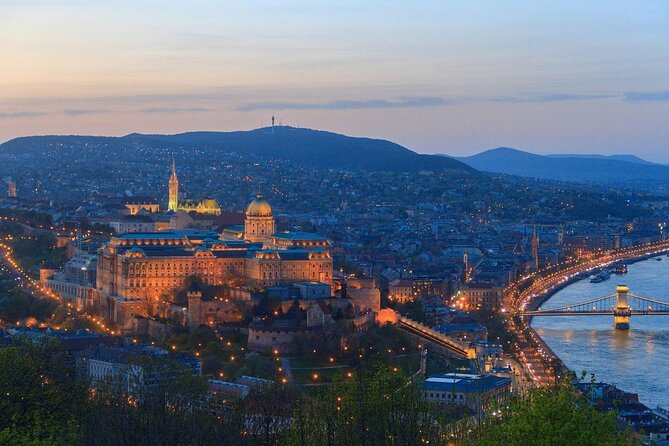
- Buda Castle District viewpoints are front and center, with time near Fisherman’s Bastion for city panoramas.
- Civic Budapest in one loop, including Heroes’ Square and the Hungarian Parliament Building.
- You finish in the Jewish Quarter area, with time near the Great Synagogue and a calm café terrace stop.
- Good value extras are included, like a public transport pass, city map, and a notebook with pen.
Some other Danube days worth pricing up
- Private Budapest TukTuk Tour: Custom Route, Hotel Pickup
★ 5.0 · 1,307 reviews - Budapest Essentials Private Tour Highlights and Hidden Gems
★ 5.0 · 861 reviews - Budapest Private Tuk Tuk Half-Day Tour
★ 5.0 · 606 reviews
Half-day logistics: where the tour starts and how the 4 hours flow
The experience is designed as a tight, high-impact half-day, about 4 hours total. It is priced at $489.24 per group, typically up to 4 people, so the cost makes more sense when you travel with companions rather than one solo person.
You begin in the Jewish Quarter area at Dohány u. 4, 1074, and the end point is near Astoria metro (Károly körút, Astoria M). The exact finish can shift within the broader downtown area depending on your personalized route, but the plan stays in the same general corridor so you do not get stranded far from transit.
Pickup is flexible. You can be met at your hotel, or at a central place you agree on. This matters because Budapest can eat time with transfers. Also, the tour includes a public transport pass, so you can move confidently once you reach the parts of town that are easier by subway than on foot.
Liberty Bridge and the Danube views, where Buda and Pest start to make sense
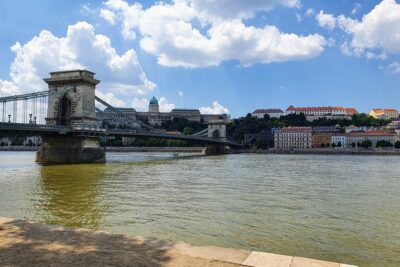
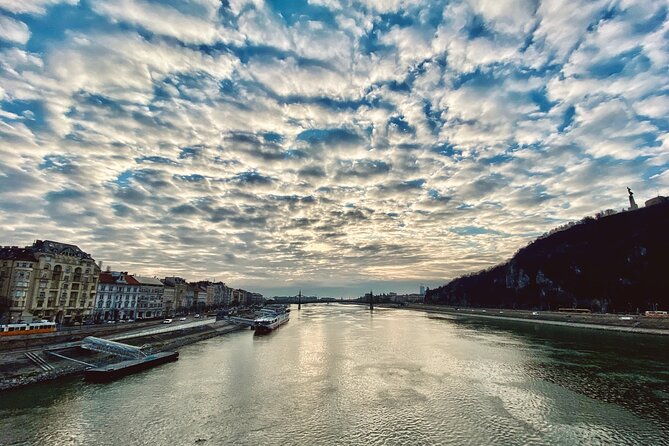
The tour opens with Liberty Bridge (Szabadság híd), connecting Buda and Pest over the Danube. It is the third southernmost public road bridge in Budapest, and it also has a name you can picture in older photos: it was originally called Franz Joseph Bridge. That gives you a quick historical anchor before you start chasing views.
From there, you shift through squares that help you understand how Budapest is stitched together: St Gellért Square in Buda, Clark Square, and the uphill lanes toward the Castle District. Clark Square is especially useful as a mental map. It is where major routes converge near the Chain Bridge, the tunnel under Castle Hill, the funicular up to Szt. György Square by the Royal Palace, and several big streets. Even if you only skim the edges, it tells you how locals circulate.
This is not a museum lesson. It is the kind of stop where you get oriented fast. Expect quick photo moments and short walks, plus guidance on what to look for as you move.
Buda Castle District stops: St Gellért, Clark, Dísz tér, and the Vienna Gate
The Buda side works best when you treat it like a series of viewpoints, not just a single destination. As you head uphill, you get passed through the St Gellért Square area, a spot named after Bishop St Gellért, known as the martyr for Hungarian Christendom. The naming alone helps explain how many of Budapest’s places are tied to identity and faith, even when you only see them for a few minutes.
Then you pass Clark Square, which, as mentioned, functions like a transport crossroads and a landmark cluster. If you have never been to Budapest, this is the kind of place that makes the rest of the city feel less confusing.
Later comes Dísz tér in the Castle District. This square is mainly one- and two-storey old residential buildings, running north-south in the central part of the district. In the Middle Ages, the area had simpler Gothic houses, and you can still find traces in foundations and walls. It is the sort of stop that gives texture. You start seeing how the Castle District was not always only palaces and churches.
The plan also includes a pass near the Vienna Gate (Bécsi kapu). The name is practical: it was a port connecting the Castle with the highway to Vienna. If you like understanding where roads and gates led, this is a quick but satisfying thread.
Fisherman’s Bastion and Matthias Church: the best photo angles and what tickets mean
Next is Fisherman’s Bastion (Halászbástya), one of Budapest’s most recognizable viewpoints near Buda Castle. What you should look for is the design language: the seven stone towers symbolize the seven chieftains who founded Hungary in 895. The terraces are where most people come for the panorama, and the Neo-Romanesque style gives the skyline an almost storybook edge.
Expect a short stop, because this is a half-day itinerary. You will have enough time to orient and take photos, but not so much time that you lose momentum. Also, entry tickets are not included for this stop, so if you plan to go inside or pay for access, you will want to check what is required on the day.
Just nearby is Matthias Church (Mátyás-templom), in front of Fisherman’s Bastion in the Castle District. The church tradition says it began as a Romanesque church in 1015, though there are no archaeological remains supporting that early date. That mix, tradition plus uncertainty, is part of why this stop feels alive. It is not just a postcard, it is a place with layers.
Like the bastion, the church does not include admission in the tour price. Practically, that means you should decide ahead of time whether you want to pay for interior access, or focus your time on the exterior views.
Other ways an evening in Budapest can go:




Riding Metro Line M1: getting across town efficiently without feeling rushed
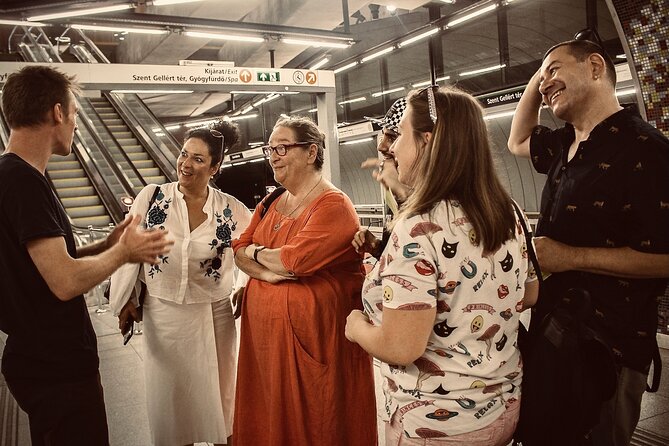
Once you finish the Buda Castle cluster, the tour uses Metro Line M1, the Millennium Underground Railway. This is the oldest metro line in Budapest, and it is also one of the oldest underground railways on the European mainland. The itinerary notes it is the world’s third oldest underground line after London and Liverpool’s Mersey Railway.
That matters because you are not just getting from A to B. You get a quick, modern-meets-heritage experience. It is also a time-saver. In Budapest, the river and hills can slow you down. Subway time lets you keep your half-day schedule intact.
From the M1 ride, you continue into the big landmark squares on the Pest side. One more practical point: the tour includes a public transport pass, so you are not doing stop-and-start ticket purchasing while you are also trying to enjoy the day.
Heroes’ Square to Parliament and St Stephen’s Basilica: grand sights with built-in pacing
The tour highlights two of Budapest’s most famous civic areas.
First is Heroes’ Square. It has the iconic statue complex featuring the Seven chieftains of the Magyars, plus other important Hungarian leaders. There is also the Memorial Stone of Heroes, which people sometimes incorrectly call the Tomb of the Unknown Soldier. Even if you only glance, this spot gives you a strong sense of national symbolism.
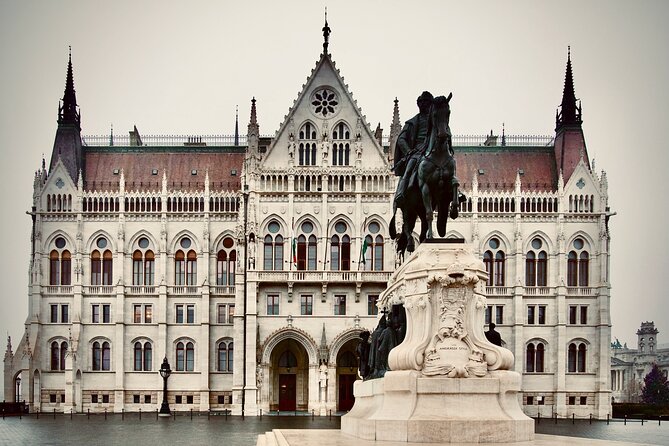
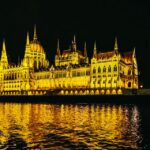
Then comes the Hungarian Parliament Building on Kossuth Square. It is the seat of the National Assembly, designed in neo-Gothic style by Imre Steindl, and it opened in 1902. The itinerary notes it has been the largest building in Hungary since completion. You get a clear view of why it has become the most photographed civic building in the country.
The important practical bit: admission is not included for the Parliament Building. So treat it like an exterior-and-square stop unless you plan to pay for interior access separately.
Next you reach St. Stephen’s Basilica (Szent István-bazilika), dedicated to Stephen, Hungary’s first king. The itinerary notes that the supposed right hand of Stephen is housed in the reliquary. Like several other landmarks here, entry tickets are not included, so the tour visit is best thought of as an exterior and photo stop within your 4-hour window.
Deák Ferenc tér, the young-people park vibe, and the finish near the Great Synagogue
Between the big monuments, you pass through Széll Kálmán tér (formerly Moszkva tér between 1951 and 2011). The itinerary also calls it a major transport interchange and a center of Buda, with shopping nearby like Mammut. Even if you do not plan to shop, it helps you understand the city’s layers, where everyday movement meets historic districts.
You also spend time near Deák Ferenc tér, and the plan includes a nearby park gathering spot. This is where the tour shifts tone. It is no longer only monuments and stone. It becomes a look at how people actually hang out in central Budapest. The info you get here is specific: alcohol is sold in the grassy area, and it is common for the area to be populated until midnight. That is useful context if you want your Budapest to feel real, not only curated for photos.
Then you arrive at the Great or Central Synagogue (Nagy Zsinagóga), also known as the Dohány Street Synagogue. The itinerary describes it as the largest synagogue in Europe, seating around 3,000 people, and a center of Neolog Judaism. This stop gives you a different kind of architecture and a different kind of Budapest story, right in the city fabric.
The half-day ends at Kamara Café, where you get a quiet terrace drink to slow down. Your beverage is included, and it is a smart way to finish. You can practice a few Hungarian phrases, compare notes with your group, and plan the rest of your stay based on what you just saw.
Value and fit: is this $489 group price a smart deal?
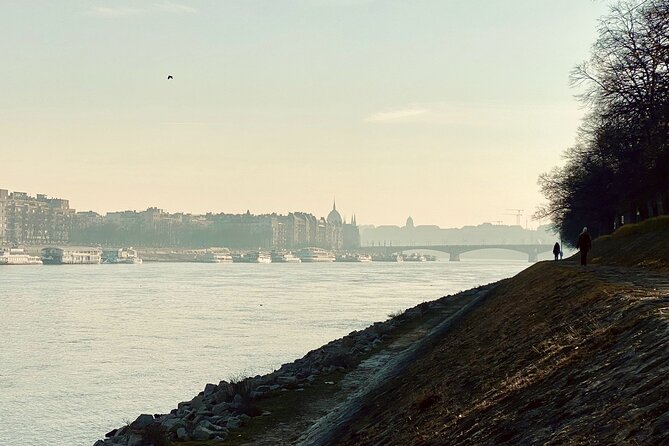
At $489.24 per group for up to 4, this tour is priced like a true private experience, not a public group bus. The value only gets strong when you take advantage of what is included and the fact that you are moving efficiently.
Here is what you are getting that helps the price make sense:
- A public transport pass plus a plan that uses transit strategically
- A guided route that covers both Buda and Pest in one compact run
- A city map, plus a notebook with pen (handy for remembering key points)
- One hot or cold beverage at Kamara Café
- Hotel or central pickup options, which saves you time and guesswork
Where you might feel the limit: entry tickets are not included for several top sights, including Fisherman’s Bastion, Matthias Church, Parliament, St Stephen’s Basilica, and the Great Synagogue. If you want interior access to many of these, your total day cost can rise.
Who it suits best:
- Couples or small families who want a guided route without committing to a full-day program
- First-time visitors who want Buda Castle District plus Pest landmarks, but do not want to spend half the trip figuring transit
- Travelers who like story-driven explanations while still moving at a reasonable walking pace
If you are the type who wants to linger 45 minutes in each place, you may find the half-day timing tight. But if you prefer efficient sightseeing with a few photo-and-why-it-matters moments, it is a strong match.
Should you book this half-day private Budapest tour?
Book it if you want a guided route that stitches together the river views, the Castle District panorama stops, the big civic squares, and a meaningful finish near the Great Synagogue, all within about 4 hours. The included transport pass and the Kamara Café drink make it feel like a complete experience rather than a checklist.
Skip it or consider a different format if you mainly care about paid interior tickets and want long time inside buildings. This plan is best for smart walking, quick orientation, and choosing a few must-pay entries instead of trying to do everything.
FAQ
How long is the Capital Budapest half-day private tour?
It runs for approximately 4 hours.
What is the maximum group size for this private tour?
It is a private experience for your group, priced per group up to 4 people.
Where does the tour start and where does it end?
The tour starts at Budapest, Dohány u. 4, 1074 Hungary. The tour ends near Károly körút (Astoria M) in Budapest, 1072, and the exact ending point can be in the greater downtown area depending on the personalized itinerary.
Is pickup available from hotels?
Yes. You can be met at your hotel in Budapest, or at a central point you agree upon.
Does the tour include public transport?
Yes. The price includes a public transport pass, and the plan uses Metro Line M1.
Are attraction entrance tickets included?
Admission tickets are free for Liberty Bridge and Heroes’ Square, but admission is not included for stops like Fisherman’s Bastion, Matthias Church, the Hungarian Parliament Building, St. Stephen’s Basilica, and the Great Synagogue.
What is included in the price besides the tour guide?
Included items are a public transport pass, a city map, one hot or cold beverage, and a notebook with pen.
What days and hours is the tour available?
The opening hours are 8:00 AM to 6:00 PM, Monday through Sunday, for the dates listed.
What is the cancellation policy?
You can cancel for free up to 24 hours in advance for a full refund. If it is canceled due to poor weather, you will be offered a different date or a full refund.
Newest from the Danube banks
- Gödöllö Royal Palace Privately with full board★ 5.0 · 1 review
- Private Budapest Tour with Thermal Bath or Market Visit★ 5.0 · 1 review
- Private Budapest walking tour – 4 hours★ 5.0 · 1 review
- Budapest Half Day Car Tour with Guide★ 5.0 · 1 review
- Budapest Private Transfer from Budapest city centre to Budapest Airport★ 3.0 · 1 review
- Magic Theme Team Adventure Game in the Streets of Budapest★ 5.0 · 1 review
- Budapest: Eat the Street, food tour with wine, 16+ tasting★ 5.0 · 1 review
- Private Transfer Budapest Airport BUD to Budapest by Car or Van★ 5.0 · 1 review
Private, compared.
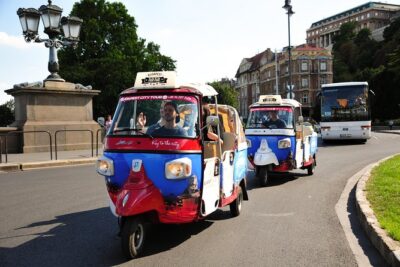
Private Budapest TukTuk Tour: Custom Route, Hotel Pickup
Read our review →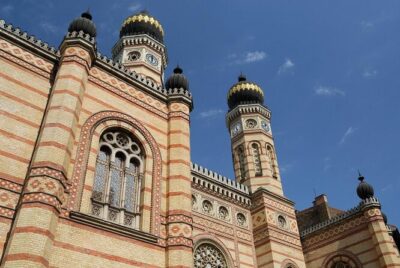
Budapest Essentials Private Tour Highlights and Hidden Gems
Read our review →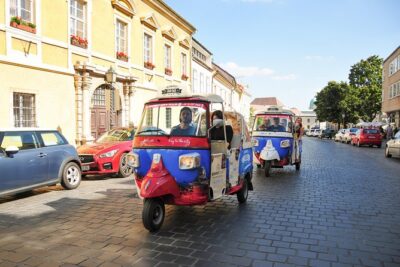
Budapest One Way Private Transfer to or from Airport
Read our review →
Budapest Private Luxury Sightseeing Tour with Guide and Transport
Read our review →
Private Budapest City tour with Classic Russian Jeep or G-Wagon!
Read our review →
Budapest Private Full Day City Sightseeing Tour Walking or by Car
Read our review →