
Reviewed · CITY TOURS
Downtown Pest Walking Tour
Budapest history, on foot, in 3 hours. This downtown Pest walk is fascinating because it connects the landmark buildings you see with how Pest became the political and financial core of a new Hungary. I love the Art Nouveau focus, because it helps you recognize Budapest’s style instead of just snapping photos. I also like how the route moves from power to community, from Parliament to major memorial and religious sites. One possible drawback: this is a true walking tour, so if you get tired easily, plan for steady pavement time.
You start at Szamos Cafe near Kossuth Lajos tér, then work your way through the Danube-side center of Pest, ending at Heroes Square. The tour runs in English with a live historian guide, and the guidance style tends to be clear and patient, including for guides such as András and Zsofia.
In This Review
- Key takeaways before you go
- Entering Downtown Pest Through Parliament at Kossuth Square
- What you should watch for
- Freedom Square and the Stock Exchange Palace, where money shaped the city
- A practical note on pacing
- A quiet, essential moment at the Holocaust Monument by the Danube
- Consideration
- Cardinal Mindszenty’s statue, a story of hiding and survival
- Art Nouveau in Pest, then St. Stephen’s Basilica and a second giant synagogue
- Practical tip
- Andrássy Boulevard and the Opera House, designed for nobility
- Consideration for timing
- Heroes Square and the 1896 1,000-year anniversary that shaped national pride
- Price and value: is $123 for 3 hours worth it?
- When it might not be the best fit
- Who this downtown Pest tour suits best
- Should you book this Downtown Pest Walking Tour?
- FAQ
- Where is the meeting point for the Downtown Pest Walking Tour?
- How long does the tour last?
- What language is the guided tour offered in?
- What sites does the tour focus on in downtown Pest?
- Is this tour a private or small group experience?
- Where does the tour end?
- Who guides the tour?
- Can I get a refund if I cancel?
- Can I reserve now and pay later?
Key takeaways before you go
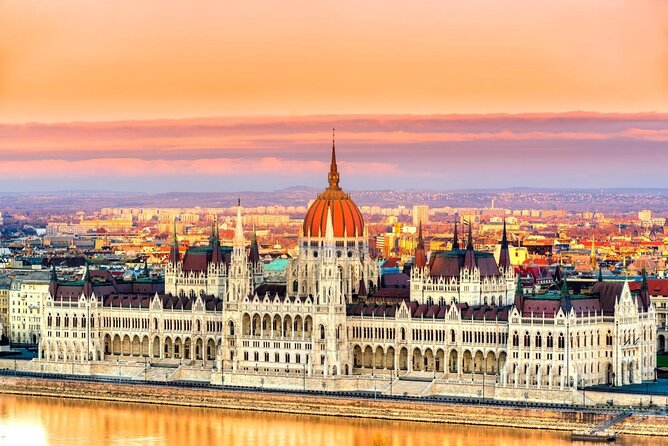
- Kossuth Square first, then you zoom into the story of modern Hungary from the biggest symbols of state power
- Holocaust Monument by the river adds real weight to the walk without turning it into a detour
- Freedom Square and the Stock Exchange Palace show how finance shaped the city’s look
- Cardinal Mindszenty’s statue connects Hungary’s 20th-century struggle with a very personal tale
- Andrássy Boulevard and the Opera House area let you see noble-era planning in how the avenue works
- Heroes Square ends with the 1896 1,000-year anniversary moment that still frames national pride
More of Pest crossed at walking pace:
- Budapest: Buda Castle Walk with Saint Stephen’s Hall
★ 4.5 · 3,012 reviews - Big Bus Budapest Hop-On Hop-Off Bus and Walking Tour
★ 3.5 · 2,206 reviews - Budapest: Buda Castle District Walking Tour
★ 4.6 · 2,108 reviews
Entering Downtown Pest Through Parliament at Kossuth Square
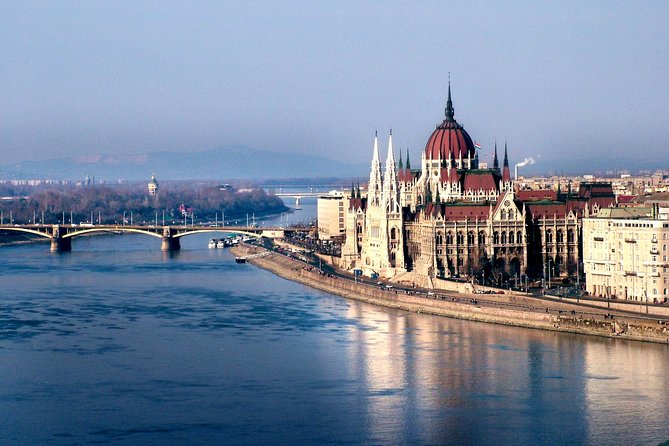
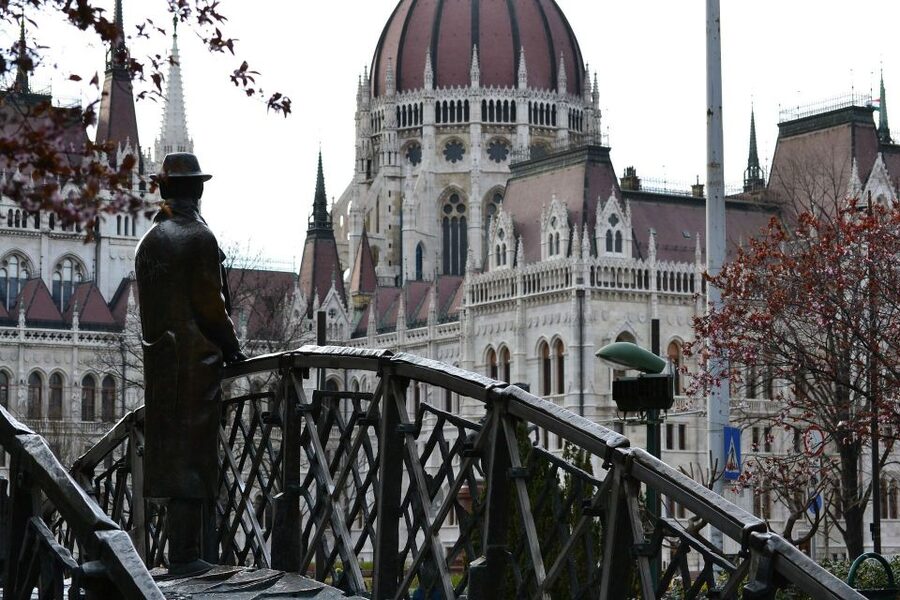
The tour’s best trick is simple: it starts where the drama is. You meet at Szamos Cafe (Kossuth Lajos tér 10) and then head to Kossuth Square, right in front of Parliament. In 1896, when it opened, it was described as the largest and most costly structure ever built in Hungary, so even from the outside you get the message: this is not a minor civic building.
What I like most here is how the guide’s historian lens changes the way you look at details. Parliament is massive and impressive on the river-side view, but the real payoff is the shift indoors, where you can appreciate works of art connected to nearly every famous Hungarian painter and sculptor of that era. That matters for first-time visitors, because it stops you from treating the building like a photo backdrop. You start to see it as an identity project.
What you should watch for
- If you’re the kind of traveler who reads building plaques and visual symbolism, you’ll get a lot from this stop.
- If you’re sensitive to crowds, plan to arrive with a little time buffer so you do not feel rushed while the group gathers.
Freedom Square and the Stock Exchange Palace, where money shaped the city
After Parliament, you move to the Holocaust Monument along the Danube, then continue on to Freedom Square. This pairing works better than you might expect. The emotional gravity near the river prepares you to understand why later grandeur can feel complicated, not just impressive.
Freedom Square is the tour’s next big “wow,” and for good reason. It was originally built as the city’s financial center, and many people consider it Budapest’s most beautiful square. When you walk around it as part of a guided route, you begin to notice how architecture and urban planning reinforce status: big institutions, formal street sightlines, and opulent buildings that still house banks.
The star on this stretch is the Stock Exchange Palace, another major centerpiece of the square. Seeing it as part of a historical arc is key. You’re not only looking at a grand façade, you’re also learning how Pest’s wealth helped drive the city’s development in the second half of the 19th century. That makes the place feel more understandable, even if you do not know the names of every architect or the dates of every financial reform.
A practical note on pacing
This stop cluster is visually dense, meaning you’ll want to keep your expectations realistic. You will not have time to linger in deep detail like you would on a museum visit. The value comes from context plus a fast, efficient walk that hits the landmarks that define the era.
Other circuits taking both banks in one go:





A quiet, essential moment at the Holocaust Monument by the Danube
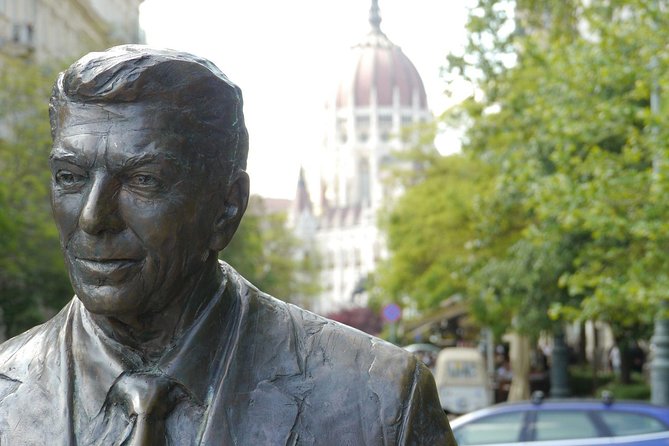
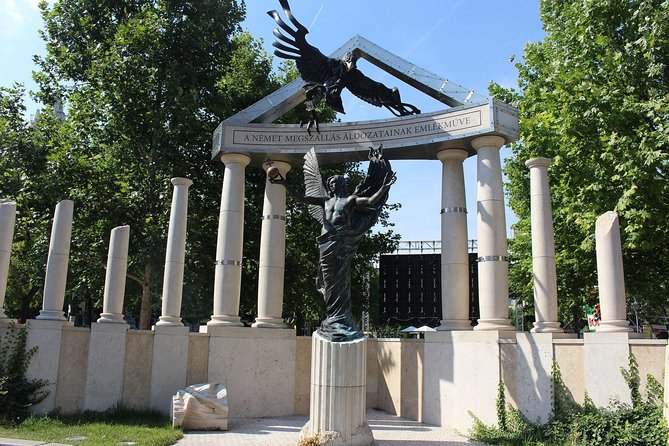
Right behind Parliament, on the Danube, you’ll find the Holocaust Monument. The tour frames it as tribute to the many Jewish citizens of Budapest who were tragically killed on that same spot in the last months of World War II. That location detail matters. It grounds the history in place, not just in a lecture.
I appreciate that the tour does not skip over the topic to keep things “light.” It’s a walking tour, so you get a focused time window, but the intention is clear: remember who was affected, and remember where it happened. For many visitors, this is the stop that turns a scenic city walk into something more human and more real.
Consideration
If you prefer lighter topics on day one, you should know this stop carries emotional weight. Give yourself a minute to pause and look before you move on to the more architectural sections of the route.
Cardinal Mindszenty’s statue, a story of hiding and survival
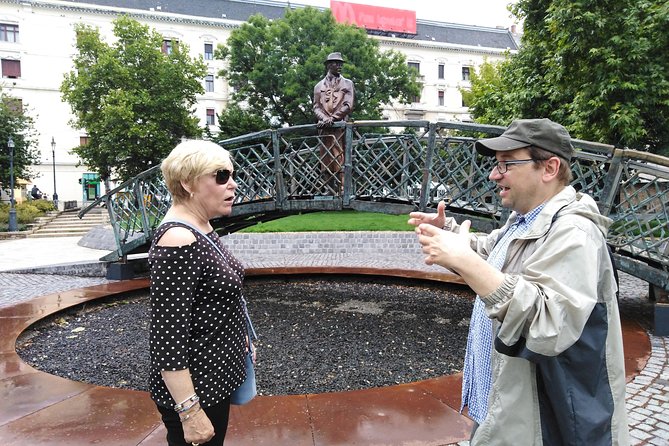
From the major national themes, the walk shifts to a very specific figure through the statue of Cardinal Mindszenty. You’ll see him on the route as you continue through Freedom Square and toward the next cultural cluster.
The guide’s focus here is tied to a personal and dramatic detail: Cardinal Mindszenty, head of the Catholic Church in Hungary, lived hidden for 15 years in the U.S. embassy while on the run from the communists. That sort of fact does something useful for visitors. It turns a statue into a living chapter of 20th-century history, not just another point on a route map.
I also like that this stop sits naturally between the financial and architectural sections. The route keeps moving, but it keeps changing your lens. You see how power can look different depending on who holds it, whether it is a government, a church leader, or the systems around them.
Art Nouveau in Pest, then St. Stephen’s Basilica and a second giant synagogue
Next comes the Budapest look that visitors often come for in the first place: Art Nouveau. You’ll pass several beautiful Art Nouveau buildings while heading toward St. Stephen’s Basilica. The tour’s value is that it helps you understand the style in a practical way. You learn to recognize that Budapest’s Art Nouveau is not just decoration. It’s part of the city’s identity at the moment when Pest was becoming important enough to attract grand investment and ambition.
From there, you reach St. Stephen’s Basilica. Even if you know it by name, walking toward it in this historical flow matters because it keeps tying grand religious architecture to the time when Pest was gathering political and economic influence.
A bit farther along, you’ll also encounter the second-largest synagogue in the world. The tour presents it as a monument to the vital role of the city’s Jewish population and its wealthy bourgeois in developing the city. That framing can change how you look at religious architecture. It is not only about faith structures, it’s also about community presence, social influence, and civic growth.
Practical tip
This portion of the walk can feel like a lot of landmark-to-landmark. If you want better photos, slow down for a moment at each major corner. You’ll catch better angles without forcing the group to wait.
Andrássy Boulevard and the Opera House, designed for nobility
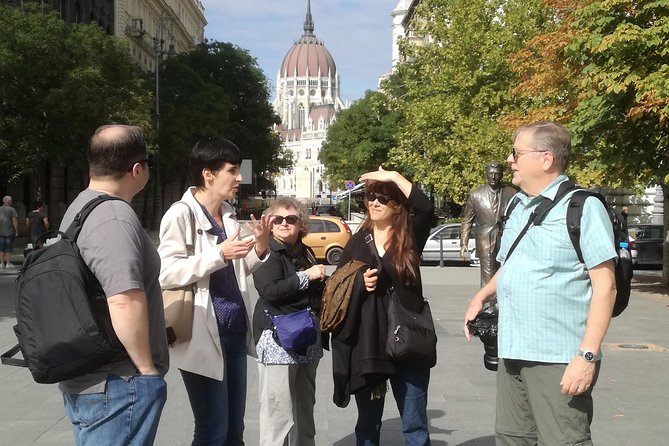
After the basilica and synagogue area, you move to Andrássy Boulevard. This is one of the tour’s signature “urban planning” moments. The boulevard is described as an esplanade designed for Hungary’s nobility, and walking it helps you see how a city can be laid out for a class as much as for traffic.
What I find helpful as a visitor is thinking of Andrássy Boulevard as a stage. Even though you are walking on foot, you experience the sense of ordered space that suits processions, public display, and a formal city image. It makes the city’s grandeur feel intentional, not accidental.
You’ll also make a short stop at the Opera House. Even in a quick pause, it works because it fits the theme of nobility and cultural prestige. And if you enjoy architecture, this stop gives you a clean break from the density of religious and memorial sites.
Consideration for timing
Because the tour ends later at Heroes Square, you might want to keep an eye on your energy during this stretch. This is often when the walk feels longest, since the avenue is built for strolling, but your schedule still moves you along.
Heroes Square and the 1896 1,000-year anniversary that shaped national pride
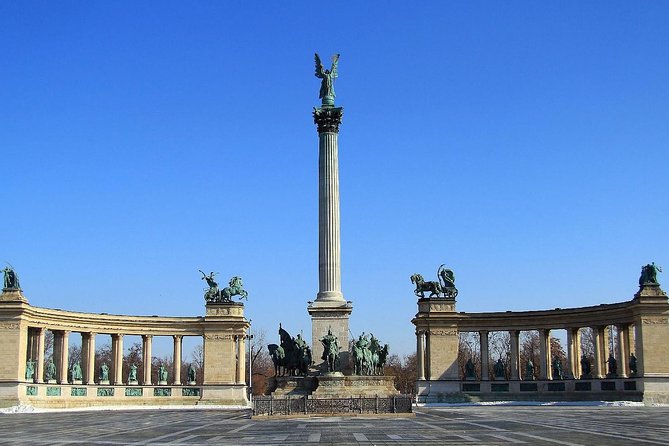
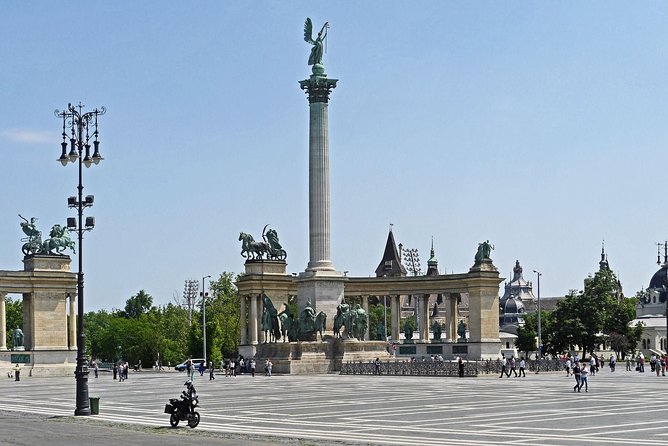
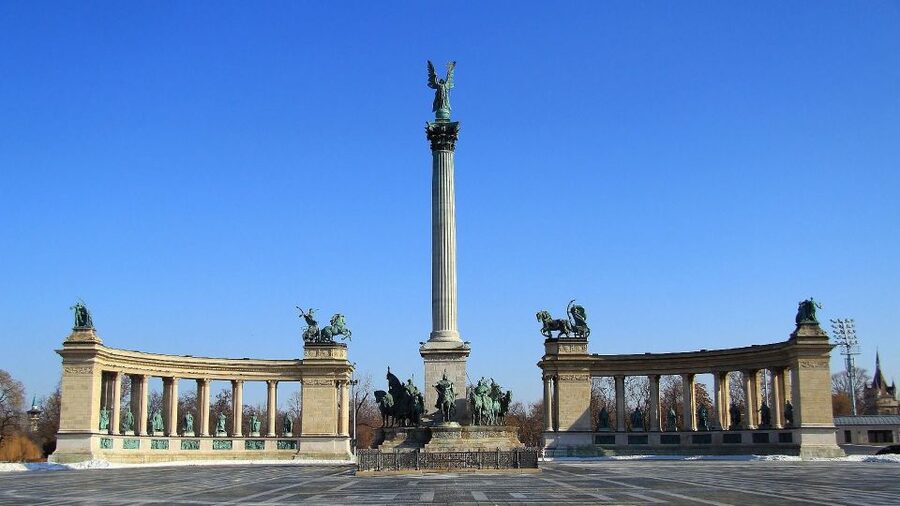
The tour finishes at Heroes Square. This is the payoff for many people because the square is tied to a very specific historical celebration: in 1896, Hungarians celebrated the 1,000-year anniversary of the founding of their kingdom.
Ending here matters because it lets you see the full arc of what you walked through. You start at Parliament and its artistic national symbolism. You pass through a financial center at Freedom Square and the Stock Exchange Palace. You encounter memorial and religious landmarks that show community and tragedy. Then you land in a national monument designed to present a unified story of identity and continuity.
I like ending at Heroes Square because it gives you a natural place to slow down after the walking pace. Even if you only stay long enough to take a few final photos, it feels like your brain gets closure on the theme: how Pest grew into the heart of the newborn Hungarian nation and how that growth still shows in stone today.
Price and value: is $123 for 3 hours worth it?
At $123 per person for a 3-hour guided walk, this is not a “cheap and cheerful” city stroll. You’re paying for the key difference between self-guided wandering and a guided historical route: interpretation.
Here’s how the value adds up for me:
- You cover major landmarks in a short time window, from Parliament to Freedom Square, and from Andrássy Boulevard to Heroes Square.
- You get an expert framing of why those places matter: how Pest became the political, financial, and religious center in the second half of the 19th century.
- You receive English narration from a live historian guide, which is especially useful for understanding memorial context and the purpose behind monuments and urban design.
- You benefit from a structured route that prevents you from guessing which buildings connect to each other historically.
When it might not be the best fit
If you already know Hungarian history well, or if you prefer to travel at your own tempo without group pacing, you might feel the time pressure. Also, the tour is a lot of landmark walking in a compact center, so it’s better suited to visitors who enjoy moving through neighborhoods rather than stopping for long breaks.
Who this downtown Pest tour suits best
This tour is a strong match if you:
- Want an efficient way to understand how Pest shaped Hungary’s identity in the late 1800s
- Enjoy architecture with context, especially Art Nouveau and monumental civic buildings
- Appreciate memorials and want the stop explained clearly within the walking flow
- Prefer English guidance from a historian, rather than piecing together connections on your own
It may be less ideal if you:
- Struggle with steady walking for a full 3 hours
- Prefer a purely visual sightseeing route without historical and emotional context
Should you book this Downtown Pest Walking Tour?
If you want Budapest to make sense, not just look impressive, I think this is a smart booking. The itinerary focuses on the exact places that define downtown Pest, and the historian-led format helps you understand what you are seeing, from political symbolism at Parliament to the financial story of Freedom Square and the 1896 national celebration at Heroes Square.
Book it if you like structured pacing and you want history that explains buildings, not just names and dates. Skip it if you want lots of free time for cafes and slow wandering, because this is designed to keep you moving and to hit the main story points in one smooth route.
FAQ
Where is the meeting point for the Downtown Pest Walking Tour?
You meet at Szamos Cafe, Budapest Kossuth Lajos tér 10.
How long does the tour last?
The tour lasts 3 hours.
What language is the guided tour offered in?
The live tour guide speaks English.
What sites does the tour focus on in downtown Pest?
You’ll see major sights including Budapest Parliament at Kossuth Square, the Holocaust Monument, Freedom Square and the Stock Exchange Palace, a statue of Cardinal Mindszenty, St. Stephen’s Basilica, a large synagogue, Andrássy Boulevard, a stop at the Opera House, and the end point at Heroes Square.
Is this tour a private or small group experience?
Private or small groups are available.
Where does the tour end?
The tour ends at Heroes Square.
Who guides the tour?
A historian guide leads the walk.
Can I get a refund if I cancel?
Free cancellation is available if you cancel up to 24 hours in advance for a full refund.
Can I reserve now and pay later?
Yes, you can reserve now and pay later.
Newest from the Danube banks
- Gödöllö Royal Palace Privately with full board★ 5.0 · 1 review
- Private Budapest Tour with Thermal Bath or Market Visit★ 5.0 · 1 review
- Private Budapest walking tour – 4 hours★ 5.0 · 1 review
- Budapest Half Day Car Tour with Guide★ 5.0 · 1 review
- Budapest Private Transfer from Budapest city centre to Budapest Airport★ 3.0 · 1 review
- Magic Theme Team Adventure Game in the Streets of Budapest★ 5.0 · 1 review
- Budapest: Eat the Street, food tour with wine, 16+ tasting★ 5.0 · 1 review
- Private Budapest Christmas Market guided tour and Danube Evening cruise package★ 5.0 · 1 review
City Tours, compared.
Budapest: City Highlights Sightseeing Cruise
Read our review →
Budapest: Nighttime or Daytime Sightseeing Cruise
Read our review →
Budapest: By Night Sightseeing Cruise with Welcome Drink
Read our review →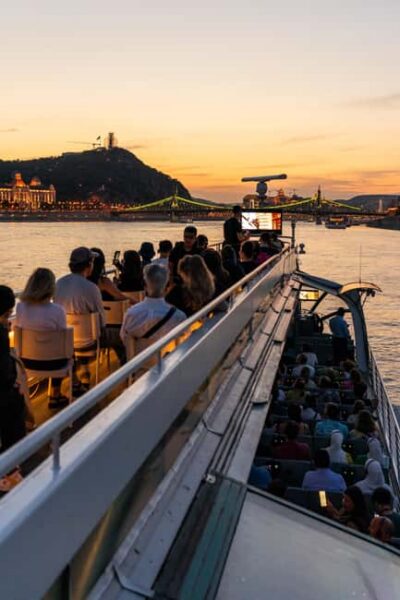
Budapest: 1-Hour Evening Sightseeing Cruise with Drink
Read our review →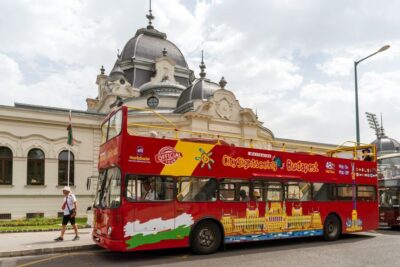
Budapest: City Sightseeing Hop-On Hop-Off Bus Tour & Extras
Read our review →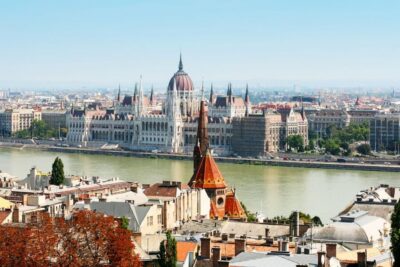
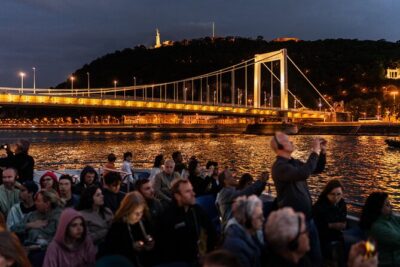
Budapest Danube River Sightseeing Night Cruise with Drink
Read our review →
Budapest: Premium Sightseeing Cruise with Tokaj Frizzante
Read our review →Browse the lists this tour appears in