
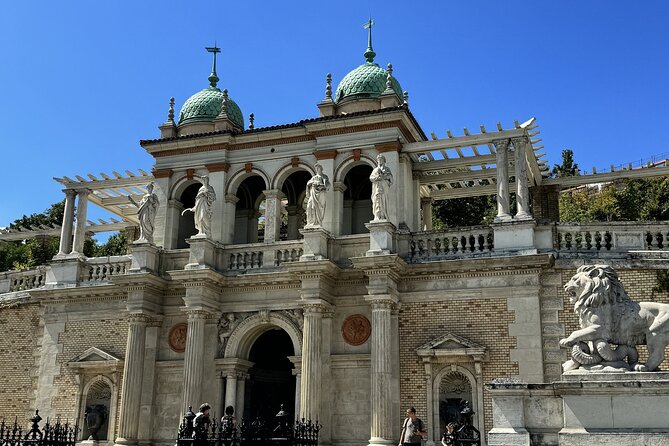
Reviewed · BUDA CASTLE HILL TOURS
Gems of the Budapest Castle District Walking Tour
Castle views, told like a story. This walk strings together royal buildings, WWII memory, and lookout points in about 2 hours, with a live guide in English. I especially like the way the route gives instant orientation to the Castle Hill, and how you get real time for photos at the best viewpoints. One thing to plan for: it is a lot of short stops packed into a short window, so you will want steady shoes and a relaxed pace.
You start at the Holy Trinity Statue near Szentháromság u. and end at the Castle Garden Bazaar by the Várkert Bazar side of the hill. The listed sights are ticket-free, so your money goes mostly to your guide’s storytelling and pointing out details you would otherwise miss. With a maximum group size of 45, the tour feels like a guided circuit, not a jammed bus of strangers.
The guide quality is a big deal here, and one name that shows up often is Antel, noted for sharp English and a friendly, humorous way of explaining symbolism. If you want a walk that mixes architecture, statues, and the “why” behind the stones, this fits. If you prefer long museum-style time at fewer places, you may feel slightly rushed.
In This Review
- Key highlights you will actually care about
- A tight Castle District circuit, from Holy Trinity to Castle Garden Bazaar
- Price and pace: $3.61 buys a guide, not a museum day
- Holy Trinity Statue and Matthias Church: symbols before you get the views
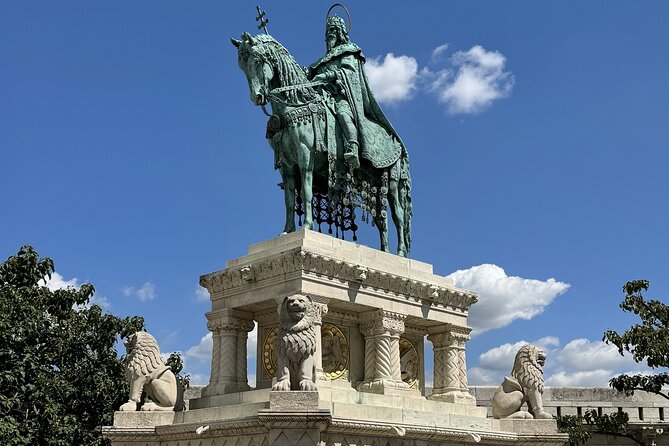
- Fisherman’s Bastion: double cross meaning and Pest panoramas
- Pope and royal statues, plus the National Archives of Hungary
- Saint Mary Magdalene and Setany: WWII memory in plain sight
- Andras Hadik, the oldest confectionery clue, and the Labyrinth
- Independence War statue, Houdini’s House, and Szent György Street’s political power
- Buda Hill Funicular, Turul bird, and the King Matthias fountain romance
- Lions Court to the Royal Riding Hall: where Castle District feels like theatre
- Prince Eugene of Savoy, S. Maria Mater Dei, and the Castle Garden finish
- Who this tour suits best (and who should skip it)
- Should you book the Gems of the Budapest Castle District Walking Tour?
- FAQ
- What is the duration of the Gems of the Budapest Castle District Walking Tour?
- How much does the tour cost?
- Where do I meet for the tour?
- Where does the tour end?
- What time does the tour start?
- Is the tour offered in English?
- Is there a mobile ticket?
- What is included in the price?
- How large is the group?
- Is the tour dependent on weather?
- Can I cancel for a full refund?
Key highlights you will actually care about
- A timed route that hits the Castle District core fast, without needing extra tickets for the stops listed
- Fisherman’s Bastion with built-in photo time, plus stories behind the statues and crosses
- WWII memory built into the walk, including the siege story near Setany and the cannon row
- A strong symbolism thread, from national birds and royal fountains to revolution-era statues
- A guide that explains, not just points, with details like double-cross meaning and coronation symbols
- Photo breaks at the best viewpoints, not just constant marching
Other ways up Castle Hill:
- Budapest: Buda Castle Cave Tour
★ 4.7 · 5,677 reviews - Budapest: Buda Castle District Vampires and Myths Night Tour
★ 4.6 · 3,830 reviews - Budapest: Buda Castle Walk with Saint Stephen’s Hall
★ 4.5 · 3,012 reviews
A tight Castle District circuit, from Holy Trinity to Castle Garden Bazaar
This is the kind of walking tour that helps you get your bearings fast. You begin at the Holy Trinity Statue (Szentháromság u., 1014) and finish at the Castle Garden Bazaar near Ybl Miklós tér (1013), right by the Várkert Bazar side of Castle Hill. The total time is about 2 hours 10 minutes, and the route is designed around a steady sequence of “look, learn, move on.”
Because the tour is built from short stops, you are not stuck for ages in one place. That matters in Budapest, where you may want flexibility for dinner plans or another neighborhood after. The pacing also makes sense if you are doing other things in the city center, since the Castle District can swallow a day if you are not careful.
All stops on the provided route are listed as admission ticket free, so you are not juggling lines or separate ticket purchases for each sight. What you do “pay for,” directly, is a live guide who connects the dots between religious art, royal power, and national identity. In practice, that connection is what makes statues and courtyards feel less like random decorations.
The tour is offered in English, uses a mobile ticket, and is capped at 45 people. Service animals are allowed, and it is described as suitable for most travelers. The big condition is good weather, since the experience requires it, so plan to bring a light layer and check the forecast before the 3:00 pm start.
Price and pace: $3.61 buys a guide, not a museum day
At $3.61 per person, this is priced like an “add-on” but delivered like a real guided walk. The value comes from the structure: a live guide, a timed route, and multiple major sights in a compact window. Instead of paying for separate entrances, you get guided interpretation across the Castle District core.
The tradeoff is simple: this is a walking sampler, not a slow stroll. You will spend plenty of time outside, and several stops are around 5 minutes each. There are a couple longer moments, like a 20-minute window for photos at Fisherman’s Bastion and 10 minutes at the Labyrinth. Still, the overall rhythm is quick, so go into it expecting to keep moving.
For me, that quick pace is a plus when the guide is good. The stop lengths force the guide to pick what matters, like construction background on the Holy Trinity column, the symbolism of figures, and the architectural details at Matthias Church. If the guide is bland, this kind of route can feel like speed reading. When the guide is strong, it feels like you are being handed the keys to a complicated neighborhood.
Group size matters too. With a maximum of 45, you are unlikely to feel truly crowded. And since it is a walking tour, you can actually look up at the details instead of only seeing them from a distance.
One practical note: bring a camera strap or a phone lanyard. With multiple statue stops and designated photo time, you will be pulling out your device more than you expect.
Holy Trinity Statue and Matthias Church: symbols before you get the views
Your walk begins at the Holy Trinity Statue, where you get the story behind the column’s construction and the symbolism of the figures. This is not random ornament talk. The guide sets up a way to “read” what you are seeing, so later you recognize patterns: religious imagery, national meaning, and how monuments communicate values.
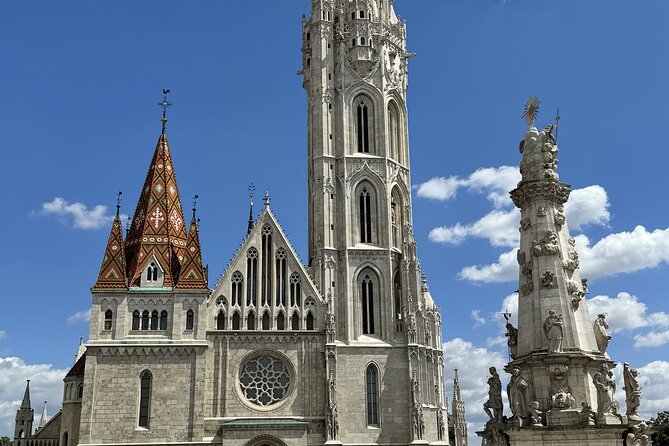
From there, you head to Matthias Church. Here the focus is on the foundation of the church and architectural details. That foundation context matters because Matthias Church sits in the heart of Hungary’s royal narrative, and the building style is part of that message. You are not just taking a photo of a pretty church, you are being told what to look for and why those design choices make sense.
These early stops set a tone for the whole tour. You start with the “why” behind religious and royal symbolism, which makes the statue-heavy middle section feel connected instead of scattered. If you tend to skim over monuments, this is the moment where you can fix that habit.
If there is a drawback at the start, it is only that you may feel like you are learning terminology before you have earned the viewpoint payoff. Stick with it. Within an hour, Fisherman’s Bastion and the Castle Hill viewpoints make the symbolism feel more grounded.
Fisherman’s Bastion: double cross meaning and Pest panoramas
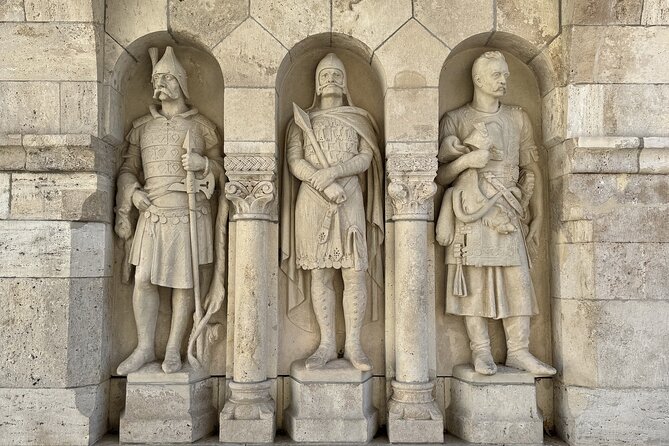
Fisherman’s Bastion is the main view stop, with about 20 minutes allotted for photos and wandering around the statues. This is where the tour turns from “interesting explanations” into “okay, I get it now.” You will see intriguing statues, and you will also get the relation of the double cross with Hungarians, which gives the lookout point a deeper layer than postcard scenery.
The tour also includes panoramic views over Pest. That view is the part you cannot fake. Even if you know Budapest well, standing here changes your sense of the river and city layout.
What I appreciate is that the photo time is built into the schedule. You are not forced to sprint, tap a shot, and run. Instead, you get enough breathing room to reposition for a better angle, zoom in on statue details, and then come back out for the wider skyline.
There are also intriguing legends tied to the area. Legends are often messy, so the best guides keep them grounded and explain what the myth is trying to express. You are not being asked to memorize a storyline. You are being shown a way to understand why a spot gets legendary.
If you want one stop to justify the whole tour, this is it.
More of Pest crossed at walking pace:





Pope and royal statues, plus the National Archives of Hungary
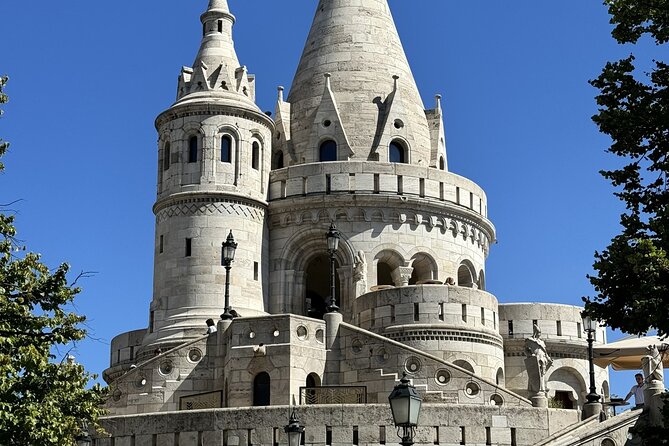
After the Bastion, the route heads to the Statue of Pope Innocent XI. This stop connects multiple historical figures, including Pope Sylvester II and a coronation statue connected to King Matthias. You also get the claim that this area includes the oldest building of Hungary. Even if you do not catch every detail, the guide’s job here is to show the “cluster logic” of power and belief around the castle district.
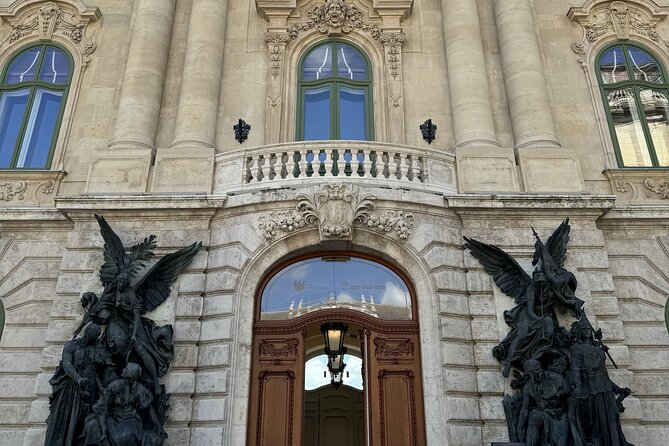
Next is the National Archives of Hungary, where you can appreciate architectural wonders without needing an entry ticket. You will look at the Vienna gate, plus Golden signatures by Uri street. You also get statues nearby and the tales they tie to the surroundings.
Why this works on a walking tour is that you see buildings as part of a map, not as isolated landmarks. Archives sound dry until someone explains how architecture and placement help a city tell its own story. Here, you get enough context to make the stone look intentional.
A potential drawback is that this section may feel more explanation-driven than view-driven. If you already know the area well, you might skim. If you are new to Budapest, this is where the walk becomes useful for the rest of your trip, because the guide is training your eye.
Saint Mary Magdalene and Setany: WWII memory in plain sight
The Church of Saint Mary Magdalene is next, and it adds a heavy note without making the tour feel morbid. You get a monument of the coronation mantle of the Hungarian kings, plus ruined traces tied to World War II. It is one of those stops where the guide can explain how a religious monument can carry national memory, and how physical damage becomes part of the story.
Then you move to the Arpad Toth Promenade, also called Setany. Here the details get very specific. You learn about the first flag after WWII, see a row of cannons, and take in views of the Buda hills. There is also a statue of Szekely Knight, and the guide provides a brief history of the WWII and siege of Budapest.
This section is valuable because it breaks the stereotype of the Castle District as only royal and romantic. You see how the same hill that holds kings also remembers sieges. The promenade layout also gives you a sense of space, so the history feels less like a lesson and more like a place you can picture.
One thing to keep in mind: ruins and memorial themes can make some people uncomfortable. If you prefer light sightseeing, you might want to mentally balance this section with the later fountain and gardens.
Still, if you want Budapest history that touches daily life and national survival, this is a strong portion of the walk.
Andras Hadik, the oldest confectionery clue, and the Labyrinth
The Statue of Mounted Andras Hadik brings the tour into knightly legend territory. You get background on him as the most famous Hungarian knight, plus local trends that connect to nearby culture. One detail that adds personality is mention of the oldest Hungarian confectionery, which makes the area feel less like an open-air monument and more like a living neighborhood with food history.
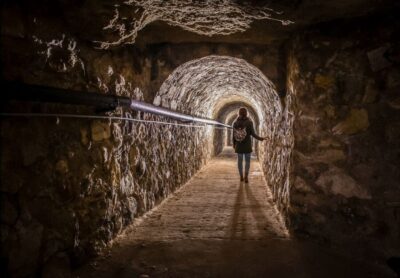
Then the walk reaches the Labyrinth, described as a natural cave used as a dungeon. You also hear the Dracula and Vlad the Impaler connection. Even if you have seen Dracula-themed marketing before, the cave angle makes it feel more local than cinematic.
The Labyrinth stop is around 10 minutes, which is enough to understand the premise and then decide how much you want to look around. This is also where a good guide matters. Cave stories can turn into spooky chaos fast. The best approach is to keep it factual enough to feel grounded while still honoring the legends.
If you have a strong interest in folklore and darker history, this is one of the most fun stops. If you do not, just treat it as a quick curiosity break before you head back toward the independence and royal symbols.
Independence War statue, Houdini’s House, and Szent György Street’s political power
Next up is the Statue of Independence, followed by context about the Hungarian revolution of 1848. The guide connects the symbolism of the statue to the original war and what it meant for Hungarian independence. This is another “read the monument” moment, where you learn what symbols are trying to say, not just what they look like.
Nearby, you also pass or reference House of Houdini. There is no huge time budget here (about 5 minutes listed), but the presence of Houdini in a Castle District walk is a reminder that cities layer different eras on top of each other. Budapest does not only speak in royal Latin and medieval stone.
Then you head to Szent György Street. Here the focus is on offices of the president and prime ministers, plus ruins of medieval castles and secret stories. Even in a short stop, you get a sense of how modern political authority sits next to older remnants. It makes the whole district feel like a working stage, not a frozen theme park.
This part is also a good reset. After the heavier WWII and dungeon themes, you get back to national identity and modern governance in quick snapshots.
Buda Hill Funicular, Turul bird, and the King Matthias fountain romance
At the Buda Hill Funicular stop, you get a mini transport-history lesson. It is described as the second oldest funicular, plus there is a “zero kilometer stone” and mention of the oldest bridge of Hungary. Even if you do not plan to ride, the stop gives you context for why Budapest’s hills and bridges matter so much to its identity.
Right after that comes the Turul Bird Statue. You learn about Hungary’s national bird and the background behind the naming story of the Hungarians. That naming storyline can be mythic, but the value here is how the guide connects national identity to symbols. Once you hear it explained, the bird stops being a random statue and becomes a cultural shorthand.
Then you reach the Fountain of King Matthias, described as the prettiest fountain in Budapest and tied to a romantic-tragedy story. This is where you get a visual reward. It also provides variety after all the statues and memorials, because fountains and courtyard details create a different kind of photo moment.
If the pace ever feels tight, this section is your chance to linger a bit. Take a moment to frame the fountain, then let the story stick before you move on.
Lions Court to the Royal Riding Hall: where Castle District feels like theatre
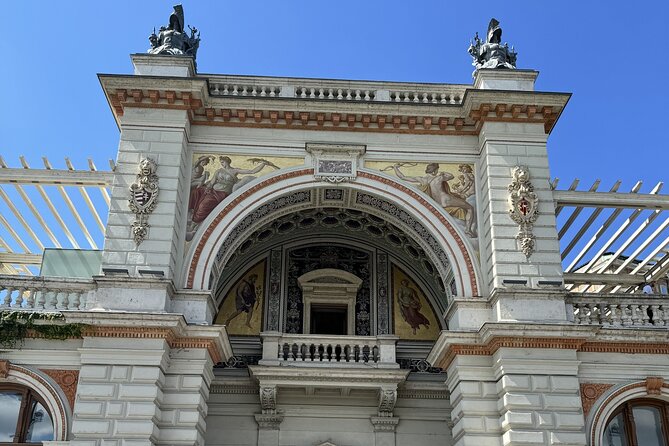
Entering the Lions Court at Buda Castle is like stepping into the Castle District’s “front stage.” This courtyard is about the facade, with mythical statues and explanations tied to what you see. The guide’s job is to point out the characters and the meaning behind them, so you start recognizing recurring motifs.
Next is the Royal Riding Hall, described as the royal Hungarian stable. This short stop is around 2 minutes listed, so it is not a long look. But even in a brief moment, it helps you understand how the castle functioned. Thrones matter, but horses and ceremonies mattered too.
If you like architecture, this is the kind of courtyard moment you enjoy because the details reward closer viewing. If you are not into stonework, the guide’s explanations can still make it feel like a set with a story.
In this portion, the tour shows its biggest strength. Instead of treating Buda Castle as a single landmark, you see multiple layers: symbolism, court life, and the way space shapes ceremony.
Prince Eugene of Savoy, S. Maria Mater Dei, and the Castle Garden finish
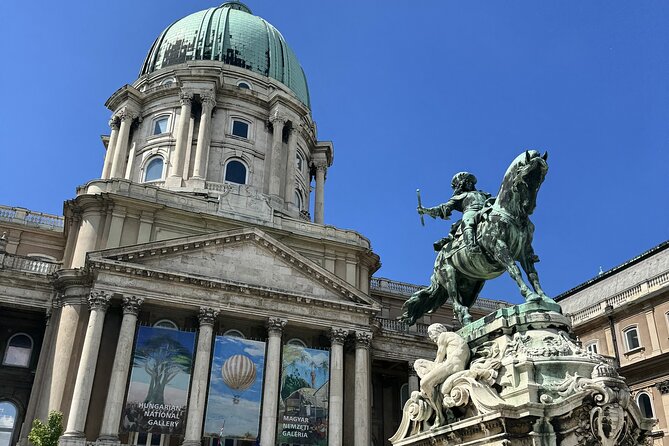
The route culminates in a large, memorable section of sculpture and garden views. First is the Prince Eugene of Savoy equestrian statue, described as the biggest statue in the castle district and linked to his role as a liberator of the Hungarians from the Ottomans. The scale here matters because it turns history into something you can feel with your eyes.
Then you reach S. Maria Mater Dei, with a statue of the Virgin Mother Mary and baby Jesus. You also get a connection between bridges of Budapest and their relation to Hungarian monarchs. That bridge connection is a good reminder that the city’s landmarks are not isolated. Even when you are standing high on Castle Hill, the stories run down toward the river and the routes people actually use.
Finally, you arrive at Castle Garden. You will see the garden setting, a spiral staircase tower, and a Triton fountain. Ending here feels smart because it offers a calmer final scene, with space to breathe and take photos without another rush of statue stops.
The tour then finishes at Castle Garden Bazaar, described as the Várkert Bazar, where you can appreciate the architecture and facade statues tied to the infrastructure. This gives you a practical landing spot at the end of the hill, so you are not trapped in the middle of sightseeing with nowhere to go next.
Who this tour suits best (and who should skip it)
This tour is a great fit if you want a guided “map in your head” for Budapest’s Castle District. It works especially well if you like symbolism, short stories, and viewpoint stops, because you get both explanations and photo time. It is also a good value if you are traveling with limited time and want to see more than just Matthias Church from the outside.
You might skip it if you prefer slow museum pacing. This walk is built on quick stops, and the best parts are the explanations plus the photo windows, not lingering at one site for an hour. If you want deep indoor time, you will likely need a separate plan.
If you are doing this as your first Castle District outing, it is even more useful. You will return to places later with sharper questions, and you will know what you are looking for.
Should you book the Gems of the Budapest Castle District Walking Tour?
Yes, if you want value and direction in the Castle District. The combination of live English guiding, ticket-free stops, and a route that balances royal buildings with WWII memory makes it a smart use of a half-day. The photo time at Fisherman’s Bastion and the quick, story-based stops help you see the hill’s character without wasting hours.
Book it if you like walking tours that explain what you are seeing, not just where to stand. It is also ideal if you want a guide who can keep the English clear and the stories easy to follow, as reflected by strong notes about Antel’s presentation and humor.
Skip or adjust your expectations if you hate fast pacing or want long indoor breaks. This is a lot of ground in a short span, so wear shoes you trust and plan to let the guide set the tempo. If you do that, you will leave the Castle District feeling like you understood it, not just photographed it.
FAQ
What is the duration of the Gems of the Budapest Castle District Walking Tour?
It lasts approximately 2 hours 10 minutes.
How much does the tour cost?
The price is $3.61 per person.
Where do I meet for the tour?
The start is at the Holy Trinity Statue, Szentháromság u., 1014 Hungary.
Where does the tour end?
It ends at Castle Garden Bazaar, Ybl Miklós tér 2-6, 1013 Hungary, right next to the Castle Garden by the Várkert Bazar.
What time does the tour start?
The start time is 3:00 pm.
Is the tour offered in English?
Yes, it is offered in English.
Is there a mobile ticket?
Yes, the tour uses a mobile ticket.
What is included in the price?
A live guide is included.
How large is the group?
The maximum group size is 45 travelers.
Is the tour dependent on weather?
Yes, it requires good weather. If canceled due to poor weather, you will be offered a different date or a full refund.
Can I cancel for a full refund?
You can cancel for a full refund if you cancel at least 24 hours before the experience’s start time.
Newest from the Danube banks
- Gödöllö Royal Palace Privately with full board★ 5.0 · 1 review
- Private Budapest Tour with Thermal Bath or Market Visit★ 5.0 · 1 review
- Private Budapest walking tour – 4 hours★ 5.0 · 1 review
- Budapest Half Day Car Tour with Guide★ 5.0 · 1 review
- Budapest Private Transfer from Budapest city centre to Budapest Airport★ 3.0 · 1 review
- Magic Theme Team Adventure Game in the Streets of Budapest★ 5.0 · 1 review
- Budapest: Eat the Street, food tour with wine, 16+ tasting★ 5.0 · 1 review
- Private Transfer Budapest Airport BUD to Budapest by Car or Van★ 5.0 · 1 review
Buda Castle Hill Tours, compared.

Budapest: Buda Castle District Vampires and Myths Night Tour
Read our review →
Budapest: Buda Castle Walk with Saint Stephen’s Hall
Read our review →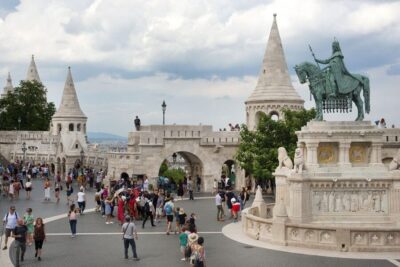

Budapest: 3-Hour Grand City Tour and Castle Walk
Read our review →
Buda Castle District Dark History, Legends and Vampire Night Tour
Read our review →
Budapest: Buda Castle District Walking Tour with a Historian
Read our review →
Browse the lists this tour appears in