Reviewed · PRIVATE
Private Art Nouveau Tour Budapest
Art Nouveau turns Budapest into a living museum.
This private Budapest Art Nouveau tour strings together the city’s most important Secession buildings, with interior access where possible, plus a cozy coffee break in period surroundings. I like that you get a professional art historian guide who connects the architecture to Hungarian identity instead of just pointing out pretty details.
Two things I especially like: I love the coffee stop at Parisian Passage Café, and I love how the tour format stays flexible enough to keep the story human and easy to follow. One drawback to consider is the pre-tour communication, since there has been at least one case where meeting details did not arrive on time, and that almost caused a missed start.
In This Review
- Key highlights worth your attention
- Why Budapest’s Secession story works best in person
- Private pace, pickup, and what your guide actually teaches
- Stop 1: Parisian Passage Café, coffee inside a renovated Art Nouveau passage
- Stop 2: Liszt Academy, Hungarian music meets international Secession
- Stop 3: Vaci Street, spotting Art Nouveau palaces while you walk
- Stop 4: Torok-Bankhaz Building, the Art Nouveau to Art Deco transition
- Stop 5: Postatakarek Bank, LECHNER and castle-like Secession details
- Stop 6: House of Hungarian Art Nouveau, the ideas behind the ornament
- Budapest Zoo area facades, Secession you might not expect
- Stop 7: Museum of Applied Arts, Secession trademarks even with a renovation facade
- Practical tips for a smooth 4-hour architecture walk
- Price and value: $243.53 per group, what you get for that money
- Who this Art Nouveau tour is best for
- Should you book this private Budapest Art Nouveau tour?
- FAQ
- How long is the Private Art Nouveau Tour Budapest?
- What languages is the tour offered in?
- Does the tour include hotel or port pickup?
- Is the tour private?
- What is included in the price?
- What kind of weather does the tour run in?
Key highlights worth your attention
- A truly private format for up to 15 people, so the pace can fit your group
- Hotel or port pickup and drop-off, which matters in a city where walking routes can add up
- Parisian Passage Café coffee, served in an Art Nouveau passage setting
- Liszt Academy interior access to see mosaic and hall details up close
- Hungarian Secession names you will remember, like LECHNER and MIKSA ROTH
- A guided “transition” route that shows where Art Nouveau morphs toward Art Deco
Some other Danube days worth pricing up
- Private Budapest TukTuk Tour: Custom Route, Hotel Pickup
★ 5.0 · 1,307 reviews - Budapest Essentials Private Tour Highlights and Hidden Gems
★ 5.0 · 861 reviews - Budapest Private Tuk Tuk Half-Day Tour
★ 5.0 · 606 reviews
Why Budapest’s Secession story works best in person
Budapest does not treat Art Nouveau like a museum piece. On this route, you watch the style change street to street, building to building, and you start seeing patterns that you would normally miss if you just walked around on your own.
You also get a clearer sense of the Hungarian version of the Secession movement, not just the generic idea of fancy facades. The guide’s job is to help you read the buildings like a language, from ornament to layout.
Private pace, pickup, and what your guide actually teaches
This is built as a private tour, meaning your group is the only group moving with the guide. With a duration of about 4 hours, it is long enough for real architecture learning, but short enough that you are not exhausted by the end.
I like that hotel or port pickup and drop-off is included. It removes the “how do we get there” stress and lets you focus on the buildings. The tour also runs in all weather conditions, so you will want to dress smart casual and plan for rain or wind.
The guide role matters here. Names like Suzy, Szoke Zsuzsanna, Michael, and Bogata have come up in prior tours as people who explain the architecture and then connect it to the wider Hungarian story. That mix is exactly what makes Secession feel more than decoration.
Stop 1: Parisian Passage Café, coffee inside a renovated Art Nouveau passage
Your first major interior moment is at Parisian Passage Café, a recently renovated building that runs like a covered passage. You get about 30 minutes, and the emphasis is on seeing the corridor and passage details, not just a quick glance from the street.
This is a smart warm-up stop because it teaches you how to look. Art Nouveau often works best in close range: curved lines, decorative rhythm, and materials that feel intentional when you are walking through them. Having coffee or tea included means you can slow down without losing time.
One practical tip: wear something comfortable for short indoor pauses. You will likely spend time standing still to take in details, then walking again to keep the tour moving.
Stop 2: Liszt Academy, Hungarian music meets international Secession
Next you head to the Liszt Academy, where the architecture is described as a homage to Hungarian music and also an example of the international secession style. You get around 15 minutes, including time to venture inside the hall.
Even in a short stop, the goal is visual literacy. Think mosaics and interior elements that reinforce how the style borrowed from across Europe but adapted for Hungary. If you like the feeling of a building designed for ceremony, this is the kind of hall that gives it to you.
The short duration is a trade-off. You might wish you had more time to linger, but the payoff is that the tour keeps momentum and gives you multiple style examples in one session.
Other ways an evening in Budapest can go:





Stop 3: Vaci Street, spotting Art Nouveau palaces while you walk
Then it is Vaci Street, Budapest’s famous fashion and shopping street. You spend about 30 minutes here, but the tour approach is not “shopping street, go look at stores.” It is more like a guided stroll where you stop at selected urban palaces and talk through their Art Nouveau heritage.
This part is where you start seeing the style outside the famous showpieces. The guide helps you connect facade details to the bigger story, so when you look at another building later, you will know what to pay attention to.
If you are the kind of person who wants a checklist, ask your guide to point out what to notice next: window rhythm, ironwork details, sculptural elements, or how the ground floor differs from the floors above. A good guide will tailor that to your interests.
Stop 4: Torok-Bankhaz Building, the Art Nouveau to Art Deco transition
At Torok-Bankhaz Building, the point is not just beauty. It is the bridge between two architectural eras, specifically the shift from Art Nouveau toward Art Deco. You get about 15 minutes for this stop.
The “why this matters” angle is useful. When architecture changes, the reasons are often social and economic as much as aesthetic. So the explanation tends to focus on how design language evolves, rather than treating Art Nouveau as a fixed snapshot.
If you love design history, this stop is one of the most satisfying because it adds movement to the story. You stop thinking in labels and start seeing the timeline.
Stop 5: Postatakarek Bank, LECHNER and castle-like Secession details
Next comes Postatakarek Bank, tied to Hungarian Secession in its national branch. The stop is short at 15 minutes, but the building is described as having marvellous architecture and castle-like details, with LECHNER called out by name.
This is a great place to look for the “national style” idea. Hungarian Secession often feels less like copied European fashion and more like a deliberate local identity, expressed through ornament and form. Even without going deep into theory, your guide should help you notice how the building’s character is different from the more purely decorative versions.
Because the stop is compact, you will get the best results if you decide ahead of time what you want to see most: exterior details, entrance area, or the overall massing. Then you can direct your attention and not feel rushed.
Stop 6: House of Hungarian Art Nouveau, the ideas behind the ornament
At the House of Hungarian Art Nouveau, you get around 15 minutes for a focused look at Hungarian Secession architecture. This stop is described as dedicated to the period of Secession in Hungarian architecture, and it offers insight into the Hungarian National Style and its influences.
This is the stop that helps the tour click. After you have seen multiple buildings, you are ready for the “what were they trying to do” explanation. The guide can connect the earlier ornament and transitions to the bigger design philosophy, so you leave understanding the style rather than only remembering it.
If you are short on time in Budapest, this is a useful mental anchor. It makes the walking route easier to recall.
Budapest Zoo area facades, Secession you might not expect
There is also time to see some buildings of the Budapest Zoo area, used to show the diversity of Art Nouveau and Secession architecture. This segment is part of the flow, not a long museum-style detour.
I like this idea because it expands your mental map. You start to see that Secession building language appears beyond the most obvious landmarks. That matters because Budapest’s layout can make you feel like you only “cover” the historic center. This adds variety without blowing up your schedule.
Stop 7: Museum of Applied Arts, Secession trademarks even with a renovation facade
The final listed architecture stop is the Museum of Applied Arts. Here you get about 15 minutes with an emphasis on Hungarian National Style of Secession trademarks, but with one limitation: since it is still under renovation, you can only explore the facade.
This is still worth it if you like exterior design. Applied Arts museums often signal the connection between architecture and crafts, and the facade is where you can see that design thinking at a glance. The trade-off is exactly what you would expect: less interior time.
If your priority is interiors, you may wish this could be longer. Still, a well guided facade stop can teach you what to notice so you can “read” other buildings later.
Practical tips for a smooth 4-hour architecture walk
Dress is smart casual. That sounds vague, but it really means: comfortable shoes and a layer you can tolerate outdoors. Since the tour operates in all weather conditions, plan for wind, drizzle, or sudden rain and keep an eye on your comfort level.
This tour is also paced for sightseeing without racing. With multiple short stops and walking between them, you should expect a rhythm of short interior or facade moments, then street walking for context. If you are traveling with limited mobility, it helps to mention it ahead of time, since there is experience adapting the route using taxis and public transportation.
And one more practical note, based on a real-world issue that has happened: before you go, confirm your pickup and meeting details in advance and keep a contact method handy. If your messages do not land, you do not want to be stuck guessing where the guide is waiting.
Price and value: $243.53 per group, what you get for that money
The price listed is $243.53 per group, with up to 15 people, for about 4 hours. That grouping detail is the key to understanding value.
If you are booking as a small group, you can effectively turn the cost of a top guide into something closer to a shared experience than an expensive solo tour. You also get professional art historian guidance, hotel or port pickup and drop-off, and coffee or tea. Those extras add up fast in Budapest, where getting around can cost time as well as money.
The route also focuses on named Secession architects and key buildings, including stops tied to LECHNER and MIKSA ROTH. If you care about architecture stories, that guide expertise is the main value driver here.
If you are traveling solo, the value depends on whether you want private attention versus joining a larger group. For solo travelers who want the guide to tune explanations to their interests, the private format is still appealing.
Who this Art Nouveau tour is best for
This works well for first-timers in Budapest who want more than sightseeing photos. If you want to understand the why behind Hungarian Secession, a guide-led reading of facades and interiors is a big advantage.
It also fits couples and small groups who like structured wandering: enough planning to hit major stops, but enough flexibility for comfort. One of the strengths of the private format is that the guide can adjust to your group, including walking limits.
If you already know Budapest architecture deeply, you might still enjoy the route because it connects Art Nouveau, Secession, and the shift toward Art Deco in a single pass. But you will likely want to ask pointed questions so the explanations match your level.
Should you book this private Budapest Art Nouveau tour?
Book it if your idea of a good afternoon is: strong guide talk, multiple signature buildings, and at least one interior stop where you can slow down. The combo of pickup, coffee in an Art Nouveau setting, and a route that names key styles and architects makes it a solid value choice for a 4-hour window.
Pass, or at least compare options, if you need a strictly long museum time at each stop. This tour is designed as a focused walk with short stops, and one site is only accessible at the facade level because of renovation.
FAQ
How long is the Private Art Nouveau Tour Budapest?
The tour lasts about 4 hours.
What languages is the tour offered in?
It is offered in English.
Does the tour include hotel or port pickup?
Yes. Hotel or port pickup and drop-off are included, and pickup is available at hotels or ports you specify.
Is the tour private?
Yes. It is a private tour, and only your group participates. The price is listed per group up to 15.
What is included in the price?
Included items are a professional art historian guide, hotel or port pickup and drop-off, a private tour format, and coffee and/or tea. Public transportation tickets are not included.
What kind of weather does the tour run in?
The tour operates in all weather conditions, so you should dress appropriately.
Newest from the Danube banks
- Pub Crawl Through The Ruin Bars in Budapest with T-shirt Included★ 4.5 · 14 reviews
- Rudas Bistro Premium Brunch★ 3.5 · 14 reviews
- Wine Tasting in the Countryside from Budapest★ 5.0 · 14 reviews
- Buda Castle District and Matthias Church Private Tour★ 5.0 · 14 reviews
- Pest side stories with a Historian★ 5.0 · 14 reviews
- Budapest Rafting – Sunset Cruise★ 5.0 · 14 reviews
- Recirquel Company: Walk My World Immersive Show Entry Ticket★ 4.6 · 14 reviews
- Ram Gorge Hiking Adventure★ 5.0 · 14 reviews
Private, compared.

Private Budapest TukTuk Tour: Custom Route, Hotel Pickup
Read our review →
Budapest Essentials Private Tour Highlights and Hidden Gems
Read our review →
Budapest One Way Private Transfer to or from Airport
Read our review →
Budapest Private Luxury Sightseeing Tour with Guide and Transport
Read our review →
Private Budapest City tour with Classic Russian Jeep or G-Wagon!
Read our review →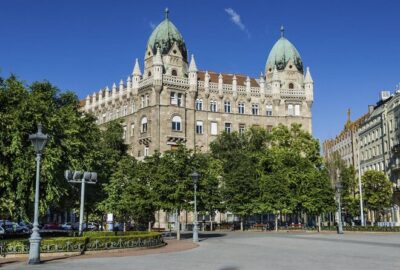
Budapest Private Full Day City Sightseeing Tour Walking or by Car
Read our review →