Reviewed · TOURS
Urban Tour of Budapest’s Most Controversial District.
Budapest has layers, and this route reads them up close. You step off the usual postcard circuit and spend 2.5 hours in District VIII, where the city’s softer edges and darker stories sit side by side. I like that the tour is budget-friendly while still covering major landmarks you’d likely skip on your own.
What really sells it for me is the way the route mixes big places with small details, from the train station ballrooms to a sprawling market full of everyday energy. You also get a strong sense of why this area feels so charged, politically and socially. One thing to consider: the schedule includes subject matter that can get graphic, and you’ll walk about 4 km at a steady pace.
In This Review
- Key things to know before you go
- Keleti pályaudvar and the long echo of old glory
- Police Museum: forensics, serial cases, and Sunday rules
- Fiumei Road Cemetery, the Communist nickname, and views from Kossuth
- Laszlo ter and the story behind a named writer
- Párbeszéd Háza, the House of Fates, and why people argue
- Orczy tér’s traffic chaos, Csobánc Társasház, and the catacomb
- Golgota tér gardens, destroyed and rebuilt chapels, and Europe Television
- MÁVAG Kolónia, a worker colony with real everyday services
- Kínai Piac China Market: 1,500 businesses, street food, and local rhythm
- Value, pace, and who this tour fits best
- Should you book this Budapest District VIII walk?
Key things to know before you go
- A private group with a real guide, so you can ask questions and get context fast
- Keleti pályaudvar’s grand interior plus a look at how it feels after more than a century
- Police Museum themes can be grim, including forensic and serial-killer cases
- Fiumei Road Cemetery is your outdoor history stop, including views from Kossuth’s tomb
- One politically debated building shows up on the route, the House of Fates (Párbeszéd Háza)
- You finish at Kínai Piac, with time to keep exploring the market area on your own
Still choosing? These run on the same stretch of Budapest:
- Budapest: City Highlights Sightseeing Cruise
★ 4.6 · 43,981 reviews - Budapest: Unlimited Prosecco, Beer and Aperol Spritz Cruise
★ 4.8 · 37,304 reviews - Budapest: Széchenyi Spa Day Ticket with Optional Upgrades
★ 4.3 · 23,911 reviews
Keleti pályaudvar and the long echo of old glory
Most Budapest walking tours start in the safest places. This one starts at Keleti pályaudvar, and that choice matters. The meeting point is at Keleti pályaudvar (1087 Hungary), then you move into the station’s arrival hall to hear how the building’s story connects to a much older era.
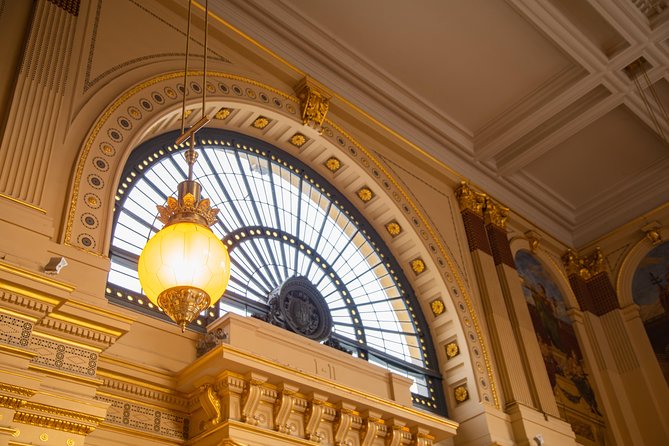
You’ll also see the famous arrival hall linked to Princess Sissi. The details are part of the fun here. The hall may not match the more famous frescoed Lotz Hall for sheer prettiness, but you still get that “how did they build this” feeling from the Greek-style supporting columns, the huge window frames, the marble coverings, and carved wooden elements. The tour doesn’t pretend everything is pristine, either, since the space looks neglected in places.
If you love architecture, this first stop is a strong warm-up. You also get an easy “orientation moment” before you head into a neighborhood that many visitors only pass through.
Police Museum: forensics, serial cases, and Sunday rules
After Keleti, the tour takes a quick turn into the Police Museum. Plan on spending about 15 minutes here, and keep your expectations clear: this is not a soft, cheerful stop.
The museum includes a forensic science exhibition plus named cases and categories. You may hear about the Black Angel case, Béla Kiss (described as the first Hungarian serial killer), a Yugoslav serial killer, and several other cases with darker titles. There are also police history displays, with relics such as uniforms, weapons, documents, certificates, sculptures, awards, and photos. The “Past and Present” photo exhibition adds another layer, showing how the topic is framed through time.
The main practical drawback is also the main warning from the tour itself: the subject matter includes a lot of grim imagery. If that’s not your thing, you’ll want to mentally prepare, or choose a different day.
Big scheduling note: on Sundays, the Police Museum is closed and you do not enter. The tour still keeps moving, but you should expect this stop to be skipped on that day.
Fiumei Road Cemetery, the Communist nickname, and views from Kossuth
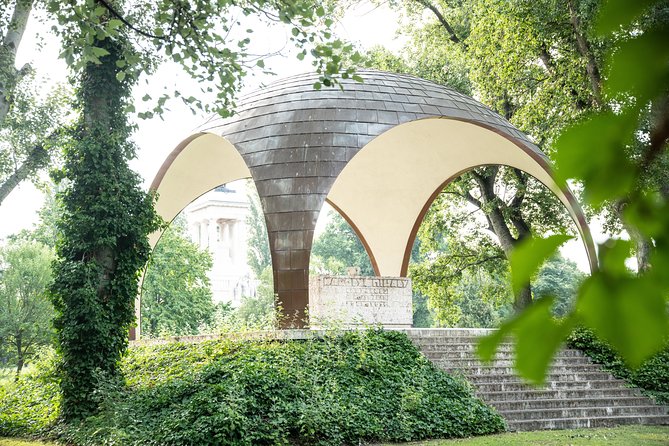
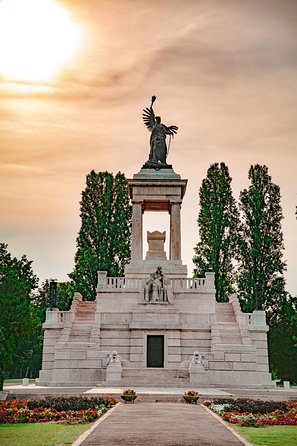
Then the mood shifts, and it works. Fiumei Road Cemetery is your outdoor museum moment, and the tour focuses on why this cemetery earned the nickname Communist Cemetery. You’ll learn about local death customs, then walk through the architecture and tombs that make the place feel like a history lesson you can physically wander through.
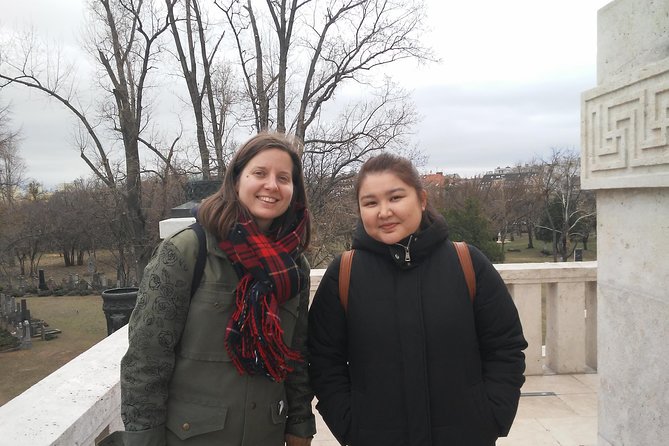
The tour time here is about 30 minutes, and it’s one of the best “slow down” segments. You get to climb up to the top of Kossuth’s tomb for the best views over the 8th district. That climb is not just for the photo, it also helps you understand the geography of the neighborhood you’re exploring.
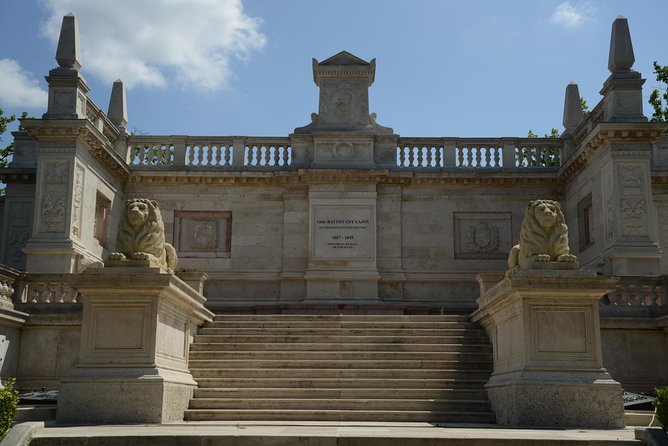
You’ll also hear about the fate of the martyred prime minister Batthany. And if you’re curious about how people honor the dead, you’ll get more than marble sightseeing. The tour even includes entering inside one mausoleum, which changes how the cemetery feels compared to just viewing stones from paths.
One detail I appreciate: the tour highlights a grand horse-drawn funeral hearse used for Count Apponyi. That kind of specific “object history” makes the cemetery more than a scenic stop.
Laszlo ter and the story behind a named writer
After the cemetery, you move to Természet Fitotéka Kkt. and the refurbished Laszlo ter area. This stop is shorter, around 10 minutes, but it gives you a thread to pull: how a spot’s name can point to a past economic life.
You’ll learn about the history of the carbon market that was located here and why the square is named after a famous Hungarian writer. Even with limited time, it’s a good example of how Budapest neighborhoods keep old functions alive through naming and local memory.
This is also a nice “breather” between heavier stops, since it’s more about place history than themed exhibitions.
Other ways an evening in Budapest can go:





Párbeszéd Háza, the House of Fates, and why people argue
From here, the route heads to Párbeszéd Háza, the House of Fates. This is where you clearly feel that this tour is about more than landmarks. It’s about contested memory, and it’s about how governments choose what they want preserved and emphasized.
You’ll be shown the unfinished building and told that it was designed to spread a message by the government of Viktor Orbán about the Holocaust of Hungarian Jews. The tour also explains that debates around Holocaust memory have been turbulent since the end of communist control in Hungary, and that the issue has stirred strong emotions in public life.
Even if you don’t want to get political, this stop is useful because it shows you that architecture can act like a statement. The building itself was designed by Attila F. Kovács and includes a giant star and railway carriage towers, which the tour ties back to a terrible start of events linked to this location.
You’ll only spend about 10 minutes here, but it leaves the day with context. It also means you should be ready for a conversation topic that may not have one universally comfortable interpretation.
Orczy tér’s traffic chaos, Csobánc Társasház, and the catacomb
Orczy tér in Józsefváros is described as an unfortunate symbol of traffic disorder. The tour doesn’t sugarcoat it, either. You’ll hear that renewal plans have existed for decades but implementation is often delayed, and that many people find the enclosure confusing and disreputable, with tram tracks and sidewalk islands that feel messy.
Then you step into something much more controlled, Csobánc Társasház, designed by György Kévés. The building is described as a striking complex architectural work, with characteristic brick architecture and numerous arches that evoke the early modern world around 1910.
This is the part I’d suggest you take your time with. The architecture is the counterpoint to the street-level confusion around it, and it gives you something concrete to look at while the guide explains the social story behind the area.
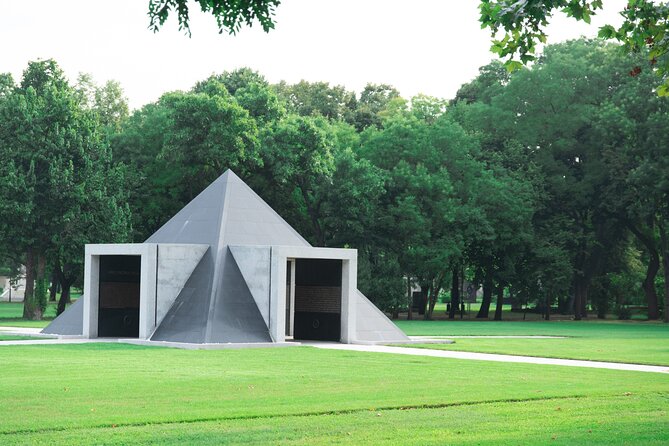
At the center is the Kokárda Catacomb, a memorial and underground chapel commemorating the failed revolutions of 1848 and 1956. The tour also frames this new housing complex as marking the start of a painful gentrification for the area.
If you’re the kind of traveler who likes seeing cities as systems, not just scenery, this stop hits hard in a good way. It also explains why “controversial district” is not just marketing language.
Golgota tér gardens, destroyed and rebuilt chapels, and Europe Television
Next you head to Golgota tér. The tour takes you through small gardens and to the remains of a chapel once frequented by workers living in nearby apartment buildings. The tour explains that communists tried to destroy it, and they were successful only on the third attempt.
You’ll also see reconstruction work of original bronze 14 reliefs by sculptor Antal Szécsi, featuring the Máriabesnyő Calvary Station. This is one of those details that makes your walk feel like you’re watching history in progress, not just reading plaques.
The stop then expands into media history at Budapest Europe Television, described as the first commercial TV station in Hungary. You’ll hear about its business model and unusual structure, and about how the relationship between the manager and the liquidator almost escalated to violence multiple times, ending in a strange outcome.
Finally, you get a community angle. The tour includes the Goyla bar and community center and explains the kinds of events and activities it runs. This helps the area feel lived in, not just studied.
This segment is short, around 8 minutes, but it adds variety so the day doesn’t feel like one long lecture.
MÁVAG Kolónia, a worker colony with real everyday services
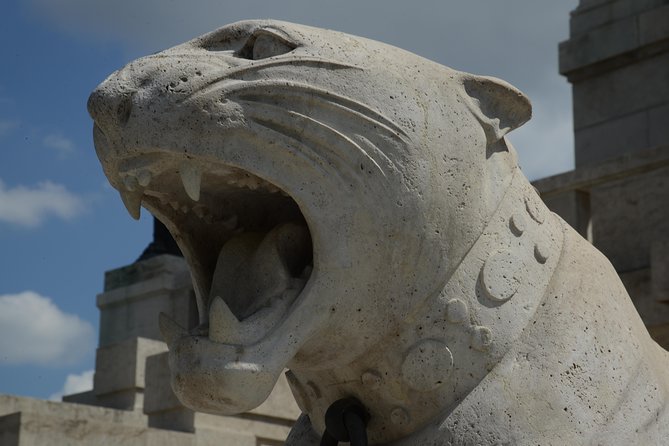
Then comes MÁVAG Kolónia, another place where the guide’s storytelling makes architecture feel human. The apartment block is described as fortress-like and it was home to three thousand workers when built.
You’ll learn that the apartments, with a room and kitchen, were built by MÁVAG (Hungarian Royal State Iron, Steel and Machine Works) to provide strong care and conditions for workers. The tour lists practical facilities too: a bathhouse, canteen, laundry, doctor’s office, kindergarten, and a public market.
Today, the colony is often used as a film location. The tour mentions that Colorado Kid, The Exam, and the documentary The City Dweller’s have been shot there. Even if you do not recognize the titles, this matters because it suggests the buildings still look convincing on camera.
This stop pairs well with the morning’s train-station grandeur. Together, they show two sides of “making life functional,” one for travel and one for workers.
Kínai Piac China Market: 1,500 businesses, street food, and local rhythm
The finale is Kínai Piac, also called China Market, located in Józsefváros market area, sometimes referred to as the four tigers market. The tour positions it as one of the largest markets of south east Asian goods in eastern central Europe.
Expect a lot here. The tour description includes that there are over 10,000 workers and around 1,500 business locations selling everything from socks and frying pans to dragon fruit, Chinese medicine, hot chicken, fresh live fish, fake flowers, and even references to plastic surgery services. Whether you shop or just observe, it helps to know you’re walking through a full ecosystem, not a small market street.
You’ll explore with the guide during the visit, then you get time to wander alone at the end. The tour specifically encourages you to try street food offered in the area.
Two important closures to keep in mind. The tour notes that the China Market is closed on Christmas and Easter holidays. If you’re traveling around those dates, you’ll want to double-check how the tour day adapts, since the stop itself won’t run the same way.
This ending also gives you practical options. The tour finishes at the market and you can meet the guide at Goyla a ruin pub, then go explore further on your own. If you prefer help, the guide can also walk you to the nearest tram stop, about five minutes away, which takes you back toward the city center.
Value, pace, and who this tour fits best
At about $27.04 per person for roughly 2 hours 30 minutes, this tour is priced for a “see a lot, learn a lot” afternoon. Many Budapest walking experiences either focus on a single theme or keep you on the safest routes. Here, your cost buys a long arc across institutions, neighborhoods, and contested memory points, plus a guided visit to a large market.
The pace is also worth noting. You need to be able to walk about 4 km in 2.5 hours. That means you should wear comfortable shoes and keep your energy steady, especially because a few stops involve stairs or short climbs, like the push up toward Kossuth’s tomb views.
This is a good fit if you want Budapest as a real working city, not only a museum postcard. It’s also a strong choice if you like context and you enjoy hearing stories that don’t always come in the standard guidebook package.
The main “not for everyone” factor is content tone. Police Museum includes forensic and crime-case material, and the cemetery and Holocaust-debate stop can bring heavier themes. If you want a light, romantic stroll only, this may feel too serious.
Should you book this Budapest District VIII walk?
If you like value, honest context, and getting out of the center’s most photographed lanes, I’d say yes, especially if you enjoy architecture, local institutions, and market life. The route hits major anchors in a way that makes the district feel readable, and the guide style seems to be a highlight, with one guide named Victoria praised for being knowledgeable, smart, funny, and clear in English.
You should probably think twice if graphic crime imagery or politically heated museum messaging will take the joy out of your day. Also consider the walking requirement of about 4 km, and plan your footwear accordingly.
If you want Budapest that feels more human and more complicated than the usual highlights, this tour gives you that in one solid afternoon.
Newest from the Danube banks
- Gödöllö Royal Palace Privately with full board★ 5.0 · 1 review
- Private Budapest Tour with Thermal Bath or Market Visit★ 5.0 · 1 review
- Private Budapest walking tour – 4 hours★ 5.0 · 1 review
- Budapest Half Day Car Tour with Guide★ 5.0 · 1 review
- Budapest Private Transfer from Budapest city centre to Budapest Airport★ 3.0 · 1 review
- Magic Theme Team Adventure Game in the Streets of Budapest★ 5.0 · 1 review
- Budapest: Eat the Street, food tour with wine, 16+ tasting★ 5.0 · 1 review
- Private Transfer Budapest Airport BUD to Budapest by Car or Van★ 5.0 · 1 review
Tours, compared.
Budapest: Big Bus Hop-On Hop-Off Tour by Open-top Bus
Read our review →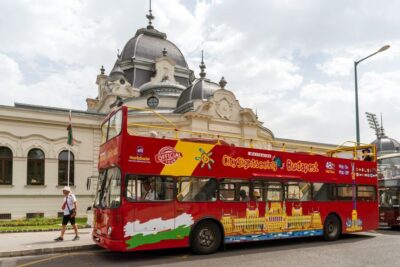
Budapest: City Sightseeing Hop-On Hop-Off Bus Tour & Extras
Read our review →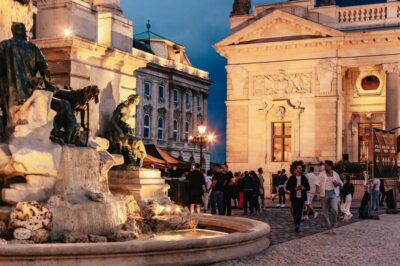
Budapest: Buda Castle District Vampires and Myths Night Tour
Read our review →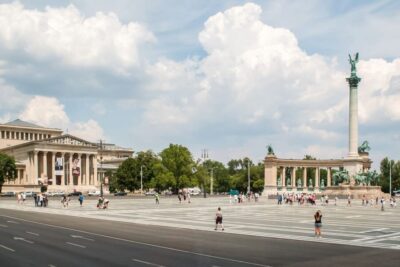
Budapest: Floating Bus Tour by Land and Water
Read our review →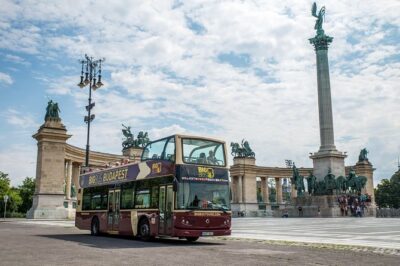
Big Bus Budapest Hop-On Hop-Off Bus and Walking Tour
Read our review →