
Reviewed · WALKING TOURS
Budapest Art Nouveau Private Walking Tour
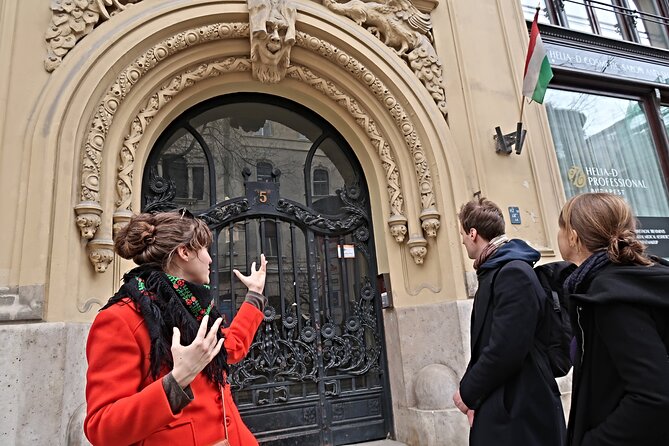
Art Nouveau in Budapest is worth seeing up close. This private walking tour maps the city’s most eye-catching façades and interior details, guided by a local historian who knows how to turn architecture into a story you can actually picture. You choose a morning or afternoon start, and you stay flexible enough to ask questions along the way.
I love the private group setup, especially with a historian leading the way. It keeps the pace comfortable for a 3-hour stroll, and it helps you notice the stuff you’d otherwise walk past. I also really like the route mix, from the polished luxury vibe of Gresham Palace to the more playful, design-obsessed buildings tied to Hungarian Art Nouveau.
One thing to plan for: not everything is included. The Kazinczy Street Synagogue visit has extra rules and costs, and the interior is not available on Saturdays, so it can affect your ideal day.
In This Review
- Key highlights worth your time
- Why Budapest Art Nouveau Works So Well on Foot
- Price and value: $350 per group, up to 10 people
- Where you start, where you end, and how the walk fits together
- Stop 1: Gresham Palace, Budapest’s luxury Art Nouveau moment
- Stop 2: Postatakarék Bank and Ödön Lechner’s design fingerprints
- Stop 3: Thonet House and the tile-and-ceramics obsession
- Stop 4: Kazinczy Street Synagogue, Art Nouveau exterior with interior rules
- How to prepare: tickets, transit, and what to wear
- What your historian guide does that changes everything
- Who this tour suits best (and who might want something else)
- Should you book the Budapest Art Nouveau Private Walking Tour?
- FAQ
- How long is the Budapest Art Nouveau Private Walking Tour?
- Is this a private tour?
- Where does the tour start and end?
- Does the tour include tickets for the stops?
- Is pickup available?
- Can I visit the synagogue interior on Saturdays?
Key highlights worth your time
- Historian-led, question-friendly explanations that connect building details to how Budapest art styles evolved
- Small private group (up to 10) for a slower, more personal pace over 3 hours
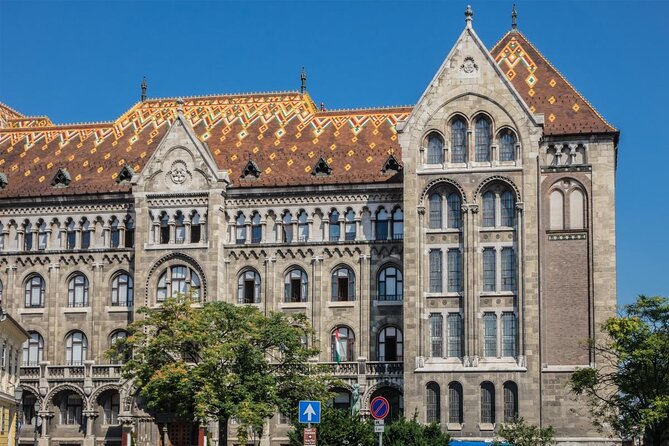
- Ödön Lechner focus at the Postatakarék Bank, including what to look for in the entrance hall
- Ceramics and tile clues at Thonet House, with the Zsolnay porcelain connection built right into the walk
- Kazinczy Street Synagogue Art Nouveau styling (interior rules apply) as a satisfying finishing stop
More of Pest crossed at walking pace:
- Budapest: Buda Castle Walk with Saint Stephen’s Hall
★ 4.5 · 3,012 reviews - Big Bus Budapest Hop-On Hop-Off Bus and Walking Tour
★ 3.5 · 2,206 reviews - Budapest: Buda Castle District Walking Tour
★ 4.6 · 2,108 reviews
Why Budapest Art Nouveau Works So Well on Foot
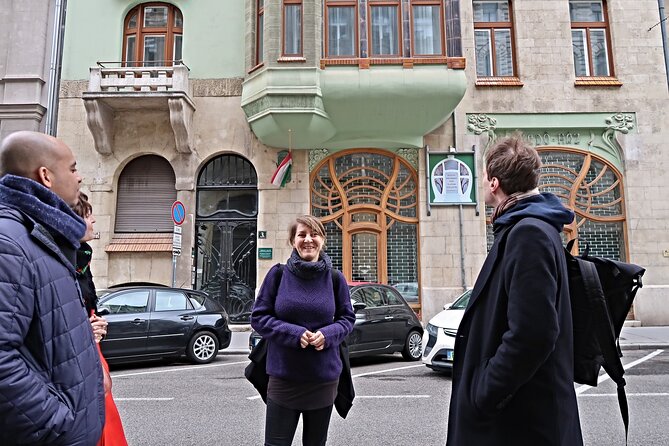
Budapest’s Art Nouveau is the kind of architecture that begs for slow walking. Up close, you start seeing patterns you miss from across the street, and you can actually compare how different designers handled the same big ideas: flow, ornament, symbolism, and material.
This tour is built for that. It’s three hours long, so you get enough time to look carefully without feeling like you’re on a forced march. You’ll also get a historian guide who can point out the “why” behind the “wow,” so the buildings don’t just look pretty, they make sense.
And the private format helps. When you can ask a question right when it pops into your head, the whole experience clicks faster. If you get a guide like Kata, who clearly knows how to keep Art Nouveau exciting, you’ll leave with names, details, and context that stick.
Price and value: $350 per group, up to 10 people
At $350 per group (up to 10), this isn’t the cheapest thing you can book in Budapest. But it can still be good value if you’ll share it with a few people.
Here’s the practical way to think about it. With up to 10 people, the cost per person can drop a lot compared to a standard large-group tour. And because it’s private, you get a more flexible stop-by-stop rhythm, plus more room for your questions. That matters a lot for architecture tours, where the interesting part is often the details, not just the postcard view.
Timing also helps your value. The tour is often booked about 48 days in advance, so if you have a tight plan, it’s smart to lock it in early. You’re choosing a morning or afternoon departure, so you can also match it to the daylight you want for photos and walking comfort.
Where you start, where you end, and how the walk fits together
You’ll meet at Madal Cafe Budapest, Alkotmány u. 4 and end at the Kazinczy Street Synagogue area. Starting at a cafe is practical because you can grab a quick coffee or snack before you start walking, and you’re set up near public transportation.
The tour is a walking route with short stops at each highlight. That’s key, because you get time to look without feeling rushed. You’ll spend about 20 minutes at most of the main exterior or interior-adjacent stops, then a longer final stop at the synagogue.
If you don’t already have a visitor pass, your guide can help you buy Budapest tram and metro tickets. That’s useful, because Budapest transit works well when you’re not trying to figure it out on the fly.
Stop 1: Gresham Palace, Budapest’s luxury Art Nouveau moment
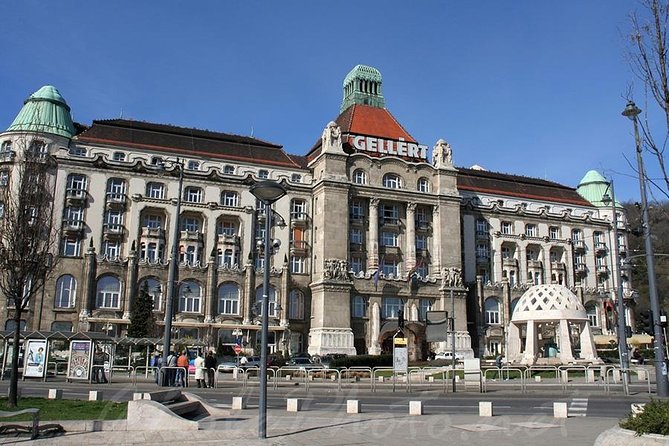
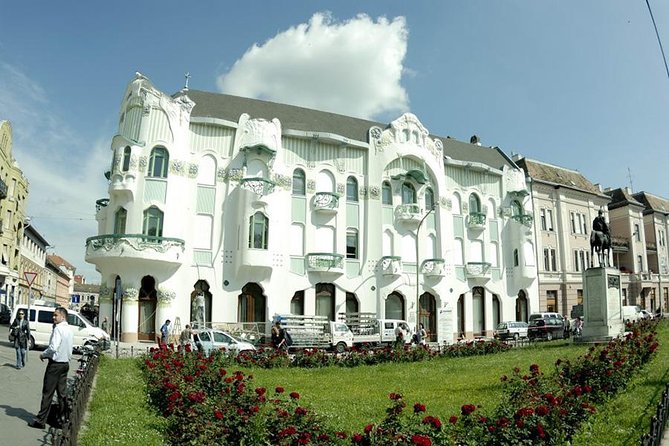
Your first major stop is Gresham Palace, a landmark that today is Budapest’s most luxurious hotel. Even before you step in, the building is doing a lot of work visually. The façades have that Art Nouveau confidence, the kind that says, “Look closer.”
You’re given about 20 minutes, with admission noted as free for this stop. That time window is long enough to take in the outside and catch key design details, then also pay attention to what the guide highlights in the interior context.
What I like about starting here is the contrast. Gresham Palace sets the tone: you’re not just seeing whimsical ornament. You’re seeing how Art Nouveau could show up in serious, high-status, real-world buildings. If you’re the type who cares about how styles travel across “classes” of buildings, this is a strong opener.
A quick practical note: even if the interior parts aren’t open the way you expect, the guide can still help you read the architecture from what you can access. The stop is structured so you still get value.
Some other Danube days worth pricing up





Stop 2: Postatakarék Bank and Ödön Lechner’s design fingerprints
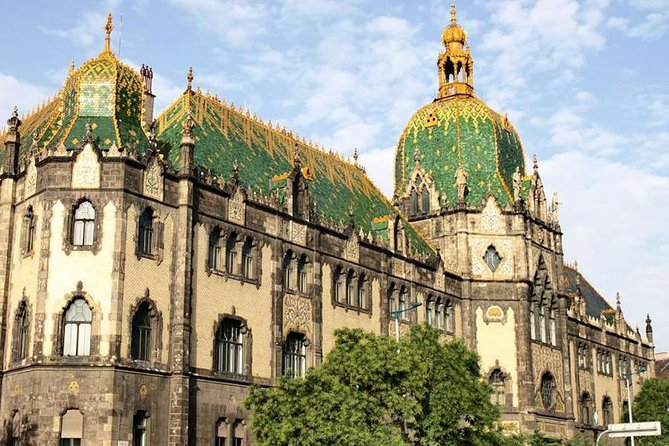
Next up is the Postatakarék Bank, also described as the Royal Postal Savings Bank. This is one of those places where the guide’s job is to help you see the design logic, not just the decorative surface.
The building is tied to Ödön Lechner, and you’ll hear that he’s often compared to the Gaudi nickname idea, a Hungarian connection to a famous creative personality. Whether you know Lechner’s work already or you’re new, this stop makes the “Hungarian Art Nouveau” angle feel specific, not generic.
You get about 20 minutes here, and admissions are listed as free. The focus includes the entrance hall interior design elements. That matters, because bank entrance halls are where symbolism and prestige live. You’re likely to see design choices aimed at making everyday civic finance feel monumental.
The drawback? This stop is only as good as what you can view during your visit. If the interior access is limited on that day, you might spend more time on the exterior cues. Still, with a historian guide, you can usually connect the dots either way.
Stop 3: Thonet House and the tile-and-ceramics obsession
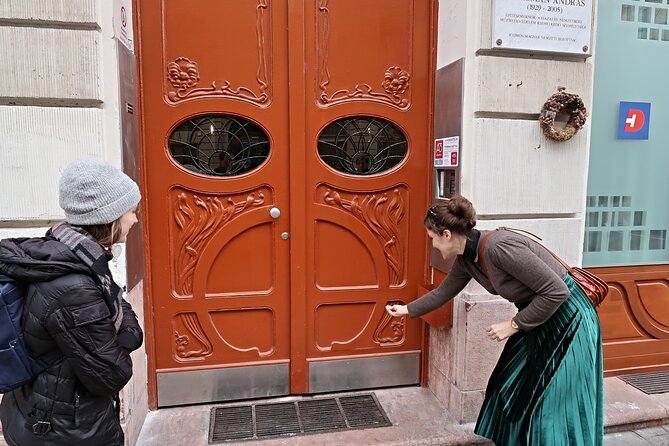
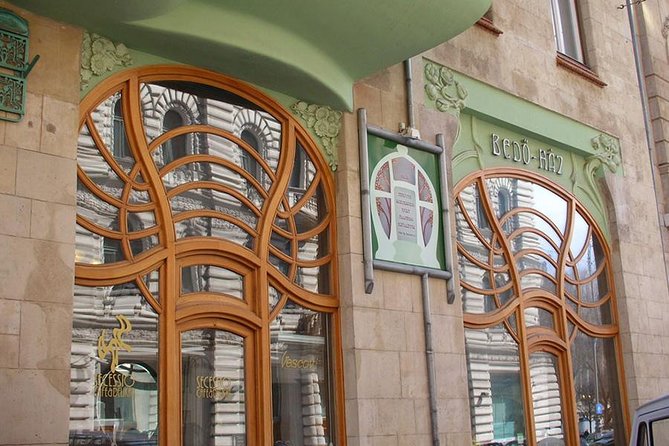
Then comes Thonet House, where the story pivots to a very Budapest ingredient: tiles. If you want to understand why Hungarian Art Nouveau looks so recognizable, this is where it starts clicking.
The tour pauses here to talk about how Hungarian Art Nouveau became famous for tile use on façades. That’s not just a style trivia point. Tiles are durable, visually bold, and they let designers create pattern and texture that stands up in real weather. In other words, it’s decoration that has a job.
You also get the connection to Zsolnay porcelain and ceramics from Pécs in southern Hungary. You’ll hear how that ceramic innovation fed the look of the movement, tying Budapest architecture to broader Hungarian craft talent rather than treating buildings like isolated objects.
Again, you’re looking at about 20 minutes at this stop, with admission noted as free. This isn’t meant to be a long museum-style visit. It’s a “see it, understand it” stop, and it works well if you like learning how material choices shape artistic style.
If you’re a photo person, this is a good moment to slow down. Tiles and ceramic details can be hard to capture quickly, so use the full stop time and don’t rush to the next corner.
Stop 4: Kazinczy Street Synagogue, Art Nouveau exterior with interior rules
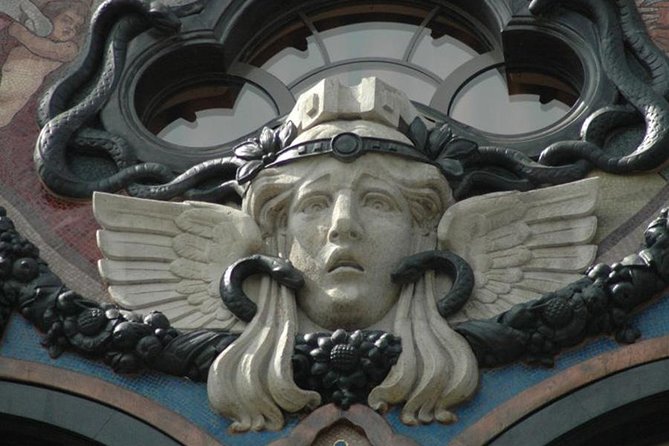
You finish at the Kazinczy Street Synagogue, described as Orthodox and decorated in Art Nouveau style. The ending location is a nice payoff because it combines two things people love: sacred architecture and design flair.
You’ll have about 25 minutes here. Admission for the synagogue interior is explicitly not included, and the interior visit only happens except on Saturdays. That means your exact experience depends on the day of your tour.
Here’s how to plan around that without getting stressed. If you’re booked on a day when interior access isn’t available, you’ll still get the exterior and the guide’s explanation of the Art Nouveau elements. If you’re on a weekday, you have a better chance of seeing more, and the synagogue interior can add a very different atmosphere to the Art Nouveau story.
This stop is also strategically useful. After three stops centered on buildings with accessible civic or hotel context, you end somewhere that feels more immersive in a spiritual setting. Even if you only see what’s accessible, the contrast helps you remember the overall theme of the walk.
How to prepare: tickets, transit, and what to wear
This is a walking tour, so your biggest “prep” is comfort. The route is short-stop structured, but you’ll still be moving through the city for about three hours total.
If you don’t have a Budapest visitor pass, your guide can help you purchase tram and metro tickets. That’s handy because it removes a small but common friction point. You won’t waste time standing around trying to figure out the best ticket for the exact day.
Also, since the tour is near public transportation, you can usually pair it easily with other plans in the same part of town. Start near Madal Cafe, end near Kazinczy Street Synagogue, and build your next activity around that flow.
For clothing, think “comfortable walking shoes.” Budapest sidewalks can be uneven in spots. You’re going to want stable footing so you can actually look up at façades and not keep one eye on your step.
What your historian guide does that changes everything
A good architecture guide makes you look smarter. Here, the historian role is more than background knowledge. Your guide is meant to connect what you’re seeing to how Art Nouveau thinkers used design to shape identity and city life.
You’ll get help reading things like façade ornament, entrance hall design choices, and why certain materials like ceramics and tiles mattered. Instead of just hearing that a building is “Art Nouveau,” you’ll learn what makes it Art Nouveau in practical terms.
I also like that the guides are described as local historians, enthusiastic hosts, and passionate storytellers. In plain language, you should expect lively explanations, not a silent walk with a checklist.
And that’s where the private format pays off. If something sparks your curiosity, you can ask and get an answer right away. That keeps the tour from turning into a one-direction lecture.
Who this tour suits best (and who might want something else)
This tour is best for you if you like architecture, you want a focused Art Nouveau route, and you enjoy learning names and design choices as you walk.
It also fits first-time visitors who want a high-impact slice of Budapest without committing to a full-day itinerary. The time commitment is manageable, and the stops cover multiple famous Art Nouveau touchpoints rather than repeating the same look over and over.
It may be less ideal if you want a very long, museum-heavy day. This is still a walking route with short visits. You’ll learn a lot, but it’s not built for deep interior time in every building. The synagogue interior access rules also mean your experience can vary by day.
Should you book the Budapest Art Nouveau Private Walking Tour?
If your top goal is a guided, detail-focused introduction to Budapest Art Nouveau, I’d book it. The private setup, the historian-led explanations, and the specific stop choices (Gresham Palace, Postatakarék Bank, Thonet House, and Kazinczy Street Synagogue) make it feel like a curated route rather than a random city wander.
Book it especially if you’ll share the group cost. At $350 per group, it becomes a smarter deal when you have several people to split with. And if you’re flexible about day-of-week synagogue access, you’ll get a smoother experience.
Skip it if you’re chasing the cheapest option, or if you know you must see the synagogue interior on a Saturday. The tour is structured to be valuable either way, but that one factor can matter.
FAQ
How long is the Budapest Art Nouveau Private Walking Tour?
It’s about 3 hours.
Is this a private tour?
Yes. It’s a private tour for only your group, with capacity up to 10 people.
Where does the tour start and end?
You start at Madal Cafe Budapest (Alkotmány u. 4, 1054 Hungary) and end at Kazinczy Street Synagogue (Kazinczy u. 29-31, 1075 Hungary).
Does the tour include tickets for the stops?
Admission is noted as free for Gresham Palace, Postatakarék Bank, and Thonet House. Kazinczy Street Synagogue admission is not included.
Is pickup available?
Pickup is offered, and the meeting area is near public transportation.
Can I visit the synagogue interior on Saturdays?
The tour includes an interior visit to Kazinczy Street Synagogue except on Saturdays.
Newest from the Danube banks
- Gödöllö Royal Palace Privately with full board★ 5.0 · 1 review
- Private Budapest Tour with Thermal Bath or Market Visit★ 5.0 · 1 review
- Private Budapest walking tour – 4 hours★ 5.0 · 1 review
- Budapest Half Day Car Tour with Guide★ 5.0 · 1 review
- Budapest Private Transfer from Budapest city centre to Budapest Airport★ 3.0 · 1 review
- Magic Theme Team Adventure Game in the Streets of Budapest★ 5.0 · 1 review
- Budapest: Eat the Street, food tour with wine, 16+ tasting★ 5.0 · 1 review
- Private Transfer Budapest Airport BUD to Budapest by Car or Van★ 5.0 · 1 review
Walking Tours, compared.

Budapest: Buda Castle Walk with Saint Stephen’s Hall
Read our review →
Big Bus Budapest Hop-On Hop-Off Bus and Walking Tour
Read our review →
Budapest City Landmarks Walking Tour in 2 Hours
Read our review →
3-Hour Orientation Walking Tour of Buda and Pest
Read our review →
Budapest: 3-Hour Grand City Tour and Castle Walk
Read our review →
Budapest Historical Sightseeing – Free Walking Tour
Read our review →
Budapest All in One Small Group Walking Tour with Strudel Stop
Read our review →Browse the lists this tour appears in