
Reviewed · HISTORICAL TOURS
Budapest Historical Sightseeing – Free Walking Tour
Budapest history is loud, even on a walk. This 2.5-hour Budapest free walking tour strings together the big landmarks on the Pest side and ties them to how the city thinks and lives today. For first-timers, it is one of the fastest ways to get your bearings without blowing your budget.
I especially like the small-fee plus tips setup, because $3.63 is basically your ticket to a guided route and local context. The tour also uses short stops outside famous spots, so you are not stuck waiting inside buildings that may not be your thing.
One thing to plan around is the walking and weather. It is not built for long rests, and in cold snaps you will feel it fast, especially if you are not used to cobblestones and winter wind.
In This Review
- Key things to know before you go
- Price and value: $3.63 is the bait, the route is the real deal
- Where you meet, how you find the group, where you end
- The route makes sense: National Museum to the Parliament area
- Kálvin tér and the quick orientation you want on day one
- National Museum gardens: turul symbolism and the 1948 uprising
- Unger’s House: one building that feels like five eras
- Elizabeth Square and Astoria: the city’s eyes, the city’s glow
- The Jewish Quarter: history you feel, not just read
- St. Stephen’s Basilica and the name behind the stone
- Szabadság tér: communist memory in an open square
- Parliament and the Danube view: the classic frame
- Fisherman’s Bastion from the Pest side: viewpoints without the climb
- Széchenyi Lánchíd and the Shoes on the Danube Bank
- Pacing, group size, and what to bring so the day stays pleasant
- What makes the guide experience work (and why names come up)
- Should you book this Budapest Historical Sightseeing Free Walking Tour?
Key things to know before you go
- Guides in yellow make it easy to spot your group at the start in Kálvin tér.
- Outside-looking-in touring style keeps you moving past major sights without long interior lines.
- Communist-era stories meet modern Budapest in places like Szabadság tér and today’s café and bar areas.
- Strong, practical guide energy shows up in the way guides explain and pace the route.
- Danube memorial stops add emotional weight at Shoes on the Danube Bank.
- Bring water and layers because the tour relies on outdoor standing and walking.
More of Pest crossed at walking pace:
- Budapest: Buda Castle Walk with Saint Stephen’s Hall
★ 4.5 · 3,012 reviews - Big Bus Budapest Hop-On Hop-Off Bus and Walking Tour
★ 3.5 · 2,206 reviews - Budapest: Buda Castle District Walking Tour
★ 4.6 · 2,108 reviews
Price and value: $3.63 is the bait, the route is the real deal
Let’s be honest. You do not book this because you love paying small money. You book it because you want a guided framework for a city that can feel confusing if you arrive with just photos and a map.
The $3.63 fee is low enough that you can take it early in your trip, then use what you learn to navigate on your own for the next couple of days. After all, the real value is not any single landmark. It is the order, the connections, and the “why this place matters” context you get while walking.
And because the tour is built on tips, the guides have a reason to make the experience work in real time, including answering questions and pointing out practical things you can do next.
Where you meet, how you find the group, where you end
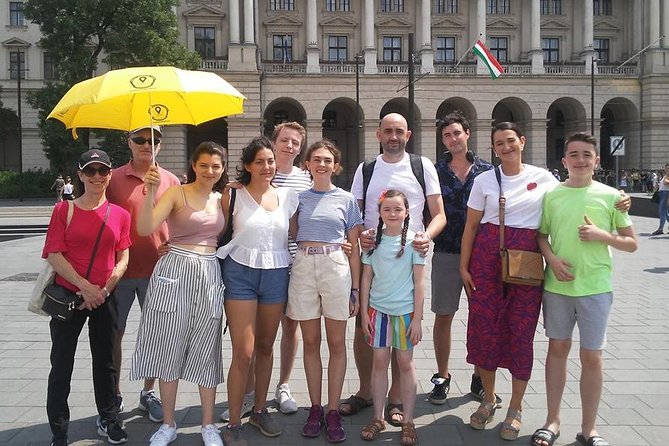
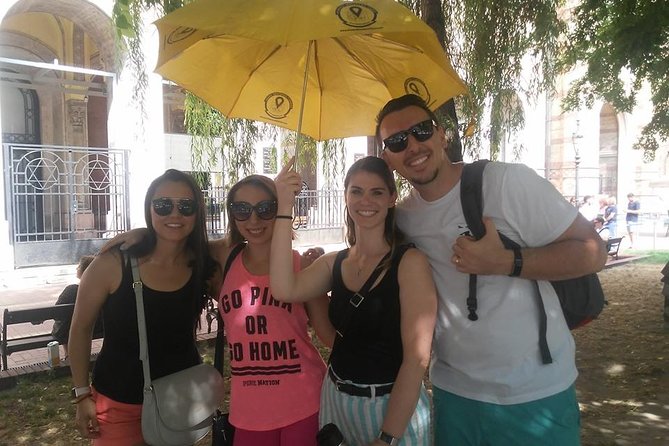
You start at OTP BankBudapest, Kálvin tér 12-13, 1085 Hungary. Look for guides dressed in yellow at around 12 Kálvin ter, and you will have a solid chance of finding the group without stress.
The tour finishes at Lánchíd area, the chain bridge. From there, you can walk back toward the center quickly, or branch out by foot into other neighborhoods.
The tour includes an in-person guide, and you should expect a mobile ticket. Service animals are allowed, but regular dogs are not permitted, and guide dogs are only allowed with the proper papers.
The route makes sense: National Museum to the Parliament area
This tour is designed to give you an “arc” through Budapest. You begin near museums and grand civic buildings, move through squares and stylistic architecture, cross into the emotional history of the Jewish Quarter, then shift into major Danube-side viewpoints and memorials.
That arc matters. If you try to see everything on your first day without context, you might miss how one era feeds into the next. Here, you learn the story while your feet keep the day moving.
Also, you are mostly outside for key stops. That is great for sightseeing flow, but it means you need to dress for standing in wind and cold.
Kálvin tér and the quick orientation you want on day one
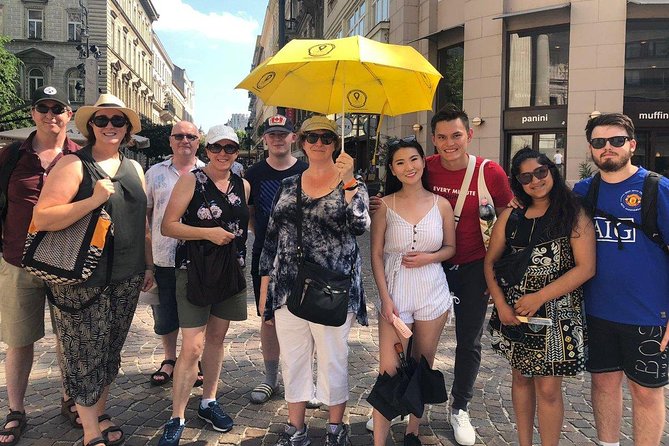
You begin at Kálvin tér, a square tied to John Calvin, and it functions like a natural gathering point. The area is helpful because you can find places to sit and even get a bit of shelter while waiting for the group to begin.
This early segment is about settling you into Budapest’s geography and attitude. You learn how the city’s layers show up in the streets, not just in postcards.
Tip: if you want to hear everything clearly, stand where you can see your guide’s face and not just the crowd behind you.
Other centuries stacked along the Danube:




National Museum gardens: turul symbolism and the 1948 uprising
The first main stop happens in the gardens near the Hungarian National Museum. You get a close look at the turul bird statue, a mythical symbol that pops up in Hungarian identity and storytelling.
From there, you hear how the museum connects to collections and its founder, and then you get a guided jump into Hungary’s modern history, including the uprising linked to 1948. It is not a lecture you can ignore. It is aimed at helping you understand why certain political and cultural themes still echo in Budapest today.
You also get a nod to the VIII district, once known for grand palaces. That detail is useful because it reminds you that the city is not only monuments. It is also neighborhood stories, old wealth, and later change.
Practical note: this is mostly outdoors standing. If it is chilly or windy, keep your hands warm. You will do a lot of listening while holding still.
Unger’s House: one building that feels like five eras
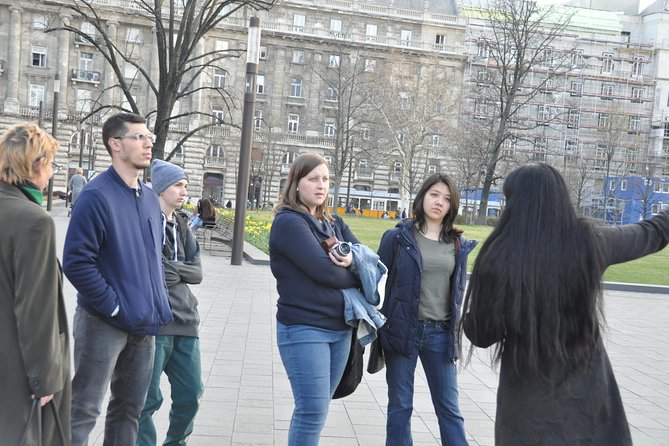
Next, you stop at Unger’s House in an area tied to the work of architect Miklós Ybl. The courtyard look is key, because Ybl’s design here mixes styles, including Byzantine, Gothic, Moorish, Renaissance, and Romantic elements.
What I like about this stop is that it teaches a visual lesson. You learn how Budapest can look ornate and layered without being random. The guide explains how architecture becomes a kind of historical shorthand.
A possible drawback: you only get a short moment here. If you love architecture and want time to wander, you may want to come back later on your own with photos and a plan.
Elizabeth Square and Astoria: the city’s eyes, the city’s glow

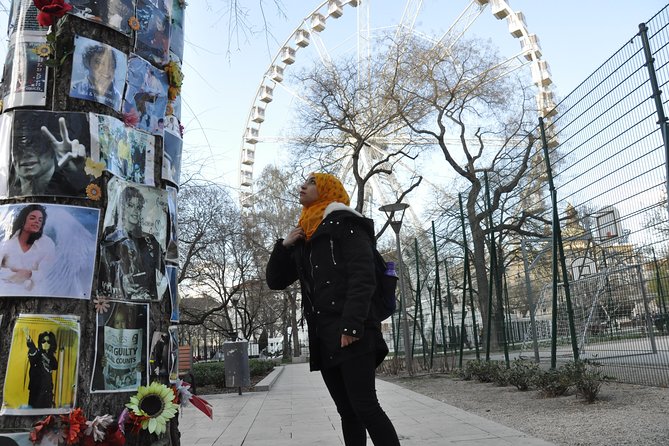
Elizabeth Square is where you get context for the Budapest Eye and what shaped the square over time. You also learn about the nearby bar and nightlife pull, which is exactly the kind of practical local angle that helps you plan evenings without wandering blindly.
Then the route passes Danubius Hotel Astoria, a French Empire style landmark. The tour makes it feel less like a famous exterior and more like a cultural hub, including a mention of international stars and film connections such as the Josephine Baker Story directed by Brian Gibson.
This pairing works well. You see a major city viewpoint and then you connect it to how Budapest attracts people, performances, and modern social life.
If you are doing this on your first day, this segment can turn on your motivation. It helps you see the city as more than history.
The Jewish Quarter: history you feel, not just read
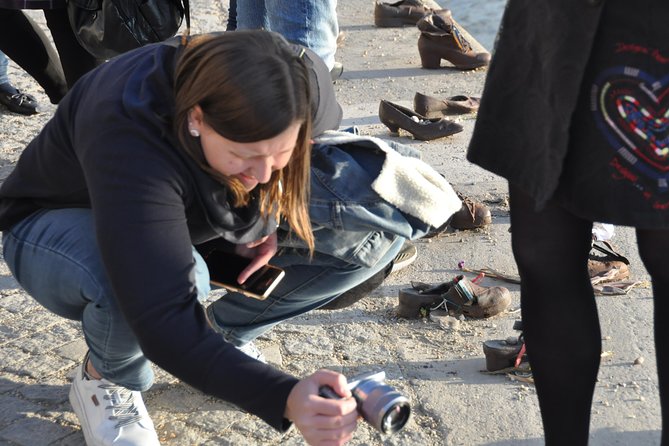
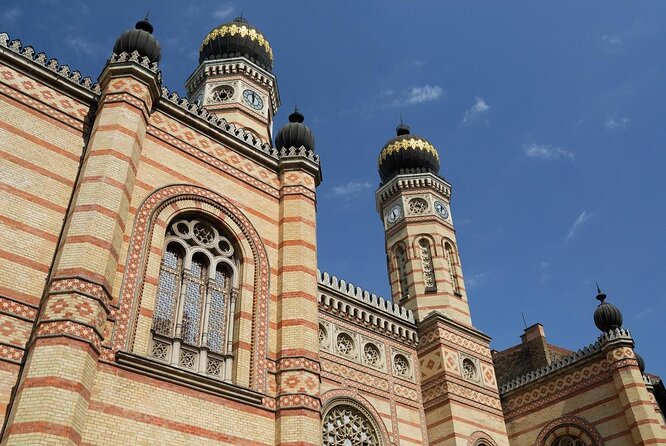
Later on, the tour travels through the Jewish Quarter and gives you a structured view of what happened here across different eras. You learn about the neighborhood’s earlier life as a home to a vibrant Jewish community, then the brutal shift into ghetto life during the Second World War.
The tour also brings things forward into more recent times, when the area has become home to artists and students. You see how it transitioned into streets with independent shops, designers, and bars.
This part of the walk can be heavier than the “pretty building” stops. That is the point. Budapest’s history does not stay in the past, and the Jewish Quarter is one of the clearest ways to understand that.
If you are sensitive to difficult topics, pace your breathing and take in the emotional weight slowly. No one is rushing you through it.
St. Stephen’s Basilica and the name behind the stone
You stop outside St. Stephen’s Basilica (Szent Istvan Bazilika) and learn why it is named after Hungary’s first king. You are not paying to go inside on this particular experience, so the focus stays on reading the building from the outside.
This is a good “reset” stop. After the Jewish Quarter’s intensity, you shift back into royal identity and national symbolism, which helps your brain regroup before the next cluster of major Danube landmarks.
Szabadság tér: communist memory in an open square
At Szabadság tér, the tour spends time at the communist memorial. This is one of the segments where the tour earns its name: you are not just seeing famous places, you are understanding how political eras leave physical marks in everyday public space.
Squares are useful teaching tools, because they show how people gather, how they move, and how official stories get placed into city life. This stop connects those ideas.
Because it is outdoors, the same practical advice applies: keep moving when you can, and dress for standing still.
Parliament and the Danube view: the classic frame
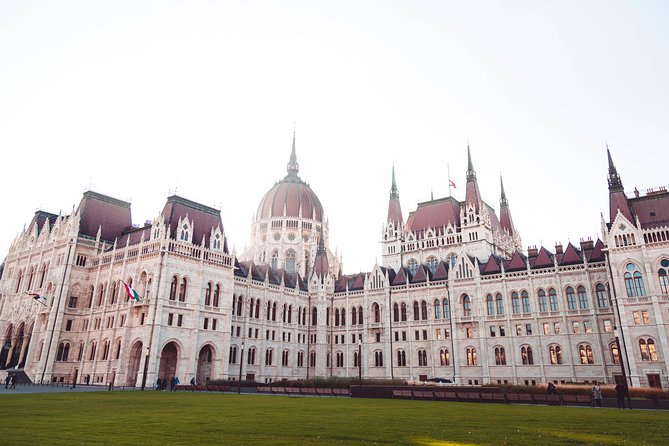
The route brings you to the Hungarian Parliament Building area for the big exterior wow moment. You stand outside and look at the neo-gothic, historic-style facade and get a view of the Danube.
You also get extra pop-culture and political context through statues in the area, including a Ronald Reagan statue looking as if he is walking away from the Parliament, and a Bush statue positioned while waiting.
This segment is also where the tour helps you for the rest of your trip. Once you know the sightline from Parliament toward the river, you can plan later photos and river walks with better understanding.
A possible drawback is that the area can feel busy, so if you struggle with hearing in crowds, aim to position yourself toward the guide early in this stop.
Fisherman’s Bastion from the Pest side: viewpoints without the climb
You then get to Fisherman’s Bastion from the Pest side of the river. The stop helps you see the castle area and the Fisherman’s Bastion, while also learning the local layout and history.
The guide points out St. Matthias Church, including its colored tiled roof, and you also get distant views of the Hungarian National Palace. From here you also see St. Margaret’s Island and Gellért Hill from afar, which helps you map the river.
If you are trying to understand Budapest’s geography without taking a day of transportation, this is exactly the kind of viewpoint that makes the city click.
Széchenyi Lánchíd and the Shoes on the Danube Bank
The tour crosses into the chain bridge zone with Szechenyi Lanchid. You learn about the history of the bridge and its reconstruction, which gives you more than just a “take a photo here” stop.
Then comes one of the most emotionally powerful moments: Shoes on the Danube Bank. You see the memorial of 60 pairs of shoes dedicated to Holocaust victims who were lined up and shot along the banks.
This stop is simple, which makes it hit harder. You do not need extra facts to feel the weight of it. The guide’s context makes it harder to forget.
It is also a good reminder to take a second before moving on. Look at the river, then look at the shoes.
Pacing, group size, and what to bring so the day stays pleasant
The tour runs about 2.5 hours, and it covers a lot of outdoor standing and walking. It is not recommended if you cannot walk about 3 miles. Plan for cobblestones and changing surfaces.
Group size can be up to 50 travelers. In practice, larger groups can mean it is harder to hear from far back, especially near busy squares and parliament area crowding. If you care about clarity, get close to the guide at each stop.
What to bring:
- Water, especially if you get thirsty while standing.
- Sunscreen and sunglasses if the sun is out.
- Umbrella or a warm jacket depending on the season and weather.
- Comfortable shoes, because you will be on your feet.
There is a short break, about 5 minutes, mainly so you can buy drinks and use the toilet. No coffee or food is served on the tour. If you need a public restroom, budget for a cost roughly in the range of 100 HUF to 500 HUF.
Also, the guides cannot carry luggage or equipment for you. Keep your bag light so you can focus on the walk.
What makes the guide experience work (and why names come up)
This tour’s reputation is tightly connected to guide style. People often praise guides for explaining in clear, understandable English, keeping a good pace, projecting their voice in cold or crowded areas, and mixing humor with serious context.
You may see guides like Peter, Victoria, Elizabeth, George, or Sabi listed in past experiences. The common thread is that they do more than recite dates. They help you connect the dots and, just as important, they help you move around the city afterward.
If you are the type who likes asking questions, this is a good fit. The guide route is structured, but it still leaves room to clarify what you just saw and how you might follow up on your own.
And do not skip tipping. Since the tour runs on minimal fees, your tip is part of how the whole thing stays real.
Should you book this Budapest Historical Sightseeing Free Walking Tour?
Book it if you want:
- A first-day orientation through major Pest-side landmarks.
- A guided story connecting communist-era memory to today’s Budapest.
- A tour that keeps you outside and moving, so you see a lot in a short time.
- An efficient way to understand where to walk and what to prioritize next.
Skip it or plan carefully if:
- You need a lot of sitting time, because this is a walking-first experience.
- You dislike emotional memorial stops, since Shoes on the Danube Bank is part of the route.
- You struggle with hearing in crowds, since the group can be large and busy areas can get loud.
My take: if your goal is to learn the city’s logic fast, this is a smart, budget-friendly way to do it. Do it early, wear good shoes, bring layers, and arrive ready to look at familiar landmarks with new context.
Newest from the Danube banks
- Pub Crawl Through The Ruin Bars in Budapest with T-shirt Included★ 4.5 · 14 reviews
- Rudas Bistro Premium Brunch★ 3.5 · 14 reviews
- Wine Tasting in the Countryside from Budapest★ 5.0 · 14 reviews
- Buda Castle District and Matthias Church Private Tour★ 5.0 · 14 reviews
- Pest side stories with a Historian★ 5.0 · 14 reviews
- Recirquel Company: Walk My World Immersive Show Entry Ticket★ 4.6 · 14 reviews
- Ram Gorge Hiking Adventure★ 5.0 · 14 reviews
- Budapest Rafting – Sunset Cruise★ 5.0 · 14 reviews
Historical Tours, compared.


Buda Castle District Dark History, Legends and Vampire Night Tour
Read our review →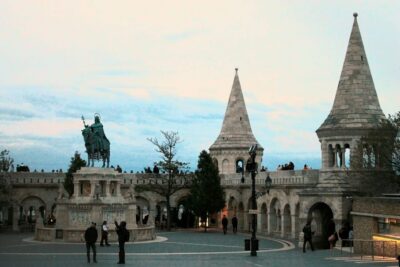
BloodThirsty Hungary: Walking tour & Dark Historical Stories
Read our review →
Budapest Jewish Heritage Memorial Walking Tour & Synagogue Entry
Read our review →
Budapest: Jewish Heritage Guided Tour with Synagogue Ticket
Read our review →
Budapest Historic Downtown Bicycle Tour in small groups
Read our review →
Budapest: Historic Downtown ride on E-Bicycles Buda & Pest
Read our review →
Budapest: Jewish History Guided Walking Tour with Historian
Read our review →Browse the lists this tour appears in