
Reviewed · JEWISH DISTRICT TOURS
Budapest: Jewish History Guided Walking Tour with Historian
Budapest hides a dramatic Jewish story. This 2.5-hour historian-guided walking tour in the 7th District connects synagogue exteriors, ghetto-era streets, and World War II rescue stories into a route you can follow on foot. You see how an old neighborhood became a place of faith, fear, survival, and community again, all without needing museum time or extra planning.
I especially like the pairing of major landmarks with street-level context, from the Kazinczy and Rumbach Street Synagogues to the famous Dohány Street Synagogue exterior. I also like the stop for Flódni and coffee, a local Jewish cake break that gives your brain a breather before the heavier WWII parts.
One consideration: the synagogues are outside only, and the tour is weather-dependent, so if you want interior visits or a slower, longer museum-style look, you may want to pair this with a separate synagogue visit later.
In This Review
- Key takeaways before you go
- Budapest Jewish history on the sidewalk, not in a lecture hall
- Starting point: Kempinski Corvinus and why that matters
- The Jewish Quarter route: the 7th District in real context
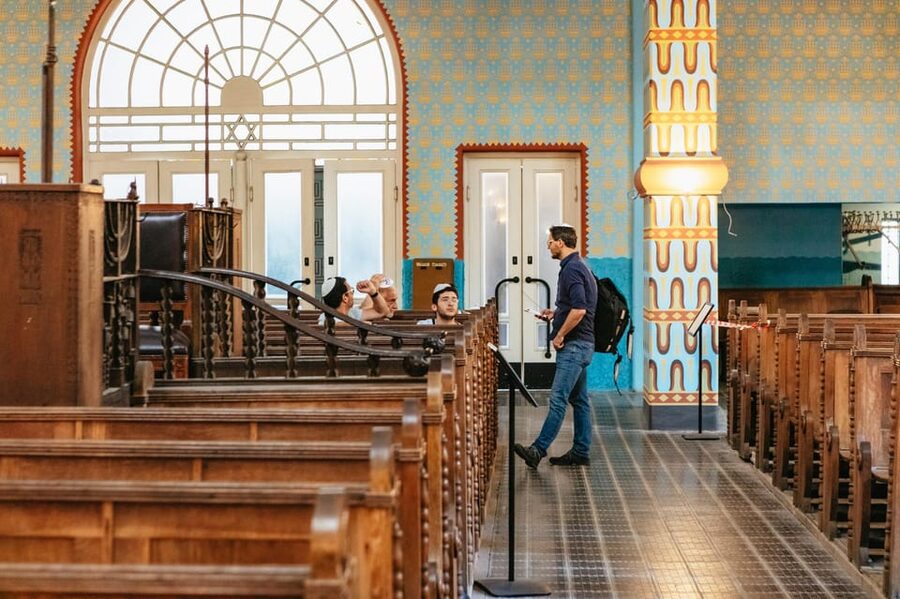
- Outside synagogues you can actually spot: Kazinczy, Rumbach, Dohány
- Kazinczy Street Orthodox Synagogue
- Neolog Rumbach Street Synagogue
- Dohány Street Synagogue
- The former Ghetto streets and the power of small details
- WWII rescue stories: Wallenberg and Carl Lutz where names become people
- Gozsdu Passage, street art, and Elizabeth Town secrets
- The coffee and Flódni stop: a sweet pause with cultural meaning
- Pacing, group size, and what to ask your guide
- Price and value: what $63 buys you, and what it does not
- Should you book? My honest take
- FAQ
- Are the synagogues included inside on this tour?
- How long is the tour?
- Is the tour in English?
- What food is included?
- Where do I meet the guide?
- How big is the group?
- Do I get a refund if I cancel?
Key takeaways before you go
- Outside-only synagogue views of Kazinczy, Rumbach, and Dohány Street, with architectural context you can actually see on the sidewalk
- Wartime rescue memorials tied to Raoul Wallenberg and Carl Lutz, with clear human stories behind the names
- Flódni plus coffee in a local cafe, a very Budapest Jewish Quarter kind of break
- 7th District focus, including streets connected to the former Ghetto and today’s active Jewish community
- Small group size (up to 10), which usually means more room for questions and pacing that fits the group
- Street art and nightlife tips around Elizabeth Town, including pointers toward Gozsdu Passage and ruin pub culture
Other walks through the old Jewish quarter:
- Budapest Jewish Heritage Memorial Walking Tour & Synagogue Entry
★ 5.0 · 568 reviews - Budapest: Jewish Heritage Guided Tour with Synagogue Ticket
★ 4.8 · 533 reviews - German tour in the Budapest city centre & the Jewish quarter
★ 5.0 · 359 reviews
Budapest Jewish history on the sidewalk, not in a lecture hall
If you have only a short time in Budapest, this is the kind of tour that helps you get your bearings fast. The 7th District is where Jewish culture has flourished for over 200 years, and this walk makes the neighborhood feel specific, not generic. You’re moving through real streets, seeing real buildings, and hearing the story as it changes across eras.
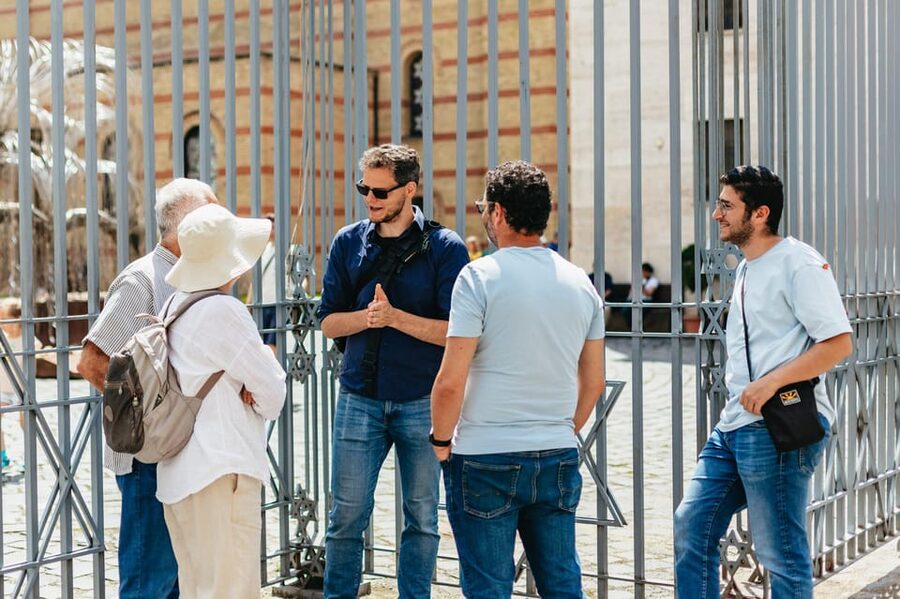
What makes this one work is the blend of the beautiful and the brutal. You look at impressive synagogue façades, then you walk the streets linked to the former Ghetto, then you reach memorials connected to the rescue period of winter 1944 to 1945. The guide is tasked with explaining the good, the bad, and the ugly, and that structure matters. Otherwise, Jewish history here can feel like disconnected facts. This tour turns it into a route with a beginning, middle, and emotional stakes.
Also, the small-group setup helps. When the group is limited to 10, the guide can slow down when questions land, and you are less likely to feel like a human blur passing landmarks.
Starting point: Kempinski Corvinus and why that matters
Your tour begins at the Kempinski Hotel Corvinus Budapest, on Erzsébet Square, meeting the guide in front of the hotel facing the Ferris wheel. This is a handy launch spot because it’s in the central area where trams and underground lines all seem to meet. If you’re using the M1, M2, or M3 metro lines, you’ll want to get off at Deák Ferenc tér, which is a common hub for reaching this part of Budapest.
Why I like this meeting point: it reduces the “where do I go, exactly?” stress. Even if it’s your first day, you can usually find your way to Deák Ferenc tér quickly, then adjust from there.
And because the tour starts in all weather conditions, you should treat that early moment as part of the plan, not a surprise. If it’s cold or rainy, dress for the walk, not for comfort at a café first.
The Jewish Quarter route: the 7th District in real context
The walk centers on the Jewish Quarter in Budapest’s 7th District, an area that is still home to a large and active Jewish community today. That continuity is one reason this tour feels more meaningful than the usual “look at old stuff” sightseeing.
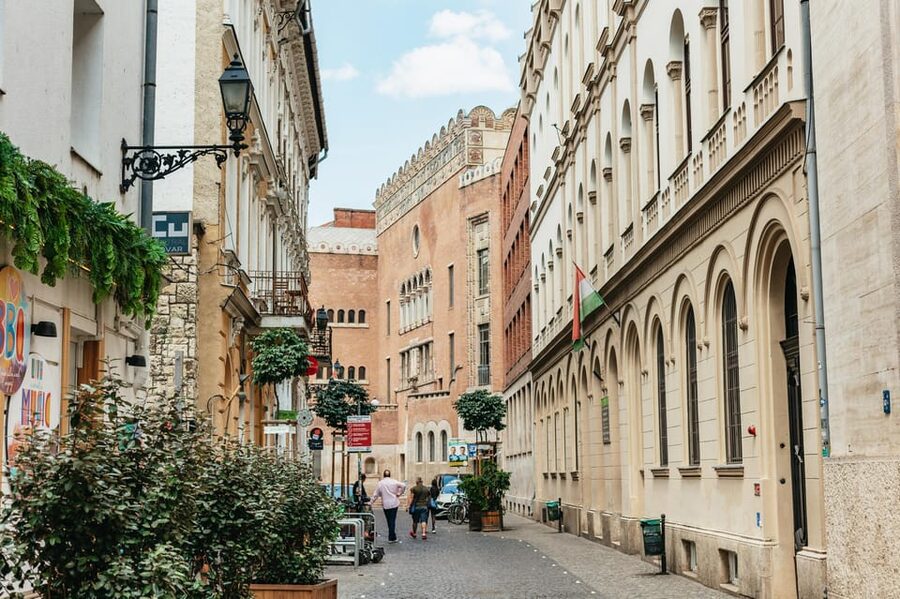
You’ll cover the neighborhood’s major synagogue exteriors and also move along streets tied to the former Ghetto. Along the way, the guide points out how this area today includes synagogues, monuments, kosher restaurants, and kosher shops. That’s not just background color. It’s a reminder that history here isn’t trapped in the past. It’s part of what you’re walking through right now.
One thing to expect from strong guides on this route is timeline clarity. Several guides are known for explaining how Hungary fit into larger European events before zooming in on Budapest. For example, some guides use simple visual aids to map out shifting territories and political change. That makes the WWII material easier to follow, because you understand the setting before the story turns darker.
Outside synagogues you can actually spot: Kazinczy, Rumbach, Dohány
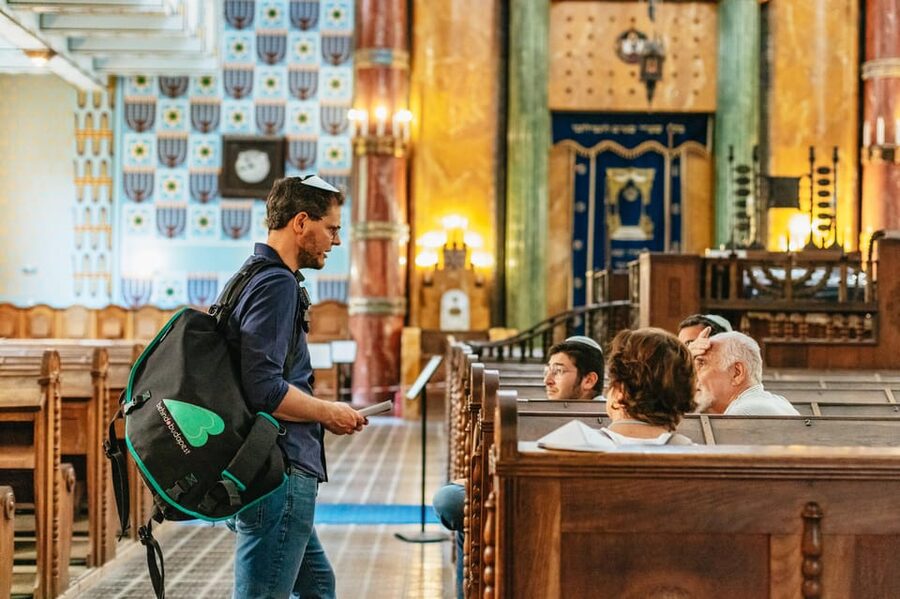
Let’s talk architecture, because Budapest does not do subtle. Even if you only see synagogues from the outside, the façades are eye-catching and historically loaded.
More of Pest crossed at walking pace:


Kazinczy Street Orthodox Synagogue
You’ll pass the Kazinczy Street Orthodox Synagogue and learn about what you’re seeing from the street. The key value here is interpretation. A synagogue exterior can look like grand civic architecture at first glance, but the guide helps you read the symbolism and the community story behind it.
Neolog Rumbach Street Synagogue
Next up is the Neolog Rumbach Street Synagogue from the outside. You’ll get context for its design and history, including that it was built in 1872 by Viennese architect Otto Wagner. Even if you don’t know Wagner’s work, this detail helps anchor the building in broader Central European architectural trends.
Dohány Street Synagogue
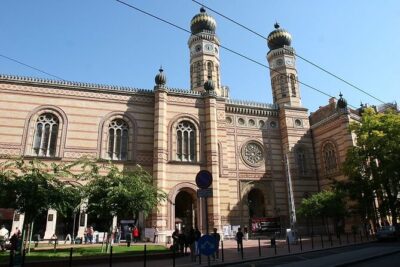
Then comes Dohány Street Synagogue, often described as the largest synagogue of Europe, and it truly makes an impression from outside. The exterior is dramatic, and the guide frames why it matters in the story of the neighborhood and its Jewish community.
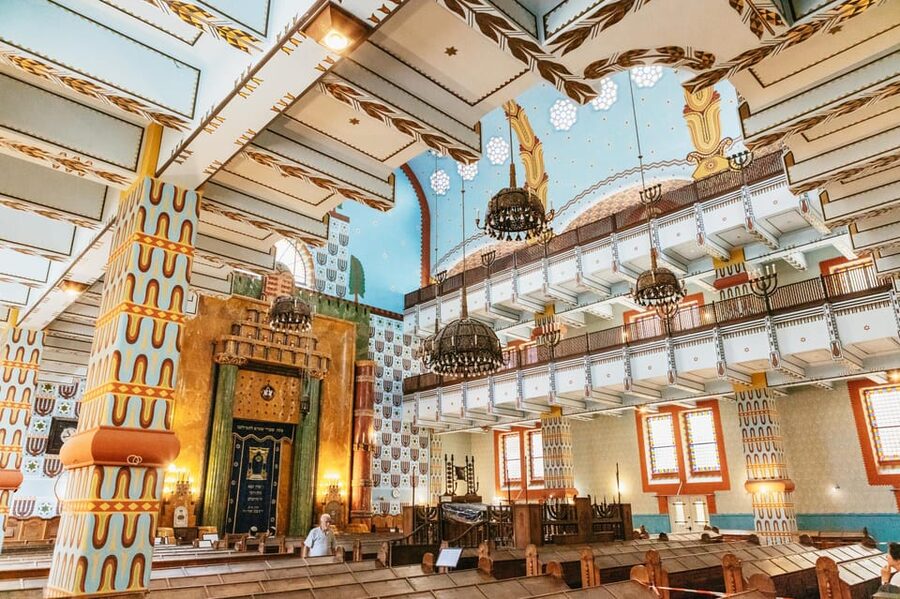
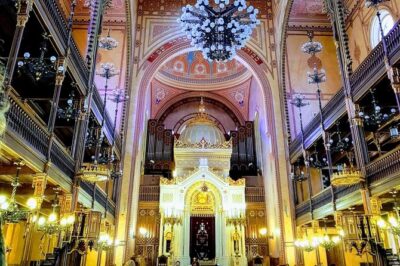
A big practical note: synagogue entry is not included. So if you’re the type who wants to step inside, you’ll need a separate plan for that. That said, seeing these buildings from the sidewalk still works, especially when the guide connects them to the timeline.
The former Ghetto streets and the power of small details
Walking the streets tied to the former Ghetto is where the tour stops being purely architectural and turns human. You’re moving through an area that once held extreme restrictions, fear, and displacement, then transitioning back into modern everyday life as the neighborhood rebuilds.
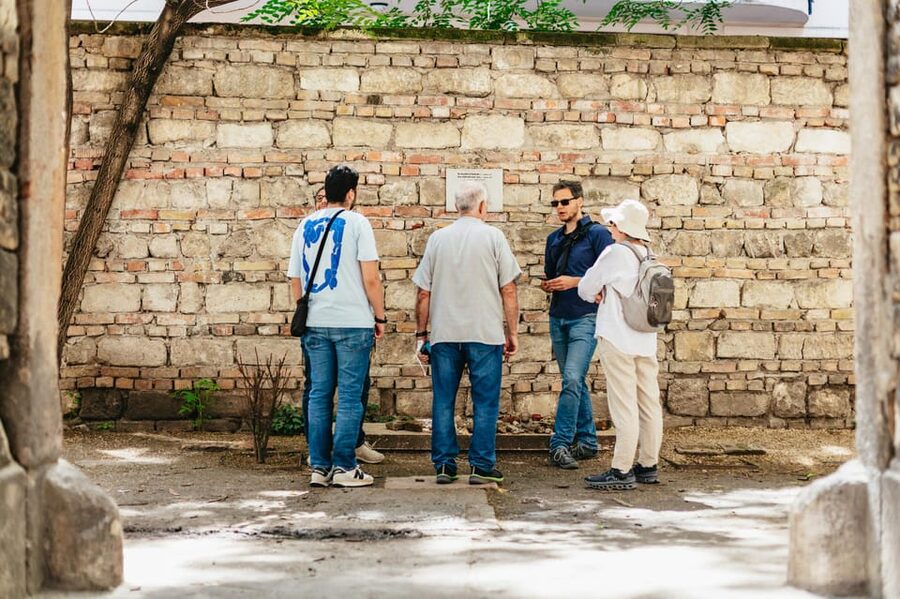
The guide will show you key spots such as monuments and street locations connected to the Ghetto period. One especially striking kind of detail that you might hear about is how certain physical remnants are surprisingly short-lived. For instance, a guide may point out that a surviving wall fragment from the Ghetto era existed for less than two months. That kind of fact hits harder when you’re standing on the street where it happened.
You also get a mix of past and present. The tour isn’t only about what happened then. It’s also about how the neighborhood functions now, including the presence of kosher businesses and community life in the same streets where families once faced confinement and terror.
WWII rescue stories: Wallenberg and Carl Lutz where names become people
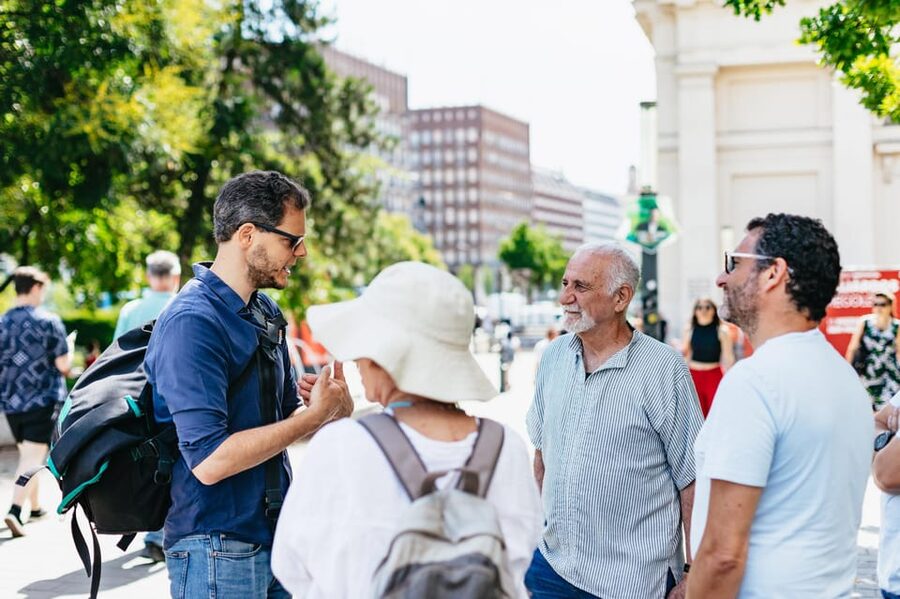
If WWII is part of your interest, this tour has a clear payoff. You’ll learn about great individuals who saved tens of thousands of Jewish lives during winter 1944 to 1945, including Raoul Wallenberg and Carl Lutz at their respective memorials.
This is the emotional center of the walk, and the guide’s job is to keep it grounded. Instead of letting the names float as facts, you connect them to what they tried to do and why it mattered in the most dangerous phase of the war in this region.
I like that the tour doesn’t treat rescue as a side note. It’s framed as a major thread of the story, with context on the crisis and the scale of what people faced. It also gives you a way to remember the material beyond the tour, because memorials are durable anchors.
Some guides also discuss the broader pressure Jews faced earlier, including legal restrictions and social incentives around conversion. That earlier context helps the WWII chapters feel less abrupt, like someone is explaining the stairs you’re walking down, not just jumping straight to the bottom.
Gozsdu Passage, street art, and Elizabeth Town secrets
After the heavier sections, the tour shifts tone slightly. You’ll walk through Gozsdu Passage, which helps restore a feeling of everyday Budapest. You’ll also hear local tips about the neighborhood’s nightlife culture, including pointers toward ruin pubs.
On top of that, there’s time for street art and the “secrets” around Elizabeth Town. This matters because it keeps your understanding of the area from freezing in one era. The neighborhood today is creative, opinionated, and layered with layers of identity.
I found this pairing smart for two reasons:
- It prevents the tour from feeling like a single long tragedy.
- It helps you later when you want to wander on your own, because you’re not just copying a guide’s route, you’re learning how the area feels.
The coffee and Flódni stop: a sweet pause with cultural meaning
Mid-tour, you get a short break: coffee and dessert in a local cafe, with Flódni as the featured Jewish cake. The tour schedule includes about 15 minutes here, so think of it as a reset, not a full meal.
I like that they include this, because food is one of the easiest ways to connect to local culture without turning the tour into only doom and history dates. Flódni is a local Jewish cake, and the act of having it right in the Jewish Quarter gives it more context than ordering it later after a generic dinner.
Also, for practical energy reasons: after walking and standing outside in synagogues and memorial areas, you’ll feel better if you’ve had a caffeine and sugar bump before the final stretch.
Pacing, group size, and what to ask your guide
This is a 2.5-hour experience, with around 2.25 hours of sightseeing plus the coffee and dessert stop. The pace tends to be active, with lots of outside walking and stops to look and listen.
The group size is limited to 10 participants. In practice, that often means:
- You can ask questions without waiting in a long line
- The guide can respond to what the group seems to need, whether it is WWII context or more detail about synagogue architecture
- The tour feels more like a guided walk than a cattle-train hop
On question-heavy tours, I recommend asking something simple but specific, like what the guide wants you to notice on the synagogue façades. You’ll get better answers if you invite interpretation, not only dates.
From the guide names that show up in this tour’s history, you can also get a sense of the style you might experience. Guides such as Barbara, Andrea, András, Noémi, and Gábor have been praised for keeping attention and connecting Hungary’s broader story to the Jewish Quarter. Others like Daniel and Aron have been praised for storytelling that ties politics and daily life together. That range suggests the tour can feel human, not just factual.
Price and value: what $63 buys you, and what it does not
At $63 per person for a 2.5-hour historian-led walk, the value is strongest if you want guided interpretation. You get a historian guide, a walking tour, and the coffee and Jewish cake stop. That inclusion matters, because it turns one random break into part of the cultural experience.
What’s not included is synagogue entry. Since visits to the three main synagogues are exterior only, you should treat this as a neighborhood-and-story tour, not a full religious-site ticket package. If you care most about interiors, you’ll likely want to add that separately on another day.
Still, for many visitors, this is exactly the right tradeoff. Synagogues are powerful and deserve more time if you want to go inside. But if you have limited days in Budapest, this tour gives you the big-picture route and the right “why it matters” context in one efficient pass.
Should you book? My honest take
Book this tour if you want:
- A guided route through the 7th District that explains what you’re seeing, not just what the buildings are called
- A focus on WWII rescue stories, especially Wallenberg and Carl Lutz, anchored at memorials
- A short cultural food stop with Flódni and coffee that fits the neighborhood
- A small group format that allows real questions
Skip or supplement it if you:
- Want synagogue interior access as a must-have
- Prefer longer stays at fewer stops, like a museum pace
- Feel sensitive to heavy WWII material and want more time to process between sites
My bottom line: for first-timers who want meaning and direction without spending your whole day in a single topic, this is one of the most efficient ways to understand Budapest’s Jewish Quarter on foot.
FAQ
Are the synagogues included inside on this tour?
No. The tour visits the three main synagogues from the outside only.
How long is the tour?
The tour lasts about 2.5 hours, with sightseeing for about 2.25 hours and a coffee and dessert stop of about 15 minutes.
Is the tour in English?
Yes, the live guide speaks English.
What food is included?
Coffee or a soft drink is included with a local Jewish cake called Flódni.
Where do I meet the guide?
Meet in front of the Kempinski Hotel Corvinus Budapest, facing the Ferris wheel on Erzsébet Square.
How big is the group?
The group is small, limited to 10 participants.
Do I get a refund if I cancel?
Yes, you can cancel up to 24 hours in advance for a full refund.
Centuries Stacked Along the Danube
- Budapest: Historic Cruise with Welcome Drink
★ 4.7 · 6,512 reviews - Budapest Historical Sightseeing – Free Walking Tour
★ 5.0 · 1,302 reviews - Buda Castle District Dark History, Legends and Vampire Night Tour
★ 4.5 · 1,240 reviews - BloodThirsty Hungary: Walking tour & Dark Historical Stories
★ 4.9 · 633 reviews
Newest from the Danube banks
- Pub Crawl Through The Ruin Bars in Budapest with T-shirt Included★ 4.5 · 14 reviews
- Rudas Bistro Premium Brunch★ 3.5 · 14 reviews
- Wine Tasting in the Countryside from Budapest★ 5.0 · 14 reviews
- Buda Castle District and Matthias Church Private Tour★ 5.0 · 14 reviews
- Pest side stories with a Historian★ 5.0 · 14 reviews
- Recirquel Company: Walk My World Immersive Show Entry Ticket★ 4.6 · 14 reviews
- Ram Gorge Hiking Adventure★ 5.0 · 14 reviews
- Budapest Rafting – Sunset Cruise★ 5.0 · 14 reviews
Jewish District Tours, compared.
Budapest Jewish Heritage Memorial Walking Tour & Synagogue Entry
Read our review →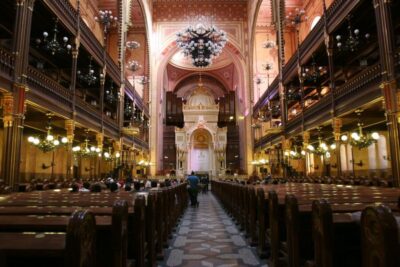
Budapest: Jewish Heritage Guided Tour with Synagogue Ticket
Read our review →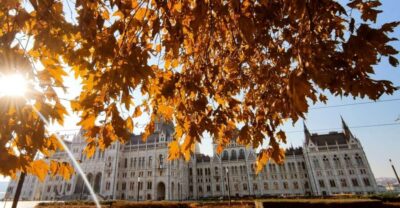
German tour in the Budapest city centre & the Jewish quarter
Read our review →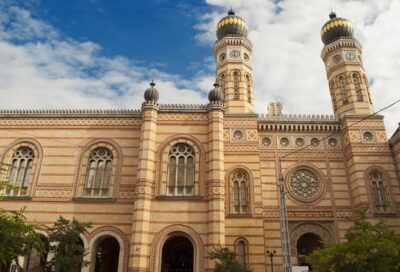
Past and Present of Budapest Jewish District Tour
Read our review →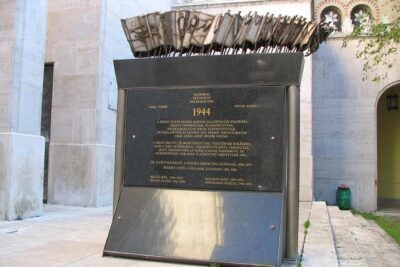
Budapest Dohany Synagogue & Hungarian Jewish Museum & free extras
Read our review →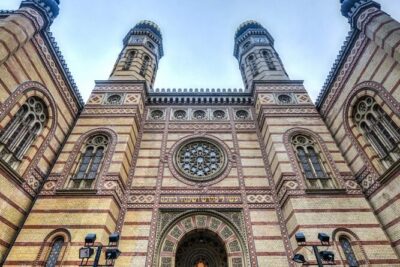
Budapest Dohany, Heroes’, Rumbach synagogues & Jewish Ghetto Tour
Read our review →
Browse the lists this tour appears in