
Reviewed · JEWISH DISTRICT TOURS
Budapest Dohany, Heroes’, Rumbach synagogues & Jewish Ghetto Tour
Budapest’s Jewish Quarter has real power. This 2 hour 20 minute walking tour connects architecture, religion, and the Holocaust, using key stops that make the history feel immediate and human. I like how it moves from major synagogue interiors to memorial ground instead of staying purely sightseeing.
Two things I especially like: first, you get entry included where it matters most, especially the Great Central Synagogue and the Rumbach Synagogue. Second, the guide framing tends to be both clear and emotionally respectful, with stories that help you understand the difference between communities and the stakes of the ghetto period.
One possible drawback: you will spend more time listening than doing long walking, and the schedule packs several topics into a short window. If you want lots of free time to wander on your own, you may feel slightly rushed between stops.
In This Review
- Key things I’d mark on your Budapest map
- Your 2 hours 20 minutes through Budapest Jewish Quarter, from Dohány to Rumbach
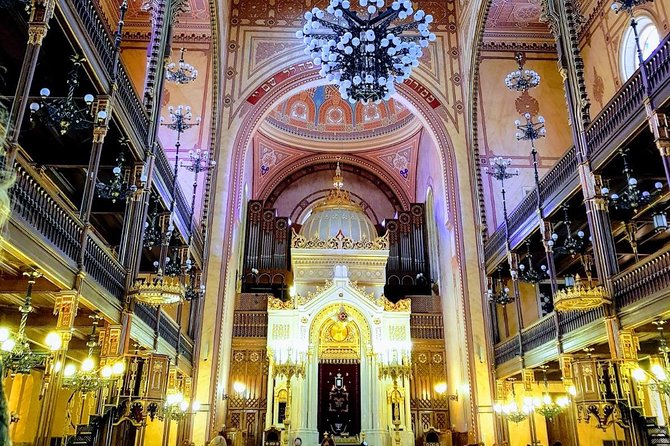
- Inside the Great Synagogue at Dohány Street, Neologue style and Liszt’s organ
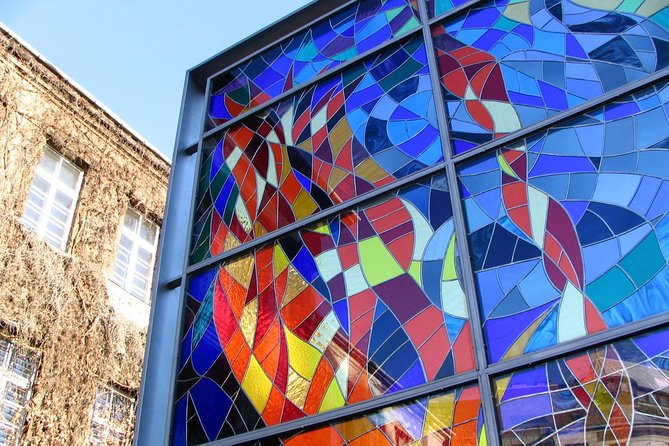
- Raoul Wallenberg Holocaust Memorial Park, the Emmanuel Tree and the ghetto cemetery
- Rumbach Street Synagogue, Otto Wagner’s Moorish masterpiece
- Királ y Street, Gozsdu Udvar, and the return of Jewish street life
- Carl Lutz Memorial, Spinoza Színház, and Dob Street’s Orthodox heart
- Kazinczy Street Synagogue and Secession style on Budapest’s cultural street
- What the guides do right, especially when the topics get heavy
- Price and value: is this $63.52 tour fair?
- Dress code and timing tips so you do not waste time at the door
- Should you book this Budapest Jewish ghetto tour with Dohány, Rumbach, and ghetto memorial stops?
Key things I’d mark on your Budapest map
- Dohány Street Great Synagogue interior included, with Neologue Judaism explained and Franz Liszt’s organ mentioned as part of the grandeur
- Raoul Wallenberg Holocaust Memorial Park plus the Emmanuel Tree of Life Memorial and a ghetto cemetery, with admission included
- Rumbach Street Synagogue visit time that lets you actually look at Otto Wagner’s Moorish design, after renovations
- Királ y Street and Dob Street walks that focus on Jewish street life returning, not just ruins and plaques
- A quick stop culture mashup around Gozsdu Udvar, Carl Lutz Memorial, and Spinoza Színház
- One synagogue stop where admission is not included on Kazinczy Street, so plan for possible extra cost if you want more access
Other walks through the old Jewish quarter:
- Budapest Jewish Heritage Memorial Walking Tour & Synagogue Entry
★ 5.0 · 568 reviews - Budapest: Jewish Heritage Guided Tour with Synagogue Ticket
★ 4.8 · 533 reviews - German tour in the Budapest city centre & the Jewish quarter
★ 5.0 · 359 reviews
Your 2 hours 20 minutes through Budapest Jewish Quarter, from Dohány to Rumbach
This tour is designed for a fast, high-impact overview of Budapest’s Jewish Quarter, with a route that starts near Dohány u. 2-4 and ends at the Rumbach Synagogue. Total time is about 2 hours 20 minutes, and the group size max is 35. That matters because larger groups can feel like a stampede through sacred spaces. Here, the format is built around steady pacing and frequent context, not just moving from photo spot to photo spot.
Also, do not get misled by the big-sounding name. The heart of the walking is very focused on the Jewish Quarter corridor, ghetto-related sites, and synagogues. You should expect a mix of short street walks and stops where you stay put to hear the story.
One practical note that can change your comfort level: you’re visiting interiors in a religion and memorial setting that has rules. The tour provides guidance, but you still need to dress for it.
Inside the Great Synagogue at Dohány Street, Neologue style and Liszt’s organ
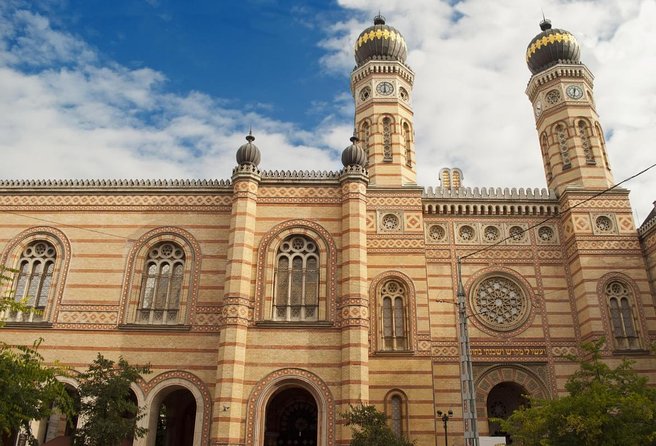
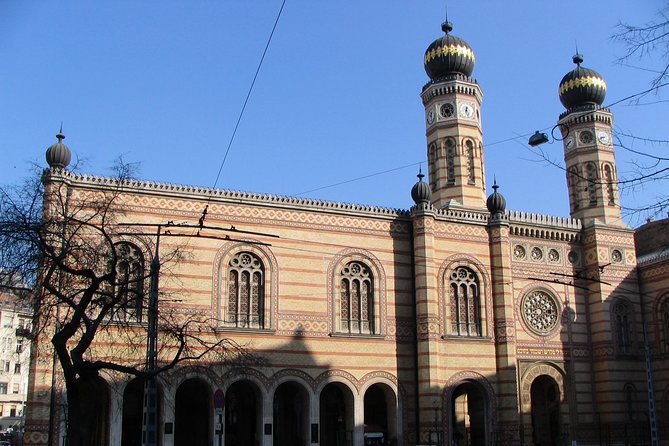
Stop 1 is the Great or Central Synagogue (Nagy Zsinagóga), and the visit time is about 30 minutes with admission included. This is the big one, the largest Jewish temple of Europe, and the tour uses that size to teach you how Hungarian Judaism organized itself in the 1800s. You will hear about the Hungarian Neologue Jewish community and how the Hungarian Jewish experience differed by practice and community type.
What I’d focus on as you step inside is the way the guide ties together religion and architecture. The synagogue is an architectural masterpiece of the 1850s Budapest era, so you can actually see history in the materials and style, not just in dates. The tour also highlights the organ associated with Franz Liszt, which is a great clue that this building was never meant to feel like a bunker. It was meant to be public, impressive, and communal.
Potential downside: 30 minutes can feel short if you love slow looking. If you do, make a quick game plan before you enter. Pick two things to study for a full minute each, like the organ area and one feature of the facade or interior design, then let the rest of the time be for the guide’s story.
Before you go in, remember the dress code is real. Your shoulders need to be covered and your clothes should reach the knee or be covered before entry. Covers may be available for purchase on the spot, and men can get help with head cover at entry.
Raoul Wallenberg Holocaust Memorial Park, the Emmanuel Tree and the ghetto cemetery
Stop 2 is the Raoul Wallenberg Holocaust Memorial Park, with about 20 minutes and admission included. This is where the tone shifts from architecture and community life to survival, rescue, and loss. The guide’s job here is not just to explain dates, but to help you understand why certain memorial elements exist, and what they represent to Hungarian Jews and to the broader story of the Holocaust.
You’ll learn about the Hungarian Holocaust and the Righteous Gentiles who saved tens of thousands of Hungarian Jews, risking their own lives. The memorial is also built around remembrance symbols, including the Emmanuel Tree of Life Memorial. Then the tour goes to the Holocaust Cemetery, created on the territory of the Budapest ghetto, where more than 2,000 victims are laid to rest.
This is the moment on the route where your emotions are likely to lead your thoughts, and that is exactly why a guided approach can help. The guide keeps the information organized so it does not just hit you as a wall of tragedy. From my perspective, that balance is the value here, because it helps you understand without rushing past the weight of the story.
A practical consideration: if you’re sensitive to heavy topics, give yourself permission to pause and breathe. The stop is timed, but you can still take a second before moving on.
Rumbach Street Synagogue, Otto Wagner’s Moorish masterpiece
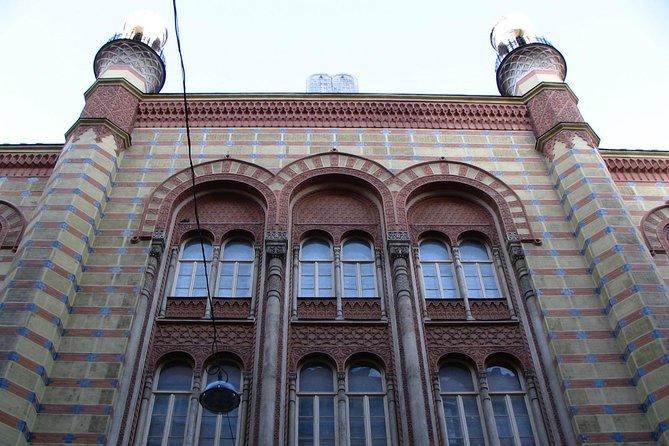
Stop 3 is the Rumbach Street Synagogue (Rumbach Synagogue), and you get about 45 minutes with admission included. This longer stop is a big deal, because the place rewards looking. It’s a masterpiece by Otto Wagner, a Viennese architect, from 1872, and the building is designed in a Moorish style that feels almost theatrical when you first see it down the street.
The tour also notes that it has recently reopened after many years of renovations, which is part of why it feels so fresh. In a district that includes memorials and darker sites, this building offers a different kind of intensity. It is gorgeous, and it also tells a story about identity and community investment in a specific time period.
What I like about how the tour frames this stop is the word hidden gets replaced by specific. You learn what you are looking at and why it was made that way, so your eyes know what to search for. If you only sprint in for photos, you miss that. If you take your time, you end up leaving with a clearer picture of how Hungarian Jewish communities expressed themselves through architecture.
Possible drawback: because the synagogue is a signature stop, it can also attract extra people at peak hours. If you want quieter moments, arrive with a calm mindset and accept that timing is part of any major Budapest synagogue interior visit.
Other ways an evening in Budapest can go:




Királ y Street, Gozsdu Udvar, and the return of Jewish street life
After the synagogues and memorial ground, the tour shifts into street-level context. You’ll walk Királ y Street, described as the high street of Pest in the 18th century and early 19th century, when it became a commercial and trade center and the cradle of Jewish life in Pest. Today, the guide points out how the area has life again, with commercial and cultural activity returning to the streets.
Expect this stop to be short, about 10 minutes, and more about orientation than deep history. Think of it as the connective tissue between the formal sites. You’ll also likely notice how the stories from the synagogue stops fit the neighborhood you’re standing in.
Then you make a quick stop at Gozsdu Udvar, a colorful courtyard-like area known for entertainment and culture. The tour explains that in the past this space housed kosher salami stores, food stores, and apartments. Today, it is a meeting point for local Jewish artists and artisan and antique products, plus places to eat and drink.
Again, this is time-efficient, about 10 minutes. It’s not a food crawl. It’s there to remind you that Jewish life in Budapest was never only about religious buildings. It also lived in commerce, food, and everyday community gathering.
One more food note that you may appreciate: the route includes a stop to see one of the best known places in Budapest for kosher flodni, described as a favorite Hungarian Jewish cake. The tour itself does not promise a long tasting, but the inclusion makes sense if you want a sensory reminder that tradition is not just in stone.
Carl Lutz Memorial, Spinoza Színház, and Dob Street’s Orthodox heart
A key part of this route is remembering specific people and then looking for cultural signals in the streets. You visit the Carl Lutz Memorial for about 5 minutes, which spotlights one of the brave Righteous Gentiles who risked his life to save thousands of Hungarian Jews. This is brief by design, but powerful in its focus.
Next comes Spinoza Színház for another short 5 minutes stop. The theatre is named after the Jewish Dutch philosopher of Portuguese Sephardi origin, who was an early representative of the Enlightenment in the 17th century. Even if you do not know Spinoza’s philosophy, the tour uses this stop to show how Jewish identity in Budapest has had cultural and intellectual roots, not only religious ones.
You also pass by Dob Street for about 10 minutes. The tour describes it as running parallel to Királ y Street and as part of the central Jewish district, also in the center of the Budapest ghetto. Today, the tour frames Dob Street as a place where Jewish life has revived, including a visible presence of Hungarian Jewish orthodoxy.
This section works best if you treat it like a walk through layers of time. The memorial names bring you back to history. The theatre and street life bring you forward to today.
Kazinczy Street Synagogue and Secession style on Budapest’s cultural street
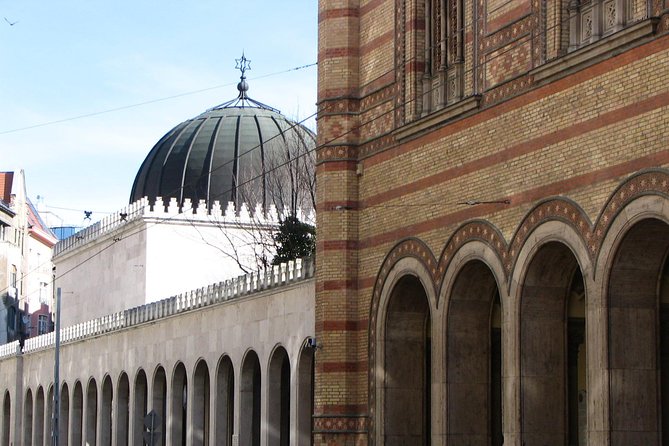
Stop 9 is on Kazinczy Street, about 15 minutes. The guide calls this the cultural street of Budapest, lined with ruin pubs, but also connected to the Hungarian Orthodox Jewish Center. That center includes a synagogue, a mikveh, kosher restaurants and cafes, schools, a butchery, and kosher food stores. The tour also points out that this part of the walk connects architecture and community identity.
You will admire early 20th century Art Nouveau in Budapest, often called Secession. The synagogue here belongs to the Hungarian traditional Orthodox Jewish community.
Important for your planning: the itinerary says admission is not included for this stop. So if you’re hoping for full interior time here, you should budget extra and be ready for whatever is possible on the day. In practice, short exterior and exterior-focused stops are common in busy urban routes, even when the architecture is worth it.
What the guides do right, especially when the topics get heavy
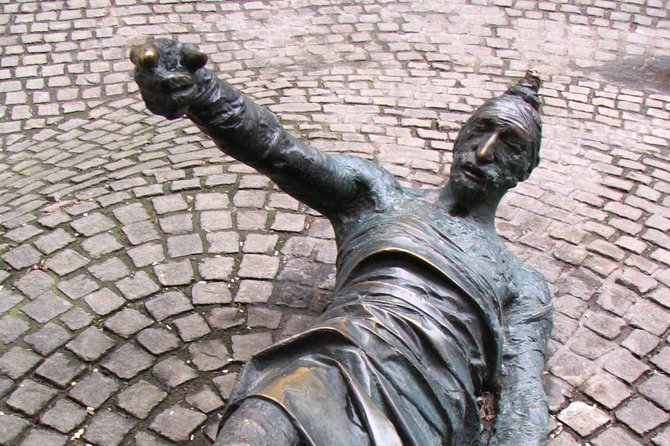
The most consistent praise in the experience is not about buildings alone. It’s about how the guide teaches. Names like Milan and David come up often, along with guides such as Micky and Daniel. The recurring theme is careful storytelling, plus an ability to handle heavy Holocaust material without turning it into a lecture that overwhelms you.
I like that the guides described here often add personal context and answer questions directly. That matters in this setting because people do not always know the right questions. A good guide helps you understand why one synagogue differs from another, and why the memorial sites are designed the way they are.
Pacing also shows up as a strength. Even with a packed itinerary, you’re not left alone to figure out the connections between community life, ghetto history, and the architecture of synagogues.
Price and value: is this $63.52 tour fair?
At $63.52 per person for about 2 hours 20 minutes, the price is not just paying for a walk. Several major stops have admission included, including the Great Synagogue, the Holocaust memorial park, and the Rumbach Synagogue. That alone shifts the value math compared with tours that show you interiors only from the doorway.
For me, the best value here is the time mix:
- Big interior moments where you can’t easily recreate the context on your own
- Memorial stops where you want the story organized and respectful
- Street stops that bring you back to how Jewish life functioned and where it returned
Where the value can feel uneven is at the shorter stops that are mostly orientation. But that is also what makes the tour fit into a single morning or afternoon block instead of turning into a full day research project.
If you like structured history with real-world stops, the cost makes sense. If you want only the quietest, slowest synagogue visit with no listening, you might prefer a self-guided approach.
Dress code and timing tips so you do not waste time at the door
This is a rule-heavy itinerary, so plan for it. The tour requests shoulders covered and clothing that reaches the knee or is covered before entering. Covers can be purchased on the spot. Men can get head cover provided at entry. Service animals are allowed, and the start area is near public transportation, which helps if you are juggling schedules around Budapest’s transit.
Also, bring layers. Even if it is warm outside, synagogue interiors can feel chilly, especially when you are standing still for explanation.
Finally, weather matters. The experience requires good weather, and the operator offers a different date or a full refund if it is canceled for poor conditions. Synagogues can also close temporarily without notice. If one closes, the tour offers alternative visiting time, but refunds are not offered because it’s a package deal. If all synagogues close, you can expect alternative hours or full refunds.
Should you book this Budapest Jewish ghetto tour with Dohány, Rumbach, and ghetto memorial stops?
Book it if you want a guided, emotionally thoughtful route that connects Hungarian Jewish community life with ghetto history, using the actual places where those stories happened. This is a strong choice if it is your first trip to Budapest Jewish sites and you want the “what am I looking at and why does it matter” answers.
Skip it, or consider a different style, if you:
- Hate structured tours and want total freedom to wander
- Prefer a longer time inside each site rather than a tight, multi-stop schedule
- Want a food-focused day, because the flodni mention is brief and not a full tasting itinerary
If your goal is to leave with clearer understanding, better names, and a sharper sense of place, this tour is one of the most efficient ways to do it in a short Budapest window.
Newest from the Danube banks
- Pub Crawl Through The Ruin Bars in Budapest with T-shirt Included★ 4.5 · 14 reviews
- Rudas Bistro Premium Brunch★ 3.5 · 14 reviews
- Wine Tasting in the Countryside from Budapest★ 5.0 · 14 reviews
- Buda Castle District and Matthias Church Private Tour★ 5.0 · 14 reviews
- Pest side stories with a Historian★ 5.0 · 14 reviews
- Recirquel Company: Walk My World Immersive Show Entry Ticket★ 4.6 · 14 reviews
- Ram Gorge Hiking Adventure★ 5.0 · 14 reviews
- Budapest Rafting – Sunset Cruise★ 5.0 · 14 reviews
Jewish District Tours, compared.
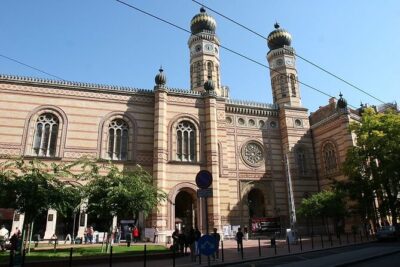
Budapest Jewish Heritage Memorial Walking Tour & Synagogue Entry
Read our review →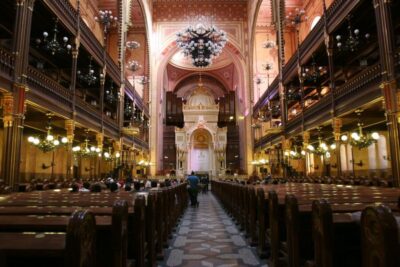
Budapest: Jewish Heritage Guided Tour with Synagogue Ticket
Read our review →
German tour in the Budapest city centre & the Jewish quarter
Read our review →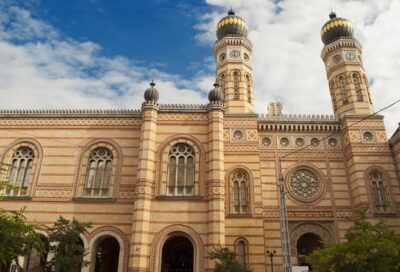
Past and Present of Budapest Jewish District Tour
Read our review →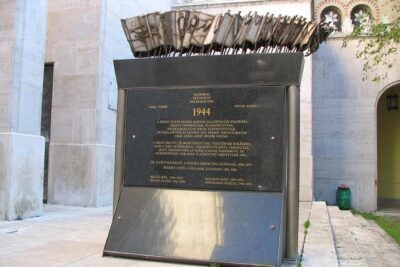
Budapest Dohany Synagogue & Hungarian Jewish Museum & free extras
Read our review →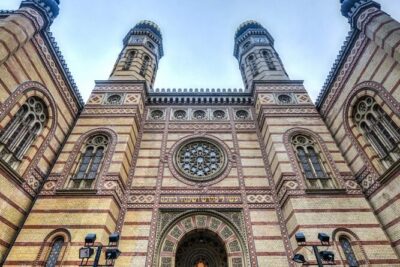
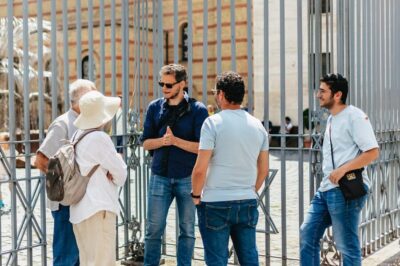
Budapest: Jewish History Guided Walking Tour with Historian
Read our review →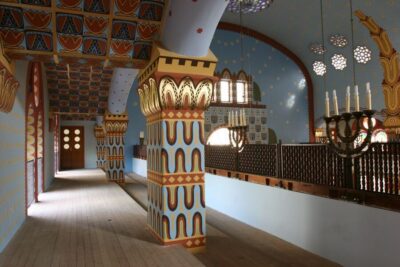
Browse the lists this tour appears in