
Reviewed · JEWISH DISTRICT TOURS
Budapest City Walk in Jewish Quarter
Budapest history turns a corner here. I love how the synagogue triangle gets connected into one story, and I love the WWII ghetto reminders that make the neighborhood feel real, not textbook. It is a compact area of Pest, so walking is the smart way to understand where people lived, worshiped, hid, and rebuilt.
One thing to plan for is the synagogue entrance fee, which is separate from the tour price. There is also moderate walking, so bring a scarf or hat (synagogues may provide pieces, but you’ll feel more comfortable with your own).
In This Review
- Jewish Quarter Key Highlights (What Makes This Walk Worth It)
- Why This Budapest Jewish Quarter Tour Works Best on Foot
- A Practical 4-Hour Route: From Hotel Pickup to Danube Remembrance
- The Synagogue Triangle: Kazinczy, Rumbach, and Dohány Street in One Arc
- Kazinczy Street Mikveh and Small Prayer Houses That Change Your Perspective
- Raoul Wallenberg Memorial Garden, the Emmanuel Tree, and Carl Lutz Reminders
- Jewish Museum and Jewish Archives: When History Becomes Evidence
- WWII Ghetto Wall Remnants and the Shoes Monument Moment
- Gozsdu Courtyard, Everyday Shops, Cafés, and Ruin Bar Culture
- Courtyard Breaks, Flex Time, and How to Keep the Pace Comfortable
- Guide Style Matters: When the Story Comes With Personal Stakes
- Value and Price: What $356.90 Per Group Really Buys You
- Who This Tour Suits Best (And Who Might Skip It)
- Quick Booking Tip: Match Your Priorities Before You Go
- Should You Book This Budapest Jewish Quarter Walking Tour?
Jewish Quarter Key Highlights (What Makes This Walk Worth It)
- A private-style pace in a small group, with room to linger where you care most
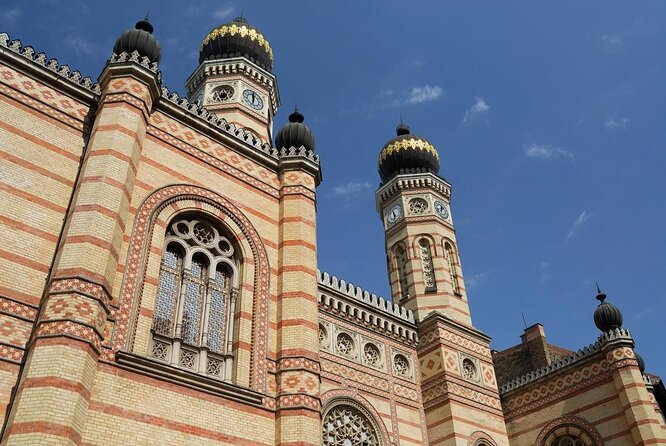
- Synagogues across the area, from the larger landmarks to smaller prayer houses
- WWII storytelling in place, including ghetto-wall remnants and the Danube Shoes Monument area
- Key memorial stops, like the Raoul Wallenberg Memorial Garden and the Emmanuel tree
- Local-life breaks, including courtyards and places you would likely miss on your own
Other walks through the old Jewish quarter:
- Budapest Jewish Heritage Memorial Walking Tour & Synagogue Entry
★ 5.0 · 568 reviews - Budapest: Jewish Heritage Guided Tour with Synagogue Ticket
★ 4.8 · 533 reviews - German tour in the Budapest city centre & the Jewish quarter
★ 5.0 · 359 reviews
Why This Budapest Jewish Quarter Tour Works Best on Foot
The Jewish Quarter in the 7th district is tight. That sounds minor until you try to learn a neighborhood without speed limits. Here, the walking is the whole method, because the sights sit close enough that your guide can link them into one continuous map of people and events.
This is not a stop-and-take-a-photo route. You get a guided walk that moves through synagogues, memorials, and everyday streets, so you can see how sacred spaces and survival history sit side by side. If you like understanding a place by its details, this format is a win.
The guide’s approach also matters. I particularly like that the tour aims for stories with context, not a lecture. You can also ask for a break when you need one, which keeps the pace friendly without turning it into a long sightseeing slog.
A Practical 4-Hour Route: From Hotel Pickup to Danube Remembrance

Your day starts with pickup from your hotel lobby or in front of your accommodation. That small convenience matters in Budapest, where you want your first hours to count. The tour runs about four hours, and it is offered daily within the stated service window.
The walk itself is designed to fit a lot into a compact area. You will move between key landmarks in the “synagogue triangle,” memorial sites, and the Jewish cultural institutions tied to the community’s past and present. Toward the end, you also get the Danube riverbank moment with the Shoes Monument, which gives a strong emotional punctuation to the day.
Even with a planned route, the tour is built to adjust. If you care more about memorials than buildings, or vice versa, your guide can shift time. That flexibility is one of the reasons this feels personal rather than generic.
The Synagogue Triangle: Kazinczy, Rumbach, and Dohány Street in One Arc
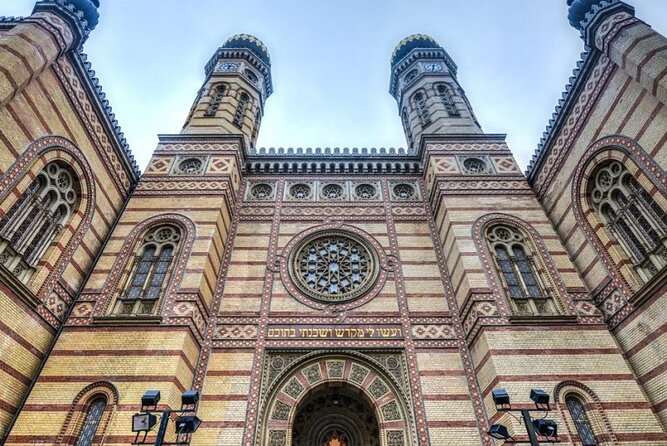
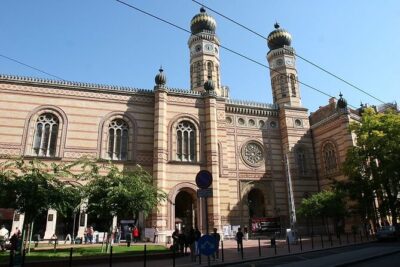
Budapest’s synagogue triangle can sound like an abstract map until you experience it as an actual walk. This tour connects the major sites you are likely to hear about, especially the Kazinczy Street area, the Rumbach Street Synagogue, and the Dohány Street Synagogue.
At Dohány Street Synagogue, the big landmark presence helps you understand why this neighborhood still holds international attention. But what makes the visit useful on this tour is the storytelling around it, especially the WWII era, when Jewish life in Budapest was under extreme pressure. You are not just looking at architecture, you are seeing why the buildings mattered.
Kazinczy and Rumbach add a different texture. They help you understand that the quarter was not only about one institution or one style of worship. Instead, it was a dense network of community needs, from public worship to smaller spaces tied to daily rhythm. If you want a rounded view, this “triangle” sequencing is the right structure.
Kazinczy Street Mikveh and Small Prayer Houses That Change Your Perspective
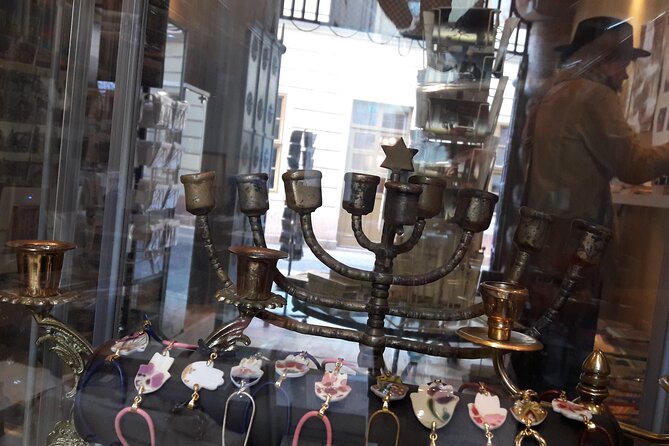
One of the best surprises on this walk is how it treats smaller religious spaces as meaningful, not as side notes. You might visit the Vasvári Street Synagogue and you may also see smaller prayer houses in the area. These stops help you see the quarter as lived-in religious geography.
A standout detail is the mikveh in Kazinczy Street. Even if you do not know what a mikveh is before you arrive, your guide can explain why it matters to community life. That kind of context turns a building you might otherwise ignore into a key piece of the story.
This is also where the tour feels most human. Smaller sites often let you slow down and understand the texture of faith practice in daily life. It is a good reminder that the quarter was not only about crisis, it was also about routine, community, and continuity.
More of Pest crossed at walking pace:




Raoul Wallenberg Memorial Garden, the Emmanuel Tree, and Carl Lutz Reminders
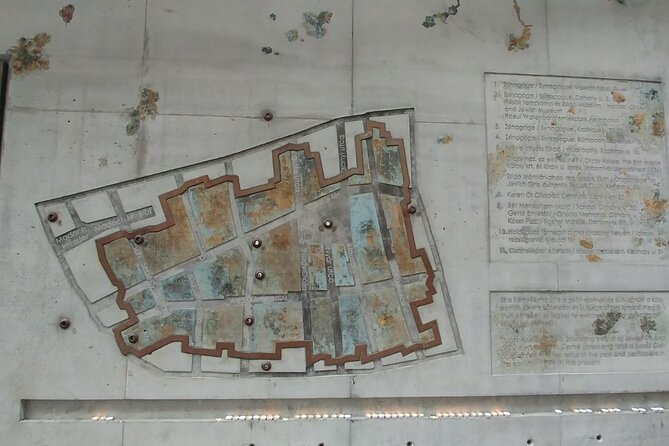
Memorials in the Jewish Quarter are not just symbolic. They are tied to named people and specific acts, which makes them easier to understand and harder to forget.
The tour includes the Raoul Wallenberg Memorial Garden, and it is especially meaningful because of the Emmanuel tree. Wallenberg is one of those names that comes up in broader WWII stories, but seeing his memorial in Budapest gives you a geographic anchor. You get to connect a large historical event to one city and one neighborhood.
You will also see the Carl Lutz Memorial, another named remembrance that broadens the focus beyond a single story. That pairing helps you understand how rescue efforts and humanitarian choices came from specific individuals and networks, not just anonymous heroism.
If you are sensitive to heavy topics, pace yourself. You do not have to rush through memorial areas. The tour’s small-group setup makes it easier to pause, ask questions, and process without feeling pushed along.
Jewish Museum and Jewish Archives: When History Becomes Evidence
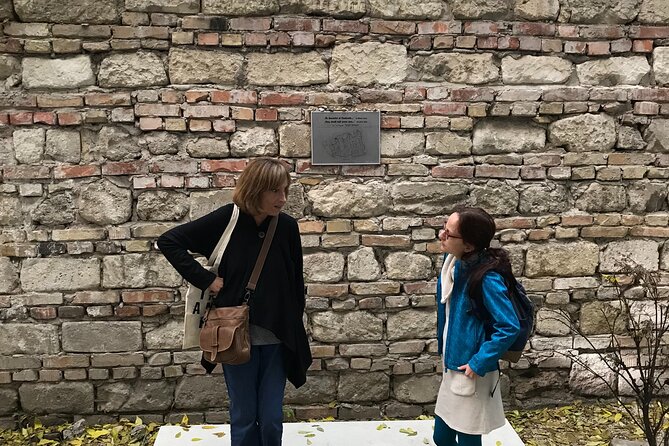
If you want more than feelings, this is where you get the supporting material. The route includes the Budapest Jewish Museum and exhibitions connected to the Jewish Archives.
The value here is practical. Walking a neighborhood gives you the geography, but museum and archive content gives you documentation and deeper framing. You can leave with names, timelines, and a clearer sense of how Jewish life changed over decades, not only during the Holocaust.
The tour balance matters. It is designed to keep the day flowing, so you do not spend all four hours trapped indoors. Instead, you use the museum stops to sharpen your understanding of what you are seeing outside on the streets.
WWII Ghetto Wall Remnants and the Shoes Monument Moment
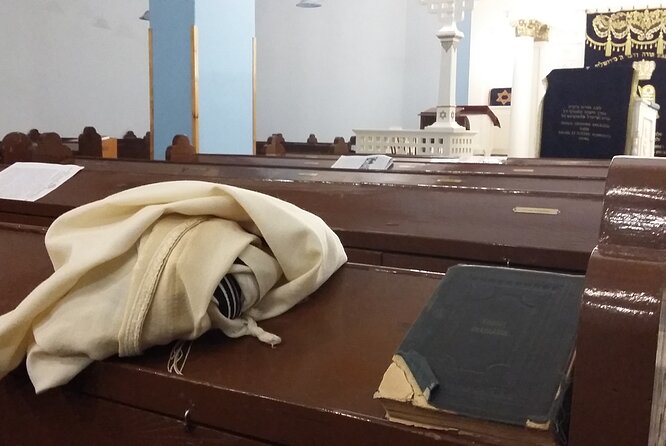
Some places in the Jewish Quarter are difficult to see, and that is exactly why they belong on this walk. The route includes the last remaining part of the WWII ghetto wall. Seeing remnants like that is different from reading about it, because the wall’s physical presence forces you to imagine the constraints in a very direct way.
The emotional peak for many people comes at the Danube with the Shoes Monument on the riverbank. Even if you already knew the general concept, the moment works best after you have heard context from earlier in the day. By the time you reach the river, you understand why the memorial is placed there and what it represents.
This part of the tour is a strong reminder that history is not distant. It happened in a city, on streets, and along a river edge where people faced choices with devastating consequences.
Gozsdu Courtyard, Everyday Shops, Cafés, and Ruin Bar Culture
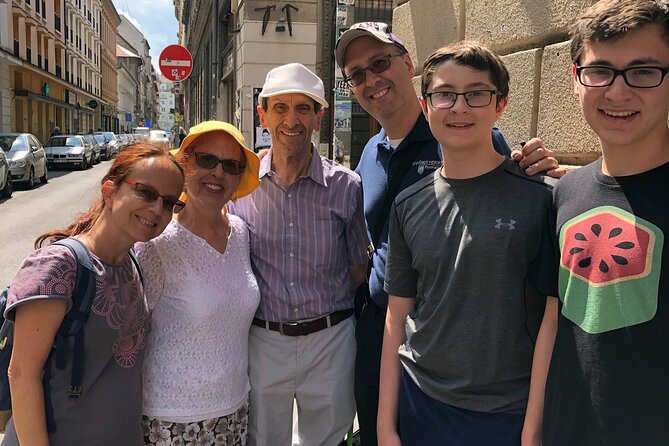
Not every moment on this walk is heavy. That is important for balance, because the Jewish Quarter today is not only a museum of tragedy. It is also a place where people live, eat, shop, and celebrate.
You may stop at Gozsdu Courtyard, with its mix of courtyards and street-level energy. The tour also includes time near local eateries, confectioneries, little shops, and other everyday spaces that help you read the neighborhood as it exists now.
Then there is the ruin bar culture, including the iconic Szimpla. Ruin bars can look like a purely modern nightlife idea, but your guide can place them in context, so they feel like part of the neighborhood’s ongoing survival and reinvention.
I like that the day gives you both sides of the coin. You get the memorials and the synagogues, but you also leave with a better sense of how the quarter functions today, not just what happened there.
Courtyard Breaks, Flex Time, and How to Keep the Pace Comfortable
This tour involves moderate walking, and it is smart to plan for it. Your guide can provide breaks, and you can also ask to shift time between stops if your interests run deeper in one area.
I recommend you treat the four hours as a conversation plus walking time, not a rigid checklist. Guides who are part of the community often steer the day based on questions, and that is where your visit becomes memorable. One reason the experience earns top marks is the guide’s personal energy and the way questions are handled without rushing.
Bring your own scarf and cap or hat if you prefer, since synagogues may provide pieces. Also wear shoes you can walk in for a few hours straight. Budapest is full of cobblestones in historic areas, and your feet will thank you for good traction.
Guide Style Matters: When the Story Comes With Personal Stakes
A lot of tours claim expertise. What you actually want is a guide who connects facts to what they mean, and that is exactly what this tour is known for.
You might be guided by Timea Tarjani, often referred to as Timi. In the stories I’ve heard about her approach, she ties Jewish and Hungarian history to personal family perspective, and she brings a warm, conversational tone to the walk. That combination is why the experience can feel less like a class and more like spending time with someone who cares deeply about the neighborhood.
It is also worth noting that some guides can provide access or explanations that you would not get alone, such as guidance to less obvious historical corners. When a tour includes small details like that, it boosts value, because it turns your self-guided wandering after the tour into informed wandering.
Value and Price: What $356.90 Per Group Really Buys You
At $356.90 per group (up to 6), you are paying for a private or small-group guided experience that includes pickup and drop-off. For a city with a lot of transit and short walking segments spread across neighborhoods, pickup is not a luxury. It saves time and reduces friction, which is a big deal on a half-day schedule.
Then there is the guide time itself. Four hours with a licensed local guide is not just commentary. It is the work of linking sites into a coherent story, handling questions, and keeping the route moving.
Entrance fees are separate. You should expect additional synagogue entrance fees, and the maximum extra cost is listed as €46.00 per person, with the option to choose visiting one synagogue only and get discounted prices in some cases. If you plan to visit just one synagogue interior, you can control this cost.
My practical take on value: if you like history but also want emotional context, and if you want to cover more ground than you could reasonably do yourself without feeling lost, this price can feel fair for a small group. If you are only looking for a quick photo run, you might find a cheaper self-guided route more efficient.
Who This Tour Suits Best (And Who Might Skip It)
This walk fits you best if you:
- want a clear, guided route through the Jewish Quarter’s key sites
- care about WWII context and named memorials
- enjoy learning from a guide who answers questions and adjusts the pace
- want also to see how the quarter lives today, with cafés and courtyard culture
It might be less ideal if:
- you want minimal walking and very short stops
- you dislike tours that include heavy WWII topics
- you only want one or two “headline” attractions and nothing else
The small-group limit helps a lot here. A walk of this kind feels better when you are not stuck listening over other people’s chatter.
Quick Booking Tip: Match Your Priorities Before You Go
Before you book, think about what you want most out of the Jewish Quarter. If you want architecture plus WWII context, prioritize time for the main synagogue stops and wall reminders. If you want named humanitarian stories, make sure you allocate attention to the Wallenberg and Lutz memorials.
Also, plan your day so you can eat after. You may get recommendations for local restaurants, and you might want that extra guidance so you can continue the theme of the quarter at dinner.
Finally, if you are sensitive to museum interiors or memorial moments, plan a calm follow-up period later in the day. A tour like this can leave you reflective.
Should You Book This Budapest Jewish Quarter Walking Tour?
Yes, if you want a guided, place-based understanding of Budapest’s Jewish Quarter that includes both historic landmarks and the neighborhood as it exists today. The strongest reason to book is the way this walk connects synagogues, memorials, museum material, and street life into one story, with a guide style that keeps the day personal and flexible.
If you are on a tight budget and only want headline sights, you could do it cheaper on your own. But if you care about context, names, and the why behind each stop, this is the kind of half-day that pays off for the rest of your trip.
Newest from the Danube banks
- Pub Crawl Through The Ruin Bars in Budapest with T-shirt Included★ 4.5 · 14 reviews
- Rudas Bistro Premium Brunch★ 3.5 · 14 reviews
- Wine Tasting in the Countryside from Budapest★ 5.0 · 14 reviews
- Buda Castle District and Matthias Church Private Tour★ 5.0 · 14 reviews
- Pest side stories with a Historian★ 5.0 · 14 reviews
- Ram Gorge Hiking Adventure★ 5.0 · 14 reviews
- Budapest Rafting – Sunset Cruise★ 5.0 · 14 reviews
- Recirquel Company: Walk My World Immersive Show Entry Ticket★ 4.6 · 14 reviews
Jewish District Tours, compared.
Budapest Jewish Heritage Memorial Walking Tour & Synagogue Entry
Read our review →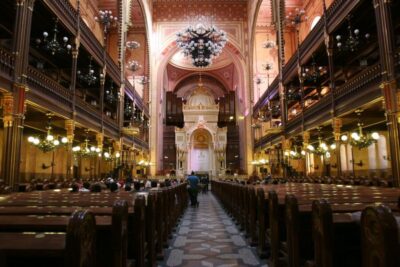
Budapest: Jewish Heritage Guided Tour with Synagogue Ticket
Read our review →
German tour in the Budapest city centre & the Jewish quarter
Read our review →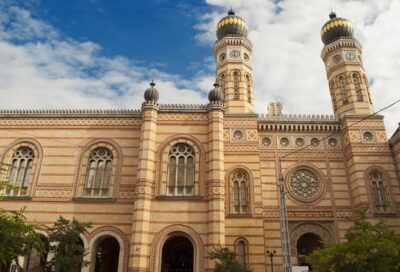
Past and Present of Budapest Jewish District Tour
Read our review →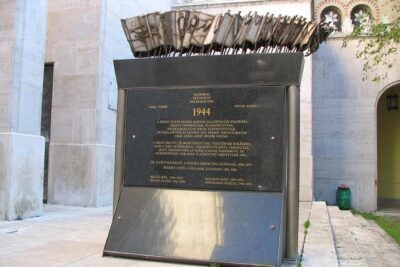
Budapest Dohany Synagogue & Hungarian Jewish Museum & free extras
Read our review →
Budapest: Jewish History Guided Walking Tour with Historian
Read our review →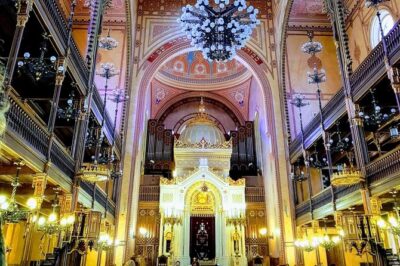
Budapest Dohany, Heroes’, Rumbach synagogues & Jewish Ghetto Tour
Read our review →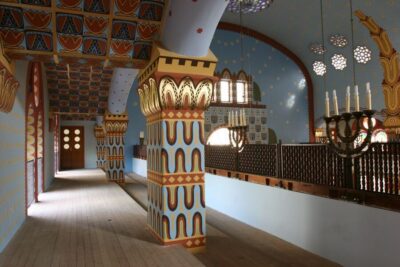
Browse the lists this tour appears in