
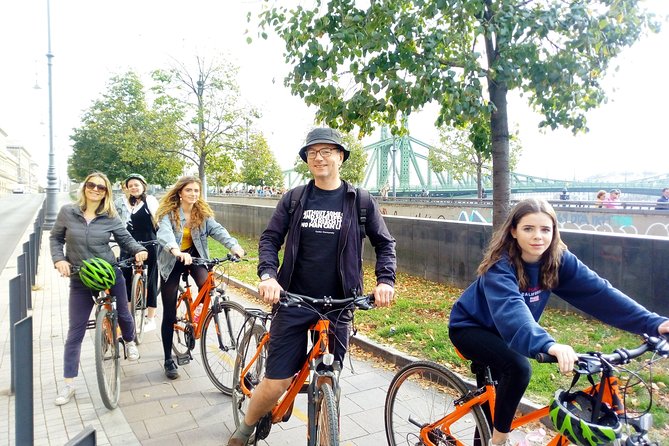
Reviewed · HISTORICAL TOURS
Budapest Historic Downtown Bicycle Tour in small groups
Four hours, a stack of Budapest. This guided, small-group ride is a fast way to see major sights with real context, without waiting in lines. I love how the tour uses bicycle time to cover more ground than walking while your guide keeps the story moving.
I also like the balance of big-photo monuments and tighter street-level details, from the Andrassy Avenue ensemble to the Jewish Quarter’s architecture. You get frequent stops that are long enough to look closely, not just pass by at speed.
One drawback to know up front: the tour is not recommended for beginners, and a few road moments can feel busier than you expect. If you are not confidently steering, braking, and holding a straight line, you may feel stressed.
In This Review
- Why Budapest feels better by bike than on foot
- The route starts at Madách Imre út, then you’re rolling
- The Bike and Relax start: quick setup, then real streets
- Rumbach Street Synagogue and Liszt Academy: architecture with personality
- The House of Terror area: why it’s powerful even from outside
- Heroes’ Square and its Central European snapshot
- Into City Park: ice rink in winter, lake energy in summer
- Vajdahunyad Castle: the playful fake castle you should see
- House of Music Hungary and the Museum of Ethnography: modern shapes in the park
- Andrassy Avenue and the Opera façade: UNESCO streets, no ticket required
- St. Stephen’s Basilica and Szabadsag ter: religious landmark and wartime memory
- Parliament, Shoes on the Danube, and the river views you can’t fake
- Baths and bridges: Turkish steam history without the ticket lines
- Ending back near the center, with the Central Market in mind
- What you get for the money, and what costs extra
- How safe and how hard is it, really
- Who should book this Budapest bicycle tour
- Should you book the Budapest Historic Downtown Bicycle Tour?
- FAQ
- How long is the Budapest Historic Downtown Bicycle Tour, and when does it start?
- Are museum or building entrances included?
- What is included in the $41.13 price?
- How large is the group?
- Is the tour okay if I am a beginner cyclist?
- Is the tour offered in English?
- Are there weight limits or rules for children and visual impairment?
Why Budapest feels better by bike than on foot
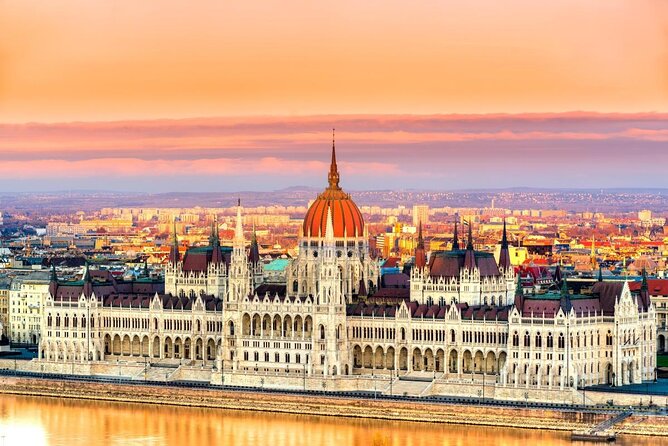
Budapest is perfect for a guided bike loop because the distances between key areas are short enough to pedal through, but the sights still feel like you jumped cities. Instead of circling back for each neighborhood, you move in one direction with a plan, and your guide fills the gaps with what to look for.
At a price of $41.13, the value comes less from any single monument and more from the overall package: a live guide, a bike, and enough time at key stops that you can actually see details. Plus, you start and end in the same place, so the whole thing feels like a clean half-day add-on.
Other centuries stacked along the Danube:
- Budapest: Historic Cruise with Welcome Drink
★ 4.7 · 6,512 reviews - Budapest Historical Sightseeing – Free Walking Tour
★ 5.0 · 1,302 reviews - Buda Castle District Dark History, Legends and Vampire Night Tour
★ 4.5 · 1,240 reviews
The route starts at Madách Imre út, then you’re rolling
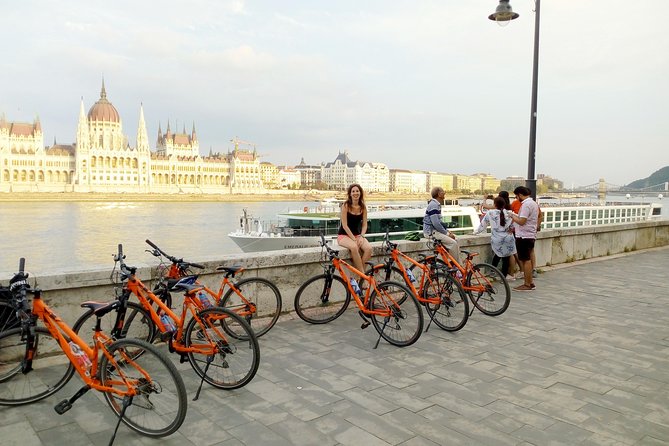
Your tour meets at Madách Imre út 12 (1075) and starts at 10:30 am. From there, you store luggage during the tour, get bottled water, and ride with a guide who keeps everyone together for safety and pacing.
You should also expect a practical vibe. The helmet is included (even if it is not mandatory), and the tour is near public transportation, which makes it easier if you are mixing it with other plans. A mobile ticket is used, so you should keep your phone charged and easy to access.
The Bike and Relax start: quick setup, then real streets
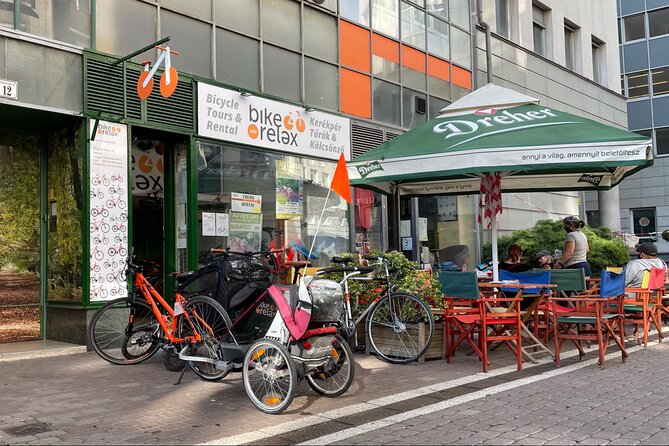
The tour begins with a short start-and-reset moment at Bike & Relax. This is where you get your bearings, learn how the group will move, and confirm your bike is comfortable before you head into heavier sightseeing areas.
Why this matters: Budapest has bike lanes and calmer side streets, but you still share some road space. Getting comfortable on day one pays off, and this short setup reduces the chances of you feeling rushed later when the route picks up.
Rumbach Street Synagogue and Liszt Academy: architecture with personality
Early on, you pass the Rumbach Street Synagogue area, known for its art-deco look and colorful street-art surroundings. Even without going inside, the exterior gives you an instant sense of how layered Budapest is, culturally and visually.
Next comes the Liszt Academy and the music corridor nearby. You will see the Music Academy’s striking architecture, and your guide connects it to the idea that students train here for classical performance and big concert spaces.
Potential downside: a few of these early stops are brief. It is enough to spot features and get photos, but if you love slow looking and long questions, you will want to return to specific areas later under your own schedule.
The House of Terror area: why it’s powerful even from outside
You stop near the House of Terror Museum, once associated with the terror regimes of the 20th century, and now a museum. For this tour, you do not enter, but you do get context for what this building represents, and you also see a Berlin Wall section placed in front.
This is one of those stops where your guide’s explanation matters more than the actual ticket. The exterior location puts the story in the same street reality you are standing in, and it makes the museum’s themes feel immediate even without stepping inside.
If you are sensitive to heavy 20th-century topics, keep that in mind before you book. But if you want a quick, guided orientation to modern Hungarian history, this stop is a strong anchor.
Other circuits taking both banks in one go:





Heroes’ Square and its Central European snapshot
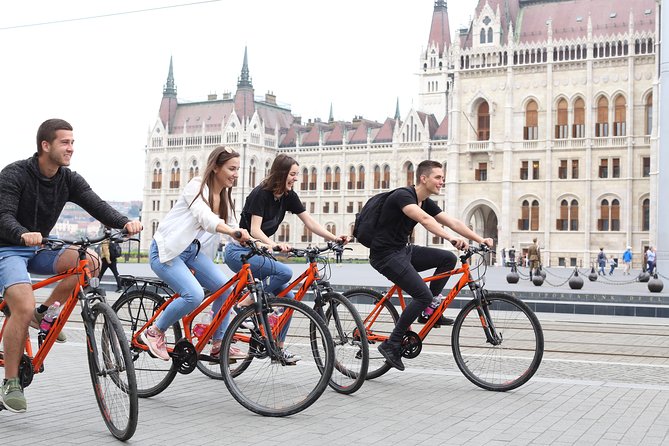
Then you reach Heroes’ Square, with time to take it in properly. The square is tied to Hungary’s 1000-year anniversary celebration, and it works like a visual timeline for Central European history.
Your guide frames what you are looking at from the big names, from King Stephen to revolutionary figures like Lajos Kossuth. That kind of guided context is what turns a photo stop into an actual understanding moment.
Free time helps here: you have a solid window to look around and orient yourself for the rest of the day. If you want the best shots, hang back for a minute and watch how people flow, because the open space gives you better angles from a few different directions.
Into City Park: ice rink in winter, lake energy in summer
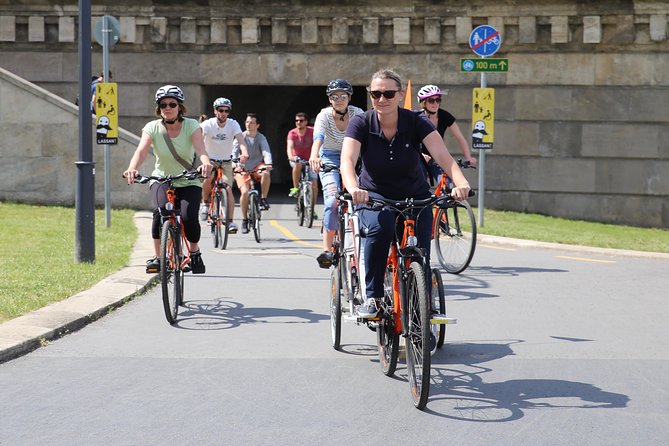
After Heroes’ Square, you move toward City Park (Varosliget), one of Budapest’s most central green spaces. In winter, you pass the famous ice rink area, and in summer you are near an artificial lake where boating is possible.
This part of the tour is less about monuments and more about breathing room. The park gives you a psychological reset after the denser historic streets, and it is a nice pacing change for a 3.5-hour ride.
A practical note: City Park is popular, and it can be open and windy. Dress in layers, and if it is cool out, bring gloves and a hat if you run cold while biking. (This is advice that makes a big difference in real comfort.)
Vajdahunyad Castle: the playful fake castle you should see
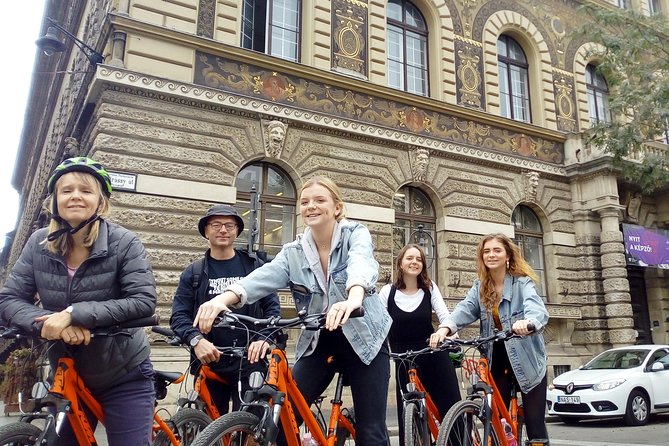
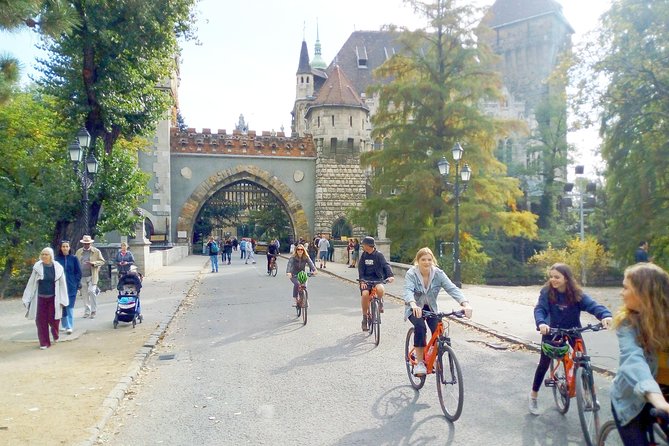
In City Park, you get a stop at Vajdahunyad Castle. It is sometimes described as a fake castle, and that detail is part of the charm, because it is a point where Budapest shows off both theatrical design and park storytelling.
You will also hear about Anonymous and how the castle area connects to Hungarian myth and national identity. Even if you only spend a short time here, the visuals are memorable.
If you prefer your architecture straightforward and real, this might feel like a curveball. But it is worth seeing, because it is also a window into how Budapest builds symbols that people want to revisit.
House of Music Hungary and the Museum of Ethnography: modern shapes in the park
Your route continues past House of Music Hungary, where modern architecture takes center stage. It is a concert hall setting, but again, you do not go inside, so you focus on exterior style and the idea of contemporary performance spaces living right next to historic park design.
Then you stop by the Museum of Ethnography, known for a distinctive shape and strong views from the edge of the park. This stop is great if you like contrast, because it makes the day feel less like a single-style museum tour.
The trade-off is time. These stops are shorter, so treat them as visual checkpoints. If you want to read walls, go deep on design, or step inside later, this tour gets you oriented for choosing what to revisit.
Andrassy Avenue and the Opera façade: UNESCO streets, no ticket required
Back into the grand style of the city, you spend time with Andrassy Avenue highlights, including the Hungarian State Opera exterior. This is a masterpiece by Michael Ybl, and your guide connects it to the late 19th-century architectural styles and the historic M1 subway line.
You do not enter the Opera, but you do get the value of seeing the building where it belongs, on the avenue that is part of the UNESCO protected ensemble. In a short time window, this is a strong way to understand why people describe Andrassy Avenue as a “must-see corridor.”
St. Stephen’s Basilica and Szabadsag ter: religious landmark and wartime memory
You then reach St. Stephen’s Basilica (Szent István Bazilika) exterior time. The highlight here is the well-known right hand of St. Stephen displayed under glass, which your guide points out as part of what makes the basilica special.
Next is Szabadsag ter, a square where you can feel the city’s contradictions: one side is often described with a New York Wall Street comparison, and the other is tied to painful 20th-century events. Your guide frames controversial memorials and reminds you to remember Holocaust and World War II experiences in Budapest.
This is another stop where the messaging matters more than the photo. If you prefer to keep emotion separate, you might find this heavier than the average sightseeing break. But it also gives the city context that you will miss if you only chase landmarks.
Parliament, Shoes on the Danube, and the river views you can’t fake
One of the best parts of the day is the stop by the Hungarian Parliament Building along the riverbank. You do not enter, but the exterior and the panorama from around it are the point. Your guide also notes the building’s careful renovation and the sweeping view across the Danube to Buda side.
Then you pass Shoes on the Danube Bank, a memorial. Even from the sidewalk, it hits, because it is closely tied to the location and the river’s role in the city’s history.
One real-world consideration: direct access to specific spots can depend on traffic and crowd flow. So do not assume you can walk right up to every memorial angle instantly. Build in a bit of patience, and let your guide manage the group.
You also pass the Chain Bridge, the oldest bridge across the river. It is the classic image of Budapest, and cycling gives you a fluid view as you move past it rather than getting stuck in one single photo point.
Baths and bridges: Turkish steam history without the ticket lines
On the river ride, you pass Rudas Baths, one of the oldest Turkish baths in Budapest. If you want to actually bathe, you would need to check schedules and go beyond this tour, since entry is not included here.
A final bath-side stop on the Buda side is at Gellert Baths area, also famous for art deco style dominating the river bank. Again, this is a look-not-go moment, but it helps you plan future time if baths are on your Budapest wish list.
Then you cross into a lively viewpoint zone at Liberty Bridge (Szabadsag hid). The bridge’s name history connects to Franz Joseph, and your guide points out how this bridge is a meeting spot for students and young people for river views.
Ending back near the center, with the Central Market in mind
The last big idea your guide leaves you with is where to eat afterward. A Central Market stop is treated as a nearby attraction you should return to for Hungarian food and atmosphere.
You also pass by the National Museum area if you are interested in the broader regional story. And you end back at the starting meeting point, so you are not stuck figuring out transport after a bike ride.
What you get for the money, and what costs extra
At $41.13 for about 3 hours 30 minutes, this tour prices itself like an efficient city orientation. What you are paying for is not museum entry. It is the guide, the bike, and the time at each viewing point so you get context without lines.
Included items that actually matter:
- Bicycle use for the full ride
- Live guide commentary across neighborhoods
- Helmet (optional use, still great to have)
- Free luggage storage during the tour
- Bottled water
What you should budget for or plan separately:
- Building entry is not part of this tour, so tickets and museum fees are not included.
- Stops labeled as not included are still great for seeing exteriors, but you will not go inside the Opera, Basilica, House of Terror, or the synagogues on this specific route.
A small upgrade detail from past departures: some people have reported e-bike upgrades if available, and that can make energy management easier on steeper bits. It is worth asking at booking if e-bikes are offered on your date, especially if you are not a regular rider.
How safe and how hard is it, really
The tour is capped small, which helps your experience feel calm. The details list a maximum of 10 travelers, and the tour concept also describes a cap around 14 in some cases, so either way, you should expect a group size that does not become chaotic.
Still, it is not recommended for beginners. That comes down to traffic exposure and riding comfort in a real city environment. The route is often described as mostly flat, but flat does not mean effortless. You still need control, especially when stopping, starting, and riding in a group.
Safety seems to be a priority, and guides such as Oliver, Thomas, and Valentin have been noted for careful pacing and keeping everyone together. One practical perk is that the group waits when someone needs a moment, so you are less likely to feel left behind.
Who should book this Budapest bicycle tour
Book this tour if you want:
- A fast, structured introduction to Budapest’s major sights
- A guided story focused on architecture, politics, and memory, not just landmarks
- A way to see more without melting in heat, since you cover ground by bike
Skip it or consider a gentler alternative if you:
- Are not confident riding in traffic settings
- Need a route designed for limited mobility or visual impairment support, because this one is not recommended for people with visual impairment
- Are traveling with kids who cannot ride comfortably with an adult in the right way, since children must be accompanied by an adult
Weight limit is listed as 110 kg, and that is something you should respect when booking.
Should you book the Budapest Historic Downtown Bicycle Tour?
Yes, if your goal is a high-value overview of central Budapest with guided context and minimal friction. The best reason to book is that the route hits the city’s big visual markers and adds meaning, like the Danube memorials and the political weight near House of Terror, while also taking you through park architecture and grand avenues.
If you are a confident rider and you do not need indoor visits, this is a very efficient use of a half-day. If you want lots of ticketed museum time, or you want to walk every site slowly, then you might feel the tour moves too quickly. For most first-timers who like riding and learning at the same time, it is a smart start.
FAQ
How long is the Budapest Historic Downtown Bicycle Tour, and when does it start?
It runs for about 3 hours 30 minutes and starts at 10:30 am.
Are museum or building entrances included?
No. The tour does not include entry options, and you will not enter stops like the Opera, the Basilica, the House of Terror Museum, or the synagogues.
What is included in the $41.13 price?
You get the bicycle, a live English-speaking guide, helmet use (optional), free luggage storage during the tour, and bottled water.
How large is the group?
The tour is listed as having a maximum of 10 travelers, and it is also described as a small-group experience capped at 14 travelers.
Is the tour okay if I am a beginner cyclist?
It is not recommended for beginners. You should be comfortable riding and handling a bike in a city environment.
Is the tour offered in English?
Yes, the tour is offered in English.
Are there weight limits or rules for children and visual impairment?
There is a weight limit of 110 kg. Children must be accompanied by an adult, and the tour is not recommended for people with visual impairment.
Newest from the Danube banks
- Pub Crawl Through The Ruin Bars in Budapest with T-shirt Included★ 4.5 · 14 reviews
- Rudas Bistro Premium Brunch★ 3.5 · 14 reviews
- Wine Tasting in the Countryside from Budapest★ 5.0 · 14 reviews
- Buda Castle District and Matthias Church Private Tour★ 5.0 · 14 reviews
- Pest side stories with a Historian★ 5.0 · 14 reviews
- Recirquel Company: Walk My World Immersive Show Entry Ticket★ 4.6 · 14 reviews
- Ram Gorge Hiking Adventure★ 5.0 · 14 reviews
- Budapest Rafting – Sunset Cruise★ 5.0 · 14 reviews
Historical Tours, compared.

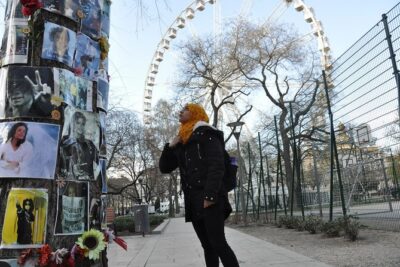
Budapest Historical Sightseeing – Free Walking Tour
Read our review →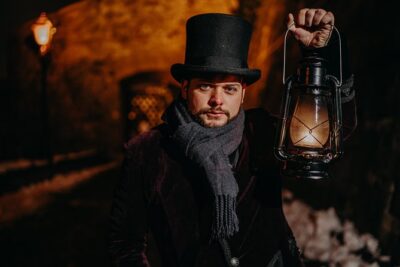
Buda Castle District Dark History, Legends and Vampire Night Tour
Read our review →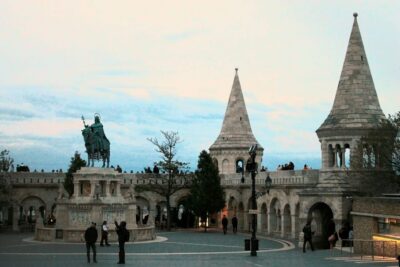
BloodThirsty Hungary: Walking tour & Dark Historical Stories
Read our review →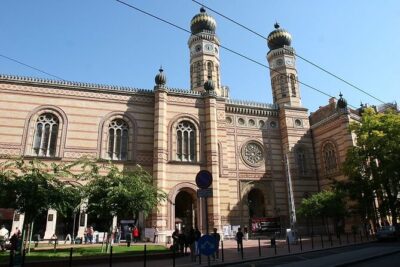
Budapest Jewish Heritage Memorial Walking Tour & Synagogue Entry
Read our review →
Budapest: Jewish Heritage Guided Tour with Synagogue Ticket
Read our review →
Budapest: Historic Downtown ride on E-Bicycles Buda & Pest
Read our review →
Budapest: Jewish History Guided Walking Tour with Historian
Read our review →Browse the lists this tour appears in