
Reviewed · WINE TOURS
Budapest: Essentials of Hungarian Wine Tasting Class
Hungarian wine is the surprise on your plate. I like the sommelier-led pacing, and I also love that you taste 8 different wines instead of getting stuck with a short list. It is a smart way to learn what Hungary is doing right now, without needing a wine degree.
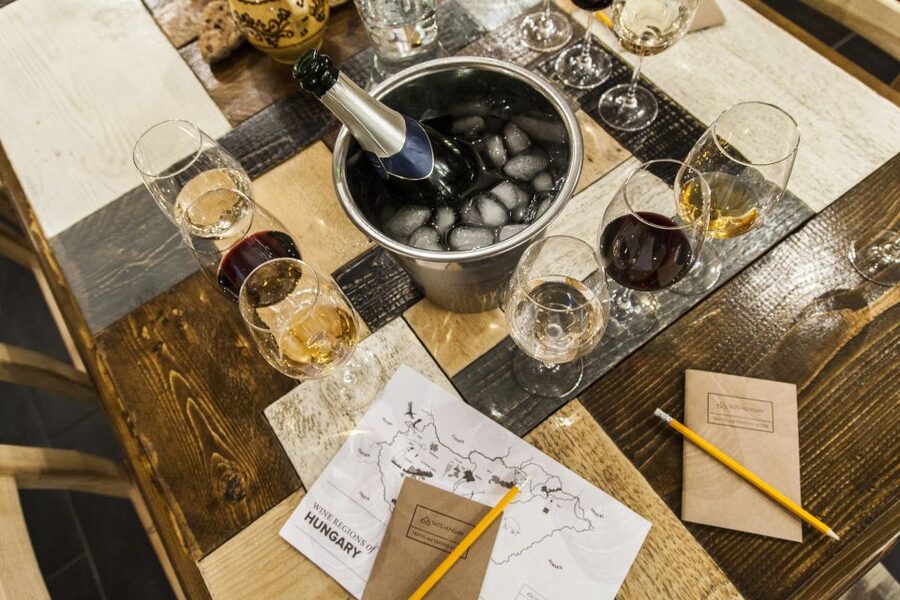
This is a 2-hour evening session that walks you from an aperitif through whites and reds, and usually ends with a sweet botrytised Tokaj Aszú. Along the way, you get food pairings with local Hungarian flavors, plus tasting sheets and a map so you can remember what you liked (and why).
One thing to consider: the instruction can run information-heavy, and if you are picky about the tasting experience, you might prefer more glass changes between whites and reds than what some people have asked for.
In This Review
- Key things that make this tasting class worth your time
- Entering Taste Hungary’s tasting room near the National Museum
- The 2-hour format that actually teaches you something
- The wines you will try, and what to listen for
- Food pairings: why cheese and charcuterie are part of the lesson
- The sommelier factor: names you might get, and why the hosting style matters
- What you learn about Hungarian wine regions, without the overwhelm
- Price and value: is $65 a fair deal?
- Who should book this wine class?
- Should you book Budapest: Essentials of Hungarian Wine Tasting Class?
- FAQ
- How long is the Hungarian wine tasting class?
- How many wines are included in the tasting?
- What food comes with the wine tasting?
- Where is the meeting point in Budapest?
- Is the tasting available in English?
- What is the legal drinking age for this activity in Hungary?
Key things that make this tasting class worth your time
- 8-wine arc, from aperitif to sweet Tokaj Aszú, so you taste multiple styles
- Local pairings with cheese and charcuterie that keep the flight moving smoothly
- Tasting sheets + a map of Hungarian wine regions, so notes stay useful after the night
- Small, conversational vibe that makes it easy to chat without feeling pressured
- Generous pours, often closer to a glass than a quick sip, depending on the session
More Budapest borozok, cukraszdak and counters:
- Budapest: Unlimited Prosecco, Beer and Aperol Spritz Cruise
★ 4.8 · 37,304 reviews - Budapest: Unlimited Prosecco, Beer & Aperol Spritz Cruise
★ 4.5 · 3,371 reviews - Budapest Food Walking Tour: Eat, Sip & Explore Like a Local
★ 4.8 · 1,027 reviews
Entering Taste Hungary’s tasting room near the National Museum
The meeting point is The Tasting Table Budapest, at Bródy Sándor utca 9, 1088 Budapest (District VIII). You are about a 5-minute walk from Astoria (M2) and Kálvin tér (M3), and the address is roughly 150 meters from the National Museum, which makes it a good “do it early” option if you want an easy evening plan.
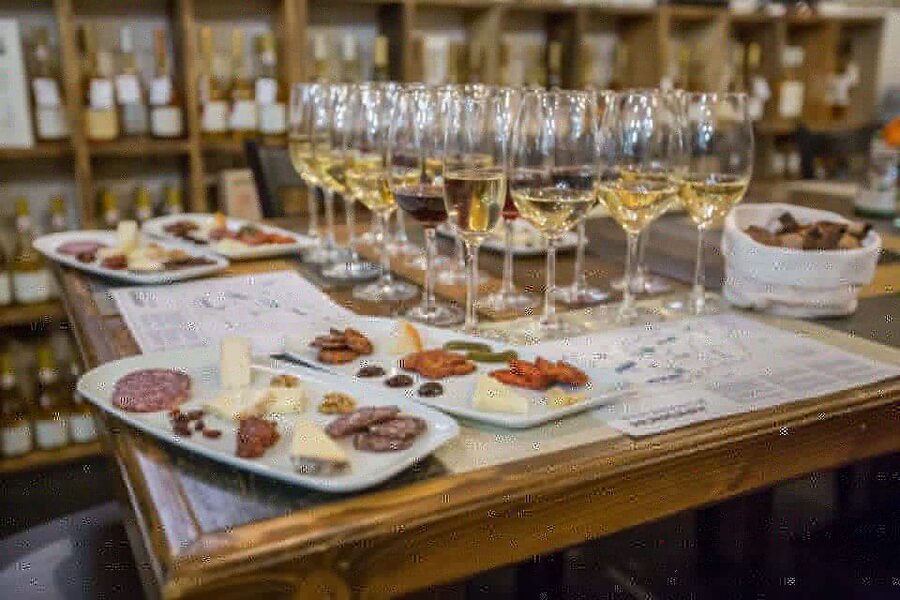
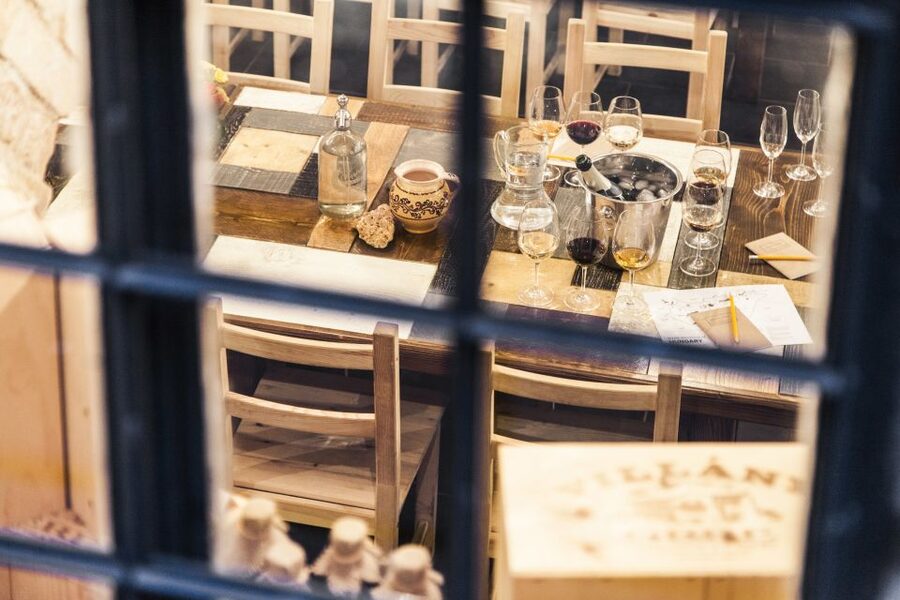
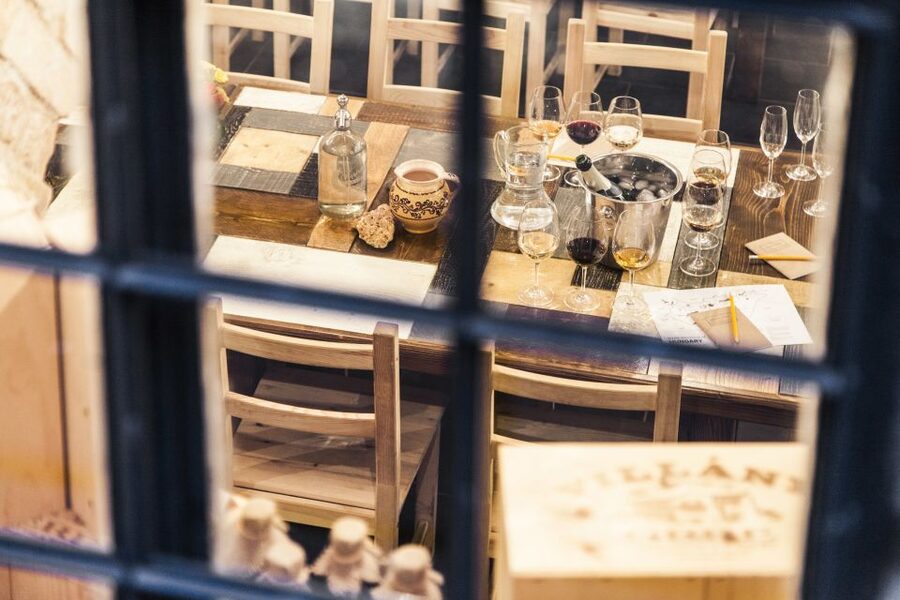
Inside, the setting feels like a wine tavern, and the atmosphere matters here. People describe a charming, old-cellar feel with brick arched spaces, which helps the night feel more like a friendly tasting than a classroom where you are afraid to ask questions.
This place also works well logistically. If you are doing Budapest at a steady pace, it is close enough to main transit that you are not stuck planning your whole evening around a far-flung pickup or a long walk back to your hotel.
The 2-hour format that actually teaches you something
The big reason this class works is that it is built like a guided story, not a random set of sips. Over two hours, you taste eight Hungarian wines chosen for a reason, and the sommelier uses that lineup to explain the bigger picture: where Hungary’s wine comes from and why the styles taste the way they do.
You should expect a flow that looks like this:
- An aperitif to get your palate warmed up
- Whites next, where you can start noticing acidity, minerality, and different flavor directions
- Reds after that, so you can compare how fruit, texture, and structure shift
- A finish with sweet botrytised Tokaj Aszú, because Hungary’s signature dessert wine belongs at the end of the lesson
You get mineral water during the session, plus food pairings. That last part is key. When wine and food arrive together, you learn faster. You also stay comfortable, which matters because the pours can be on the generous side.
If you are the type who likes to take notes, use the included tasting sheets. They are not just paper. They come with a map of Hungarian wine regions, which makes your notes more than just what you tasted. You can connect names to places in a way that is useful when you later buy a bottle or order a glass.
The wines you will try, and what to listen for
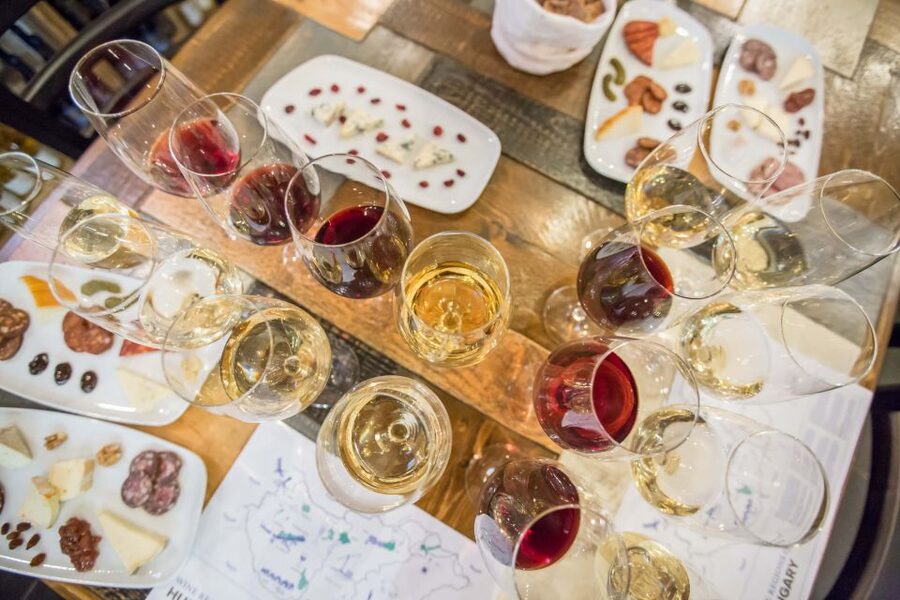
You are tasting Hungary across multiple regions and styles, so the goal is not to memorize every label. The goal is to learn how Hungary thinks, then recognize it when you see it again.
Here are the practical things I think you should pay attention to, even if you are new to Hungarian wine:
- How the white wines feel on the palate: pay attention to acidity and how “sharp” or “rounded” it tastes
- What the reds do with texture: notice how tannins show up, and whether the fruit feels bright or darker
- How the sweet Tokaj Aszú lands: it is easy to think dessert wine will be all sugar, but this style is about balance, complexity, and that botrytised character
- The pattern across the lineup: the session is designed so each wine supports the next explanation, from history and regions to varietals and style trends
Some sessions include a sparkling start, followed by a spread of whites and reds, then the sweet Tokaj Aszú finale. You should not treat the exact varietals as a guarantee from night to night, but the overall “shape” of the tasting is consistent: variety first, lesson second, sweet finish last.
If you love weird, off-the-beaten-track grapes, this is one of the rare tastings that treats Hungarian varietals as the main event, not as a side note.
Food pairings: why cheese and charcuterie are part of the lesson
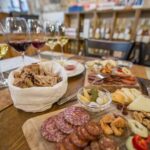
Wine lessons often fail because the room is quiet and the only focus is spit buckets and flashcards. This one is more humane. You get food pairings with local Hungarian flavors, including cheese and charcuterie.
That matters in two ways:
- You learn flavors in context. Salt, fat, and spice change how wine tastes, so your palate gets more information from each pour.
- You actually enjoy the night. Several people mention it is enough for an enjoyable dinner-style experience, not just a snack.
A common favorite in feedback is that the boards are well matched and substantial, with plenty to eat while you taste. And yes, if you are hoping to avoid hunger during the session, you will likely be glad you are not just drinking.
If you are watching what you eat for dietary reasons, the data here only confirms local pairings and cheese/charcuterie, not specific allergy options. If you have dietary needs, it is smart to ask ahead so you do not get surprised.
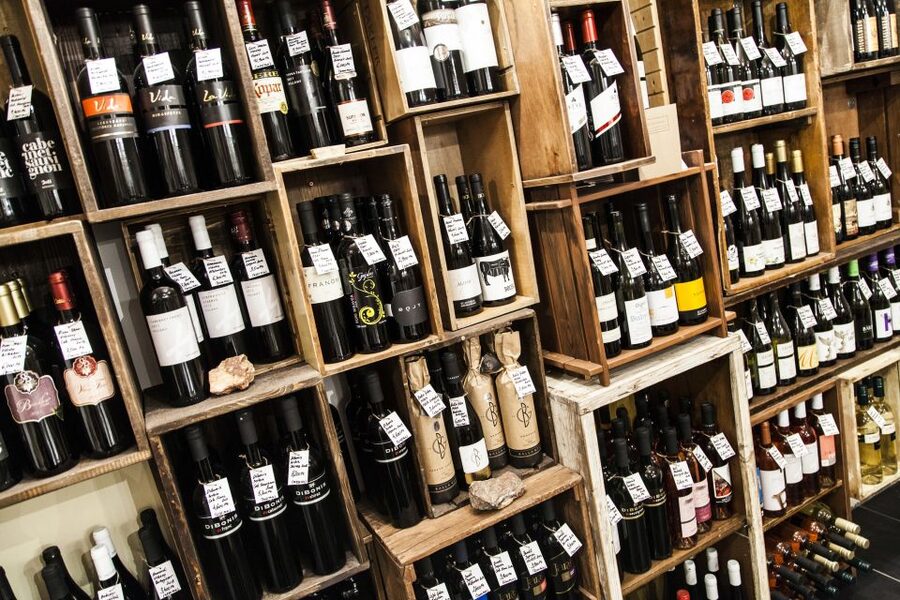
Other Hungarian wine poured near Budapest:

The sommelier factor: names you might get, and why the hosting style matters
The biggest single ingredient in a tasting like this is the person leading it. People describe hosts ranging from Somali and Tomas to Carlos, John, Nikki, Christian, and Sebastian. Across the board, the vibe comes through: friendly, engaging, and built for conversation.
What I like about this approach is that the lesson does not feel like a lecture you have to survive. The guide helps you connect wine to place and history, then hands you the chance to react with your own palate.
You can also expect that the teaching style shifts with the host. Some sessions focus more on Hungarian winemaking history, while others lean into regions, soil, climate, and how varietals behave in different styles. That is not a flaw. It is part of why the tasting feels like it can work for both beginners and people who already dabble.
One practical tip from the feedback: if you are the kind of person who wants a very strict tasting ritual, you might appreciate glass changes between whites and reds. If that is important to you, bring it up calmly, because the way the tasting is run can affect how “clean” the comparisons feel.
What you learn about Hungarian wine regions, without the overwhelm
Even if you know zero Hungarian wine terms, you should walk away with a clearer mental map. This class is designed to cover the big pillars fast:
- History of winemaking in Hungary
- Major regions and how they differ
- Important varietals and what makes them characteristic
- Unique traits and styles, and how those trends are showing up now
The best part is that this is not learning for learning’s sake. The tasting is set up so you taste the lesson. The sommelier can point to a region and then hand you the wine that represents that idea. You end up with a story you can repeat to yourself later.
Because you also get the tasting sheets with a map, your memory has something concrete to grab onto. That is how this kind of experience stays useful after Budapest moves on.
Price and value: is $65 a fair deal?
At $65 per person for two hours, you are paying for more than wine. The price includes:
- 8 wines
- Min. water
- Food pairings with local Hungarian flavors
- A guided session with a sommelier
- Tasting sheets (and a map of wine regions)
For me, the value case is simple. If you want Hungarian wine education and you also want to taste multiple styles in one night, you are not just buying a drink. You are buying guidance, context, and food support that helps you enjoy and remember the experience.
Could you spend less by ordering a couple glasses on your own? Sure. But you would miss the structured comparison and the explanations that connect taste to place. And if you already know you like Hungarian wine, this also gives you a natural shopping list for what to look for next.
Based on the feedback on generous pours and the “enough for an enjoyable evening” food setup, this is one of those activities where the price feels grounded in what you actually receive.
Who should book this wine class?
This class is a strong fit if:
- You want an easy, evening activity that teaches you something real
- You like meeting people in a relaxed setting while still getting real instruction
- You want to try Hungarian wine that most people do not automatically order in bars
- You care about food pairings, not just alcohol
It is also a good choice if you are traveling solo. One session was adjusted to keep a solo booking in the flow, and the experience still delivered the expected wine spread. That flexibility is a real bonus if your plans are fluid.
If you are deeply obsessed with wine mechanics and want a ultra-technical tasting lab, you might still enjoy it, but you should know the format includes conversation and broad regional explanation rather than strict lab-style precision.
Should you book Budapest: Essentials of Hungarian Wine Tasting Class?
Yes, you should book it if you want a compact, friendly introduction to Hungarian wine that feels like a real night out, not a rushed event.
Book it especially if you are curious about Tokaj Aszú, want to taste a range of Hungarian styles in one sitting, and like the idea of leaving with notes you can use again. The setting near the National Museum makes it easy to slot into your day.
The only reason to hesitate is if you are very sensitive to instruction volume or you want a more formal tasting ritual like frequent glass swapping. If that is you, ask how the session handles glassware and pace, then go in expecting a guided conversation.
FAQ
How long is the Hungarian wine tasting class?
It lasts 2 hours.
How many wines are included in the tasting?
You will taste 8 Hungarian wines, along with mineral water.
What food comes with the wine tasting?
The tasting includes food pairings with local Hungarian flavors, including cheese and charcuterie-style selections.
Where is the meeting point in Budapest?
The meeting point is The Tasting Table Budapest, Bródy Sándor utca 9, 1088 Budapest (District VIII).
Is the tasting available in English?
Yes, the host or greeter provides the experience in English.
What is the legal drinking age for this activity in Hungary?
The legal drinking age in Hungary is 18, so you must be 18 or above to participate.
More Workshops in Budapest
- Budapest: Hungarian Chimney Cake Workshop in the City Center
★ 4.7 · 1,263 reviews - Budapest: Traditional Chimney Cake (Kürtőskalács) Workshop
★ 4.8 · 323 reviews - Chimney Cake Workshop Budapest Downtown – Kürtőskalács Class
★ 5.0 · 220 reviews - Budapest: Small-Group Cooking Class & Market Tour with Local
★ 5.0 · 138 reviews
Newest from the Danube banks
- Pub Crawl Through The Ruin Bars in Budapest with T-shirt Included★ 4.5 · 14 reviews
- Rudas Bistro Premium Brunch★ 3.5 · 14 reviews
- Wine Tasting in the Countryside from Budapest★ 5.0 · 14 reviews
- Buda Castle District and Matthias Church Private Tour★ 5.0 · 14 reviews
- Pest side stories with a Historian★ 5.0 · 14 reviews
- Recirquel Company: Walk My World Immersive Show Entry Ticket★ 4.6 · 14 reviews
- Ram Gorge Hiking Adventure★ 5.0 · 14 reviews
- Budapest Rafting – Sunset Cruise★ 5.0 · 14 reviews
Wine Tours, compared.
Countryside Half-day Gastro-Wine Tour from Budapest Meal & pickup
Read our review →Budapest Centre Food Tour with 10+ Tastings, Wine & Street Food
Read our review →
From Budapest: Half-Day Countryside Wine Tour with Meal
Read our review →
Budapest: Wine, Cheese, and Charcuterie Tasting
Read our review →
Budapest Cooking Class & Market Tour with Local Guide & Wines
Read our review →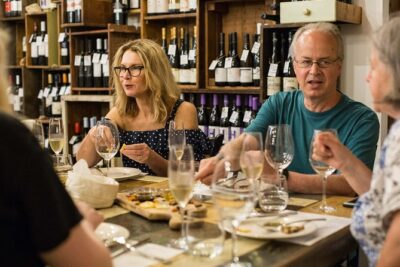
Hungarian Wine Tasting (with Cheese and Charcuterie) in Budapest
Read our review →
Budapest: Hungarian Wine Tasting with 8 Wines and Tapas
Read our review →
Budapest Food Tour: Market to Tavern with 14+ Tasters & Wines
Read our review →Browse the lists this tour appears in