
Reviewed · WALKING TOURS
Budapest Grand Walk
Budapest can feel big and confusing on day one, until you walk it with a guide. This 4-hour Grand Walk packs history into real street corners, with a wine start, easy public transport bits, and stops like St. Stephen’s Basilica and the Shoes on the Danube. I especially like how you get both the famous postcard sights and quieter details most people miss.
I also like the way the tour keeps things practical. You ride Europe’s oldest metro line, pause for coffee, and get time for photos and questions while you move. It is an efficient use of a half day, especially if you are trying to stay awake through jet lag.
One thing to consider: it is a walking-heavy route, and the schedule can stretch if you are not in a hurry, so bring comfortable shoes and a bit of stamina for the mid-afternoon to evening transition. Also, the tour is not refundable, so book only when your plans are firm.
In This Review
- Key things to know before you set off
- Starting at Tasting Table Budapest: wine first, then real streets
- Practical tip
- Pest highlights on foot: Andrássy Avenue, the Opera House, and a 1956 landmark
- Why this part is worth your time
- The Jewish Quarter at street speed, then the Danube memorial that hits hard
- Photo reality check
- St. Stephen’s Basilica and the pause for coffee
- What to expect from the metro segment
- Parliament, the Danube promenade, and the view payoff that makes it click
- Tip for your next move
- Inside the Buda Castle area: seven buildings, courtyards, and big views
- Why the Buda Castle segment works
- Small group pace, public transport help, and what the tour includes
- Who should book the Budapest Grand Walk?
- Price and logistics: the trade-offs you should actually think about
- Should you book this Grand Walk?
- FAQ
- FAQ
- What is the duration of the Budapest Grand Walk?
- Where do I meet the guide?
- Where does the tour end?
- What is included in the price?
- Is there a metro ride on this tour?
- How much walking is involved?
- What group size should I expect?
- Is it refundable if I cancel?
Key things to know before you set off
- Wine and coffee included at the start and during the route, so you are not spending extra time hunting for refreshments.
- Small group limits help the guide manage questions and keep a steady pace, with a maximum of 8 travelers.
- Historic stories on major streets like Andrássy Avenue, plus stops that connect everyday life to major events.
- Jewish Quarter + Danube memorial time means the tour does more than take pictures, it puts context behind them.
- Metro ride is part of the experience, not just a transfer, including a stop on the city’s oldest line.
- You finish near Chain Bridge, which is ideal if you want to cross into Buda Castle on your own after.
More of Pest crossed at walking pace:
- Budapest: Buda Castle Walk with Saint Stephen’s Hall
★ 4.5 · 3,012 reviews - Big Bus Budapest Hop-On Hop-Off Bus and Walking Tour
★ 3.5 · 2,206 reviews - Budapest: Buda Castle District Walking Tour
★ 4.6 · 2,108 reviews
Starting at Tasting Table Budapest: wine first, then real streets
The tour starts in the Pest district at Tasting Table Budapest, at Bródy Sándor u. 22 (1088). Meeting time is mid-afternoon, which is a smart choice for photos and for seeing Budapest without rushing in harsh late-day light. You begin with a glass of Hungarian sparkling wine at the wine cellar, which sets a friendly tone fast.
From there, you walk through handsome streets and pass buildings that look grand but also show the wear of time. That mix is part of the value here. Budapest is photogenic, yes, but it is also human-scale, with daily life happening right alongside the big monuments.
I like that this is not just a lecture. The route includes time for questions, and the guide keeps the stories tied to what you can actually see outside your window. If you have ever felt a city tour goes in one ear and out the other, this format usually holds attention better.
Practical tip
Wear shoes you trust. The tour is described as a moderate amount of walking, and you will be on your feet for hours, not just between short stops.
Pest highlights on foot: Andrássy Avenue, the Opera House, and a 1956 landmark
The early part of the walk focuses on Pest’s major streets and key civic buildings. You start by heading through the Palace district, where you will pass the Hungarian National Radio Building. This matters because it connects architecture to a specific turning point: the building’s role during the 1956 Revolution.
Next, you move through areas where the city shows its different eras at street level. You will also pass the National Museum and see how it sits within the broader neighborhood fabric, not just as a stand-alone attraction. If your goal is to understand why Budapest looks the way it does, this is useful because you get a sense of what was built to impress, what was built to educate, and what was built to broadcast.
Then the route brings you along Andrássy Avenue, where you briefly check out the Hungarian State Opera House. It is a neo-Renaissance building designed by Miklós Ybl, and you get a quick visual education in how Budapest borrowed European styles and made them distinctly Hungarian in scale and attitude.
Why this part is worth your time
This section is where the tour earns its 4-hour promise. You are covering a lot of territory, but the stops are not random. They are tied to national stories you can recognize later when you see other monuments across the city.
Other ways an evening in Budapest can go:





The Jewish Quarter at street speed, then the Danube memorial that hits hard
After the Opera House area, you head toward the former Jewish Quarter. The tour gives you a brief look that still feels substantial: you see the Grand Synagogue, described as Europe’s largest, and you also pass the Gozsdu udvar complex and Király utca, known for its busy street life.
This is a good segment if you want a grounded start before you go deeper on your own. You get key anchors (synagogue and neighborhood streets), without getting bogged down trying to fit every detail into one afternoon.
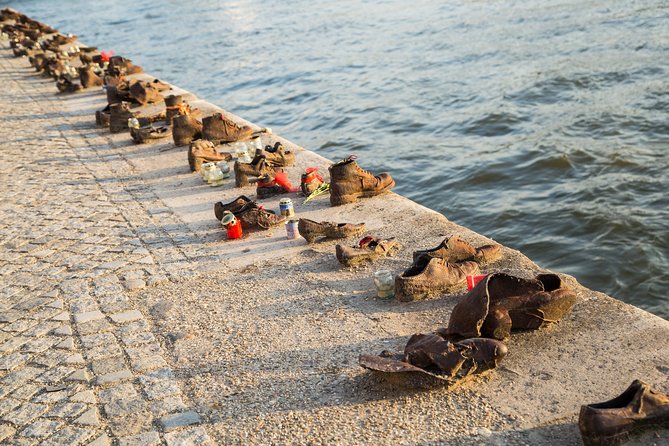
Then you come to one of the most emotionally charged stops in the whole route: the Shoes on the Danube Memorial. It sits along the riverbank and forces you to slow down. The guide connects the memorial to broader tragedy, not just to an image for your camera roll.
You also learn that there is more than one layer to these riverside commemorations. The tour mentions other memorial elements, including the Soviet Monument, and it notes why there is memorial to characters including a US major and Ronald Reagan. Even if you are only half paying attention at first, these details nudge you toward the bigger theme: Budapest is a place where history is not locked behind glass.
Photo reality check
This stop is popular for photos. If you want the moment to land, step back from the crowd for a minute and let the river do its thing. It is easier to absorb when you are not trying to “get the shot.”
St. Stephen’s Basilica and the pause for coffee

One of the key civic-religious landmarks on the route is St. Stephen’s Basilica (Szent István Bazilika). It is named for Stephen, the first King of Hungary, and the tour specifically points out that his mummified right hand is housed in the church.
You get about 15 minutes here, which is enough time to appreciate the scale and get oriented, without pretending it is your only stop. The basilica is a place where you can easily lose 45 minutes, so I like that the tour keeps you moving while still making this a meaningful stop.
Then comes a fun, practical twist: you hop onto continental Europe’s oldest metro line. That is not just a ride to save walking distance. It also gives you a quick taste of how locals get around, and it breaks up the long stretch of pavement.
Right after the metro part, you also get a coffee break at a favorite local café. The tour includes coffee and/or tea, and this is usually where your feet will quietly remind you they worked hard. It is also a good moment to refuel before the later segments near the river.
What to expect from the metro segment
You should be ready for it to feel like a real commute moment. You are not in a vehicle set aside for sightseeing only.
Parliament, the Danube promenade, and the view payoff that makes it click
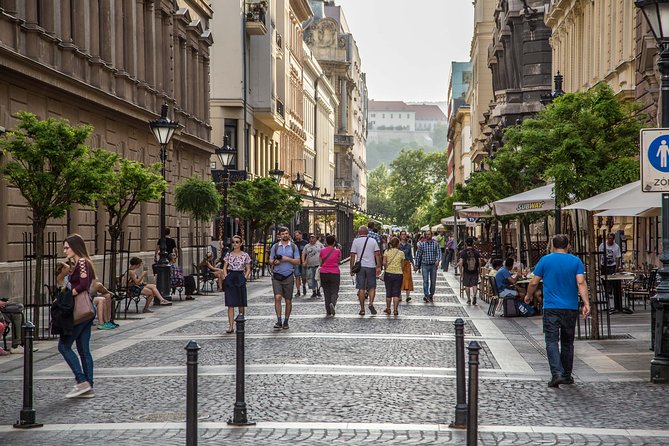
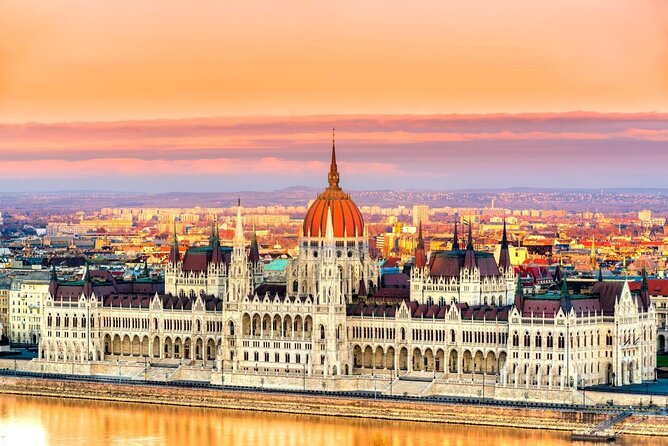
As you move back toward the Danube riverfront, the neo-Gothic Parliament building becomes the main visual anchor. It dominates the Danube bank, and the guide’s storytelling here helps you understand why the building matters, not just how it looks in photos.
From there, you get Danube promenade views that frame major landmarks across the water. The tour specifically includes views of:
- Parliament
- Chain Bridge
- Buda Castle
This is the “aha” part for many visitors. Budapest’s layout makes more sense once you can see the relationship between sides of the city, and once you understand that the river is both a barrier and a connector.
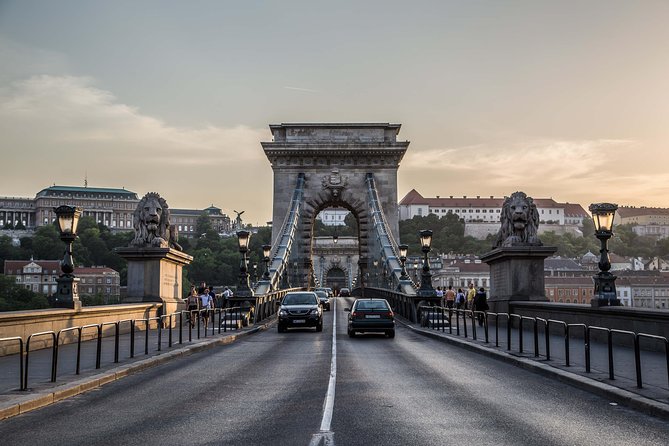
And then you reach the ending point: the guide departs near Chain Bridge on the Pest side. The tour includes that finishing location for a reason. If you want to continue, you can cross into Buda Castle areas on your own with a clear sense of what you are heading toward.
Tip for your next move
If you plan to visit Buda Castle right after, this finish point makes it easier. You can keep the momentum without having to “re-find” the route from scratch.
Inside the Buda Castle area: seven buildings, courtyards, and big views
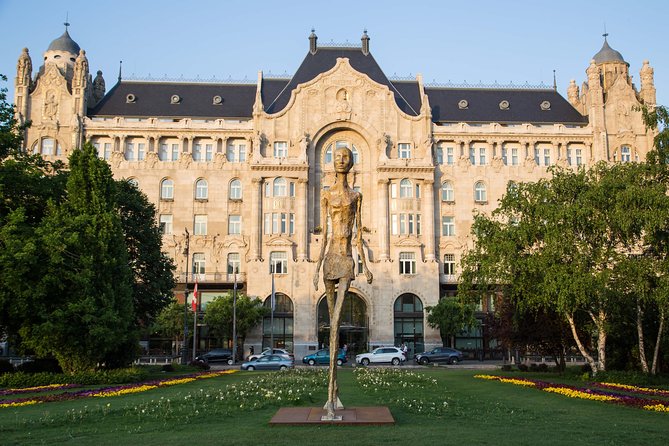
After you end near Chain Bridge, the tour also covers the Buda Castle complex area from the viewpoint of what you can see along the route. It mentions the complex of seven buildings in the 7th district, including the connected courtyards that are full of shops and restaurants.
This is a section where you get to see the contrast between grand public spaces and lived-in city corners. The courtyards are lively, and that matters because Buda Castle is not only monuments and museums. It is also a place where people meet, eat, and browse.
As you move, you will also see:
- the Shoes on the Danube Holocaust memorial
- the Soviet Monument
- the Hungarian Academy of Sciences, housed in an elegant neoclassical palace built in 1865
- Liberty Square, flanked by notable buildings, including the former stock exchange
The tour also connects how Budapest’s bridges shape daily life. You start to understand why bridges are not just scenery here. They are practical routes, and they guide how the city breathes.
Why the Buda Castle segment works
You are not just ticking off sights. You are learning how multiple layers of power and identity appear in stone, institutions, and public squares.
Small group pace, public transport help, and what the tour includes
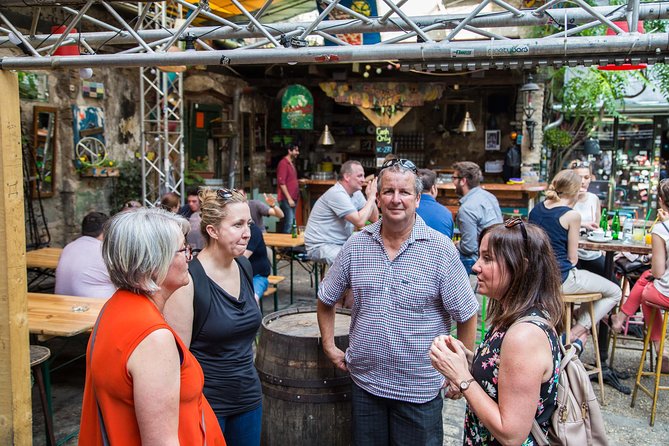
This is set up as a shared small-group tour with 2 to 8 guests (and it can run larger for a different option). That cap is more than a comfort detail. It tends to make a difference for questions, photo moments, and how often the guide can slow down without messing up the whole schedule.
The tour includes:
- an English-speaking local guide
- a glass of Hungarian sparkling wine at the start
- a coffee break during the tour (one coffee or drink included)
- short trips on public transportation, including the oldest metro line
- admission tickets where listed as free, like the initial stop and the basilica timing
- many photo and question stops
The price is $125 per person for about 4 hours. Value here comes from stacking items you would otherwise pay for or plan yourself: guided history, riverfront and castle area coordination, metro use, plus drinks. It is not a cheap “walk and go” tour. It is a guided half-day with extras that actually cost money if you piece them together.
Also, this tour is commonly booked around a month ahead (on average 34 days). If your dates are fixed, I would not wait until the last week.
Who should book the Budapest Grand Walk?
This tour is a strong match if you:
- want a first-day orientation to Budapest without cramming in too much
- like your sightseeing paired with clear historical context, from kings and architects to dictators and freedom fighters
- enjoy walking, but want it managed with breaks and a couple of transport jumps
- plan to explore further on your own after, especially around Chain Bridge and Buda Castle
It is less ideal if you hate walking or if you have a tight schedule where you cannot risk the tour running a bit longer than four hours. The format also works best when you are comfortable asking questions and listening as you go.
Price and logistics: the trade-offs you should actually think about
Let’s talk money like adults. At $125, you are paying for more than a stroll. You are paying for an experienced guide, structured timing, and included drinks plus a metro ride. If you were to book a guide separately and also pay for transport and cafes, the cost would usually rise quickly.
The trade-off is commitment. This is a set experience: it runs as a shared group with a max of 8, and it is not designed for “I will do it my way” flexibility. Also, the experience cannot be refunded and cannot be changed once booked, so it is best for travelers who are confident their plans are locked.
In other words, if you want an all-you-can-walk history sampler with real city beats, this fits. If you want a do-it-yourself map and zero structure, you might prefer a self-guided plan.
Should you book this Grand Walk?
I think you should book it if you want a guided half day that connects Budapest’s big monuments to the human stories behind them. The wine start, the coffee break, the metro ride, and the way the route ties Pest and Buda together make it feel like more than just a checklist tour.
I would book with a bit of purpose. Pick one or two themes you care about most, like 1956, Jewish history, or the Danube memorials, then use the tour to build a mental map. You will be better off later when you branch out on your own.
FAQ
FAQ
What is the duration of the Budapest Grand Walk?
The tour is about 4 hours.
Where do I meet the guide?
You meet at Tasting Table Budapest, Bródy Sándor u. 22, 1088 Hungary.
Where does the tour end?
The tour ends near Chain Bridge on the Pest side, at Széchenyi Lánchíd, Budapest.
What is included in the price?
Included are an English-speaking local guide, a glass of Hungarian sparkling wine, a coffee break (one coffee or drink included), coffee and/or tea, and a few short trips on public transportation, including the continent’s oldest metro line.
Is there a metro ride on this tour?
Yes. The itinerary includes hopping on the continent’s oldest metro line.
How much walking is involved?
There is a moderate amount of walking, so comfortable shoes are recommended.
What group size should I expect?
It is a shared small-group tour with 2 to 8 guests, and there is a maximum of 8 travelers.
Is it refundable if I cancel?
No. The experience is non-refundable and cannot be changed for any reason.
Newest from the Danube banks
- Pub Crawl Through The Ruin Bars in Budapest with T-shirt Included★ 4.5 · 14 reviews
- Rudas Bistro Premium Brunch★ 3.5 · 14 reviews
- Wine Tasting in the Countryside from Budapest★ 5.0 · 14 reviews
- Pest side stories with a Historian★ 5.0 · 14 reviews
- Buda Castle District and Matthias Church Private Tour★ 5.0 · 14 reviews
- Recirquel Company: Walk My World Immersive Show Entry Ticket★ 4.6 · 14 reviews
- Ram Gorge Hiking Adventure★ 5.0 · 14 reviews
- Budapest Rafting – Sunset Cruise★ 5.0 · 14 reviews
Walking Tours, compared.
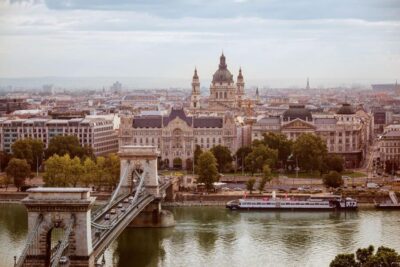
Budapest: Buda Castle Walk with Saint Stephen’s Hall
Read our review →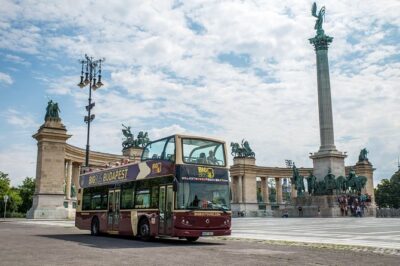
Big Bus Budapest Hop-On Hop-Off Bus and Walking Tour
Read our review →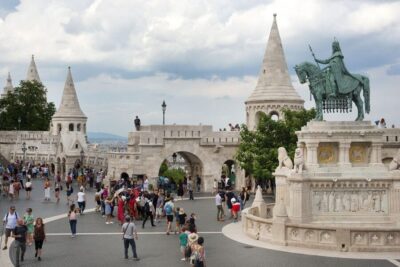
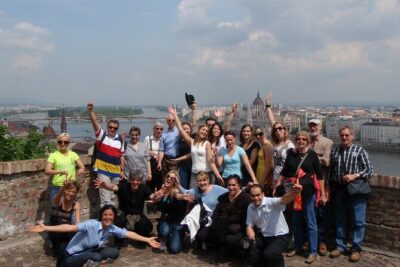
Budapest City Landmarks Walking Tour in 2 Hours
Read our review →
3-Hour Orientation Walking Tour of Buda and Pest
Read our review →
Budapest: 3-Hour Grand City Tour and Castle Walk
Read our review →
Budapest Historical Sightseeing – Free Walking Tour
Read our review →
Budapest All in One Small Group Walking Tour with Strudel Stop
Read our review →Browse the lists this tour appears in