

Reviewed · WALKING TOURS
Budapest : Must-see attractions walking tour
Budapest makes sense fast with the right route. This private walking tour strings together the big sights and the small stories, led by a licensed local guide who explains architecture, public art, everyday Hungarian culture, and even a bit of basic language. You start at Kempinski Hotel Corvinus Budapest, then move through classic landmarks like St. Stephen’s Basilica and the Hungarian Parliament Building.
I especially like how the guide connects each stop to what you will notice later when you explore on your own. The second highlight for me is the Danube Embankment stretch, where the viewpoints line up with Castle Hill, Matthias Church, Fisherman’s Bastion, Buda Castle, and Gellért Hill, plus a quick stop at the Little Princess Statue for a wish. One consideration: at only 2 hours, you get smart orientation and photo-worthy looks, but you should not expect long inside visits or slow wandering at every single place.
In This Review
- Key things I’d prioritize on this Budapest highlights walk
- Starting at Kempinski Corvinus, then getting your bearings at Erzsébet Square
- St. Stephen’s Basilica and St. Stephen’s Square, where architecture meets everyday symbolism
- József nádor tér and the porcelain-and-ceramics stop tied to Habsburg threads
- Vörösmarty Square and the end of Váci utca, perfect for people-watching and timing
- Danube Embankment viewpoints: Castle Hill to the Citadel, all in one walking segment
- Vigadó Square and the coronation banquet story with Franz Joseph and Sissy
- Szechenyi Lánchíd and Gresham Palace, where bridges and buildings explain the era
- Hungarian Parliament Building: neo-Gothic, recent politics, and what to watch for
- What the guide advice adds to your trip value
- Price and timing: $29 for 2 hours, and when it is worth it
- Who this Budapest highlights walking tour suits best
- Should you book this Budapest must-see attractions walking tour?
- FAQ
- How much does the Budapest must-see attractions walking tour cost?
- How long is the walking tour?
- Where do I meet the guide?
- Is this tour private?
- What languages are available for the live guide?
- Is the tour wheelchair accessible?
- Is there free cancellation?
Key things I’d prioritize on this Budapest highlights walk

- Private and customizable so the pace and focus can match your interests, not a preset group script
- Licensed local guide with practical advice for what to do next in the city, beyond the stops themselves
- Real public art and street-level details, like the fat policemen theme at St. Stephen’s Square
- Danube Embankment panoramas that frame multiple landmarks in one go
- Switches between themes (church and architecture, Habsburg ties, coronation-era stories, and Parliament-era politics)
- Quick language moments, including basic Hungarian to help you feel less lost
More of Pest crossed at walking pace:
- Budapest: Buda Castle Walk with Saint Stephen’s Hall
★ 4.5 · 3,012 reviews - Big Bus Budapest Hop-On Hop-Off Bus and Walking Tour
★ 3.5 · 2,206 reviews - Budapest: Buda Castle District Walking Tour
★ 4.6 · 2,108 reviews
Starting at Kempinski Corvinus, then getting your bearings at Erzsébet Square
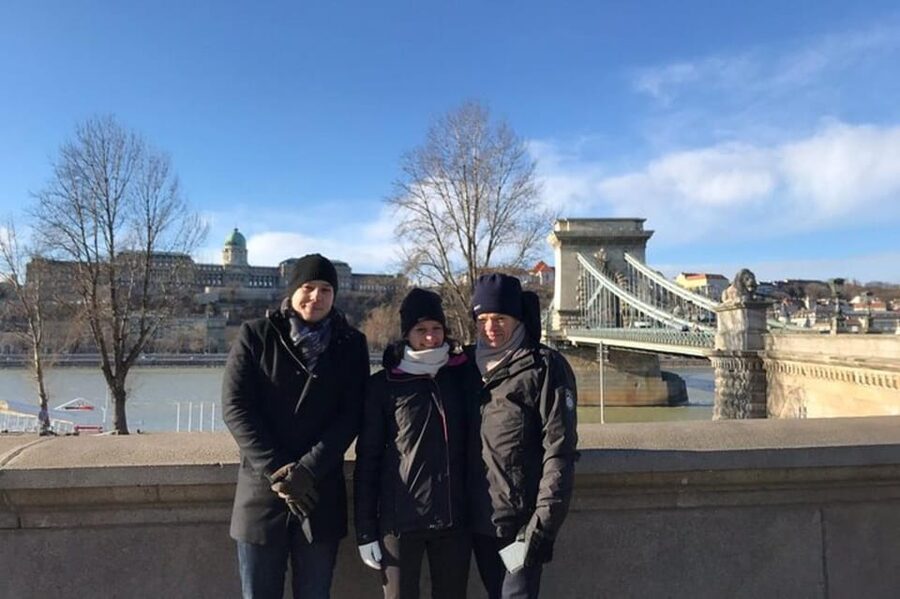
Your tour begins at Erzsébet tér 7, right by Kempinski Hotel Corvinus Budapest, so you are set up in a central area that is easy to relate to the rest of the city. Meeting at a major hotel helps because you can orient quickly, even if you arrived in town that morning and you are still mapping streets in your head.
Once you meet the guide, the first order of business is context. You will get a tour intro that mixes history and architecture with how Hungarian society actually works, plus practical notes you can use immediately. Expect the guide to point out details that most people walk past, including what to look for visually as you move.
This start matters because Budapest can feel like two cities glued together, with hills, bridges, and major landmarks on both sides of the Danube. Getting that bigger picture early makes later sightings feel less random and more connected.
St. Stephen’s Basilica and St. Stephen’s Square, where architecture meets everyday symbolism
St. Stephen’s Basilica is the first big landmark hit. You will learn why it is the largest church in Budapest, and you will hear the basics of its architecture and history in a way that makes the building easier to read from the outside. That is a real benefit when you are short on time, because you will not need to guess what you are seeing.
Right after, St. Stephen’s Square adds variety. This is where public art enters the story, including the cheeky figures of fat policemen. I like this stop because it shows Budapest is not only stone-and-royalty. It is also humor, social memory, and the way people express identity in art.
If you care about food culture too, this part often includes culinary art and history notes. Even if you are not a museum person, those small cultural cues help you make better choices for what to eat later, because you understand what shaped Hungarian tastes.
József nádor tér and the porcelain-and-ceramics stop tied to Habsburg threads
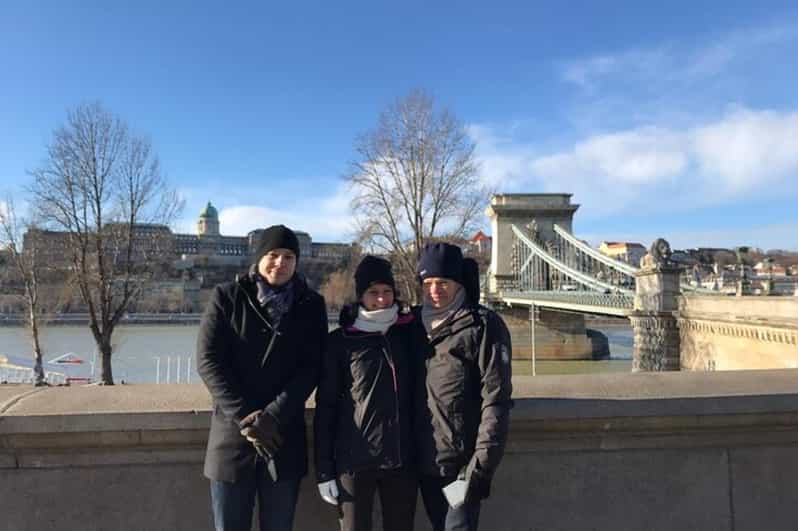
At József nádor tér, the tour shifts gears into the Habsburg era. You will connect the architectural and cultural influences of that period to what you see around you. The most tangible payoff here is the look at hand-painted porcelains and colorful ceramics, which turns a historical topic into something you can actually visualize.
I like this stop because it does not treat history like a timeline you memorize. It treats it like a lens. Once you see how older influences show up in everyday decorative traditions, you start spotting those patterns elsewhere in Budapest.
One practical note: ceramics and porcelain are often best enjoyed with a bit of patience, so if you tend to rush, slow down here for a moment. It is the kind of detail you can lose if you only do quick photos.
Vörösmarty Square and the end of Váci utca, perfect for people-watching and timing
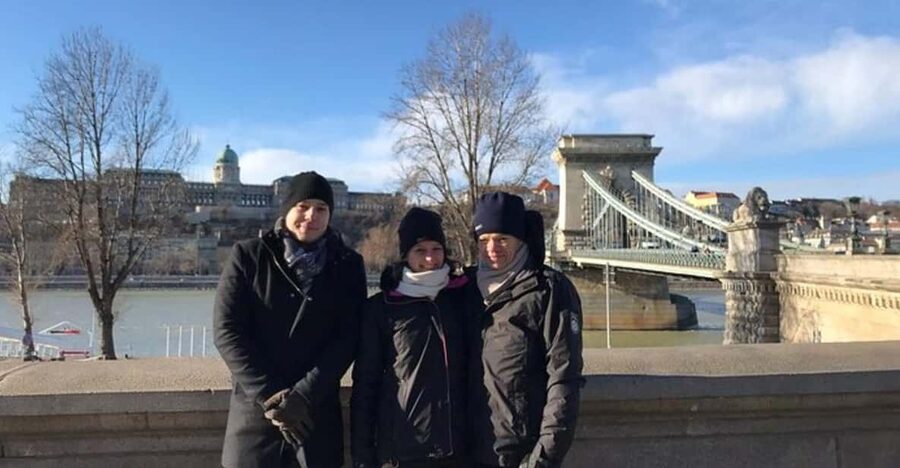
Vörösmarty Square is a strong change of pace. You get a hangout spot where people-watching does the heavy lifting, and the setting is tied directly to the famous pedestrian street Váci utca. Reaching this area tells you you are moving through Budapest’s most visitor-friendly corridor, but with enough local context that it does not feel like a theme park.
The guide will point out what to notice as you stand here, and that is useful when you later return to the same streets independently. You will know where you are in the pedestrian flow, how the square connects to the retail streets, and what landmarks line up visually.
This stop is also a good moment to reset your legs before the Danube viewpoint segment. In a compact tour, that matters.
Other ways an evening in Budapest can go:





Danube Embankment viewpoints: Castle Hill to the Citadel, all in one walking segment
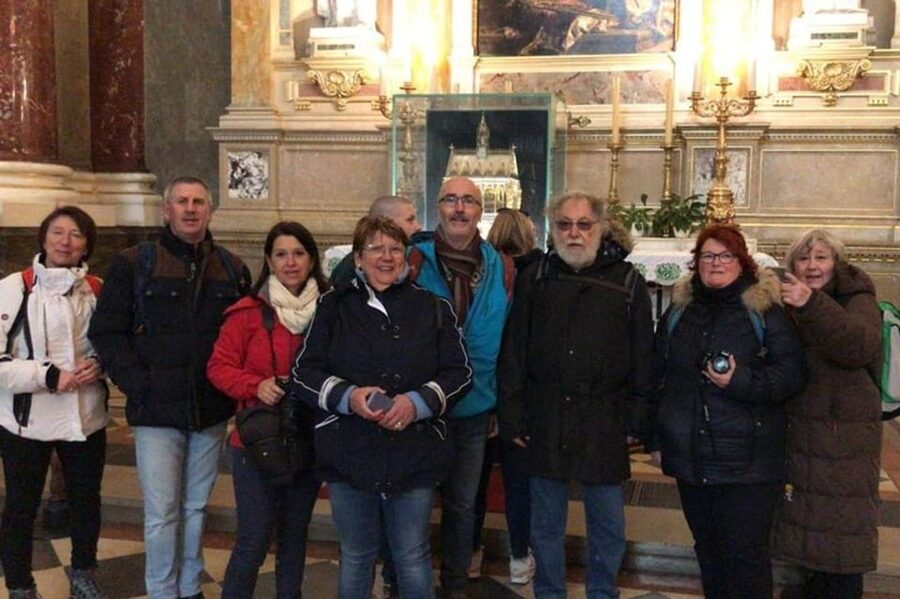
The Danube Embankment section is the big payoff for many first-time visitors, and for good reason. You will get panoramic views of Castle Hill, Matthias Church, Fisherman’s Bastion, Buda Castle, and Gellért Hill with the Citadel. Even if you have seen postcards, seeing the city in real scale is different, because you can judge distances and skyline rhythm.
You also get a story bridge, because the Danube is not just scenery. It is a central spine for how Budapest developed. By the time you reach the embankment, the earlier architecture and cultural stops start to feel linked to this geography.
Then comes the quick, charming moment at the Little Princess Statue. You pause and make a secret wish, which is brief but memorable. It gives you a human touchpoint in the middle of a checklist tour, and it makes photos more fun instead of just factual.
Vigadó Square and the coronation banquet story with Franz Joseph and Sissy

Vigadó Square adds another layer to your understanding of Budapest’s “who ruled what” story. You will hear about the coronation banquet connected to Franz Joseph and Sissy, which helps explain why certain places feel tied to major ceremonial eras even when you only see open space and street-level views.
This stop works because it connects political theater to physical places. When a guide explains that an event like a coronation banquet happened here, you stop seeing the square as just a background and start seeing it as a stage.
Also, this is a nice bridge between the Danube views and the next set of architectural icons. Your brain is ready to keep switching themes, church and cityscape to ceremony and then to bridges and power.
Szechenyi Lánchíd and Gresham Palace, where bridges and buildings explain the era

The story of the Chain Bridge starts at Szechenyi Lánchíd. You will learn the history of the bridge, not only the fact that it is iconic. I like this approach because it turns a structure you might otherwise pass over quickly into a symbol of how Budapest connected areas and ambitions.
Right along this segment, Gresham Palace comes in with its exceptional secessionist look. You will admire the building style and get the framing you need to understand why secession-era architecture matters in the city’s visual identity.
This pair, bridge history plus secessionist architecture, gives you two different ways to understand the same theme: Budapest as a city that keeps reinventing its look while still honoring older roots. If you are an architecture person, you will appreciate how the guide keeps the details clear instead of turning it into a lecture.
Hungarian Parliament Building: neo-Gothic, recent politics, and what to watch for
You finish at the Hungarian Parliament Building, and the stop is more than a photo call. You will learn about recent history, elections, and the building’s neo-Gothic architecture, which makes this final landmark feel current rather than frozen in time.
I like a finish like this because Parliament is not only pretty. It is also power, policy, and civic identity. When your guide explains what elections and recent political changes have meant, you walk away with an awareness that the city is living, not just preserved.
Architecturally, neo-Gothic can look like a lot of repeating forms unless someone points out what to watch for. Your guide does that, so you finish with both a visual hook and a mental story you can carry into your own explorations.
What the guide advice adds to your trip value

This tour is private and exclusive, meaning you will not be folded into another group. That matters more than it sounds. When you are walking the core landmarks, you inevitably have questions, and private time makes it easier to get direct answers instead of waiting your turn.
The guide also provides lots of valuable advice about other things to do in Budapest. That is where value really shows up for first-time visitors. A good guide helps you pick neighborhoods, plan timing, and avoid the classic mistake of spending your limited hours on places that do not match your interests.
It is also customizable. If you want more time on viewpoints versus churches, or you care more about architecture than food culture, you can shape the emphasis. And because the guide is local, you are more likely to get tips that match what is actually practical.
One more practical benefit: the tour includes help from the team to book tickets for desired visits. The walking tour itself is the focus, but knowing someone can help with ticket planning is useful if you decide to add an extra interior visit later.
Price and timing: $29 for 2 hours, and when it is worth it
The price is $29 per person for a 2-hour private walking tour. For Budapest’s top landmarks, that is a straightforward, low-commitment way to get oriented without spending your whole day. If you are traveling solo or as a couple, private tours can sometimes get pricey, but this one stays in a budget-friendly zone for what you cover.
Timing is the main tradeoff. Two hours is enough for a highlights circuit, not enough for deep museum hours or extended inside time everywhere. If your dream Budapest day includes long cathedral visits, a museum detour, or a slow café crawl, treat this tour as your smart setup, then add extra time after.
Also, the tour includes walking and public transport depending on the option you select. That helps keep the route doable even if you want to keep your legs fresh. It also means you get more variety than a pure walking-only loop.
Who this Budapest highlights walking tour suits best
This is a strong fit if:
- You are in Budapest for a short stop and want the “main map” landmarks tied together in one plan
- You like getting context, not just photos
- You want a guide who can explain what to look for in architecture and public art
- You want practical recommendations for what to do next
From the guide angle, I also like that different guides have been involved, including Adrienne, Anikó, and Alix. That suggests consistent professionalism and a history of answering questions clearly in multiple languages.
If you are a traveler who hates walking and hates flexibility, this might be stressful. But if you are fine with a compact route and want your time to count, it is a solid choice.
Should you book this Budapest must-see attractions walking tour?
Yes, if you want a tight, first-time friendly route that links Budapest’s big icons to the stories behind them. The combination of private pacing, a licensed guide who mixes culture with architecture, and the Danube viewpoint segment is exactly what makes this type of tour worth doing early in your trip.
Book it especially if you plan to explore on your own afterward, because the guide’s explanations give you a mental checklist you can actually use while wandering. If you know you want long interior time at basilicas and monuments, add extra hours after the tour rather than expecting those details to be fully covered in 2 hours.
FAQ
How much does the Budapest must-see attractions walking tour cost?
The tour costs $29 per person.
How long is the walking tour?
It lasts 2 hours.
Where do I meet the guide?
Meet your guide in front of Kempinski Hotel Corvinus Budapest.
Is this tour private?
Yes. It is private and exclusive, with no one else in your group.
What languages are available for the live guide?
The live guide is available in English, Spanish, Italian, and French.
Is the tour wheelchair accessible?
Yes, the tour is wheelchair accessible.
Is there free cancellation?
Yes. You can cancel up to 24 hours in advance for a full refund.
Newest from the Danube banks
- Pub Crawl Through The Ruin Bars in Budapest with T-shirt Included★ 4.5 · 14 reviews
- Rudas Bistro Premium Brunch★ 3.5 · 14 reviews
- Wine Tasting in the Countryside from Budapest★ 5.0 · 14 reviews
- Buda Castle District and Matthias Church Private Tour★ 5.0 · 14 reviews
- Pest side stories with a Historian★ 5.0 · 14 reviews
- Recirquel Company: Walk My World Immersive Show Entry Ticket★ 4.6 · 14 reviews
- Ram Gorge Hiking Adventure★ 5.0 · 14 reviews
- Budapest Rafting – Sunset Cruise★ 5.0 · 14 reviews
Walking Tours, compared.

Budapest: Buda Castle Walk with Saint Stephen’s Hall
Read our review →
Big Bus Budapest Hop-On Hop-Off Bus and Walking Tour
Read our review →
Budapest City Landmarks Walking Tour in 2 Hours
Read our review →
3-Hour Orientation Walking Tour of Buda and Pest
Read our review →
Budapest: 3-Hour Grand City Tour and Castle Walk
Read our review →
Budapest Historical Sightseeing – Free Walking Tour
Read our review →
Budapest All in One Small Group Walking Tour with Strudel Stop
Read our review →Browse the lists this tour appears in