
Reviewed · MUSEUMS
Mika Tivadar Secret Museum in Hungary
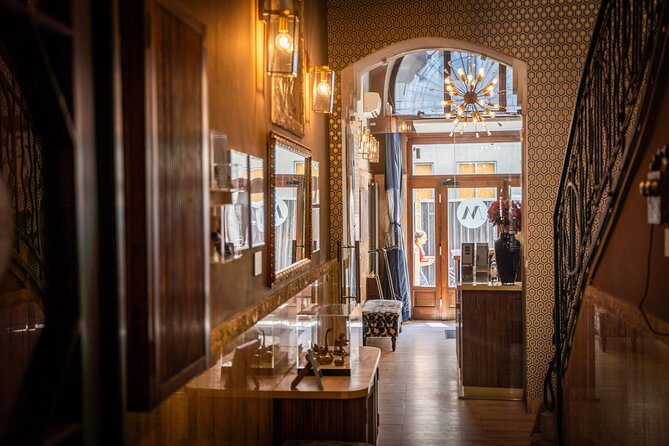
A secret museum lives behind Budapest stairs. This one tells you about the building by Mika Tivadar and the real stories hiding in the area. You follow a tight set of exhibits using mobile audio guides in multiple languages, plus voice effects that make the rooms feel theatrical.
I especially like the hands-on, scene-based way it shows Budapest from unusual angles, and I also enjoyed the fact that you can order drinks on site, with reviews calling out cocktails. The only real drawback is that it is a compact museum, so if you want a long, full-day museum marathon, you should pair it with nearby sights.
In This Review
- Key Highlights to Expect
- Stepping Into Mika Tivadar’s Secret Museum in Budapest
- What You Actually See: Building History Plus Neighborhood Scenes
- A Theatre-Like Feel Without Needing a Guide
- The Adult-Themed Section: A Simple Comfort Check
- Drinks on Site, Plus Why That Changes the Mood
- Timing, Hours, and How to Plan Around It
- Price and Value: Why About $6 Can Still Feel Worth It
- Pair It With a Kazinczy Street Walk
- Should You Book Mika Tivadar Secret Museum?
- FAQ
- How much does the Mika Tivadar Secret Museum cost?
- How long does the museum visit take?
- Do I need a mobile ticket?
- Is English available?
- Are audio guides provided?
- Can I stay as long as I want inside?
- What are the opening hours?
- Is the museum near public transportation?
- What is the cancellation policy?
- Are parking fees included?
Key Highlights to Expect
- 140-meter radius storytelling: the exhibits connect to places around the exhibition space, not just one generic topic.
- 140 sqm of exhibits: small footprint, easy to fit into a busy day.
- Mobile audio with voice effects: you control your pace using the audio on your guest phone.
- 8 languages available: practical if you are traveling with mixed language levels.
- Budapest landmarks in the mix: you get references to the Blue Cat nightclub and early cinema history tied to Michael Curtiz.
- Adult-themed section: there is a part focused on Budapest Brothels, so choose based on your comfort level.
More Budapest collections out of the weather:
- Budapest: Cat Museum Budapest Entry Ticket
★ 4.4 · 2,210 reviews - Budapest: Light Art Museum Skip-the-Line Entry Ticket
★ 3.9 · 1,531 reviews - Budapest: Budapest Retro Interactive Museum Ticket
★ 4.4 · 569 reviews
Stepping Into Mika Tivadar’s Secret Museum in Budapest
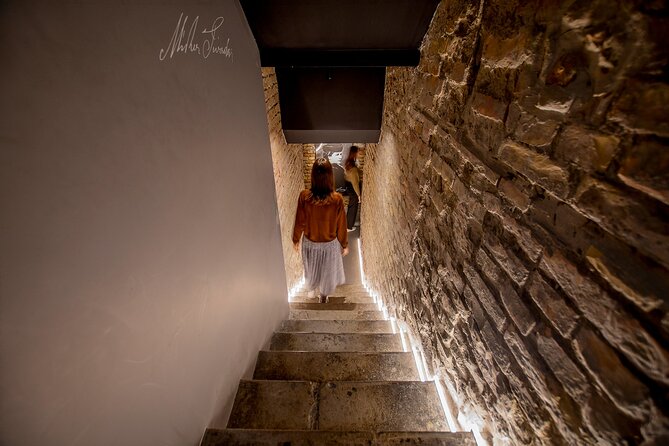
This museum is the kind of place that rewards curiosity. You do not need a deep museum background to enjoy it. You just need to be willing to follow a trail of stories down stairs, through rooms, and back into the neighborhood where those stories actually happened.
What makes Mika Tivadar Secret Museum feel different is how it treats history like something you can walk through. The museum focuses on the building connected to Tivadar Mika, then expands outward to explain what came to life nearby within a 140-meter radius. That matters because Budapest is full of layers, and you often see only the surface. Here, you get a guided perspective, even though the museum itself is small.
I also like the “you can control the experience” factor. The audio guides run on your own mobile device, and the setup includes voice effects. That is useful in a compact space, because you can pause, rewind, and catch what you missed without waiting for anyone else.
One more practical point: this is not an all-day ticket. Think more like 1 to 2 hours of focused wandering. After that, you will likely want to step back outside and test what you learned against the streets.
What You Actually See: Building History Plus Neighborhood Scenes
The visit begins with the basics, but in a fun, story-first way. You learn about the building constructed by Tivadar Mika, which now houses the museum. That connection is the spine of the experience. It gives you a reason to pay attention, because the museum is not pretending it is just a collection. It is physically tied to its subject.
Then the museum shifts into scenes connected to the surrounding area. You get multiple “small worlds” inside a limited footprint, and each one reframes a recognizable part of Budapest with context you might not guess from the street level. For example, the museum references major nightlife and entertainment history in the same general area, so the exhibits feel like a map of influences rather than a single lecture.
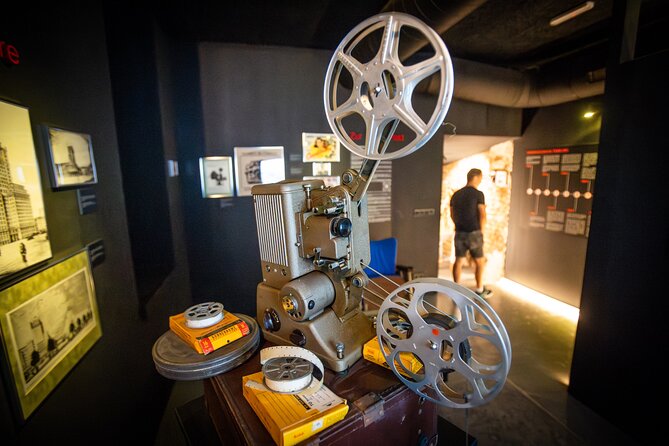
I like how the museum mixes big, famous names with local details. The Blue Cat nightclub is mentioned as being in the area. That instantly puts you in a time and place you can picture. Early cinema also gets attention, including the start of Michael Curtiz’s career. Curtiz is famous for directing Casablanca, but you learn he began in Hungary’s film world, connected to this same neighborhood orbit.
You also get the kind of odd connection that makes you laugh and then remember it later. There is a reference linking American film actors Sylvester Stallone and Arnold Schwarzenegger to a tiny house on Kazinczy Street. It is the sort of trivia that turns into a mental breadcrumb. When you are back outside, you can look for it or at least remember where to ask.
A Theatre-Like Feel Without Needing a Guide
You do not have to rely on a live guide to make the experience work. The museum provides audio guides on your guest mobile, and it includes voice effects. That combination makes the rooms feel staged, even if you are moving at your own pace.
This is where the “small museum” advantage becomes real. In a compact space, audio guidance is easier to track than in a huge building. You can listen, move to the next scene, and reset without losing the thread. If you like to linger, the audio is there for you. If you like to move fast, you can still keep up.
Language support also matters for comfort. The museum is offered in English, and it also states 8 languages total. If you are visiting with someone who prefers another language, you should have options. If you are alone, you at least know you will not be stuck with a single language that makes the visit feel too thin.
One more thoughtful detail: the museum lets you stay without rushing. The ticket includes unlimited time within operating hours. That is a big deal in small attractions. It means you can stop for audio chapters you want to revisit, or take extra time if you end up reading slower than you planned.
The Adult-Themed Section: A Simple Comfort Check
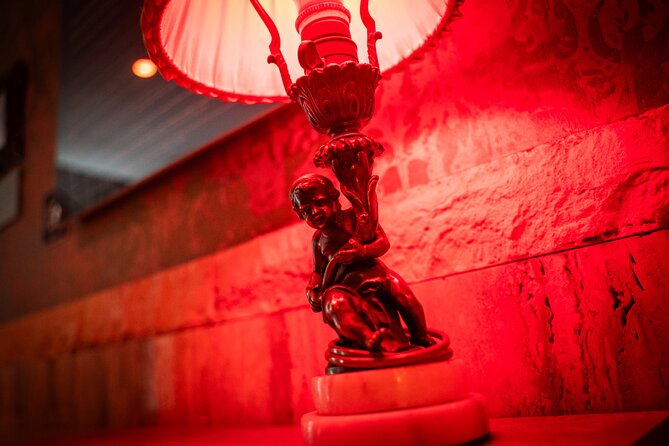
A key thing to know up front is that the museum includes content related to Budapest Brothels. That section was called a favorite by one of the visitors, and reviews even mention erotics and drinks in the same breath.
So here is my practical advice: decide before you go how you feel about adult topics in a museum setting. If you are traveling with family, with teens, or with anyone who prefers strictly daytime, non-adult content, this might not be the best match. If you are an adult traveler who is comfortable with cultural history that includes adult subjects, you may find it gives the neighborhood a more honest slice.
Either way, you will feel better once you know your comfort level. This museum is not trying to hide its tone. It aims to show Budapest in multiple aspects, including the parts people often skip.
Other ways an evening in Budapest can go:





Drinks on Site, Plus Why That Changes the Mood
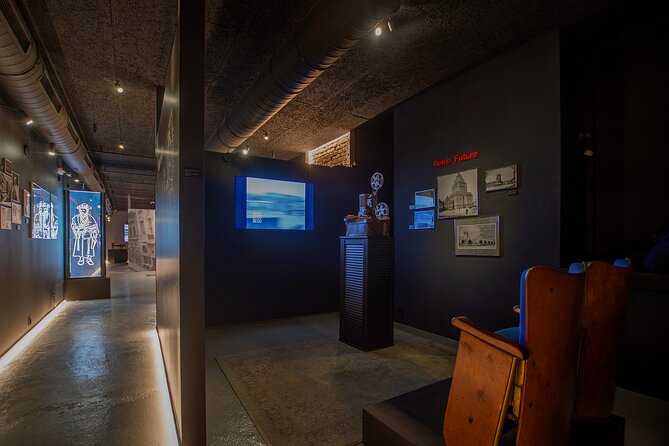
Some small museums feel like a “hurry through it” obligation. This one can feel different because there is a bar experience mentioned in reviews, including cocktails. One review even described enjoying drinks while visiting.
That matters because alcohol or mocktails can change the pace. If you take a break and reset, you might enjoy the museum more rather than rushing to finish. If you are doing this as part of an evening plan, having the option to grab a drink without leaving the property can also make the whole outing feel smoother.
Just keep it sensible. The museum is built around listening, reading, and moving through scenes. If you plan to drink, pace yourself so you can still hear the audio guide clearly.
Timing, Hours, and How to Plan Around It
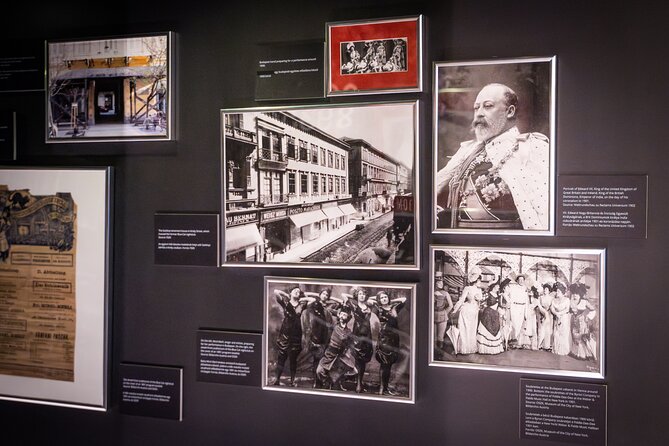
The museum runs daily, 8:00 AM to 8:00 PM. That broad window is handy. You can fit it in early when the streets are quieter, or later when you want an indoor break between outdoor sights.
If you are planning around other entertainment in the area, this kind of flexible timing helps a lot. It also makes it easier to match your energy level. On a long sightseeing day, I like starting with something compact that gives you context fast. On a lighter day, it is also a good “only one focused stop” activity.
It is worth booking ahead too. The experience is commonly booked about 17 days in advance on average. That does not mean it will sell out instantly, but it suggests you are better off locking your date rather than waiting until the last minute, especially if you travel in peak season.
Duration is listed as 1 to 2 hours. I suggest planning for the higher end if you want to read carefully and replay audio sections. If you tend to skim and move quickly, you may finish closer to an hour.
Finally, note a practical cost detail: parking fees are not included. If you plan to arrive by car, budget for that. If you are using transit, this is less of an issue because it is described as being near public transportation.
Price and Value: Why About $6 Can Still Feel Worth It
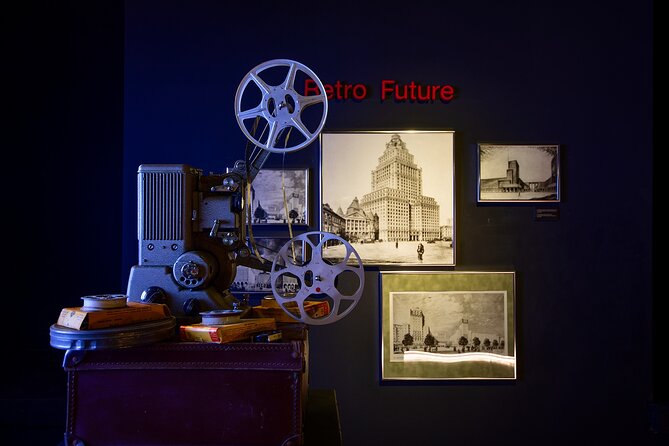
At $6.02 per person, this is priced like a budget-friendly add-on. The big question is whether “cheap” means “thin.” In this case, the value comes from how much you get for the time.
You are paying for:
- a compact set of rooms that connects multiple neighborhood stories,
- audio guidance with voice effects,
- 8-language support,
- and the chance to stay as long as you want within operating hours.
That last point is underrated. Unlimited time means you are not forced into the “20 minutes and out” mentality that some low-cost attractions create. You can slow down. You can stop. You can re-listen.
For me, the best value isn’t just the content. It is the effect it has when you walk back outside. You leave with names and connections, like Blue Cat, Michael Curtiz’s early career, and the Kazinczy Street tiny-house trivia. Even if you never fully chase down every reference, you will start seeing the neighborhood with different context.
This is also a great “first Hungary stop” if you are still orienting yourself in Budapest. It gives quick cultural grounding without demanding a full day.
Pair It With a Kazinczy Street Walk
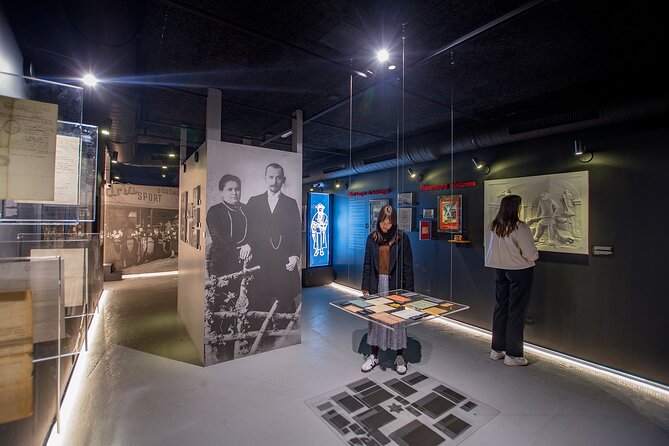
The museum’s strongest benefit may be what it sets up for you next. Because the storytelling ties to the surrounding area, you can use the museum as the first chapter, then do a light self-walk afterward.
In particular, the museum references things you can look for or at least remember while wandering, including:
- the Blue Cat nightclub reference,
- the early cinema history connected to Michael Curtiz,
- and the Kazinczy Street trivia about a tiny house linked to Sylvester Stallone and Arnold Schwarzenegger.
You do not need to turn it into a scavenger hunt. But you will enjoy walking more when you have a mental list. It helps you notice signage, building styles, and street energy with better context than you would have had at the start.
If you want to keep it simple, do this: visit the museum, take notes on whatever stories grabbed you most, then walk a few nearby blocks with those names in mind. You will likely end up pausing at at least one spot just to connect what you heard inside with what you see outside.
Should You Book Mika Tivadar Secret Museum?
Book it if you want a small, story-driven Budapest stop that is easy to fit into your day. It is especially worth it if you like audio experiences, appreciate neighborhood context, and enjoy quirky connections that link entertainment history to real streets.
Skip or reconsider if you need a long, traditional museum with lots of exhibits spread over hours, or if you are not comfortable with adult-themed content like the section on Budapest Brothels.
If you are booking soon, I would secure your slot ahead since it is often reserved around two to three weeks in advance. And once you go, plan on using the audio guide actively. That is where the museum really turns from a room with signs into a guided set of scenes.
FAQ
How much does the Mika Tivadar Secret Museum cost?
It costs $6.02 per person.
How long does the museum visit take?
The duration is about 1 to 2 hours.
Do I need a mobile ticket?
Yes, the experience uses a mobile ticket.
Is English available?
Yes, the experience is offered in English.
Are audio guides provided?
Yes, there are audio guides on your guest mobile, and the experience includes voice effects.
Can I stay as long as I want inside?
You have unlimited time to spend in the museum within operating hours.
What are the opening hours?
It is open Monday through Sunday from 8:00 AM to 8:00 PM.
Is the museum near public transportation?
Yes, it is near public transportation.
What is the cancellation policy?
Free cancellation is available. You can cancel up to 24 hours in advance for a full refund.
Are parking fees included?
No, parking fees are not included.
Newest from the Danube banks
- Gödöllö Royal Palace Privately with full board★ 5.0 · 1 review
- Private Budapest Tour with Thermal Bath or Market Visit★ 5.0 · 1 review
- Private Budapest walking tour – 4 hours★ 5.0 · 1 review
- Budapest Half Day Car Tour with Guide★ 5.0 · 1 review
- Budapest Private Transfer from Budapest city centre to Budapest Airport★ 3.0 · 1 review
- Magic Theme Team Adventure Game in the Streets of Budapest★ 5.0 · 1 review
- Budapest: Eat the Street, food tour with wine, 16+ tasting★ 5.0 · 1 review
- Private Transfer Budapest Airport BUD to Budapest by Car or Van★ 5.0 · 1 review
Museums, compared.


Budapest: Light Art Museum Skip-the-Line Entry Ticket
Read our review →
Budapest: Budapest Retro Interactive Museum Ticket
Read our review →
Budapest Card: Free Public Transport, Spa & Museums with Delivery
Read our review →
Budapest Dohany Synagogue & Hungarian Jewish Museum & free extras
Read our review →
Skip the Line: Budapest Pinball Museum Admission Ticket
Read our review →
Browse the lists this tour appears in