
Reviewed · COMMUNIST-ERA TOURS
Budapest Hammer & Sickle Communist Times Tour
Revolutions feel real when you walk the streets. This Budapest communist times tour connects 1956 Revolution landmarks with an interactive look at daily life under Soviet rule, including details about passports and the odd logic of rationing, black markets, and banana lines. I especially like how you get both big political moments and small family stories, and you end with the Budapest Retro Interactive Museum, which makes the era easier to understand. The main drawback to plan for is that key sights like St. Stephen’s Basilica and the Parliament area have admissions that are not included, and there are no headphones or audio sets, so your ability to hear the guide matters.
You’ll start at Deák Ferenc tér and finish near Liberty Square, moving through central Pest at a comfortable pace with stops that are mostly quick but meaning-packed. The tour runs in all weather, it is in English, and it is capped at a small group size (max 10). Plan your afternoon smart, because it is timed to hit the most relevant downtown sites around the 1956 story.
If you want history that explains how people lived, not just what leaders decided, this is a strong fit. And if you’re into human-scale explanations, you may get a guide who brings the subject alive in a calm, well-structured way, with names like Anna, Celeste, Andrea, and George showing up in past departures.
In This Review
- Key Highlights You Will Actually Feel
- A Small-Group Walk Through Communist Budapest
- How the Hammer and Sickle Theme Connects to Real People
- 3:00 pm Meeting Point, Route Pace, and What It Means for Your Day
- Stop 1: Szent Istvan Bazilika and Religion Under Communism
- Szabadság ter: The Soviet Memorial and the Takeover Story
- Parliament Square: 1956 Outbreak, Handling of Events, and a Key Name
- In memoriam 1956. October 25: When Soviet Tanks Met the Crowd
- Imre Nagy Remembrance and Oct. 23 Context
- Budapest Retro Interactive Museum: Passport Delays and Daily Life Under Big Brother
- Shoes on the Danube Bank: Holocaust Memory in the Middle of a WWII Story
- Price and Value: What About $79.65 Buys You
- Guides, Hearing the Stories, and How to Get the Most
- Who Should Book This Tour (And Who Might Skip It)
- Should You Book This Budapest Hammer and Sickle Communist Times Tour?
- FAQ
- Is the tour offered in English?
- How long is the Budapest Hammer and Sickle Communist Times Tour?
- What is included in the price?
- Are tickets for all stops included?
- Is there audio equipment or headphones available?
- Is it suitable for children?
Key Highlights You Will Actually Feel
- 1956 Revolution route in the city center, including Soviet invasion context and remembrance sites tied to Oct. 23 and Oct. 25
- Budapest Retro Interactive Museum entry included, with hands-on-style exhibits about family life, travel limits, and daily routines
- Imre Nagy remembrance focus, including his memorial and why his story mattered to the regime change
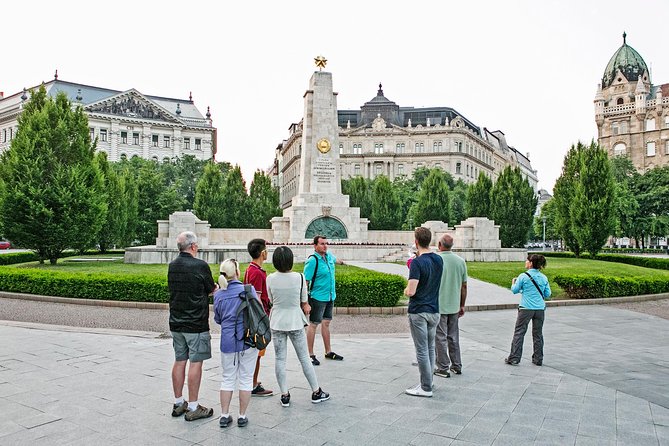
- Liberty Square and the Soviet memorial area, a clear visual marker of occupation and political takeover
- Holocaust remembrance stop at Shoes on the Danube Bank, grounding the WWII era in a place you can see and reflect on
- Small-group advantage, sometimes even very small, so questions do not feel like they get lost in a crowd
More of the decades behind the Iron Curtain:
- Budapest: Communist History Tour with House of Terror Option
★ 4.8 · 182 reviews - Communism in Hungary with a Historian
★ 5.0 · 70 reviews - Budapest: 3-Hour Walking Tour About Communism (Small Group)
★ 4.7 · 70 reviews
A Small-Group Walk Through Communist Budapest
Budapest has layers. This tour helps you read them fast. You start in central Pest and walk through the key public spaces where communist power, Soviet pressure, and Hungarian resistance played out in real time.
What makes this experience practical is that it does not treat history like a museum label. The guide ties the political timeline to daily life. That means you will hear how families lived, how people traveled, and why normal tasks like getting documents could turn into a major obstacle.
You also get a mix of emotional and explanatory stops. Some places are about speeches, protests, and marches. Others are about the lived reality behind the Iron Curtain, including how informal economies worked when official systems failed. That blend is the reason this kind of tour works well for first-time visitors.
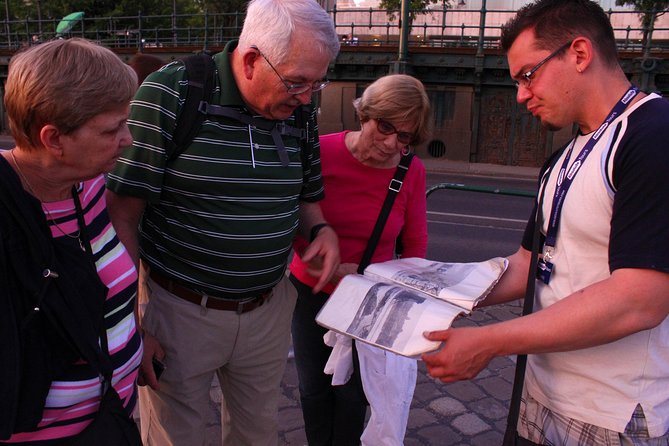
The small group size (up to 10) matters more than it sounds. In a larger group, you can lose context. In a small one, a guide can answer follow-ups and clarify the details that usually feel confusing the first time you hear them.
How the Hammer and Sickle Theme Connects to Real People
The Hammer and Sickle theme is not just symbolism here. It is a framing device that turns political history into everyday experience.
You get an overview that connects:
- early 20th century pressures (World War I and what followed)
- the World War II period and its consequences
- the communist takeover and Soviet policies
- the Hungarian Revolution of 1956 and the crackdown
That arc is useful because it prevents the usual problem: learning 1956 as a standalone event. Here, you see how Hungary ends up on the political map and why 1956 became a breaking point, not a random outburst.
Even better, the tour does not only focus on oppression in abstract terms. It points to how people navigated shortages and restrictions. The interactive museum content includes concrete examples tied to daily life, like how long it took to get a passport and what black markets looked like on the ground. Those details give you something to remember later when you see posters, courtyards, and memorial plaques around the city.
3:00 pm Meeting Point, Route Pace, and What It Means for Your Day
The tour starts at 3:00 pm. Your meeting point is the Lutheran Church at Deák Ferenc tér (Deák Ferenc tér 4, 1052). You finish around Szabadság tér 1, near Liberty Square in the downtown core.
Why this matters: you can still do a morning activity in Budapest and then switch gears into history after lunch. A 2 hours 30 minutes tour also fits well if you want something focused without sacrificing your whole afternoon.
Transportation-wise, it is near public transit, and there is no pick-up or drop-off. You’ll be walking between downtown stops, so plan comfortable shoes. The weather is part of the bargain too, since the tour runs in all conditions.
One important note for comfort: there is no audio equipment or headphones provided. So if you are hard of hearing in noisy outdoor spaces, bring that into your plan. Standing closer to the guide (or choosing a place with fewer distractions) can make a noticeable difference.
Stop 1: Szent Istvan Bazilika and Religion Under Communism
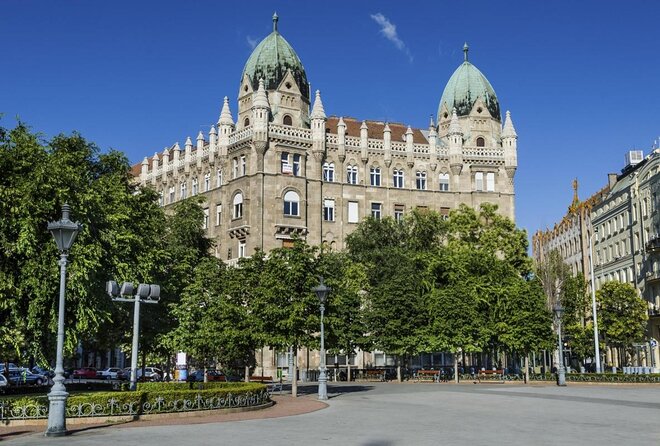
Your first stop is Szent Istvan Bazilika. Even though the admission ticket is not included, the stop is still worth it because it sets a tone early: communism did not only reshape politics, it shaped institutions, including religious life.
At this point, the guide explains how communist rule affected the operation of different churches. That context helps you understand why later political events and public spaces matter. When the state changes, everyday freedom changes too, including how communities practice faith.
Practical tip: if you want to keep your budget predictable, check whether you personally need to enter specific areas of the basilica. The tour lists the admission as not included, so you may need to pay separately depending on how much access you take.
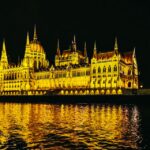
Other ways an evening in Budapest can go:




Szabadság ter: The Soviet Memorial and the Takeover Story
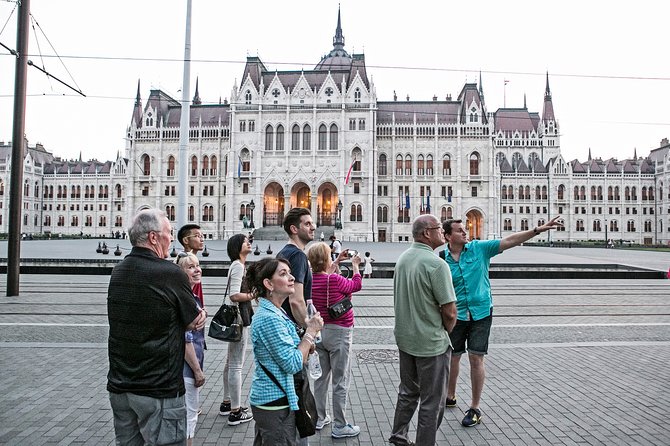
Next you head to Szabadság tér, where you visit the Soviet memorial. This is a free stop and it works well for orientation, because it visually anchors a big idea: occupation changed the political direction of the country.
You learn about:
- the end of World War II
- the beginning of occupation
- how the Communist Party seized power
This is one of those stops where it helps to listen for the timeline. You are not just seeing a monument, you are placing a date range into a place you can picture later.
And because you are walking through central Pest, the memorial also gives you a sense of scale. You get a clearer idea of how public spaces can carry state power, even when the regime is no longer in control.
Parliament Square: 1956 Outbreak, Handling of Events, and a Key Name
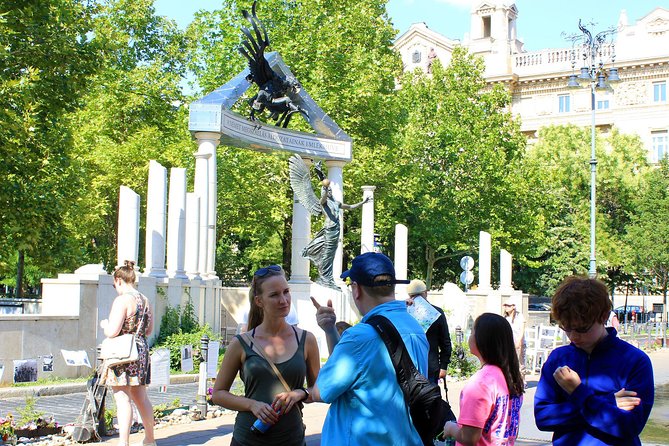
The tour then moves to the Hungarian Parliament Building area. The square in front of it played an important role in the first days of the 1956 revolution, and the admission ticket is not included.
Here, you learn what led to the outbreak and how party leadership handled the events. This part is useful because it does not just say what happened. It helps you understand why a revolution starts when it does, and how leaders react when they lose control of the narrative.
If Imre Nagy comes up in your mind as a name you recognize from textbooks, this tour helps you connect the dots. Imre Nagy is highlighted as a communist figure best known for defying Soviet leaders in Moscow, only to be executed for treason afterward. That kind of detail matters because it shows how the story was not simply Hungarians vs. an outside enemy, it was also internal conflict under extreme pressure.
In memoriam 1956. October 25: When Soviet Tanks Met the Crowd
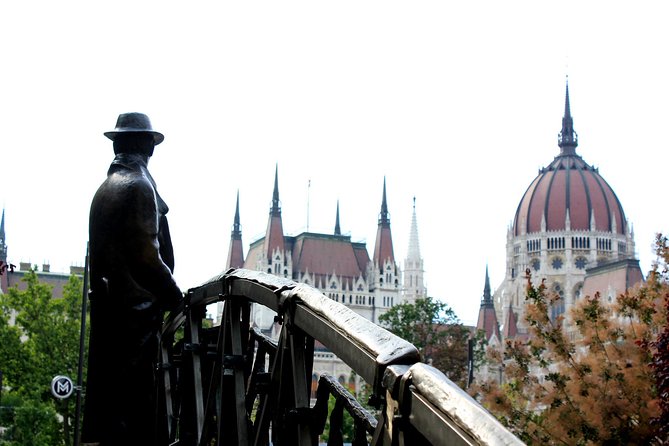
This stop brings you to In memoriam 1956. October 25, and it is another free segment. The tour explains the second day of the revolution, focusing on what happened when military authorities and Soviet tanks fired into a crowd.
The exhibition uses archive footage and recollections. That blend tends to work well because footage gives you the setting, while recollections help you understand what those moments felt like to ordinary people.
This part is emotionally heavy, but it is also historically important. If you want to understand why remembrance in Hungary is taken seriously, this stop gives you the reason in concrete terms rather than slogans.
Imre Nagy Remembrance and Oct. 23 Context
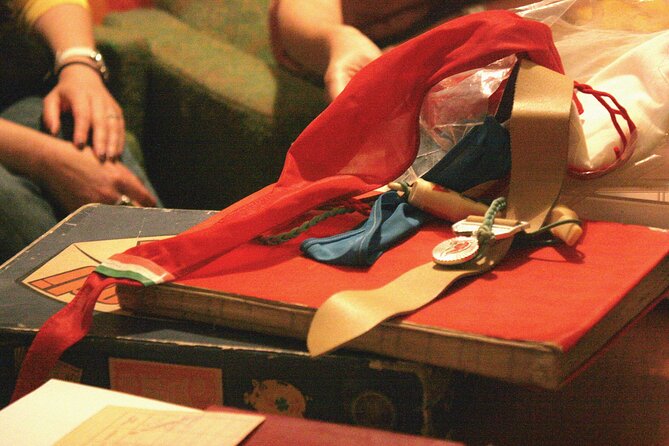
You then visit the Monument to Imre Nagy, tied to remembrance day on Oct. 23. It is a free stop and runs about 15 minutes.
The tour covers why his reburial mattered in the change of regime. That angle is practical. It shows how political shifts are not only about governments changing, they are also about how societies revise what they honor, what they mourn, and who they treat as heroes or enemies.
This is also a good place to mentally connect the earlier stops. By now you have seen Soviet occupation markers, you have walked past the symbolic power spaces, and you have faced the reality of Oct. 25. The Imre Nagy memorial helps tie it together into a story of regime transformation.
Budapest Retro Interactive Museum: Passport Delays and Daily Life Under Big Brother
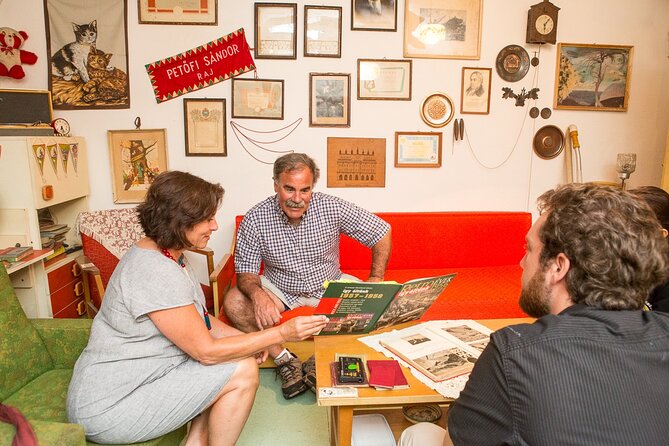
This is one of the main reasons the tour scores so well. The tour includes entry to the Budapest Retro Interactive Museum, where you learn what life was like behind the Iron Curtain.
Expect an interactive exhibition approach. It focuses on:
- how children were brought up
- how families lived
- how people traveled and where they could go
- examples connected to the frustrations of bureaucracy, including how long it took to get a passport
- how black markets and everyday workarounds functioned in real life
Even if you consider yourself only a casual history fan, this section is the one that tends to make everything feel real. It shifts the question from what the government did to what it meant for a family on a Tuesday.
Past departures have praised this stop as a turning point in the tour because it gives you objects and room-like details, including mock-up living space themes. That kind of storytelling helps you picture how ordinary people adjusted, joked, saved, and survived.
Shoes on the Danube Bank: Holocaust Memory in the Middle of a WWII Story
The highlights also include a visit to Shoes on the Danube Bank Holocaust memorial. Even though not every tour route includes every single stop type, the point is clear: your WWII context is not kept in a classroom.
If WWII is on your agenda anyway, this stop adds something vital. It takes the war out of abstract dates and places it in a location built for remembrance. It also broadens the tour’s timeline beyond just communist Hungary, reminding you that the history of the 20th century in this region contains multiple tragedies layered together.
If you want the day to feel balanced, this memorial is a key counterweight to the focus on political rebellion and occupation. It grounds your understanding of why freedom and human rights were such urgent matters in the region.
Price and Value: What About $79.65 Buys You
At about $79.65 per person for roughly 2 hours 30 minutes, the value comes from the mix of:
- an English-speaking guide
- multiple downtown historical stops
- inclusion of the Budapest Retro Interactive Museum entry
- coffee or tea or a soft drink
- a small group format, capped at 10
Admissions are the one cost you might need to add. St. Stephen’s Basilica and the Parliament area have tickets not included. So the true total depends on how you choose to handle those entries.
Still, for a history-and-story tour that combines outdoor monuments with an included interactive museum stop, this price range can be fair. You are paying for interpretation and for saving time on piecing together the sites yourself.
Guides, Hearing the Stories, and How to Get the Most
The strongest praise in the experience centers on the guides. Names like Anna, Celeste, Greg, Andrea, Tomas, and George show up repeatedly in the best accounts, and the common theme is clarity and balance. The best guides explain context first, then add personal and family stories to make the timeline stick.
A few practical ways to get more from your guide:
- Stand where you can hear. There are no headphones, so don’t pick a spot behind a post or in the far corner of a square.
- Ask about the everyday stuff. Passport delays, black markets, and how children were raised tend to lead to the most memorable answers.
- Bring a question mindset. If you know the name Imre Nagy but not the details, ask what defying Soviet leaders meant in practice.
Also, since the tour goes in all weather, dress for cold or sudden changes. You will be outside enough that your comfort affects your attention span.
Who Should Book This Tour (And Who Might Skip It)
This tour is a great fit if you want:
- a clear overview of Hungary’s modern political story from WWI onward
- an understanding of 1956 beyond dates, including protests, marches, and Soviet invasion context
- everyday life under communist rule, not only major events
- a museum-style stop where you can see and picture daily reality
It may not be the best choice if:
- you need a fully headphone-based experience for outdoor segments
- you strongly prefer purely outdoor, monument-only walking
- you are traveling with kids under 14, since the tour is not recommended under that age
Should You Book This Budapest Hammer and Sickle Communist Times Tour?
I’d book it if you want your first Budapest history day to feel grounded. The route connects major 20th century turning points to physical places, and the Retro Interactive Museum entry included is the part that makes the political story human.
If your budget is tight, just plan for possible extra admissions at Szent Istvan Bazilika and the Parliament building area. And if you tend to struggle hearing guides outdoors, choose your position carefully since there are no headphones.
Overall, this is a smart, focused way to understand why Hungary’s modern history matters today, and why remembrance sites in Budapest are more than scenery. If that’s your kind of travel, this tour earns a spot on your list.
FAQ
Is the tour offered in English?
Yes, the tour is offered in English.
How long is the Budapest Hammer and Sickle Communist Times Tour?
It runs for about 2 hours 30 minutes.
What is included in the price?
The price includes an English-speaking guide and coffee or tea or a soft drink. Entry to the Budapest Retro Interactive Museum is also included.
Are tickets for all stops included?
Not all admissions are included. The tour lists Szent Istvan Bazilika and the Hungarian Parliament Building as admission ticket not included, while other stops are free.
Is there audio equipment or headphones available?
No. The tour does not provide audio equipment or headphones.
Is it suitable for children?
It is not recommended under age 14.
Newest from the Danube banks
- Pub Crawl Through The Ruin Bars in Budapest with T-shirt Included★ 4.5 · 14 reviews
- Rudas Bistro Premium Brunch★ 3.5 · 14 reviews
- Wine Tasting in the Countryside from Budapest★ 5.0 · 14 reviews
- Buda Castle District and Matthias Church Private Tour★ 5.0 · 14 reviews
- Pest side stories with a Historian★ 5.0 · 14 reviews
- Recirquel Company: Walk My World Immersive Show Entry Ticket★ 4.6 · 14 reviews
- Ram Gorge Hiking Adventure★ 5.0 · 14 reviews
- Budapest Rafting – Sunset Cruise★ 5.0 · 14 reviews
Communist-Era Tours, compared.
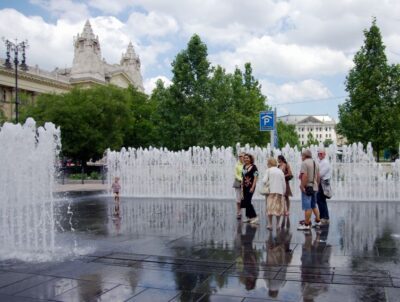
Budapest: Communist History Tour with House of Terror Option
Read our review →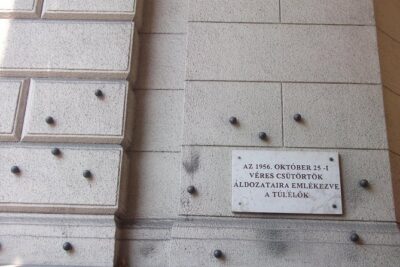

Budapest: 3-Hour Walking Tour About Communism (Small Group)
Read our review →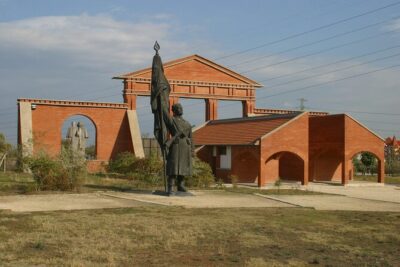
Memento Park Visit with Private Trabant Transfer
Read our review →
Budapest: Memento Park and Icons of Communism Guided Tour
Read our review →Browse the lists this tour appears in