
Reviewed · COMMUNIST-ERA TOURS
Budapest: Memento Park and Icons of Communism Guided Tour
Communism comes alive in giant concrete statues. I like that this small-group tour puts you face to face with 41 communist-era icons at Memento Park, with a licensed English guide who explains what you’re seeing and why it mattered. You get the bigger picture for how Soviet-style power took root in Hungary after World War II, not just a photo stop.
What I especially like is the way guides, including Victor in many tours, use extra teaching tools like laminated photos and keep the stories grounded in everyday reality. The one drawback is that it is emotionally heavy and you do real walking in an outdoor park, so it is not the best choice if you want an easy, light outing.
In This Review
- Key highlights at a glance
- Why Memento Park feels different from a regular sightseeing stop
- Getting there from Batthyány tér, with time that actually works
- Memento Park walk: 41 statues and the propaganda playbook
- Stalin’s Grandstand, the Boots of Stalin, and the crowd moment
- How the communist system manipulated people, step by step
- Secret police and the fear factor in daily life
- Photos, shade, and using the monuments like a teaching tool
- Price and value, and who this tour suits best
- Booking advice: should you do it?
- FAQ
- Where is the meeting point for the tour?
- How long is the guided tour?
- Is there a live guide and what language do they speak?
- How big is the group?
- What does the price include?
- Do we get time to look around on our own?
- Can we take photos at the park?
- Are souvenirs and food available?
Key highlights at a glance
- A story told through 41 communist-era statues placed after the fall of the system at Memento Park
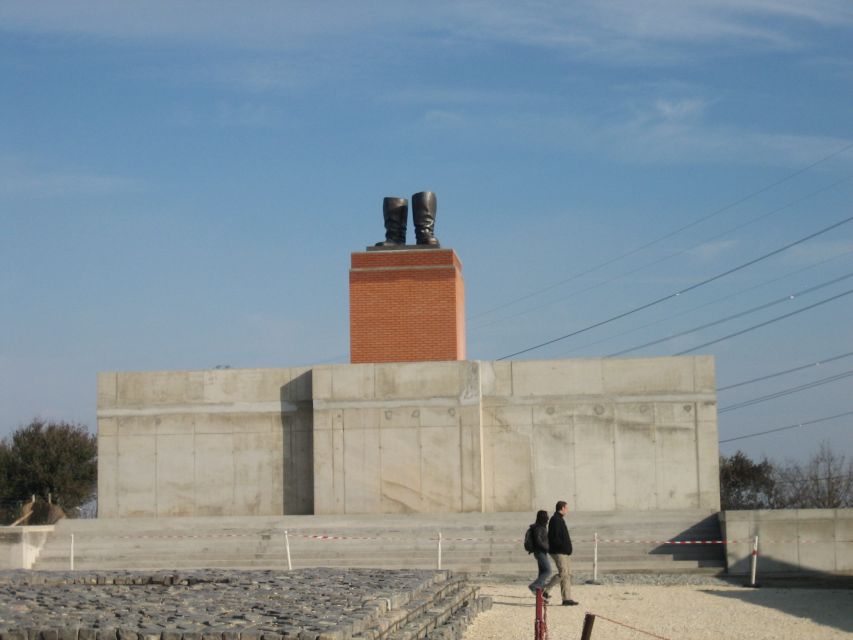
- Stalin’s Grandstand and the Boots of Stalin, explained as a symbol of people’s longing for freedom
- Propaganda and rule-of-law changes under communist control, explained in clear cause-and-effect
- Secret police tactics, including how intimidation and recruitment could work in daily life
- Private-car transport from Batthyány tér, so you do not have to figure out the trip on your own
- Photo support on site, with guides happy to help you get in the picture and (on hot days) help you find shade
More of the decades behind the Iron Curtain:
- Budapest: Communist History Tour with House of Terror Option
★ 4.8 · 182 reviews - Budapest: 3-Hour Walking Tour About Communism (Small Group)
★ 4.7 · 70 reviews - Communism in Hungary with a Historian
★ 5.0 · 70 reviews
Why Memento Park feels different from a regular sightseeing stop
Memento Park is outdoor history that does not sit politely in the background. You walk among oversized figures from the communist era, and the scale is part of the point. These statues were built to project power, certainty, and control, and once you see that in person, the politics stops being abstract.
I like that the tour frames the park as a communication machine. You are not just learning names like Marx, Engels, or Lenin. You’re learning how ideology was turned into messaging, and how that messaging shaped everyday life in Hungary over decades.
This is also the kind of stop that helps you read the city more clearly. Budapest has plenty of monuments, but this one explains the tactics behind them, including manipulation and fear.
Getting there from Batthyány tér, with time that actually works
The tour starts at Batthyány tér, right by the Danube. Your guide meets you in front of St. Anne Church, which has two towers and is a helpful visual landmark.
From there, you ride in a private car to Memento Park, about 16 km (10 miles) away. The ride takes around 45 minutes each way, which is long enough to settle in, but not so long that you waste your afternoon. I also appreciate that transport is included, because public transit to an out-of-the-way open-air site can turn into extra stress.
You will be back at Batthyány tér after the visit, and the whole tour runs about 3 hours. That makes it realistic even on a tight Budapest schedule.
Memento Park walk: 41 statues and the propaganda playbook
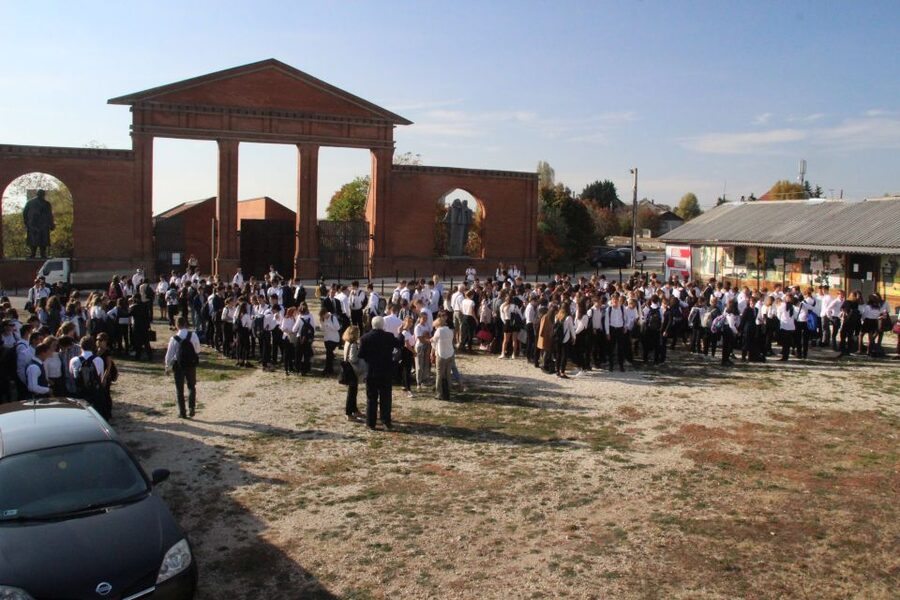
Once you arrive, you get a guided walk through the main outdoor exhibits. The museum portion is about 1.5 hours of guided time, with time to look around on your own afterward.
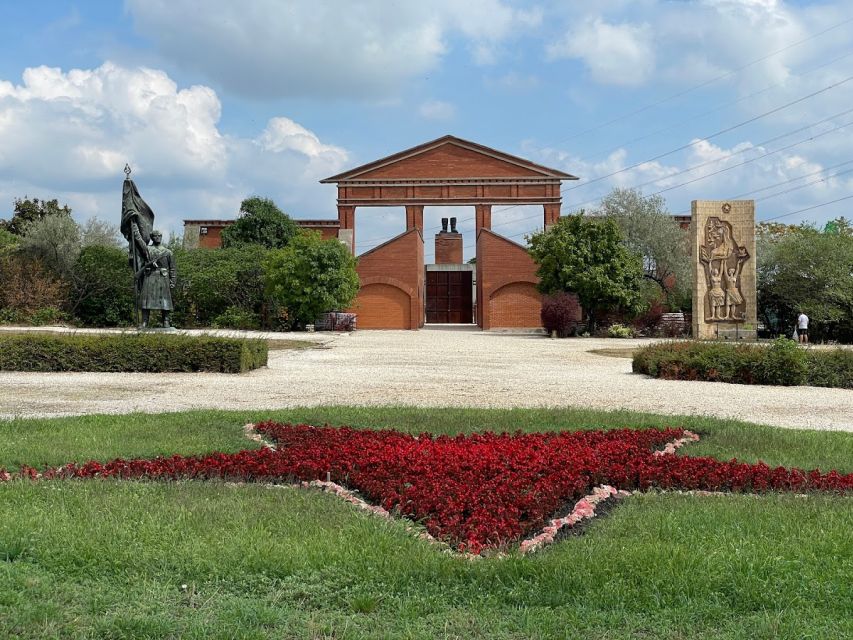
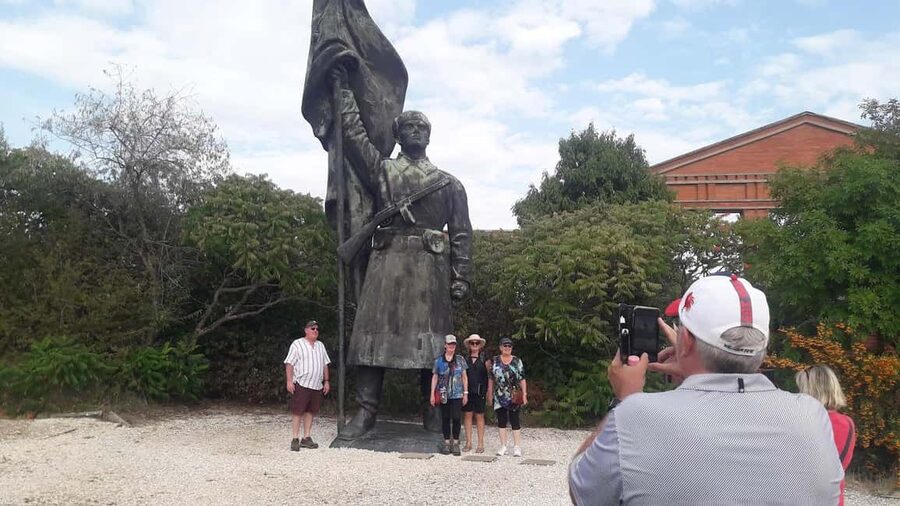
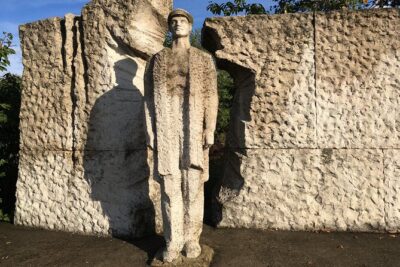
The star of the park is straightforward: 41 statues that represent communist icons and messages from the era. This includes major figures tied to Marxist theory and Soviet influence, such as Marx, Engels, and Lenin, along with other symbols of power. The tour explains that these monuments were placed after the falling of the system, so the park also functions like a historical remix of propaganda imagery.
The guide connects what you see to how communists changed life after they gained power. You’ll hear about how the rule of law shifted under communist rule, and how propaganda was used to manipulate people into accepting that shift. The tour does not just describe the system, it explains the mechanics, like how messages were repeated and how official narratives crowded out independent thinking.
If you like history that feels practical, this format lands well. You can stand in front of a statue and immediately understand what it was meant to signal, then compare that message to what the guide says happened in real life.
Stalin’s Grandstand, the Boots of Stalin, and the crowd moment
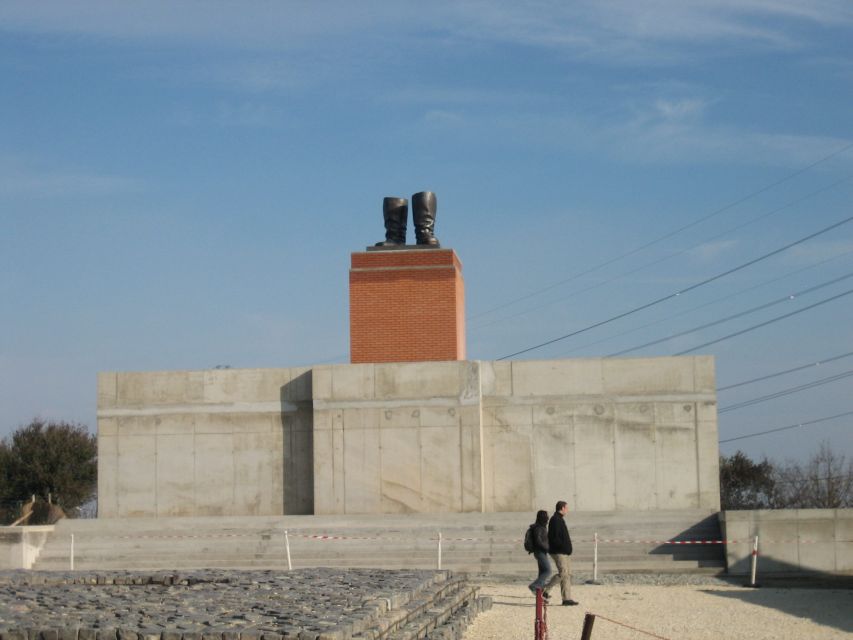
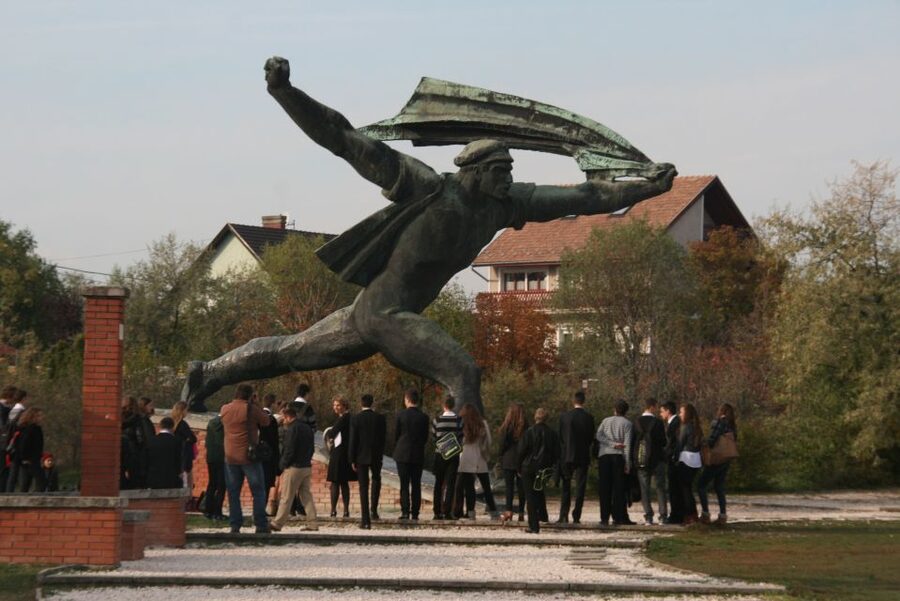
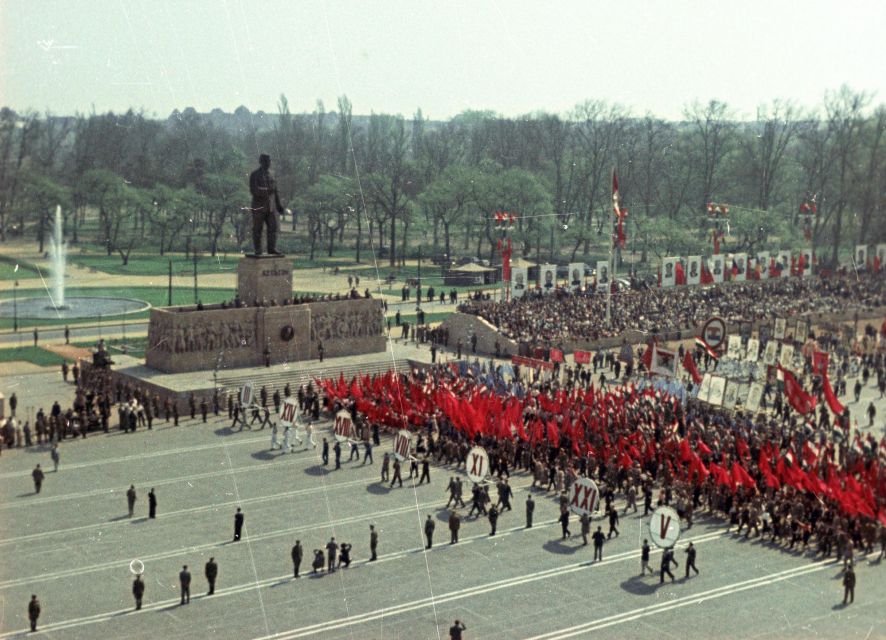
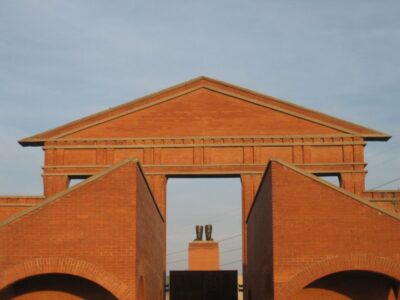
The park’s most memorable stop is the Stalin area. You can stand in front of Stalin’s Grandstand and imagine the revolting crowd that pulled down the huge statue of the hated dictator. Today, you mainly see the Boots of Stalin, which the tour frames as a symbol of people’s longing for freedom.
That moment is more than a dramatic story. It ties together two themes you hear throughout the tour: intimidation on one side, resistance on the other. The statues represent how power tried to look permanent. The fall of the statue represents how that power could be rejected when people finally had momentum.
Even if you know a bit about communism going in, this part helps you make it concrete. Seeing the scale of Stalin’s representation, and then hearing what happened when people turned on that imagery, gives you a different kind of understanding than reading a textbook paragraph.
Some other Danube days worth pricing up




How the communist system manipulated people, step by step
One of the best uses of a guided tour here is pacing. The story moves from big ideology to smaller human consequences without getting lost in theory.
The tour explains why communist ideology had room in Hungary after World War II, and then it shows how a theory associated with Marx turned into a nightmare for millions. That framing matters, because it helps you understand the shift from political promise to lived reality, and it clarifies why the story still shapes attitudes today.
You also learn how an ordinary person could be intimidated. This is not just abstract oppression. It is explained through how fear changes behavior, how people self-censor, and how the public face of the regime can hide a more controlling system underneath.
You can think of this tour as learning the language of propaganda and the psychology behind it. The statues are the vocabulary. The guide explains how the regime used that vocabulary to push obedience and limit choice.
Secret police and the fear factor in daily life
A major thread of the tour is the role of the secret police under Soviet rule. You’ll hear how the system recruited new members, and how intimidation could work even when you were not directly facing a dramatic public event.
This is one of those topics where a good guide really matters. The guide’s job is to keep you grounded in what the symbols meant, while also explaining the human consequences. That is where the laminated photos and real-life examples (reported in guides like Victor’s approach) can be especially helpful, because they provide context for what the monuments are standing for.
If you’re sensitive to heavy themes, take a breath before the most intense parts. The tour is designed to help you understand why communists stayed in power in Hungary for about 40 years, and it does not treat that as a simple political timeline. It’s presented as a long period in which propaganda and fear were constant forces.
Photos, shade, and using the monuments like a teaching tool
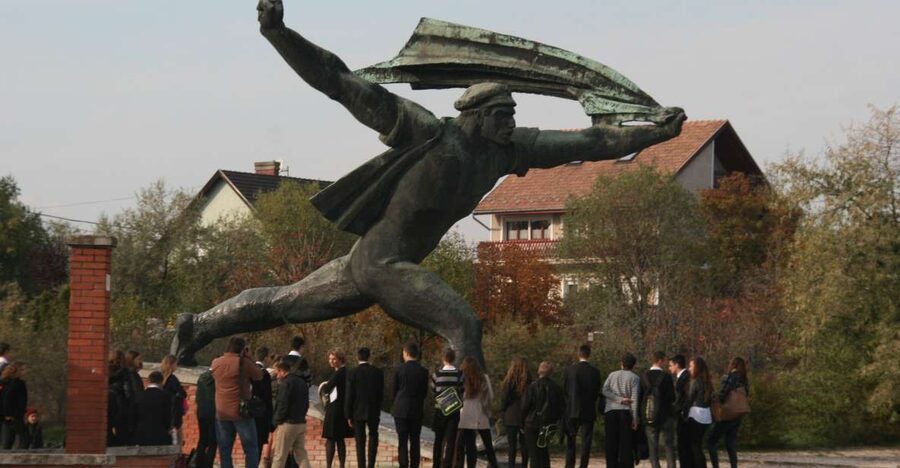
Memento Park is built for photos, but the tour makes photos smarter. You can take pictures with the statues, and the guide helps if you want to be in the photo too. It’s a nice twist, because it lets you experience the space from the same angle as the original propaganda message, but with your modern context.
You also get a bottle of water. That sounds small, but an outdoor park can feel warm, and comfort matters when you are walking for around 1.5 hours.
Some guides in this experience have also offered practical help on hot days, like finding shade when possible. If the weather is warm when you go, it is worth asking your guide what spots give you the best shade breaks.
There is also free time at the park. Use that time to slow down. Look at the details on the statues and compare them to what you heard in the guided portion. When you do that, the park becomes less like an outdoor gallery and more like a history lesson in space.
Price and value, and who this tour suits best
At $68 per person for about 3 hours, this tour is not trying to be the cheapest option. Instead, you are paying for the combination of transport, entrance, and a live English guide who explains meaning, not just location.
Here’s what you get in the price:
- pickup and round-trip transport by car from Batthyány tér
- entrance fee to Memento Park
- live English-speaking licensed guide during the museum portion
- skip the ticket line
- bottle of water
- photo help around the statues
If you try to do this on your own, you still have the core problem: you have to build the context yourself. Memento Park is visually powerful, but without guidance, it’s easy to treat it like just another set of giant monuments. A good guide turns it into cause-and-effect history.
This tour is a great fit if you:
- like history and politics, especially the 20th century
- want to understand how propaganda works, not only what it preached
- enjoy walking tours that include real interpretation, not just explanations of dates
It may not be the best fit if you want a relaxing, light day. The theme is heavy, and the point of the visit is to understand a system that hurt people.
Booking advice: should you do it?
I’d book this tour if you want your Budapest history to connect to real human stories and real tactics. The guided walkthrough among 41 statues, plus the focus on propaganda, intimidation, and why communist rule lasted about 40 years in Hungary, gives you a sharper, more usable understanding than a quick self-guided stop.
If you can handle intense political themes and you’re okay with outdoor walking, this is one of those experiences that stays with you. The images, like Stalin’s boots, are memorable, but the explanation is what turns them from scary art into insight.
If you’re unsure, pick this tour on a day when you have enough mental energy for serious topics. Then use the photo time and free time to let the story sink in at your own pace.
FAQ
Where is the meeting point for the tour?
You meet at Batthyány Square (Batthyány tér), in front of St. Anne Church, which has two towers, near the Danube.
How long is the guided tour?
The total experience is about 3 hours, including transport time to and from Memento Park.
Is there a live guide and what language do they speak?
Yes. The tour includes a live English-speaking licensed guide.
How big is the group?
It is a small group limited to 7 participants.
What does the price include?
It includes pickup at the meeting point, round-trip transport by car, entrance to Memento Park, a live English guide, skip the ticket line, a bottle of water, and help with photos at the statues park.
Do we get time to look around on our own?
Yes. There is guided time plus free time and sightseeing time at Memento Park.
Can we take photos at the park?
Yes. You can take pictures of the statues, and the guide will help if you want to be in the photo too.
Are souvenirs and food available?
You can buy souvenirs at the museum shop. Food is not included.
Newest from the Danube banks
- Rudas Bistro Premium Brunch★ 3.5 · 14 reviews
- Wine Tasting in the Countryside from Budapest★ 5.0 · 14 reviews
- Pub Crawl Through The Ruin Bars in Budapest with T-shirt Included★ 4.5 · 14 reviews
- Buda Castle District and Matthias Church Private Tour★ 5.0 · 14 reviews
- Pest side stories with a Historian★ 5.0 · 14 reviews
- Recirquel Company: Walk My World Immersive Show Entry Ticket★ 4.6 · 14 reviews
- Ram Gorge Hiking Adventure★ 5.0 · 14 reviews
- Budapest Rafting – Sunset Cruise★ 5.0 · 14 reviews
Communist-Era Tours, compared.
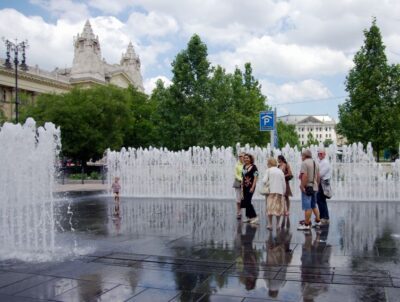
Budapest: Communist History Tour with House of Terror Option
Read our review →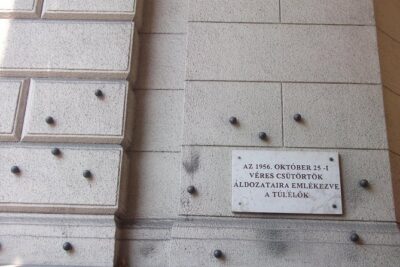

Budapest: 3-Hour Walking Tour About Communism (Small Group)
Read our review →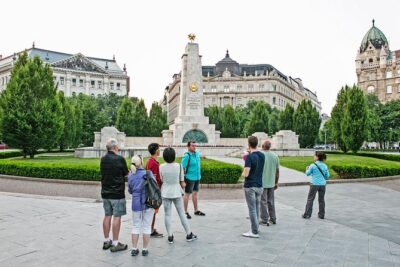
Budapest Hammer & Sickle Communist Times Tour
Read our review →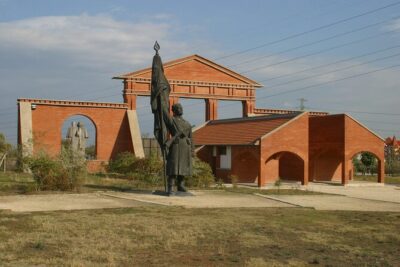
Memento Park Visit with Private Trabant Transfer
Read our review →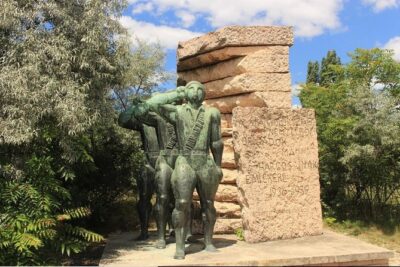
Browse the lists this tour appears in