
Reviewed · COMMUNIST-ERA TOURS
Communist Budapest Private Walking Tour
Communism leaves marks you can still read today. This private walking tour turns Budapest’s buildings and public spaces into a timeline of rule from 1949 to 1989, guided by a local historian. You focus on the places where power was displayed, resistance was sparked, and propaganda was made visible.
I especially like how the tour is built around real locations, not just lectures. I also like the way everyday life comes into the story, including the hard edges of what Hungarians call goulash communism. One heads-up: the House of Terror Museum is the endpoint, but the exhibit inside is not included, so plan either to buy a ticket or treat the exterior as your finish.
In This Review
- Key points to know before you go
- Why this communist tour works in Budapest
- Parliament area and Kossuth Square: where 1956 shows up in plain sight
- Liberty Square and the Cold War symbol tour: US embassy, Soviet Army monument, atomic shelter
- Puskas Stadium area and socialist realist propaganda
- Ronald Reagan statue: why a US president shows up in Hungary
- Bem József Square: 1956 begins here, plus a 1960s coffeehouse interior
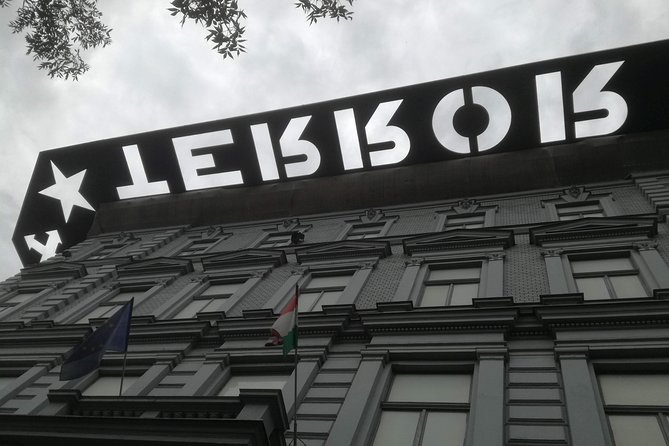
- The House of Terror Museum exterior: your endpoint and what it signals
- “Goulash communism” and the everyday side of the story
- Transit, pace, and what to wear
- Price and value: $393.17 per group, and why group size matters
- Who should book this communist walking tour
- Should you book it?
- FAQ
- How long is the communist Budapest private walking tour?
- What does the tour cost and how many people are in a group?
- Does the tour include museum tickets?
- Do I need metro or tram tickets?
- Where does the tour start and end?
- Is free cancellation available?
Key points to know before you go
- Historian guide for a private group: you get a tight, personal explanation of what you are seeing.
- Revolution to Cold War in a walkable arc: Kossuth Square, Liberty Square, and Bem József Square connect big events to specific sites.
- Propaganda you can point at: socialist realist statues and stadium-era imagery make the ideology feel concrete.
- A practical transit plan: your guide helps you use metro and tram tickets if you do not already have a pass.
- House of Terror as the logical next step: you finish outside the former secret service headquarters, with a Berlin Wall slab in view.
More of the decades behind the Iron Curtain:
- Budapest: Communist History Tour with House of Terror Option
★ 4.8 · 182 reviews - Budapest: 3-Hour Walking Tour About Communism (Small Group)
★ 4.7 · 70 reviews - Communism in Hungary with a Historian
★ 5.0 · 70 reviews
Why this communist tour works in Budapest
Budapest is one of Europe’s best cities for reading the 20th century in stone. This tour takes advantage of that. In about 3 hours, you trace how authorities ruled through public space, symbolism, and fear, then you end at one of the most serious Cold War reminders in the city.
What makes it work for you is the match between topic and places. You are not just hearing about communism, you are looking at the Soviet and socialist cues that were meant to be seen every day: monuments, parade-sized streets, regime-approved art, and the institutions that kept people watched.
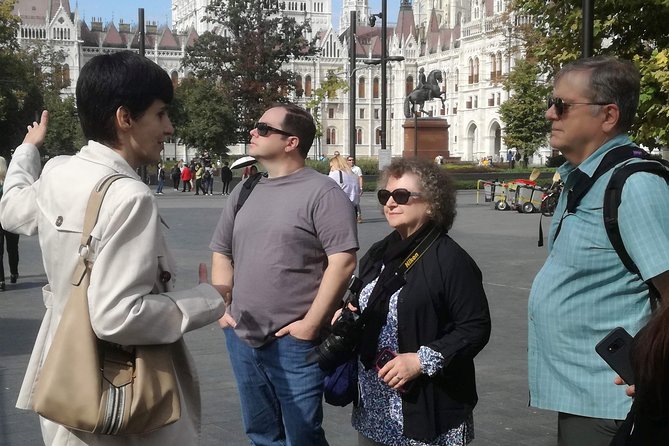
The other key strength is the private format with a historian host. In practice, that means you can ask questions as you go, and your guide can steer the route toward what interests you most, whether you are focused on 1956, Soviet influence, or the US-Hungary political symbolism you will pass along the way. I liked the energy from guides I have seen for this experience, including András, who can adjust to your interests, and Kata, who explains clearly with both perspective and a sense of humor.
Parliament area and Kossuth Square: where 1956 shows up in plain sight
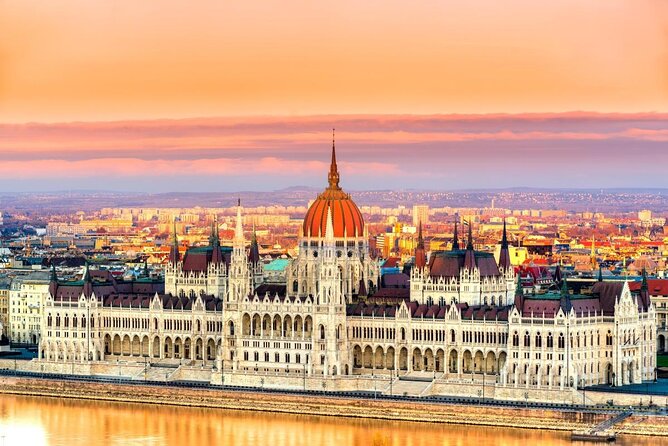
Your tour typically starts near central Budapest, with a meeting point at Frankel Leó út 2-4, 1027, then heads out with your guide. From there, you take metro to Kossuth Square in front of the Hungarian Parliament Building.
This is a smart first move. Parliament is not just an impressive landmark. It is also a stage for national identity, and in a 20th century story it becomes a backdrop for how power wanted to look and how power was challenged. You explore monuments tied to the 1956 Hungarian Revolution, then you work your way onward toward Liberty Square.
In this section, I recommend you slow down for a minute and look at how the square is set up. These were not random gathering spots. They were built to concentrate attention, and during the Cold War they became places where political messages could be amplified quickly. Even if you only catch part of the detail, your guide’s timeline helps you connect each landmark to a bigger pattern.
At this stop, admission is free, and the time is about 25 minutes. That is enough to get the main story without turning it into a drag.
Liberty Square and the Cold War symbol tour: US embassy, Soviet Army monument, atomic shelter
After Kossuth Square, you continue toward Liberty Square, where the mood shifts from revolution-era memorials to Cold War face-to-face symbolism. This area is where you learn how Hungary was pulled between competing blocs and how both sides left visible marks.
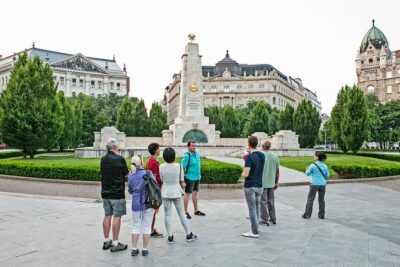
You will discuss the Cold War before you reach key landmarks along the route: the US Embassy area, the monument to the Soviet Army, and also the Ronald Reagan statue along with an atomic shelter nearby. It is a lot of messaging in a short span, but that is the point. Your guide helps you read the political language written into the urban landscape.
One practical tip: in this part of the walk, you may move fairly quickly between points. If you care about the political backstory, ask your guide to repeat the key takeaway in simple terms. You want the message to stick, because the symbols are easier to remember when you understand what they were meant to communicate.
Puskas Stadium area and socialist realist propaganda
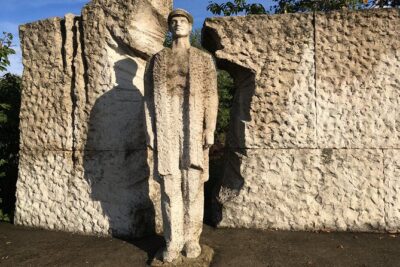
Next, you drop by the former People’s Stadium, now the Puskás Ferenc stadium area. Even with the sports repurpose, you can still see classic socialist realist statues, which is one of the most useful things to look for on a communist-era tour.
Why statues matter here: they are ideology you can measure with your eyes. Socialist realism was not subtle. It leaned hard on heroic forms and public-facing messages, aiming to shape what people thought was admirable and modern. Standing near these remnants, you get a clearer sense of how regimes used art to push a worldview.
This is about 20 minutes, and admission is free. It is a nice counterbalance to the heavier thematic stops later, because it is easier to connect what you see to what your brain already understands, even before you get the full historical context.
More of Pest crossed at walking pace:


Ronald Reagan statue: why a US president shows up in Hungary
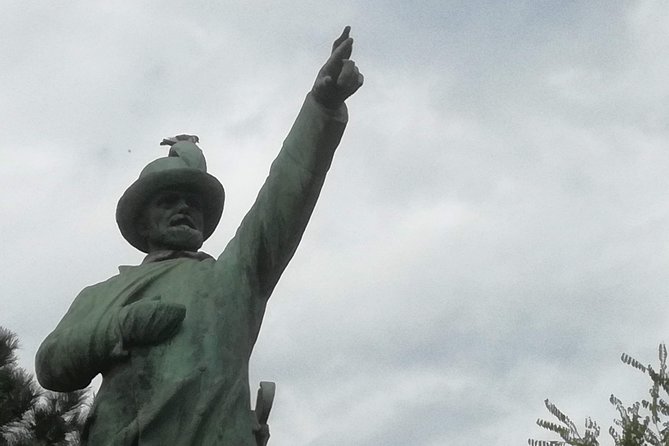
At some point you also take a brief stop at the Ronald Reagan Statue. The tour frames it with a particular Hungarian angle: the sense of obligation to Reagan for efforts credited with helping bring down the Iron Curtain.
This works best if you are open to a slightly surprising detail. You might expect the communist story to focus only on Soviet influence and internal Hungarian control. Instead, you get the other side of the Cold War equation, showing how international pressure, messaging, and diplomacy also left a physical mark here.
Admission is free and the time is short, around 10 minutes. Use it as a pause to absorb one idea, then move on.
Bem József Square: 1956 begins here, plus a 1960s coffeehouse interior
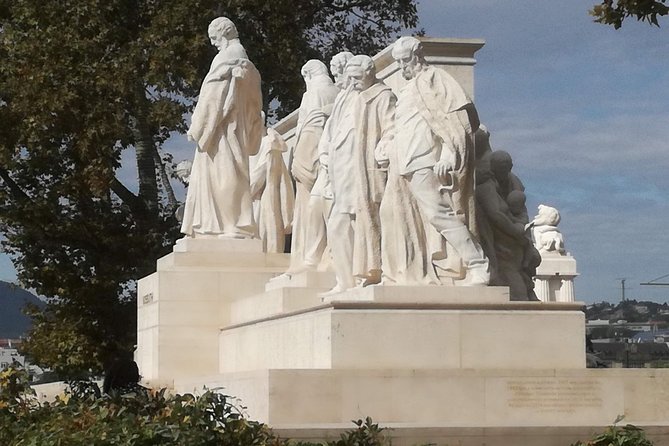
One of the most memorable stops is Bem József Square. This is where the first major demonstration of the 1956 uprising kicked off. Your guide explains the significance, then you look around and notice how the square functions as a stage for public action.
What I like in this area is that history is not just commemorated. It is layered into daily life. On the square is a coffeehouse that has retained its original interior from the 1960s. That detail is not just trivia. It is a window into how people lived during the years after the revolution, when the regime was still shaping the rhythm of public and private life.
Time here is around 25 minutes with free admission. This stop is also where the tour’s broader theme clicks for me: after seeing propaganda-style imagery and secret service associations, you end up back in a place where people gathered, talked, and tried to make sense of the future.
The House of Terror Museum exterior: your endpoint and what it signals
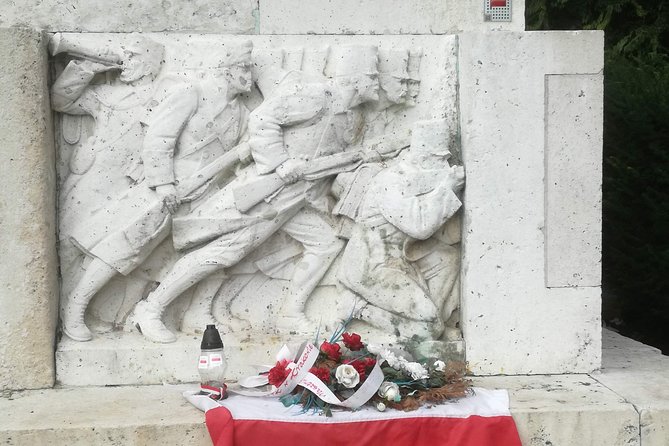
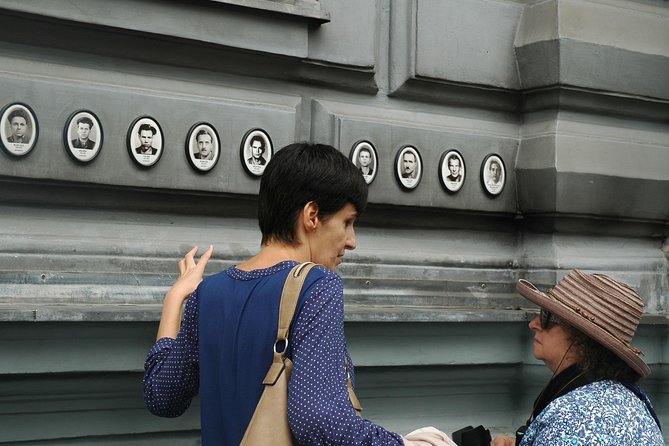
Your tour wraps outside the House of Terror Museum on Andrássy út 60, 1062. This building used to be the headquarters of Hungary’s communist secret services, and the site is heavy with meaning even from outside. A slab of the Berlin Wall sits in front, which turns the location into an instant Cold War briefing.
Important detail: the tour does not include admission to the museum exhibit inside. But as an ending point, it is excellent. It gives you a strong final image and a clear option for next steps. If you are the type who wants the interior story, you can buy a ticket after the walk.
Time at this endpoint is about 15 minutes. I think it is a good length because you finish with the right emotional weight without forcing the tour to compete with a full museum visit in the same 3 hours.
“Goulash communism” and the everyday side of the story
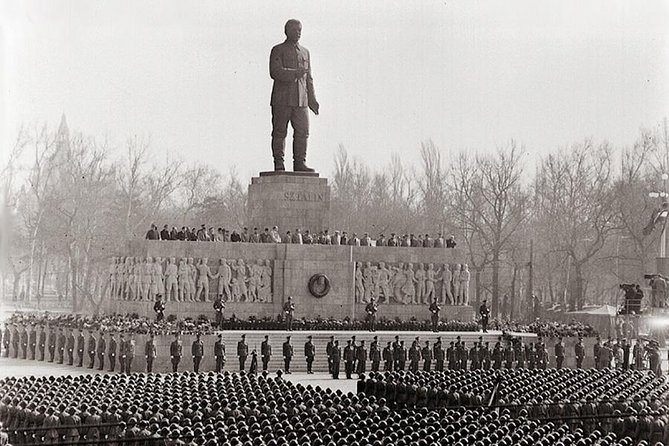
The tour does more than mark dates. It tries to explain the privations of life under Hungary’s goulash communism. Even if you are not a Hungary specialist, you can connect it to a familiar concept: when economies are managed politically, shortages, rationing, and compromises end up shaping daily routines.
This is why the tour’s route matters. You are not learning abstract theory. You are standing where public power was staged, where propaganda was displayed, and where institutions enforcing that power operated.
Also, Budapest helps. The city has plenty of spatial contrast, grand political buildings on one side and more ordinary street textures on the other. Your guide can point out the difference, and you end up understanding why ideology became visible in the first place.
Transit, pace, and what to wear
The tour is designed for a small group, and you will likely use a mix of subway, tram, and walking. Tram and metro tickets are not included, but your guide will help you buy what you need if you do not already have a pass.
Pace-wise, the stop durations look balanced, with a handful of short segments and a couple of longer viewing breaks. The experience is “most travelers can participate,” and the structure fits people who want a guided overview without committing to a full day.
What you should bring is simple: comfortable shoes and weather-ready layers. You will be outside for extended chunks, including at the endpoint where the building and Berlin Wall slab are the focus.
Price and value: $393.17 per group, and why group size matters
This experience is priced at $393.17 per group, listed for up to 10 people, while the activity notes a maximum of 8 travelers. Either way, the value is really about how many people are sharing the cost.
If you are traveling solo, the private feel can still be worth it, especially if you want a historian’s pace and the chance to ask questions. But if you have 2 to 6 people, your per-person cost drops fast, and you get the bonus of a small group dynamic.
Also, because House of Terror admission is not included, your total cost might increase slightly depending on whether you decide to go inside after the walk. The tour’s strength is the guided route and interpretation. You are not paying for museum entry, you are paying for a clear, local narrative that makes you understand what you are seeing.
Bottom line: I see this as a solid buy if you want a guided communist-era story with strong site selection, not a quick photo loop.
Who should book this communist walking tour
This one fits best if you:
- want a private historian guide instead of a large group tour
- are interested in the shift from 1956 to the broader Cold War era
- like learning from what you can physically see: monuments, statues, squares, and institutional architecture
- enjoy the idea of ending at House of Terror and deciding what to do next
If you only want museum time, you might prefer a format that includes interior admissions. But if you want the story stitched into the city first, this is a great way to set your bearings.
Should you book it?
Yes, if you want a guided walk that treats Budapest like a textbook you can read on foot. The combination of 1956 landmarks, Cold War symbolism (including US and Soviet references), and the endpoint at the House of Terror gives you a satisfying arc in just about 3 hours.
Book it especially if you value a guide who can explain the why, not only the what. The historian-host approach, highlighted by guides like András and Kata, is the real differentiator here. If you are willing to add the House of Terror interior visit on your own, you will get the most out of the final stop.
FAQ
How long is the communist Budapest private walking tour?
It runs for about 3 hours.
What does the tour cost and how many people are in a group?
The price is $393.17 per group, and the experience lists a maximum of 8 travelers.
Does the tour include museum tickets?
The House of Terror Museum admission is not included, but the other stops listed have free admission.
Do I need metro or tram tickets?
Tram and metro tickets are not included. Your guide will assist you in purchasing tickets if you do not already have a transport pass.
Where does the tour start and end?
It starts at Budapest, Frankel Leó út 2-4, 1027 Hungary, and ends outside the House of Terror Museum at Budapest, Andrássy út 60, 1062 Hungary.
Is free cancellation available?
Yes. You can cancel for a full refund up to 24 hours in advance of the experience start time.
Newest from the Danube banks
- Gödöllö Royal Palace Privately with full board★ 5.0 · 1 review
- Private Budapest Tour with Thermal Bath or Market Visit★ 5.0 · 1 review
- Private Budapest walking tour – 4 hours★ 5.0 · 1 review
- Budapest Half Day Car Tour with Guide★ 5.0 · 1 review
- Budapest Private Transfer from Budapest city centre to Budapest Airport★ 3.0 · 1 review
- Magic Theme Team Adventure Game in the Streets of Budapest★ 5.0 · 1 review
- Budapest: Eat the Street, food tour with wine, 16+ tasting★ 5.0 · 1 review
- Private Transfer Budapest Airport BUD to Budapest by Car or Van★ 5.0 · 1 review
Communist-Era Tours, compared.
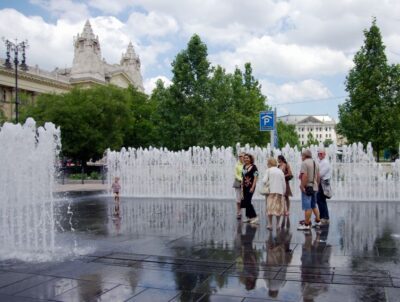
Budapest: Communist History Tour with House of Terror Option
Read our review →
Budapest: 3-Hour Walking Tour About Communism (Small Group)
Read our review →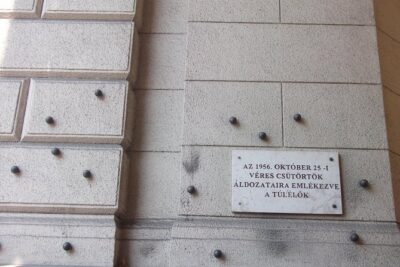
Budapest Hammer & Sickle Communist Times Tour
Read our review →
Memento Park Visit with Private Trabant Transfer
Read our review →
Browse the lists this tour appears in