
Reviewed · COMMUNIST-ERA TOURS
Communist Budapest Walking Tour
Communism has a strong visual footprint in Budapest. I love how this historian-led walk ties propaganda, daily life, and political control into one clear route, and I especially like the focus on the 1956 revolution places you actually stand in front of. One thing to keep in mind: if you already know the era well, you may want a bit more detail about everyday life and the final road to democracy.
The pace is usually relaxed, and the small-group feel helps questions land. In practice, a guide like András, a professional historian style storyteller, can adjust the focus on the fly, using older photos to show what changed and what stayed the same. The only real drawback is that you will still be walking, plus you’ll do a couple short transit hops that require your own metro and tram tickets.
In This Review
- Key things to know before you go
- Communism mapped in plain sight, in just 3 hours
- Bem József Square and the 1956 spark you can feel
- Kossuth Square, Parliament, and the revolution’s “chapter markers”
- Freedom Square: Cold War symbols and the atomic shelter entrance
- 1970s housing estates at the city edge, drab now, prized then
- Puskás Stadium and Socialist Realist statues that insist on a future
- Stalin’s trolley buses, May Day boulevards, and the then versus now comparison
- House of Terror, secret service HQ, and the Berlin Wall slab outside
- Price, pace, and which kind of traveler this suits best
- Practical tips so you get more from every stop
- Should you book the Communist Budapest Walking Tour?
- FAQ
- How long is the Communist Budapest Walking Tour?
- What language is the tour guide speaking?
- What’s included in the price?
- Do I need metro and tram tickets?
- Where does the tour meet?
- Is this tour only for large groups?
Key things to know before you go
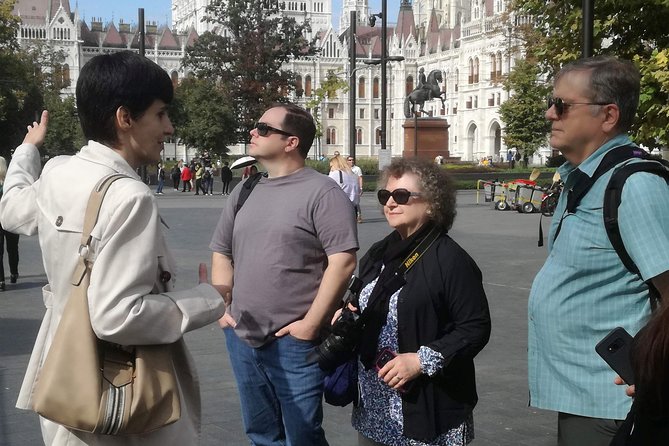
- Historian guide backgrounds include professors, doctoral students, historians, journalists, art critics, and authors.
- Start at Bambi Eszpresszó, then move through the city using a mix of walking, metro, and a trolley bus ride.
- Freedom Square’s Cold War set-up includes the US embassy, Soviet monument, Ronald Reagan statue, and an atomic shelter entrance.
- Socialist Realist propaganda in real locations, including heroic statues near the former People’s Stadium (now Puskás Stadium).
- Use of old photos and an iPad helps you compare then versus now, not just hear dates.
- 3 hours is long enough to connect the dots, but short enough that you can still enjoy the rest of your Budapest day.
More of the decades behind the Iron Curtain:
- Budapest: Communist History Tour with House of Terror Option
★ 4.8 · 182 reviews - Budapest: 3-Hour Walking Tour About Communism (Small Group)
★ 4.7 · 70 reviews - Communism in Hungary with a Historian
★ 5.0 · 70 reviews
Communism mapped in plain sight, in just 3 hours
Budapest does not hide its 20th-century story. You see it in squares, on boulevards, and on building façades that still look official, still look planned. This tour is built to help you read that visual language without getting stuck in a lecture.
I like that you start with protests and end near an institution built for fear. That gives the walk emotional range. You also get a structure that makes sense: major political events, Cold War symbolism, the look of life at the apartment scale, and then the museum that turns history into evidence. For a $123 price tag, what you’re really paying for is not just access to sites. You’re paying for a trained guide who can explain why the city’s design matched the regime’s goals.
Bem József Square and the 1956 spark you can feel
You begin at Bambi Eszpresszó on Frankel Leó út 2/4, a practical meeting spot that puts you right into the neighborhood mood. From there, the route starts at Bem József Square, a place tied to the early momentum of the 1956 uprising.
This stop matters because demonstrations do not happen in a vacuum. Squares are where people gather, where slogans can spread fast, and where the authorities can show force quickly. Standing in a location linked to the first large show of resistance gives you an anchor point for everything that follows.
One of the smartest parts of the experience is the attention to the everyday, not just the dramatic. You’ll see a coffeehouse that kept its original interior from the 1960s. That small detail helps you picture the era as a lived-in one, not a cardboard cutout of uniforms and flags.
What to watch for: when you shift from the square’s public energy to the coffeehouse’s quieter interior, you’re getting a reminder that regimes operate on both fronts, the street and the routine.
Kossuth Square, Parliament, and the revolution’s “chapter markers”
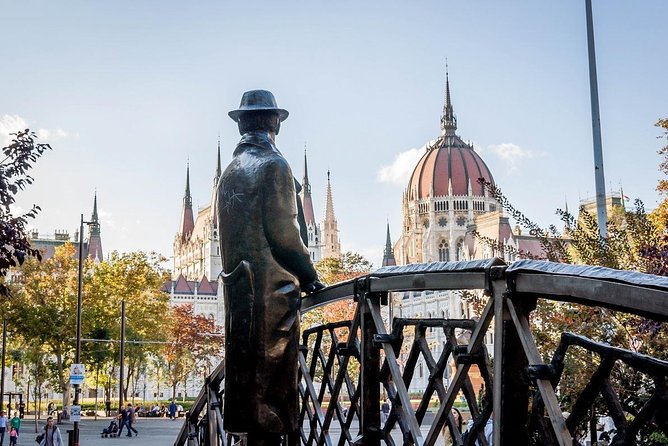
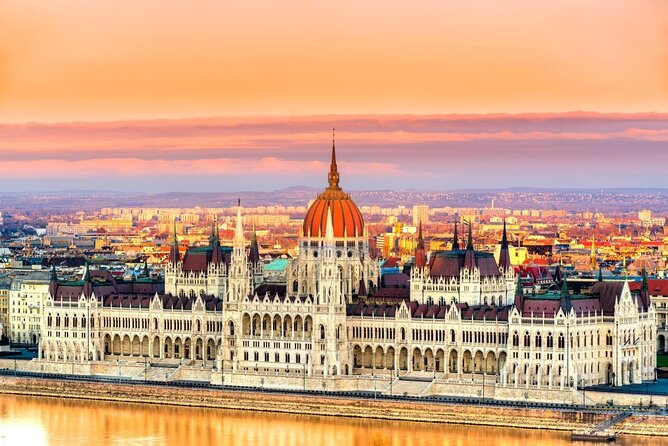
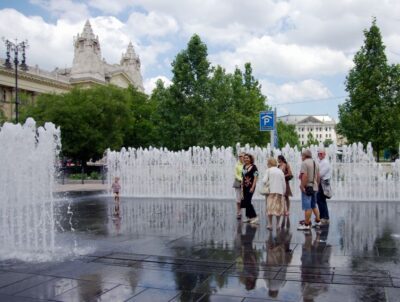
After the first gathering point, you take the metro toward Kossuth Square, and the scenery changes fast. The area around Parliament is all about visibility and national identity, which is why it became a stage during the 1956 revolution.
In front of Parliament, you’ll focus on monuments connected to the political and armed conflicts of 1956. The value here is how the guide connects objects to meaning. A monument is not just a sculpture. It is a message sent across time, the regime’s version of what should matter, and the public’s version of what happened.
If you like history that feels grounded, this part works well because you are not stuck staring at a single plaque. You can look across space, notice how the architecture holds attention, and then let the guide explain how that physical prominence ties into power and spectacle.
A consideration: this part can feel intense if you are hoping for lighter storytelling. The tour is about “goulash communism,” meaning the mix of control and small liberties, and the revolution stops bring the hard edge back into view.
Freedom Square: Cold War symbols and the atomic shelter entrance
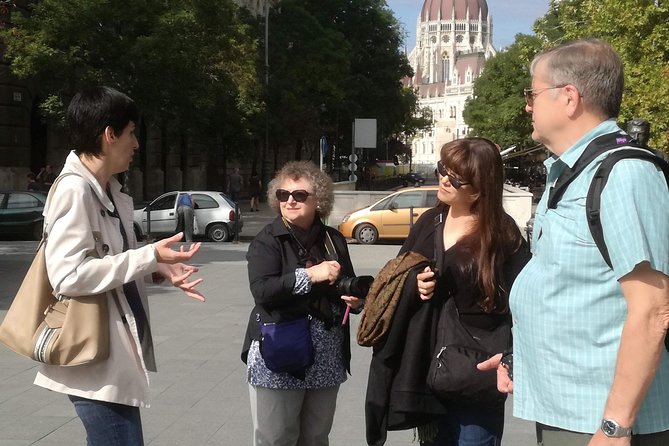
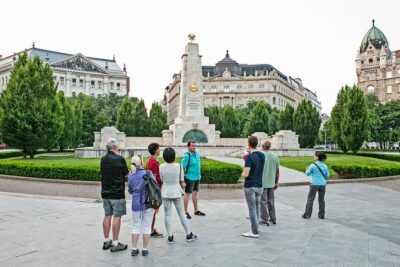
From Kossuth Square, the walk shifts toward Freedom Square. This is one of the tour’s high-impact segments because it turns geopolitics into a small walkable cluster of stone.
You’ll see four key elements that represent the Cold War balance of power:
- The US embassy
- A monument to the Soviet army
- A statue of President Ronald Reagan
- The entrance to a secret atomic shelter
This is the kind of stop that helps you understand why the era felt surreal. Budapest wasn’t just living in the shadow of local politics. It was positioned in a global face-off, and the cityscape itself reflects that.
The tour’s practical strength here is pacing and orientation. You get to stop, look, and then you get help reading what you’re seeing. The guide uses old material to show what these sites meant in context, not just what they look like today.
What I think you’ll take away: you can’t separate communist Hungary from the wider Cold War story, and Freedom Square is the simplest place to feel that connection in one shot.
More of Pest crossed at walking pace:
1970s housing estates at the city edge, drab now, prized then
Next comes a quieter kind of history. You take the metro to a 1970s housing estate at the edge of the city center, and the first reaction for many people is plain: grey blocks.
But the guide’s job is to flip the perspective. During that time, these apartments were described as an enormous improvement. The bonuses people were thrilled about included things that older buildings did not offer, like elevators and modern conveniences. Even in a system of control, material progress could feel like relief.
This is one of the tour’s most useful lessons because it complicates the usual “all bad” narrative. The reality of life under communism included trade-offs. The regime promised housing and improvements, while expecting obedience on major issues. That bargaining shows up in architecture and neighborhood planning.
Practical note: if you’re traveling in summer, this section can involve more exposure to the elements depending on how long you spend outside. Wear something comfortable and plan for a bit of walking even when the story turns calm.
Puskás Stadium and Socialist Realist statues that insist on a future
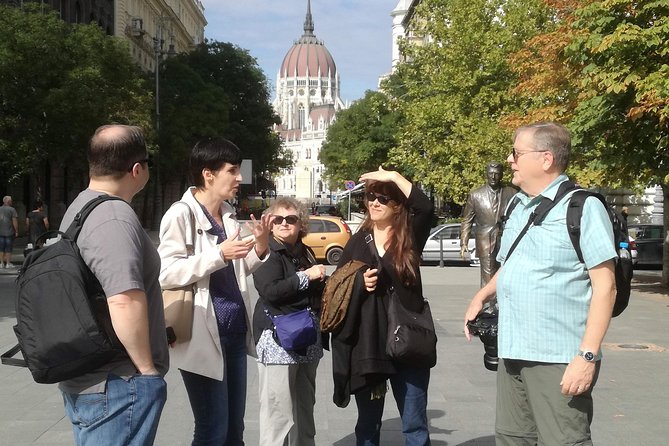
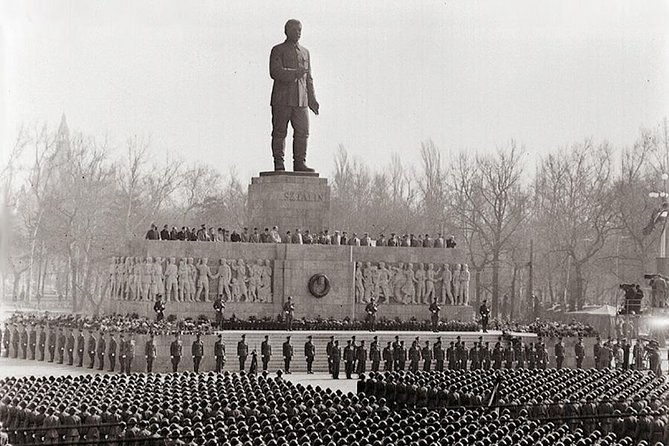
The next landmark is the former People’s Stadium, now Puskás Soccer Stadium. For a history tour, this is a fun and slightly weird choice in the best way: sports infrastructure becomes a portal into propaganda.
You’ll be looking for typical Socialist Realist statues that show heroic workers, soldiers, and intellectuals pointing the way toward a bright future. The statues are not random decoration. They are the regime’s ideal citizen in sculpture form.
This stop helps you notice how communism used art as instruction. The goal wasn’t just to represent. It was to persuade. If you’ve ever wondered how ideology gets into daily life without speeches every day, Socialist Realism is one of the clearest answers.
A drawback to consider: if your interest is strictly in political events, you might initially see this as less urgent than 1956. But it earns its place, because it shows how power tried to shape what people thought was normal, admirable, and inevitable.
Stalin’s trolley buses, May Day boulevards, and the then versus now comparison
Here you get motion and a different kind of urban reading. You’ll do a short ride on one of the trolley buses associated with the Stalin-era period, then head to Dozsa György Street, a broad boulevard used for May Day parades.
May Day parades are not just a tradition. They are mass theater, a chance for a state to turn ideology into a visible crowd. Seeing how wide and formal the boulevard is gives you a better sense of why the regime liked big events. Space was part of the message.
The guide uses an iPad and old photos to compare how the city looked then versus now. This method matters because it turns “history in words” into “history you can track with your eyes.” You can spot changes in buildings, street rhythm, and the overall feel of the environment.
If you enjoy visual comparisons, this is one of the better ways to get value from a 3-hour tour, because you’re not only hearing about the past, you’re actively matching past images to present streets.
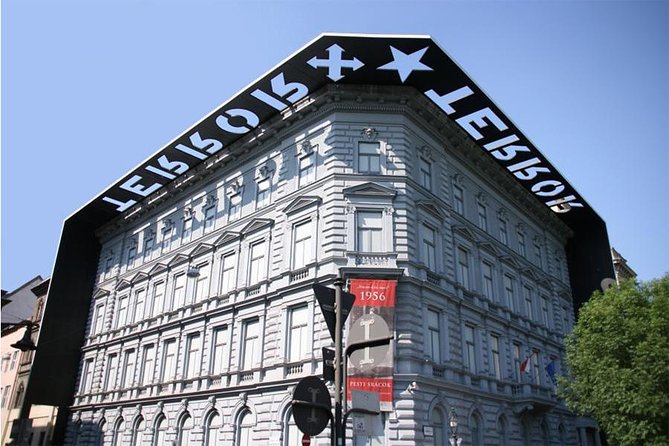
House of Terror, secret service HQ, and the Berlin Wall slab outside
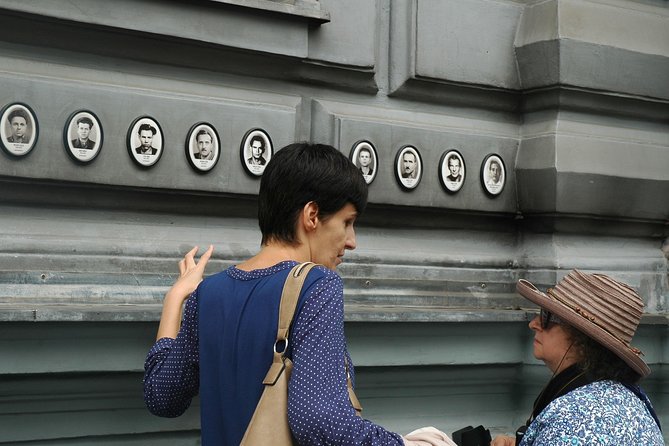
You end near the House of Terror, housed in the former headquarters of the secret services. This is the emotional capstone of the route, and it changes tone from monuments and symbols into crimes and consequences.
The museum commemorates the crimes of communism, especially during the Stalinist years. Whether you start this tour with lots of background or very little, this final focus tells you what the city did not want to forget, and what the regime tried to hide.
In front of the building, you’ll also see a slab of the Berlin Wall. That detail widens the frame again. Hungary is one piece of a bigger story, and the wall became an international symbol of division.
How to approach this ending: don’t just rush to the next photo. Take a moment to let the stop reframe the earlier sights. Freedom Square’s atomic shelter, Socialist Realist sculptures, and apartment blocks stop being separate moments. They become parts of a system that could offer stability and convenience while maintaining fear and control.
Price, pace, and which kind of traveler this suits best
Let’s talk value, because $123 for a 3-hour guided tour is not the cheapest Budapest experience. What justifies it is the combination of:
- a tight route focused on major sites
- a live English guide
- a guide profile that tends to be academic and interpretive
- site selection that is specific, not generic sightseeing
If you’re a first-time visitor and you want communist history that does not feel like a textbook, this price starts to look fair. The tour is also formatted so you don’t spend your whole day commuting. The metro and short transit hops are part of the narrative, not a chore.
The pace is another value point. Feedback highlights a relaxing, conversational approach and the guide’s ability to adapt. That matters because the topic is heavy. A tour that moves too fast turns into fatigue, and the story becomes noise.
One consideration from a more mixed perspective: if you already have solid background on Hungary between WWII and 1989, you might want more on how daily life functioned in detail and how communism finally unraveled. In that case, treat this as an on-the-ground orientation plus targeted context, not a replacement for a longer, deeper study.
Practical tips so you get more from every stop
A few small moves can make this tour feel smoother and more meaningful.
- Bring metro and tram readiness. Tram and metro tickets are not included, so you’ll want to plan for that before you start.
- Dress for walking. It’s a 3-hour route with a mix of walking and transit, plus outdoor stops around big squares.
- Ask for the “why” behind objects. The best parts tend to be when the guide explains why a statue or a shelter entrance exists and what it signaled at the time.
- Use the photo contrast. If your guide is using old photos and an iPad, slow down when you see the comparison. That’s where the learning sticks.
Should you book the Communist Budapest Walking Tour?
If you want communist-era Budapest that is site-based, story-driven, and guided by a real historian type, I’d book it. It’s a strong way to understand how ideology shaped squares, housing, public art, and even the city’s Cold War posture, without spending your day trapped in a single museum room.
Skip it or pair it with extra reading if you already know the period well and crave more depth on everyday life mechanics and the end of the system. In that case, this tour may feel like a focused primer rather than a full graduate seminar.
Overall, this is the kind of walk where you finish feeling like you can look at Budapest and read between the stone lines.
FAQ
How long is the Communist Budapest Walking Tour?
The tour lasts 3 hours.
What language is the tour guide speaking?
The tour is offered in English.
What’s included in the price?
The price includes a 3-hour walking tour and a historian guide.
Do I need metro and tram tickets?
Yes. Tram and metro tickets are not included.
Where does the tour meet?
The meeting point is Bambi Eszpresszó, Budapest, Frankel Leó út 2/4, 1027 Hungary.
Is this tour only for large groups?
No. Private or small groups are available.
Newest from the Danube banks
- Gödöllö Royal Palace Privately with full board★ 5.0 · 1 review
- Private Budapest Tour with Thermal Bath or Market Visit★ 5.0 · 1 review
- Private Budapest walking tour – 4 hours★ 5.0 · 1 review
- Budapest Half Day Car Tour with Guide★ 5.0 · 1 review
- Budapest Private Transfer from Budapest city centre to Budapest Airport★ 3.0 · 1 review
- Magic Theme Team Adventure Game in the Streets of Budapest★ 5.0 · 1 review
- Budapest: Eat the Street, food tour with wine, 16+ tasting★ 5.0 · 1 review
- Private Budapest Christmas Market guided tour and Danube Evening cruise package★ 5.0 · 1 review
Communist-Era Tours, compared.
Budapest: Communist History Tour with House of Terror Option
Read our review →
Budapest: 3-Hour Walking Tour About Communism (Small Group)
Read our review →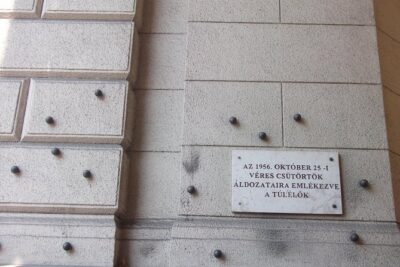
Budapest Hammer & Sickle Communist Times Tour
Read our review →
Memento Park Visit with Private Trabant Transfer
Read our review →
Browse the lists this tour appears in