
Reviewed · COMMUNIST-ERA TOURS
Life Under Communism” with optional visit to the House of Terror
Communism is written in Budapest’s streets. This walking tour connects major squares to the everyday reality of life under the Iron Curtain, with stories from guides like Miklós, and time for coffee at Bambi Presszó. I especially like the street-level approach and the chance to ask questions in plain, human terms. One thing to consider, though, is that if you choose the House of Terror or Memento Park option, the day can feel a bit longer and more intense.
If you want a softer pace, keep your expectations realistic: you are moving between landmarks, looking at relics, and then sitting with harder material depending on your choice. The most emotionally heavy stop is the optional House of Terror Museum, so you’ll want to be mentally ready for that tone shift.
In This Review
- Key things to know before you go
- Communist Budapest, where the past still has street addresses
- Liberty Square, Soviet memory, and the Siege of Budapest
- Szabadság tér: Habsburg geometry meets Communist-era context
- Kossuth Square and the 1956 spark in front of Parliament
- Petőfi Statue area and Március 15. Square, daily life around memory
- Corvin köz: resistance where the street became a battlefield
- Crossing to Gellért Hill, and the view from St Gellért Square
- Optional Memento Park: why Budapest saved the statues
- Optional House of Terror: the restored monument and the T-54 tank
- Bambi Presszó coffee stop, and why it matters
- Guides, firsthand stories, and why the Q and A makes it worth it
- Price, value, and the math that actually helps
- Who this tour suits best
- Before you book: how to choose between Memento Park and House of Terror
- FAQ
- FAQ
- How long is the tour?
- Is the tour private?
- What language is the tour offered in?
- Is pickup included?
- Are tickets included?
- Can I get mobile tickets?
- Is there food included?
- What physical condition do I need?
- Is it family-friendly for kids?
- Are service animals allowed?
- What is the cancellation policy?
- Should you book this tour?
Key things to know before you go
- Private group size (up to 5) keeps the pace flexible and questions easy to answer
- English mobile ticket means you skip most ticket-fumbling on the day
- Liberty Square to Kossuth Square to Corvin köz ties political history to real street locations
- Memento Park (if chosen) explains why Budapest preserved propaganda statues instead of erasing them
- House of Terror (if chosen) includes admission and focuses on the building’s restored look and exhibits like a T-54 tank
- Coffee stop at Bambi Presszó gives context in an atmosphere shaped by Communist-era memory
More of the decades behind the Iron Curtain:
- Budapest: Communist History Tour with House of Terror Option
★ 4.8 · 182 reviews - Communism in Hungary with a Historian
★ 5.0 · 70 reviews - Budapest: 3-Hour Walking Tour About Communism (Small Group)
★ 4.7 · 70 reviews
Communist Budapest, where the past still has street addresses
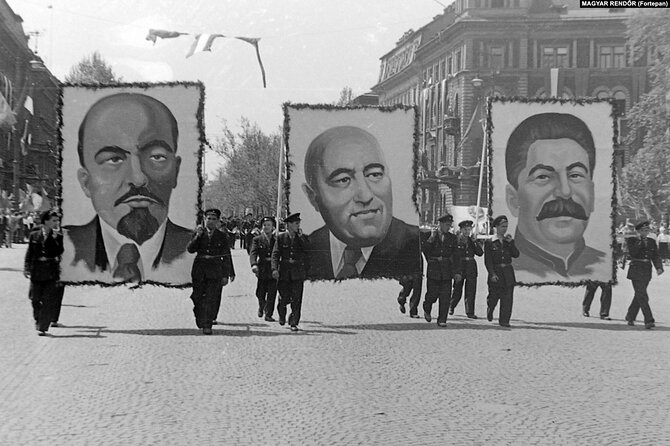
Budapest makes it hard to treat the Communist era as something distant. Even after the regime ended, the city kept markers: monuments, square names, and buildings that still frame how you read the skyline. That is the heart of this tour. You are not just learning dates. You are learning how power showed up in public space, and how people adapted to it.
What I like most is that the tour keeps returning to visible places you can stand in. You get a story, then you get a view, then you move on. If you enjoy history but hate classroom vibes, this format tends to work well.
The other big draw is that you are not left with vague generalities. Guides on this experience, including Miklós and Balázs (seen in past bookings), are the kind of people who respond to your questions. That matters because Communism is one of those topics where everyone has half-knowledge, and you want it sorted out in the right order.
Liberty Square, Soviet memory, and the Siege of Budapest
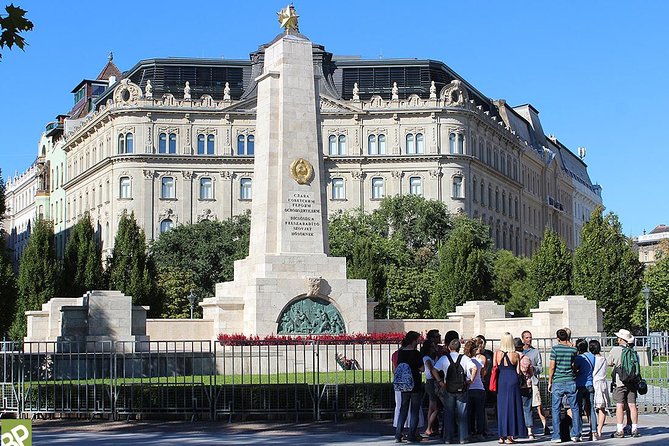
The walk starts at Liberty Square, where you look at the grand memorial to the Soviet army and the Siege of Budapest. This is tied to the end phase of World War II, when Soviet forces encircled the Hungarian capital for about 50 days.
Why this stop works: memorials like this are never neutral. They tell you what a government wanted people to remember, and they show how public space can carry political messages long after the fighting ends. Even if you only linger for a few minutes, you can feel the scale designed to persuade.
Practical tip: Liberty Square is open, and the walking routes from here can feel like a straight shot if the weather is good. If it is rainy, you’ll appreciate that you are moving early in the tour while your legs are still fresh.
Szabadság tér: Habsburg geometry meets Communist-era context
Next comes Szabadság tér, one of the more stately city-center squares. The space is large for a reason, shaped by the Habsburg era and the presence of the former Újépület area. It is described as peaceful and spacious, which gives you a useful contrast after the more heavy tone of Liberty Square.
Why I’d put this on your must-see list even without the tour: this square helps you understand how Budapest works visually. Places built for imperial planning can later become stages for different political narratives. You can see how the city’s original layout makes it easy for monuments and crowds to be seen from far away.
A quick consideration: if you are looking only for the dark side of Communism, a calm square stop can feel like a breather. But that breathing room is useful because the next part turns sharply more personal.
Kossuth Square and the 1956 spark in front of Parliament
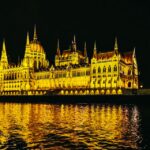
At Kossuth Square, you reach the Hungarian Parliament building, associated with Lajos Kossuth. The square’s story hits a turning point with the 1956 revolution. According to the tour framing, during the fighting a firefight began in front of Parliament, and the exact number of demonstrators who died is still not fully known.
This is not presented as a neat textbook page. You are led to understand what the crowd looked like in that moment: mixed civilians, including men, women, children, and the elderly. That detail changes the emotional weight. It is harder to think of revolution as an abstract clash of forces when you’re hearing how ordinary people were caught in it.
What to watch for at this stop: Parliament is surrounded by institutions and major buildings, so the view matters. From the square, you can feel how public protest and government power sit on the same stage.
Practical tip: if you care about photos, arrive ready to take them quickly. This area can be busy, and the tour flow moves on at the end of the scheduled stop.
Other ways an evening in Budapest can go:




Petőfi Statue area and Március 15. Square, daily life around memory
From Parliament, you head toward the Petőfi Statue and Március 15. Square. These are located near the oldest church of Budapest, and after renovations in 2011, the area became a popular scene of social life, not just tourism.
This stop is clever because it refuses to treat history like museum dust. When a place becomes a hangout spot again, that is part of the story of how a society continues after trauma. People return to ordinary routines, even when the past is still visible in stone and names.
If you are the type who likes to understand how locals live around historical sites, this section usually clicks. You get memory, then you get the everyday heartbeat.
Corvin köz: resistance where the street became a battlefield
The tour then moves to Corvin köz, framed as a major resistance center during 1956. Here, local youngsters fought invading Russians using Molotov cocktails and guns taken from soldiers to fight against Soviet tanks. You also get reminders of those battles and discussion of the invasion and its aftermath.
This is one of the most “you are standing in it” sections of the walk. Corvin köz is not just a viewpoint. It is a place where the story is tied to actions taken by real people, not only government decisions.
How to make the most of it: bring your curiosity. Ask how the events after the invasion changed daily life. Because this tour’s guiding approach emphasizes firsthand accounts, you often get better answers when you ask follow-up questions instead of waiting for a perfect one-size-fits-all narrative.
Crossing to Gellért Hill, and the view from St Gellért Square
To connect the Buda side, you cross one of Budapest’s beautiful bridges. The next major stop is at the foot of Gellért Hill, St Gellért Square.
St Gellért Square is named after Bishop St Gellért, described as the Martyr for Hungarian Christendom. From here you also get an excellent view of the Liberty Statue, erected in 1947 in remembrance of Soviet liberation of Hungary.
That last part is important: even a “liberty” monument can come with complicated meaning depending on the political point of view. This tour tends to treat these symbols like clues, not like final answers.
Why this works: you get a sweeping view, then you immediately reconnect it to political messaging. It keeps the tour grounded in place and interpretation, not just chronology.
Optional Memento Park: why Budapest saved the statues
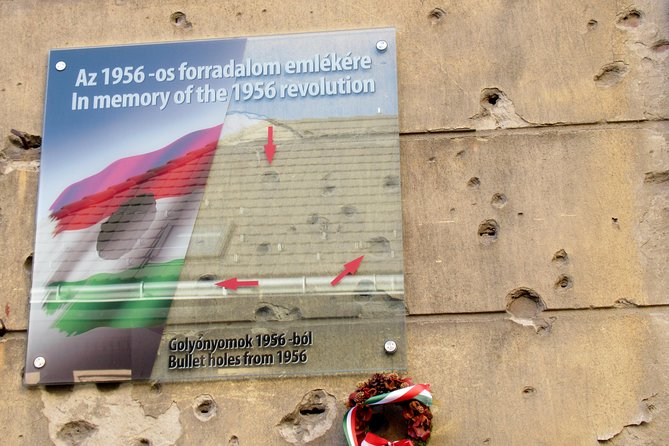
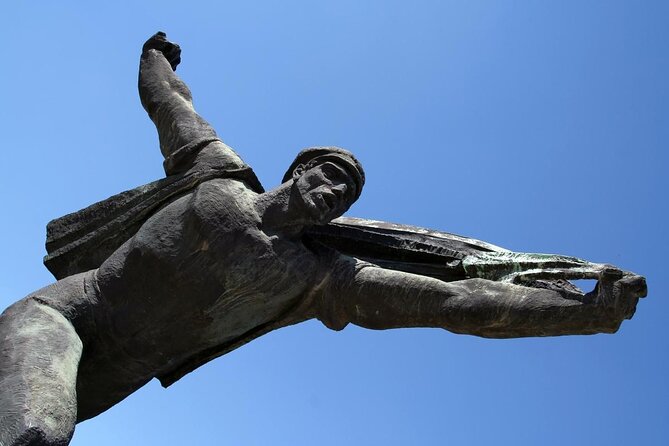
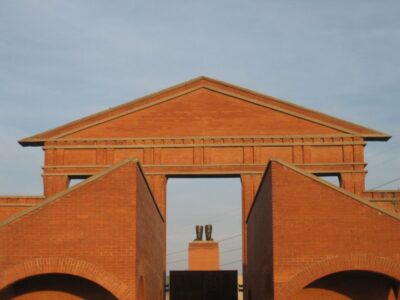
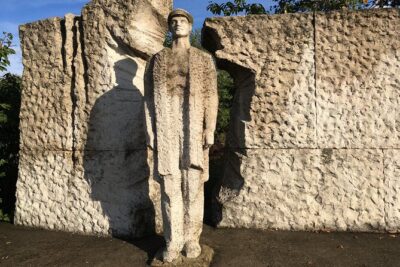
If you choose the Memento Park option, you head to a separate 1-hour stop with admission included. The premise is simple but thought-provoking. When Communism collapsed in Hungary in 1989, Budapest had many public artworks celebrating the era. In 1993, the city decided to save the statues rather than destroy them, and Memento Park was born.
So what do you do there? You walk through preserved examples of Communist-era public art and talk about what it meant at the time. The value here is that you see propaganda in physical form and hear why preservation can function like a warning sign instead of a celebration.
Who this option is best for: if you want history with less emotional shock than the House of Terror, Memento Park can feel like a cleaner entry. It also helps if you are trying to understand why societies sometimes choose documentation over destruction.
Timing note: the tour is designed around about 3 hours, but adding an optional museum stop can shift your overall pacing. If you dislike museum time traps, keep your schedule flexible.
Optional House of Terror: the restored monument and the T-54 tank
If you choose the House of Terror Museum option, expect a harder tone. Admission is included, and the stop is listed as about 1 hour. The building has been fully renovated inside and out, with the reconstruction plans credited to architects János Sándor and Kálmán Újszászy.
Outside, the museum is described as a black monument with a frame-like presence on Andrássy Avenue. Inside, the museum display includes a T-54 tank on site.
What you should know before you commit: this is not a “happy history” experience. Even if you came to see facts, the museum is built to make you feel the weight of repression. If your goal is context and understanding, it can be a powerful add-on. If you are easily overwhelmed, consider choosing only the walking portion plus Memento Park instead.
Practical tip: dress comfortably for walking, but also plan to stand and look closely inside. You will likely want to take your time with what you see rather than rushing.
Bambi Presszó coffee stop, and why it matters
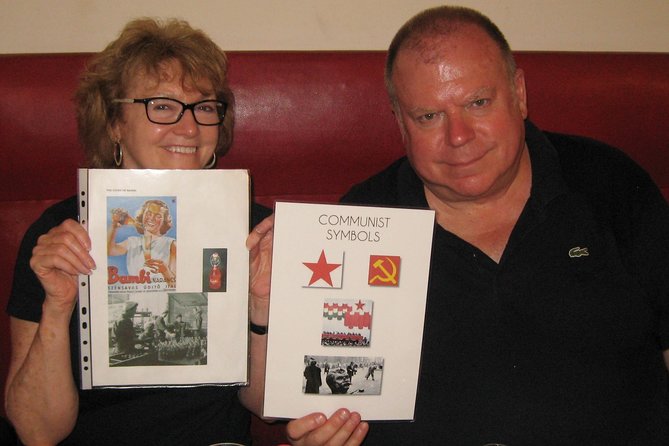
The tour highlights a coffee pause at Bambi Presszó, described as the last stronghold of Communist culture. Even if you only sip for a few minutes, the stop changes the tone. You shift from monuments and squares to a place with a living atmosphere that people associate with the Communist era’s cultural memory.
Budget reality check: the tour description includes the coffee stop as part of the experience highlights, but the overall terms list additional food and drink as not included. So I suggest treating coffee as potentially extra, unless your booking materials confirm it is covered for your exact option.
How to use this pause: ask your guide about everyday life, not only the politics. Coffee stops are where you often get the most human answers.
Guides, firsthand stories, and why the Q and A makes it worth it
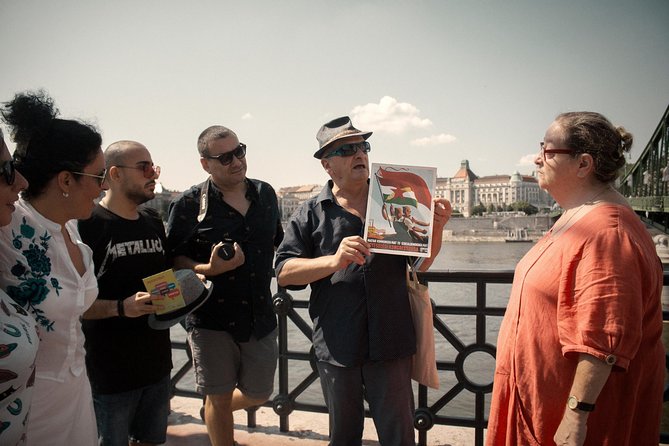
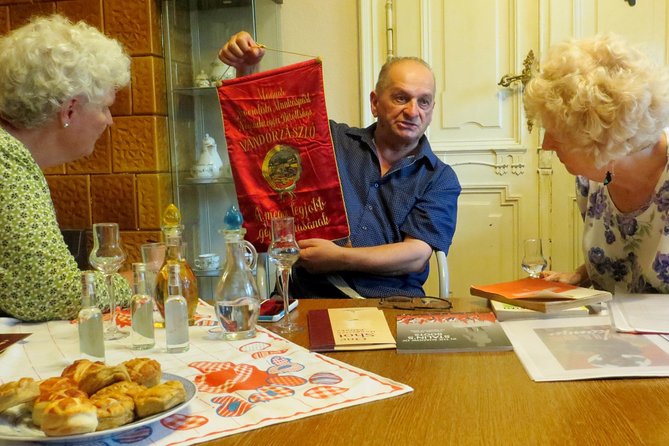
The best version of this tour is when the guide treats your questions like part of the curriculum. That comes through clearly in past feedback tied to specific guides. Miklós is repeatedly praised for considerate attention to personal interests and clear guidance around how to use Budapest’s transport during and after the tour. Balázs is highlighted for adapting the schedule to your needs and for making history feel relevant.
There is also a simple truth in their style: they connect the landmarks to lived experience. You are not only learning what happened. You are learning how people navigated fear, propaganda, and daily routines.
One consideration: because the tour is story-driven and question-friendly, how much you get out of it can depend on your own engagement level. If you want strict pacing with no sidetracks, choose your questions carefully, and let your guide know your preferred focus early.
Price, value, and the math that actually helps
This experience is priced at $280.33 per group, up to 5 people, for about 3 hours. That means the maximum effective price per person is roughly $56, assuming you fill the group.
What makes it feel like a decent value: you get a local guide, informative handouts, a mobile ticket, and included entrance tickets for the chosen options (Memento Park or House of Terror). You also get a structured walk across several key sites rather than a couple of isolated stops.
Where value can feel uneven: if you book as a group of 1 or 2, you pay the full group price anyway. Also, if you are expecting everything to be fully covered including refreshments, double-check what your booking includes, since additional food and drink is listed as not included.
My practical recommendation on price: compare the cost of a guided walking tour plus separate museum entrance tickets. For many people, the combination of guided interpretation and included admissions is what justifies the spend.
Who this tour suits best
This is a good fit if you want:
- A walkable, place-based way to understand Communist-era Hungary
- A guide who can answer your questions with real context
- A choice between a less heavy museum add-on (Memento Park) and a more intense one (House of Terror)
It may be less ideal if you:
- Want only light sightseeing with minimal emotional content
- Prefer short museum time and lots of casual wandering on your own
- Are very sensitive to intense historical topics
Also note the tour is listed as moderate physical fitness, and it runs on foot with bridge-crossing. If you have mobility limits, plan ahead and discuss needs when booking.
Before you book: how to choose between Memento Park and House of Terror
Make the decision based on your mood and your purpose.
Choose Memento Park if you want:
- A longer look at Communist-era public art and what preservation means
- A calmer, reflective complement to the walking route
Choose House of Terror if you want:
- A direct, emotionally heavy museum experience tied to oppression
- Included admission and a museum focus after the street walking
If you are unsure, a simple rule helps: pick the option that matches how much intensity you want after the walk. The walking portion already sets the stage. Then your option determines whether you finish with reflection or with something harsher.
FAQ
FAQ
How long is the tour?
The walking tour is listed as about 3 hours, and each optional visit option (Memento Park or House of Terror) is listed as about 1 hour.
Is the tour private?
Yes. It is a private tour or activity, and only your group participates.
What language is the tour offered in?
It is offered in English.
Is pickup included?
Pickup is listed as offered, but hotel pickup and drop-off are not listed as included. It is best to confirm your exact meeting point details after booking.
Are tickets included?
Entrance tickets are included for the optional visits you choose (Memento Park and/or House of Terror). Any other entrance tickets not listed are not included.
Can I get mobile tickets?
Yes, mobile tickets are listed as part of the experience.
Is there food included?
Additional food and drink are not included. The tour highlights include a coffee stop at Bambi Presszó, so check your booking details to understand what, if anything, is covered.
What physical condition do I need?
You should have moderate physical fitness, and the tour involves walking between stops, including crossing bridges.
Is it family-friendly for kids?
Children must be accompanied by an adult.
Are service animals allowed?
Yes, service animals are allowed.
What is the cancellation policy?
Free cancellation is available up to 24 hours in advance for a full refund.
Should you book this tour?
Yes, if you want Budapest’s Communist era explained through places you can actually see. This tour is at its best when you like asking questions and when you choose the option that matches your comfort level. Go with Memento Park for a reflective look at preserved propaganda art, or go with House of Terror if you want the strongest, most intense museum experience with included admission.
Newest from the Danube banks
- Pub Crawl Through The Ruin Bars in Budapest with T-shirt Included★ 4.5 · 14 reviews
- Rudas Bistro Premium Brunch★ 3.5 · 14 reviews
- Wine Tasting in the Countryside from Budapest★ 5.0 · 14 reviews
- Buda Castle District and Matthias Church Private Tour★ 5.0 · 14 reviews
- Pest side stories with a Historian★ 5.0 · 14 reviews
- Recirquel Company: Walk My World Immersive Show Entry Ticket★ 4.6 · 14 reviews
- Ram Gorge Hiking Adventure★ 5.0 · 14 reviews
- Budapest Rafting – Sunset Cruise★ 5.0 · 14 reviews
Communist-Era Tours, compared.
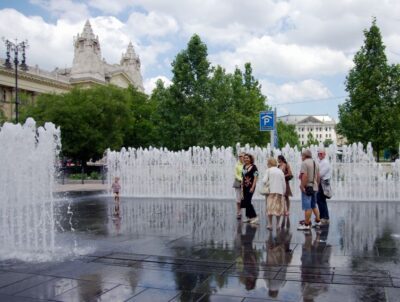
Budapest: Communist History Tour with House of Terror Option
Read our review →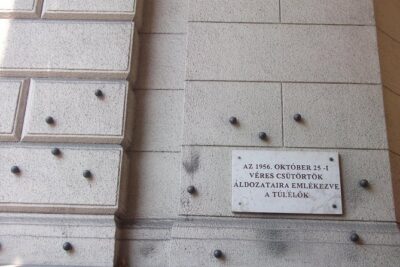

Budapest: 3-Hour Walking Tour About Communism (Small Group)
Read our review →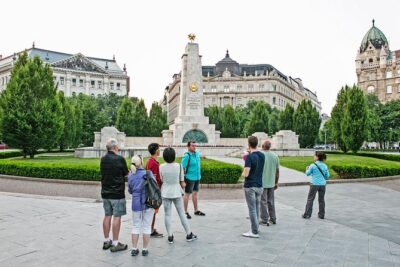
Budapest Hammer & Sickle Communist Times Tour
Read our review →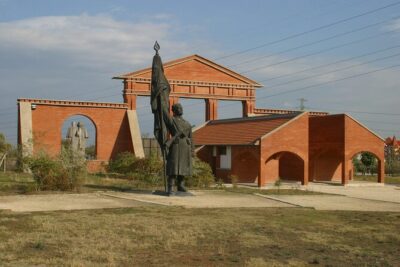
Memento Park Visit with Private Trabant Transfer
Read our review →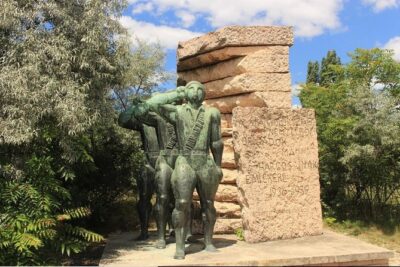
Browse the lists this tour appears in