
Reviewed · COMMUNIST-ERA TOURS
Private Tour of Communist Era Budapest
Communism left big physical marks in Budapest. This private tour strings them together into one clear story you can walk through in a full day. I like how it mixes major landmarks with everyday places, and I really enjoyed the guide’s use of personal memories to connect the facts to lived life. You’ll also get smart context at each stop, not a lecture.
Two parts I especially liked were the walk-and-talk pacing that keeps you moving through real neighborhoods, and the thoughtful, neutral way the guide presents the era’s darker side without turning it into propaganda. You’re going to see heavy material, though, and the day can run long, so wear shoes for long stretches and expect museum time to depend on timing.
One possible drawback: if traffic or timing runs tight, a scheduled stop that involves a museum visit may be harder to fit in, so plan for that reality on a busy day.
In This Review
- Key highlights you will care about
- Private time in Budapest, and why the route makes sense
- Szabadság Square, Soviet liberation memorials, and Stalin Baroque details
- House of Terror, Bem Square, and how fear and resistance sit side-by-side
- Bambi Café and the preserved communist interior you can still step into
- Gellért Hill’s Liberty Statue and the communist message in major buildings
- Fehérvári Way market hall, local lunch, and street-level communist architecture
- Tower estates, a communist-era church, and what daily life looked like
- Memento Park and the Trabant you can actually sit in
- Csepel Island factories, Red Csepel, and modernism creeping in
- Budgeting time and money, plus where a museum stop can shift
- Should you book this private communist-era Budapest tour?
- FAQ
- How long is the Private Tour of Communist Era Budapest?
- Does the tour include pickup in Budapest?
- What language is the tour offered in?
- What is included in the tour price?
- Which attractions require separate admission fees?
- Is there free cancellation?
Key highlights you will care about
- Private group focus with full attention from Tamas Varga, plus flexibility to match how deep you want to go
- Snacks, soda/pop, and bottled water in an air-conditioned car, which makes a long day feel manageable
- Nuts-and-bolts city context, from propaganda architecture to tower blocks where people actually lived
- Iconic yet often-missed stops like the Housing Estate areas and the preserved communist-era presszó café
- Memento Park entry fee still on you (worth planning for), plus an optional interactive museum time if schedule allows
- Neutral interpretation that sticks to facts and history, not glorification
More of the decades behind the Iron Curtain:
- Budapest: Communist History Tour with House of Terror Option
★ 4.8 · 182 reviews - Budapest: 3-Hour Walking Tour About Communism (Small Group)
★ 4.7 · 70 reviews - Communism in Hungary with a Historian
★ 5.0 · 70 reviews
Private time in Budapest, and why the route makes sense
At $245 per person, this is not the cheapest way to see Budapest. But you’re paying for something that is hard to buy on your own: a tightly built route across both sides of the city, with explanations timed to what you are looking at.
You’ll get pickup at your hotel or wherever you agree to meet, and then you ride in a certified passenger vehicle with a licensed professional driver-guide. That matters because communist-era sites are scattered, and you want to move between them without wasting hours figuring out transport and backtracking.
Also, this is a true private tour. Only your group goes with you, so you can ask questions, get clarifications, and adjust the depth at the start of the day. In my experience with tours like this, the difference between okay and excellent usually comes down to that back-and-forth, and the guide clearly works that way.
Szabadság Square, Soviet liberation memorials, and Stalin Baroque details
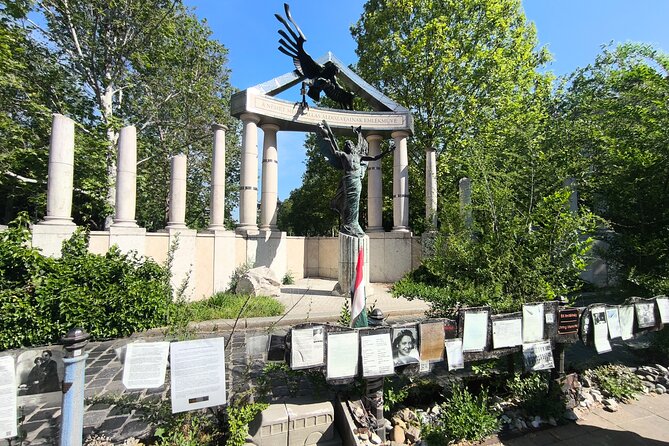
The story starts at Szabadság Square in downtown Budapest. You begin at a memorial for victims of the German occupation, then you get a short history lesson on how Hungary ended up in the communist orbit after World War II.
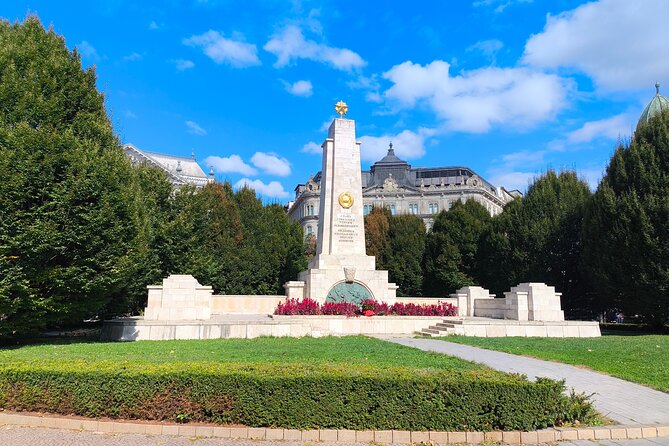
From there, the route takes you toward the Soviet liberation of Hungary memorial, and the guide connects the dots to the Stalinist dictatorship of the late 1940s and early 1950s. This first stretch is where the tour earns its seriousness, because you understand the shift from wartime occupation to peacetime control.
Right nearby, you’ll see some of the few remaining examples of Socialist Realism, often called Stalin Baroque. The tour includes a huge residential complex with interesting reliefs in the inner courtyard, plus a statue of a bear riding a scooter. Yes, really. That kind of detail helps you understand how propaganda inserted itself into everyday housing and public space.
You should expect mostly walking and looking, and your payoff is perspective. If you only see big tourist icons in Budapest, you miss how power showed up in apartments, courtyards, and street-level life.
House of Terror, Bem Square, and how fear and resistance sit side-by-side
Next up is a pause at the House of Terror Museum on Andrássy Avenue. You do not enter here, but the guide still makes the building matter. During World War II, it was tied to the fascist Arrow Cross Party, and later it became central office space for the communist secret police (ÁVH).
Even without going inside, you get the point: totalitarian regimes tend to reuse the same kinds of spaces for control. The building becomes a symbol of the era’s violence and surveillance, which is important context before you move to the revolution sites.
Then you head to Bem Square on the Buda side, the place where the 1956 Hungarian revolution began. The guide explains why this spot mattered for the protests and how events spread across the city from here.
This section is a strong reminder that communist history in Budapest is not only about rule from above. It is also about pushback, and the courage to challenge a system that tried to manage everything, including public gatherings.
Bambi Café and the preserved communist interior you can still step into
One of my favorite parts of the day is how the tour treats “soft” history, not just monuments. You’re invited to a drink at Bambi Café, a preserved communist-era presszó. The place is kept in its original form, so you can actually feel what a casual outing looked like under the era’s rules and expectations.
After that, you stop at the Marczibányi Square Culture Centre, built in 1972 for young people. The tour frames it as a youth space with “meaningful but supervised” activity, meant to steer people away from what authorities considered questionable gatherings.
You briefly see the reception hall, and that is enough to show how architecture and atmosphere were part of social control. It’s easy to think of communism as posters and statues. This tour nudges you to recognize it in hangout places too.
Quick note for your planning: these stops are short and timed, so they work best if you go with the mindset of quick observation rather than expecting a long independent visit.
Some other Danube days worth pricing up




Gellért Hill’s Liberty Statue and the communist message in major buildings
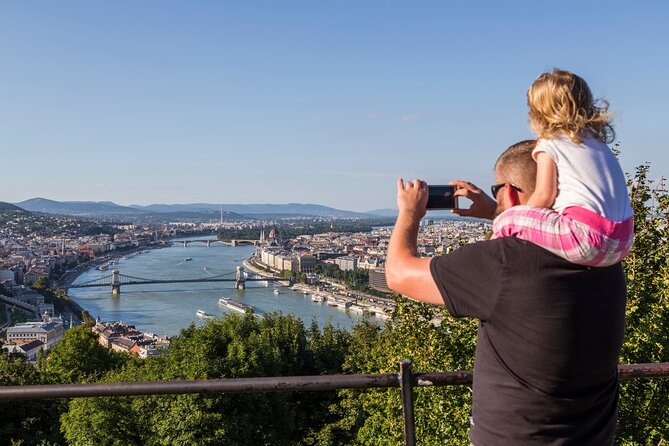
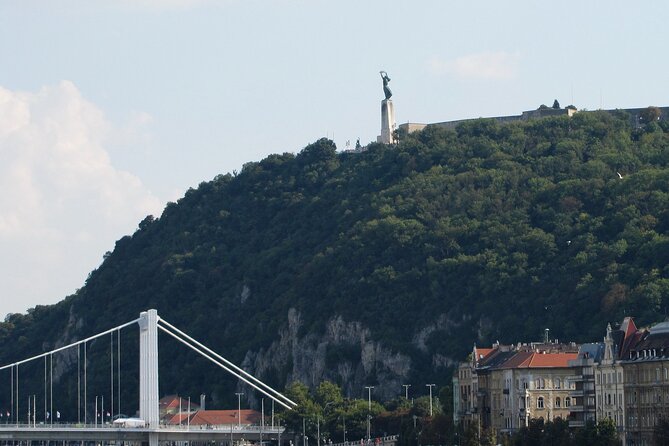
From there, you move to Gellért Hill for the Liberty Statue, unveiled in 1947. It was originally called the Liberation Monument, and the inscription used to reference memory of liberating Soviet heroes. You also learn the statue was modeled after a real nurse, Erzsébet Gaál, who ended up as a “living Liberty Statue” with a story that sounds almost impossible but is part of the monument’s history.
Right now, the statue area and the Citadel are under renovation, with reopening expected in December 2025. The tour still gives you time to walk around, climb the steps up to the monument, and enjoy the viewpoints. That makes this stop both historical and practical for photos.
You’ll also visit Hotel Budapest, a circular-shaped hotel completed in 1967. Most tourists miss it, which is exactly why it fits this tour. The guide explains the communist message behind the skyscraper-like build style: socialist states could build high-tech, modern-looking structures too, and this hotel was a visual proof of that idea.
Then there is a stop at Budapest University of Technology and Economics, where you can see some of the remaining Socialist Realist buildings. On weekdays, you may even be able to enter parts of the campus. The guide also points out the facade details, including the H, T, and R buildings as standout examples.
This whole block works because you see how ideology used design, elevation, and institutions. Power likes to be seen, and here you can literally look up at it.
Fehérvári Way market hall, local lunch, and street-level communist architecture
Next comes food and everyday city life. You visit the Fehérvári Way market hall on Fehérvári Street, a distinctive 1977 brutalist building that later got a white, box-like exterior over it. The tour reads that change as a symbol of how brutalism got rejected, even though Soviet-linked design tastes helped popularize concrete forms in the region.
Inside, you get to see the concrete surfaces and ramps, and there’s time to browse Hungarian goods if you want. The market hours are listed clearly on the tour info, and if you travel during late morning or afternoon, checking those hours matters because the day can shrink fast.
For lunch, you go to Restaurant Alba Regia, chosen as a place away from tourist crowds. The menu is only in Hungarian, but the guide helps you pick something you will like. I always value that kind of support because language barriers can turn lunch into a guessing game.
You should also be aware that lunch is not included. So for budgeting, think of this as a tour with free included drinks and snacks, plus an extra lunch bill on top.
Tower estates, a communist-era church, and what daily life looked like
One reason this tour feels honest is how it spends time on housing and daily routines. You visit a communist tower block estate area with a nearby statue of three bulls, which is a great photo opportunity.
You also see a church built during the communist era that does not look like the churches you might expect. It is a brutalist style structure made mostly from metal, tucked at the base of stark residential towers. It’s the kind of place you would never stumble upon unless you had directions and context.
Then you stop at Experimental Housing Estate, one of the more successful examples of communist-era housing in Budapest, and the guide connects it to personal life since he lived there until age six. That kind of specificity makes the housing feel real, not like a set piece.
These segments are shorter, but they hit hard. Communism is often taught as a political system. Here you also see it as an urban planning choice, and that changes how you interpret what you see in photos afterward.
Memento Park and the Trabant you can actually sit in
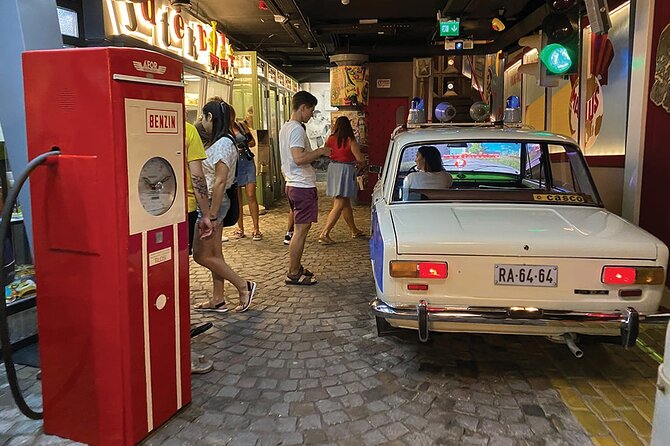
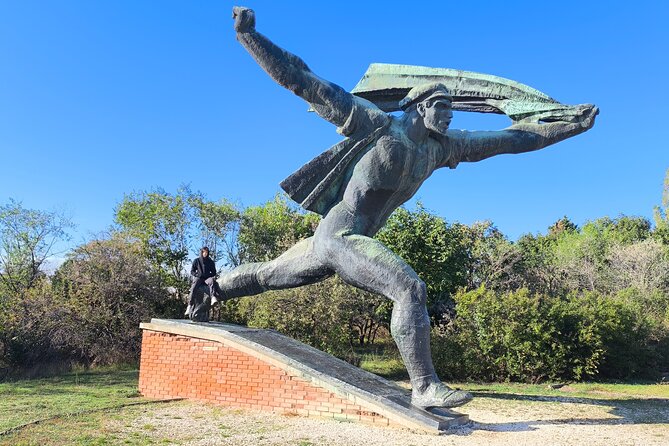
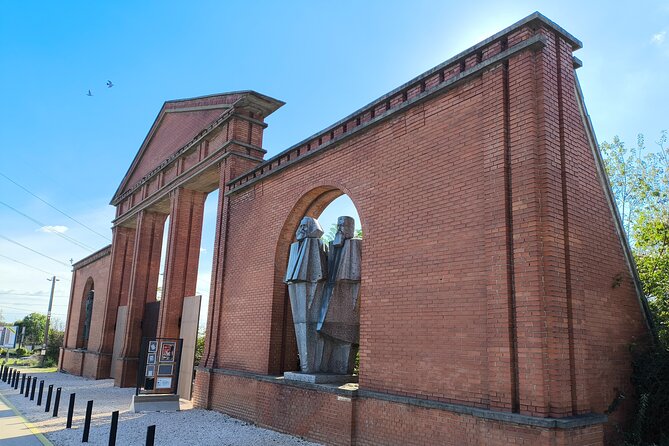
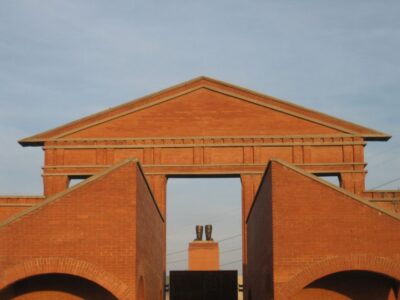
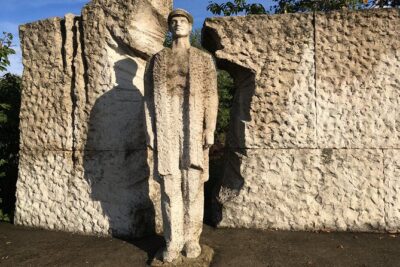
The emotional peak for many visitors is Memento Park. This is an open-air museum that preserves large statues and monuments tied to the regime. The guide frames it as a way to face the final moments of dictatorship and then reflect on the messy transition to democracy.
You walk among enormous pieces that once stood as symbols of power, and now they sit outdoors under the elements. That visual decay is hard to forget, because it shows how quickly authority can lose control over its own meaning.
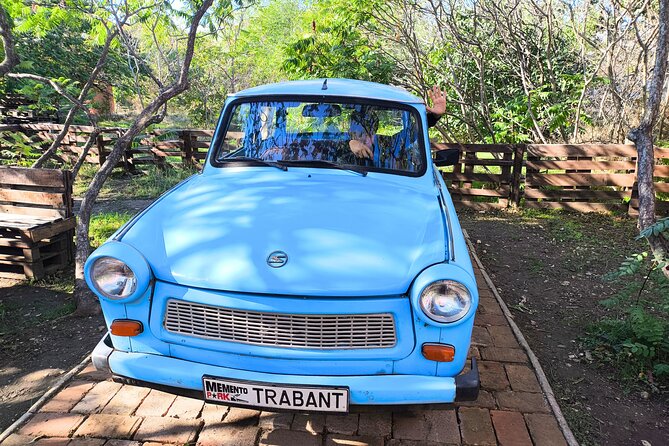
You also get a chance to sit into a real East-German Trabant, described as likely the worst communist car ever made. Even if that line makes you laugh, the point is serious: these are tangible artifacts from an era that affected everything from politics to transportation.
Important practical note: Memento Park admission is not included, listed at $9 per person, and you should factor it into your total cost. The stop is about 1 hour 30 minutes, so you will want comfortable time and patience for outdoor walking.
Csepel Island factories, Red Csepel, and modernism creeping in
The tour doesn’t end with statues. It heads to Csepel Island in the Danube, known during the communist era as Red Csepel because of its industrial role and working-class identity.
You visit the Csepel Iron Works, a massive industrial complex tied to Soviet-style industrialization. The guide explains how tens of thousands worked there and how production ranged from steel to machinery and vehicles. You also learn the workers of Csepel played a crucial role in the 1956 revolution and kept holding out even when other areas had fallen.
Around the factory, you pass large communist-style tower block housing estates and see surviving examples of socialist realist art and architecture. This is one of those “why it matters” moments, because industrial policy and housing policy were linked, and you feel that connection in the layout.
After that, you visit Gubacsi Road Housing Estate along the Ráckevei-Danube riverfront. It’s a post-war time capsule showing transition from socialist realism to modernism in the 1950s. You get to see colorful ceramic reliefs that recall the industrial and communist past, which is a nice contrast to the heavier monuments.
If you like your history with physical details, these stops are the ones you’ll talk about later.
Budgeting time and money, plus where a museum stop can shift
This tour runs about 7 to 10 hours, which is a long day, and that length is part of the value. You are not only visiting 3 or 4 sights. You are seeing multiple layers, including architecture, housing, museums, markets, and viewpoints.
Admission fees to plan for are specifically listed:
- Memento Park: $9 per person (not included)
- Budapest Retro Interactive Museum: not included, with weekend pricing noted as $19.5, and the tour lists $16.50 per person
Lunch is also not included.
Everything else you get inside your tour package is designed to keep the day comfortable: soda/pop, bottled water, and snacks, plus air-conditioned transport.
One more thing: the day can be affected by traffic. During one trip, a museum stop that requires paying attention to schedule was saved for a future visit. If you really want every single stop, it helps to keep your next-day plans flexible too.
Should you book this private communist-era Budapest tour?
I think this tour is a strong choice if you want more than a surface-level “look at monuments” day. You’ll like it if you care about how ideology shows up in normal life: apartment blocks, youth centers, cafés, markets, industrial workplaces, and the big monuments on hills.
Book it if you appreciate balance. The guide presents facts in a neutral way and keeps the focus on what these places meant, including the darker side of the era. And because it is private, you can ask questions and steer the depth at the start of the day.
Don’t book it if you want a relaxed stroll with lots of free time to wander on your own. This is structured, and several stops are short by design. Also, if you hate history that feels heavy, you might find parts of the route emotionally intense.
If you want communist-era Budapest explained in a way that helps you see the city differently, this is one of the best ways to spend a full day.
FAQ
How long is the Private Tour of Communist Era Budapest?
The tour is listed as about 7 to 10 hours.
Does the tour include pickup in Budapest?
Yes. The guide will pick you up at your hotel or at another agreed meeting point in Budapest.
What language is the tour offered in?
The tour is offered in English.
What is included in the tour price?
Included items are soda/pop, bottled water, snacks, and travel in an air-conditioned certified passenger vehicle with a licensed professional driver/guide.
Which attractions require separate admission fees?
Memento Park costs $9 per person and is not included. The Budapest Retro Interactive Museum also has a separate admission fee and is not included. Lunch is not included.
Is there free cancellation?
Yes, you can cancel for a full refund up to 24 hours in advance of the experience start time.
Newest from the Danube banks
- Gödöllö Royal Palace Privately with full board★ 5.0 · 1 review
- Private Budapest Tour with Thermal Bath or Market Visit★ 5.0 · 1 review
- Private Budapest walking tour – 4 hours★ 5.0 · 1 review
- Budapest Half Day Car Tour with Guide★ 5.0 · 1 review
- Budapest Private Transfer from Budapest city centre to Budapest Airport★ 3.0 · 1 review
- Magic Theme Team Adventure Game in the Streets of Budapest★ 5.0 · 1 review
- Budapest: Eat the Street, food tour with wine, 16+ tasting★ 5.0 · 1 review
- Private Transfer Budapest Airport BUD to Budapest by Car or Van★ 5.0 · 1 review
Communist-Era Tours, compared.
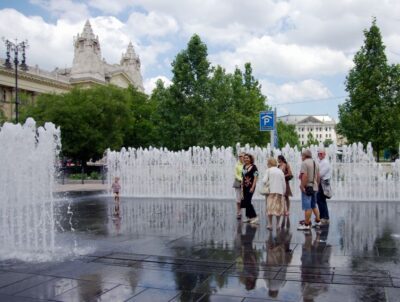
Budapest: Communist History Tour with House of Terror Option
Read our review →
Budapest: 3-Hour Walking Tour About Communism (Small Group)
Read our review →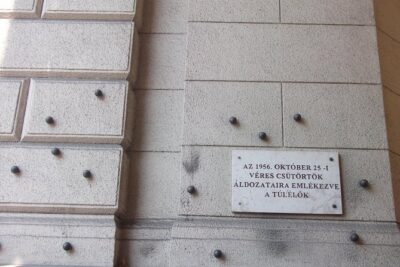
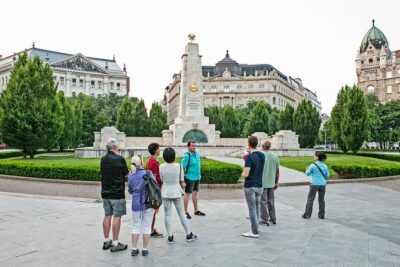
Budapest Hammer & Sickle Communist Times Tour
Read our review →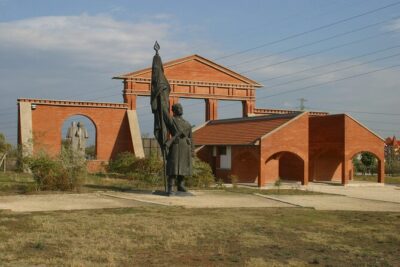
Memento Park Visit with Private Trabant Transfer
Read our review →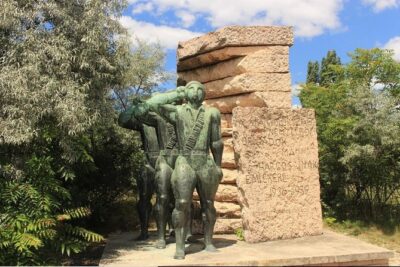
Browse the lists this tour appears in