
Reviewed · COMMUNIST-ERA TOURS
Rise Against the Soviet: The 1956 Revolution – Private Tour
This is a private, 3 hour look at the 1956 revolution’s turning points in Budapest, with a guide who turns street corners into stories you can actually picture. I love the hotel pickup style convenience and the way the route connects big political events to very specific places you can stand in front of. The one thing to think about is time, this tour is timed tightly, so if you want every single detail of 1956 explained start to finish, you may wish you had more hours or paired it with a second stop on your own.
You’ll move across both sides of the river and hit the sites tied to demonstrations, government power, propaganda, and armed resistance. In past groups, guides like Peter and Miklos have added personal layers, including what life felt like before and after the revolution, and that kind of human context is what makes this tour feel different from a standard highlights stroll.
If you’re curious about Hungary’s communist-era legacy, and especially how 1956 played out on the ground, this route gives you a clean, memorable timeline.
In This Review
- Key takeaways before you go
- Entering the 1956 story at Kossuth Lajos Square
- The White House at Margaret Bridge and Imre Nagy’s legacy
- Bem Square student protests and Bambi Eszpresszó’s quieter link to the era
- Sándor Petöfi statue as a meeting point for resistance
- Radio Budapest, Sándor Bródy Street, and the desperate appeal
- Corvin Cinema and Corvin köz, where Molotov cocktails met tanks
- How the guide shapes your understanding, from Peter to Miklos
- What you get for $228.66 per group, and how to judge value
- Practical tips so the 3 hours feel worth it
- Who should book this 1956 Soviet uprising tour
- Should you book Rise Against the Soviet: The 1956 Revolution?
- FAQ
- Is this a private tour, and how many people are in a group?
- How long does the tour last?
- Where does pickup happen in Budapest?
- What language is the tour in?
- Are any tickets required for the main stops?
- Can I cancel and get a full refund?
Key takeaways before you go
- You see 1956 in place, not as an abstract chapter, from Kossuth Lajos Square to Corvin Cinema.
- Personal testimony matters here, with guides who have shared firsthand context from the communist era.
- A mix of walking and public transit keeps it from feeling like one long sidewalk slog.
- Stops include the “why” behind the headlines, like where revolutionary voices tried to reach the outside world.
- Handouts and a small souvenir help you remember the story after you leave the street signs behind.
- It’s private and small, up to 5 people, so you can ask questions and set your own pace when needed.
More of the decades behind the Iron Curtain:
- Budapest: Communist History Tour with House of Terror Option
★ 4.8 · 182 reviews - Communism in Hungary with a Historian
★ 5.0 · 70 reviews - Budapest: 3-Hour Walking Tour About Communism (Small Group)
★ 4.7 · 70 reviews
Entering the 1956 story at Kossuth Lajos Square
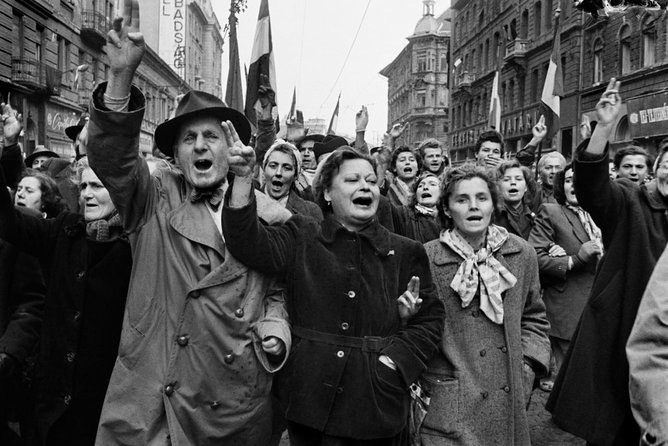
Kossuth Lajos Square is where you get the drama and the consequence in one shot. You’ll stand by the Hungarian Parliament building and look out over a square that, during the 1956 uprising, became a stage for massive public action. The key detail your guide will connect for you is that after a major demonstration, dozens were massacred by the government.
It’s heavy material, but that’s also why this stop works. You aren’t just learning that repression happened, you’re learning how quickly a public moment can turn into a violent one. If you’re the kind of traveler who likes to understand the human cause-and-effect behind political dates, this square sets the emotional tone for the entire route.
Practical note: plan on standing and looking a lot. Even though the stop is short, you’ll want a minute to read the space with your guide’s explanation rather than rushing past it.
The White House at Margaret Bridge and Imre Nagy’s legacy
From here, the tour shifts to power and control. Near Margit Bridge, you’ll visit a building in communist times nicknamed the White House, used as Party HQ for the Hungarian communist government. That nickname isn’t just a trivia point, it gives you a sense of how political language can reshape public perception.
You’ll also spend time around the memory marker tied to Imre Nagy. In 1956, he was Prime Minister, and later he was murdered. Your guide’s framing usually makes this feel less like a statue you walk past and more like a reminder of how the revolution’s leaders were treated once the regime regained control.
I like that this stop balances the earlier image of public protest with the machinery of state power. It helps you see 1956 as a tug of war, not a single burst of chaos that just happened.
Bem Square student protests and Bambi Eszpresszó’s quieter link to the era
Heading toward Bem Square, the tour focuses on how the revolution spread through young people. This is where you’ll connect with the fact that around 200,000 Hungarian students protested against Soviet rule in 1956. The rally had roots in support for Polish workers, which is an important detail because it shows how Central European politics were linked by more than geography.
Then, there’s a stop that adds atmosphere without turning the tour into a café break. You’ll also visit Bambi Eszpresszó on Frankel Leó utca, a long-running shelter for intellectuals on the Buda side that has kept the same interior feel since the 1960s. For me, this is where the tour becomes more than dates and buildings. You start thinking about how ideas circulated under pressure, where people met, and what spaces helped communities breathe.
A possible catch: if you’re expecting a big memorial at every stop, Bambi Eszpresszó is more about tone and setting. It can feel like a pause, but it’s a purposeful one.
Sándor Petöfi statue as a meeting point for resistance
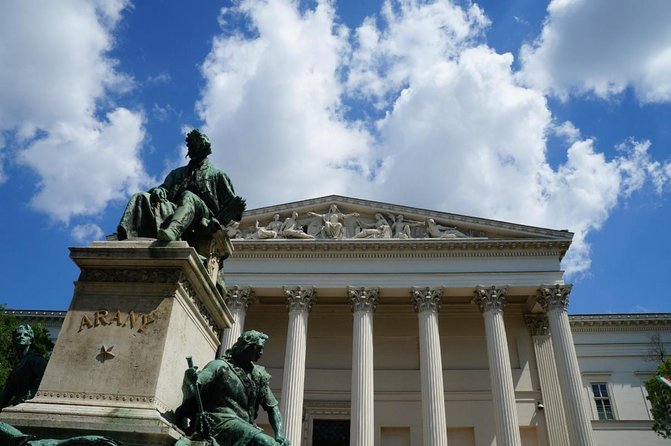
At the Sándor Petöfi statue, you’ll get a different kind of political story, one rooted in symbolism. Petöfi was a key figure in the 1948 revolution, and he became a shorthand for resistance against government. The statue still functions today as a gathering point for political events and protesters.
In 1956, actor Sinkovits Imre came to the statue and recited Petöfi words that urged revolution. After that, Sinkovits was arrested and imprisoned. Your guide will use this to show how art and performance could be treated as political acts, especially when governments were watching for any spark.
This stop is short, so the key is to slow down for the explanation. Even a 15 minute pause can land hard when you understand the reason the place kept its role after 1956.
Some other Danube days worth pricing up



Radio Budapest, Sándor Bródy Street, and the desperate appeal
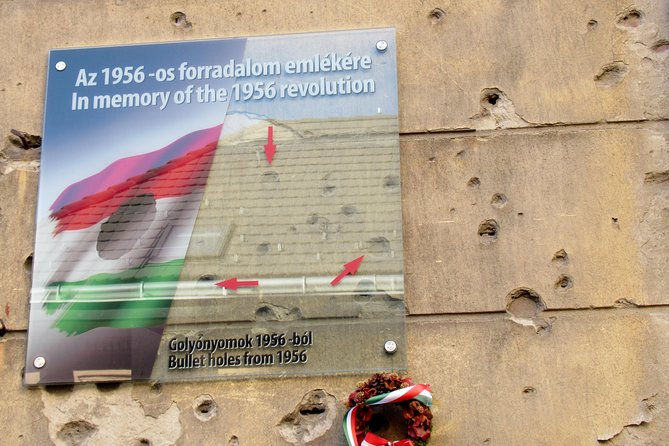
Next you’ll head to a quieter stretch of Budapest where a crucial communication battle played out. Along the tiny, one-way Sándor Bródy Street, you’ll visit the Magyar Rádió building, also known as Radio Budapest. It’s more secluded than the city’s main thoroughfares, and that matters, because wartime struggle is often hidden in plain sight.
This is described as one of the epicenters of fighting in 1956. From here, revolutionaries begged for help from the world at large. That detail gives you a window into what was at stake beyond Hungary’s streets: they wanted outside attention, outside pressure, and outside rescue.
I like how the tour frames media and communication as part of resistance. When you watch how people try to broadcast their situation under threat, it makes the revolution feel less like a local event and more like an international moral fight that just failed in the moment.
Corvin Cinema and Corvin köz, where Molotov cocktails met tanks
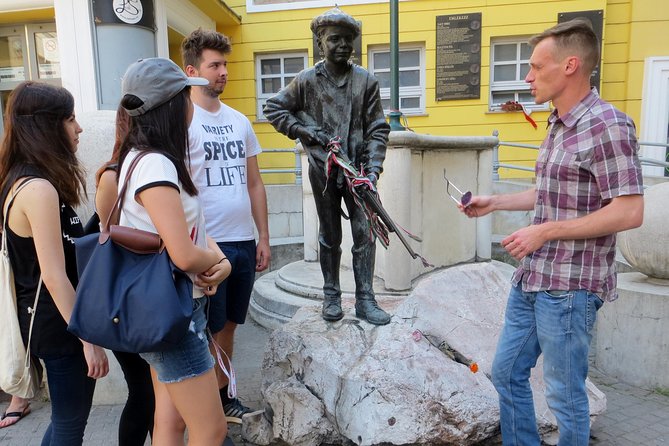
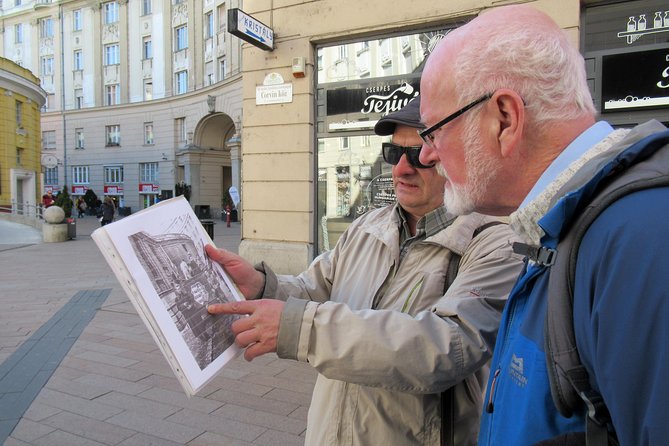
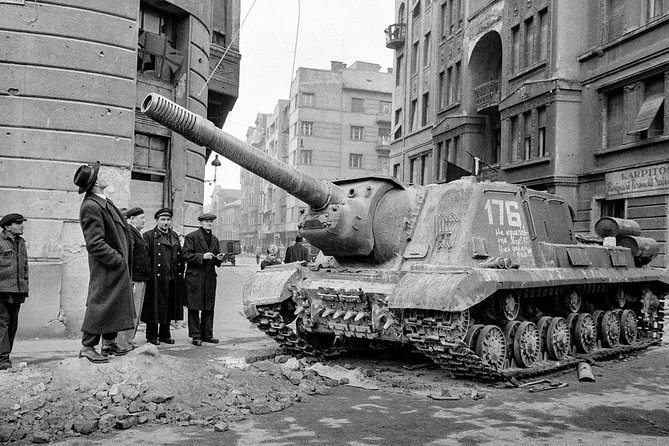
Toward the south-east part of the city, the tour reaches Corvin köz and Corvin Cinema, a major resistance center in 1956. You’ll hear how local youngsters fought invading Russians with Molotov cocktails and guns they stole from soldiers to take on Soviet tanks.
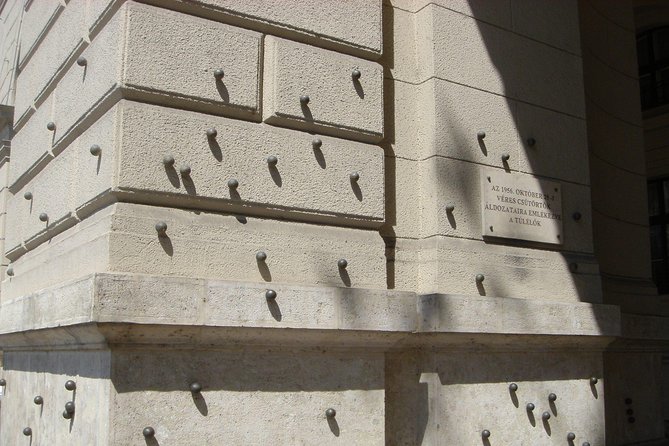
This stop gives you the most physical sense of the conflict. Even without dramatic re-enactments, you’ll look at reminders of fighting and talk through the invasion and what followed afterward. The story lands as messy, improvised, and brave in the most human way.
One added bonus from guide storytelling in prior groups is the mention of an underground memorial connected to the 1956 Revolution. If your guide brings you there during your time window, that can be one of the most moving moments of the whole tour, because it brings bodies, not just headlines, into focus.
Again, this stop is timed, so it helps to come with questions ready. Ask how the resistance worked day to day, or how ordinary people were pulled into decisions they never wanted.
How the guide shapes your understanding, from Peter to Miklos
The strongest praise for this tour is not just the route, it’s the way the guide teaches. I like the fact that the guides can slow things down and still keep you oriented. In one example, Peter adjusted pace for a 91 year old father who had escaped Hungary during the 1956 revolution, and he made sure the content stayed relevant to that personal perspective.
Miklos is another guide name that comes up often, and one standout detail is his personal insight from having lived through the communist era. That kind of context can sharpen the whole story, because you start to understand how fear, control, and daily life fit together with political events.
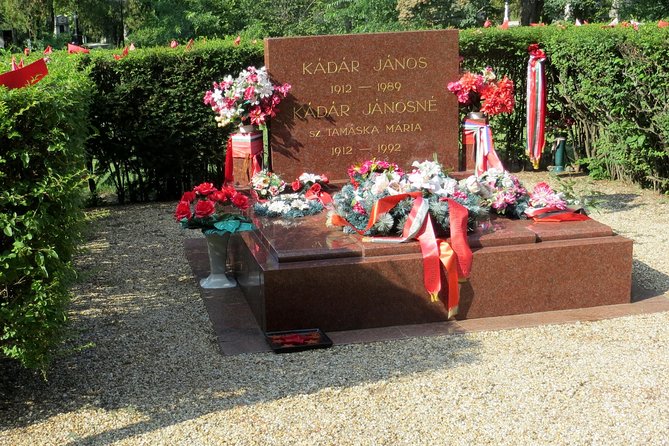
You may also get extra context points beyond the headline locations. In past tours, one group included a cemetery where those killed during the revolution were buried. If your guide has time for an additional context stop like that, take it. It’s the kind of detail you carry for years because it turns history into something real.
Expect a mix of walking and public transit on the way between sites. That keeps the route efficient and helps you cover more Budapest than a purely on-foot walk would allow in 3 hours.
What you get for $228.66 per group, and how to judge value
The price is $228.66 per group, up to 5 people, for about 3 hours. That math can make this either a bargain or a splurge, depending on who you’re traveling with.
- If you’re a full group of 5, it’s roughly $45.73 per person.
- If it’s just 2 people, it’s about $114.33 per person.
For Budapest, where many tours charge per person and still feel rushed, a small-group private format is often the sweet spot. I think the value is strongest if you want guided interpretation, not just photos. The handouts and the souvenir also help, because you leave with something tangible to review later rather than relying on memory alone.
If you’re traveling solo or as a couple on a tight budget, consider whether you truly want a private guide. But if you’re history-focused and you like asking questions as you go, private time is where this tour pays off.
Practical tips so the 3 hours feel worth it
This tour is listed as having a moderate physical fitness level, and you’ll be moving between multiple sites in central areas. Wear comfortable shoes, and keep in mind you’ll spend time standing at squares and outside building fronts while your guide connects the political story to what you see.
Entry tickets for the stops are listed as free in the plan, so you’re mostly paying for the guide and the route time. Still, bring your own water, and plan on skipping drinks and snacks unless you’re sure you’ll have a moment for it.
You’ll also get a mobile ticket, and you can be picked up at your hotel in Budapest or met at a central point you agree on. That pickup flexibility is one reason this tour works well for first-time visitors who don’t want to waste their limited time figuring out where to start.
If you have family members with limited mobility, you can ask the guide to adapt the pace. The fact that a guide has done this before is a good sign, but it’s still worth communicating your needs early.
Who should book this 1956 Soviet uprising tour
I’d book this if:
- You’re a history buff who likes political stories grounded in real places.
- You want the communist legacy in Hungary explained through what happened during and after 1956.
- You prefer a smaller private group where you can ask follow-up questions.
I might skip it or pair it with something else if:
- You’re looking for a very long, ultra-deep 1956 timeline with no shortcuts.
- You already know the revolution well and want a different angle of Budapest history.
This tour is designed to give you clarity fast. It’s a smart choice when you want to understand what you’re looking at while you’re still in the city.
Should you book Rise Against the Soviet: The 1956 Revolution?
Yes, if you’re in Budapest with a limited time window and you want one guide-led route that connects key locations, leaders, and moments of resistance. The best reason to book is the way guides like Peter and Miklos turn the geography into a coherent story, including the human details that usually get left out.
If you’re unsure, do this simple check: are you excited to stand at places tied to protests, state power, and armed resistance, and do you want the context to make it make sense? If yes, this tour is a strong fit. If you want only 1956 in extreme depth, plan extra time for your own follow-up afterward.
FAQ
Is this a private tour, and how many people are in a group?
Yes. It’s a private tour/activity, and it runs for only your group, up to 5 people.
How long does the tour last?
The duration is about 3 hours.
Where does pickup happen in Budapest?
Pickup is offered from your hotel in Budapest, or from a central meeting point you agree upon.
What language is the tour in?
The tour is offered in English.
Are any tickets required for the main stops?
The itinerary lists admission tickets as free for the stops included in the tour.
Can I cancel and get a full refund?
Yes. You can cancel up to 24 hours in advance for a full refund. If you cancel less than 24 hours before the start time, the amount paid is not refunded.
Newest from the Danube banks
- Gödöllö Royal Palace Privately with full board★ 5.0 · 1 review
- Private Budapest Tour with Thermal Bath or Market Visit★ 5.0 · 1 review
- Private Budapest walking tour – 4 hours★ 5.0 · 1 review
- Budapest Half Day Car Tour with Guide★ 5.0 · 1 review
- Budapest Private Transfer from Budapest city centre to Budapest Airport★ 3.0 · 1 review
- Magic Theme Team Adventure Game in the Streets of Budapest★ 5.0 · 1 review
- Budapest: Eat the Street, food tour with wine, 16+ tasting★ 5.0 · 1 review
- Private Budapest Christmas Market guided tour and Danube Evening cruise package★ 5.0 · 1 review
Communist-Era Tours, compared.
Budapest: Communist History Tour with House of Terror Option
Read our review →
Budapest: 3-Hour Walking Tour About Communism (Small Group)
Read our review →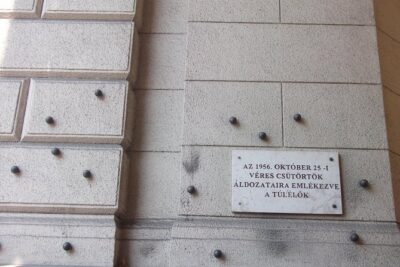
Budapest Hammer & Sickle Communist Times Tour
Read our review →
Memento Park Visit with Private Trabant Transfer
Read our review →
Browse the lists this tour appears in