
Reviewed · COMMUNIST-ERA TOURS
Still Watching You! – Hungary’s Communist Story
Communism feels close when the street names do. This 3-hour Budapest tour strings together the Soviet years, the Hungarian Communist era, and the 1956 uprising, using storytelling tied to real places instead of dusty lectures. You’ll stop at major memory sites like the House of Terror Museum and Liberty Square, then finish back where you started at the Hungarian State Opera House.
Two things I really like: you get a guide who can answer your questions in plain language, and you get real-world access to several top sites for free as part of the tour. Emma, the guide name I saw mentioned, stands out for linking events to how Hungary looks today, and for explaining why decisions in war shaped the country’s borders.
One drawback to consider: this is not a light, funny walk. Some stops are emotionally heavy, and two big interior attractions, St. Stephen’s Basilica and the Hungarian Parliament Building, are listed as admission not included, so you may need to decide on the spot whether you’ll pay extra.
In This Review
- Key highlights you should know before you go
- The idea behind this Budapest communist story tour
- Where it starts, how it feels on the ground
- Stop 1: Soviet Heroic Memorial and the white obelisk message
- Stop 2: House of Terror Museum, Andrássy út 60
- Stop 3: St. Stephen’s Basilica and the reliquary detail
- Stop 4: Szabadság tér, where liberation and genocide share the stage
- The Freedom Statue on Gellért Hill, independence turned into stone
- Stop 5: Hungarian Parliament Building and the politics of power
- Stop 6: Memorial to the 1956 Hungarian Revolution and War of Independence
- The retro soda, snacks, and the small breaks that keep you sane
- Price and value for $87.27 in about 3 hours
- Who should book this tour, and who might want another option
- My decision guide: should you book?
- FAQ
- How long is the tour?
- Where does the tour start and end?
- What is the group size limit?
- Is admission included for all stops?
- What is included in the price?
- Is food or drinks included?
- Does the tour use a mobile ticket?
- Are children allowed?
- Is there any guidance on physical fitness or getting around?
Key highlights you should know before you go
- House of Terror Museum on Andrássy út 60: memorial and museum time, with entry provided for free on this tour
- Liberty Square and Gellért Hill symbolism: you’ll see how competing narratives get turned into monuments
- 1956 Revolution memorial stop: a dedicated moment for Hungary’s uprising against the communist regime
- Small group size (max 15): easier questions, less rushing, more back-and-forth during the walk
- Retro soda stop plus snacks: a small break that fits the theme without making the tour feel like a gimmick
- Short and focused (about 3 hours): ideal if you want the “Red Past” story without losing half a day
More of the decades behind the Iron Curtain:
- Budapest: Communist History Tour with House of Terror Option
★ 4.8 · 182 reviews - Budapest: 3-Hour Walking Tour About Communism (Small Group)
★ 4.7 · 70 reviews - Communism in Hungary with a Historian
★ 5.0 · 70 reviews
The idea behind this Budapest communist story tour
Budapest can look like a postcard from far away. Up close, it’s political. Every few blocks you hit a building, a monument, or a square where someone wanted the future to remember the past in a specific way.
That’s what this tour is built for. Instead of treating communism as a single era, it uses the city like a timeline. You’ll connect the Soviet footprint, the machinery of terror, and the postwar struggle for Hungarian control, then end at the 1956 memory marker. For me, the value is the way the stops build on each other, so you don’t just see sites, you understand why they’re there.
Also, the time is realistic. About three hours is enough to give you context and still let you keep exploring the city afterward, instead of feeling locked into one long tour bubble.
Where it starts, how it feels on the ground
You meet at the Hungarian State Opera House on Andrássy út 22, 1061. It’s a good start point because it anchors the walk on one of Budapest’s central showpiece streets, and it’s easy to orient yourself for later sightseeing.
From there, the tour moves at a pace that works for a “moderate physical fitness” level. You should expect walking between stops, plus short orientation moments at each location. Since the group max is 15, you’re unlikely to get stuck behind a huge crowd. That matters when the guide is telling story threads and you want to actually hear the explanation.
One practical note: the tour uses a mobile ticket, and some stops include free admission while others do not. I’d keep a little cash or card plan in your head for the paid entries you might choose.
Stop 1: Soviet Heroic Memorial and the white obelisk message
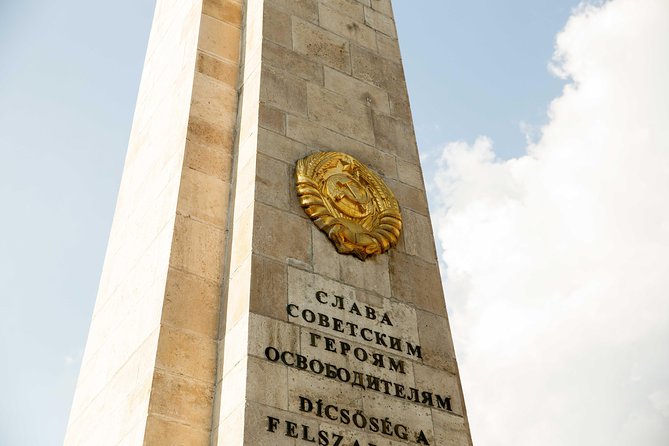
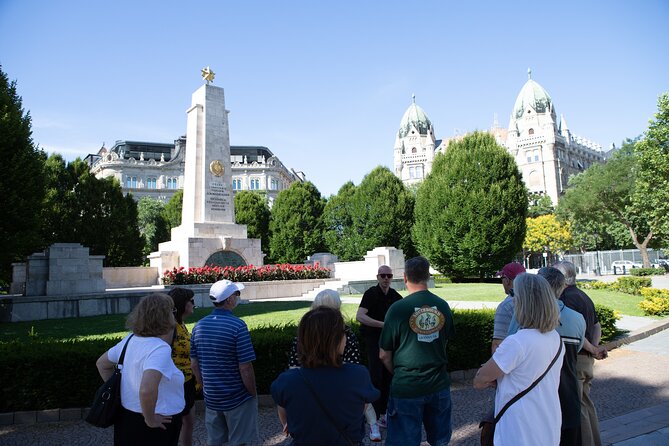
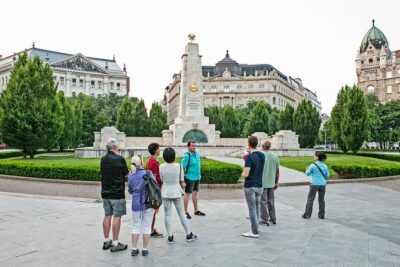
The first stop is the Soviet Heroic Memorial in a landscaped park. You’ll encounter a striking white obelisk commemorating Russian military who served in World War II.
This sounds straightforward until you look at what memorials are really doing. In many cities, World War II remembrance gets framed as honor and unity. Here, you’re starting with a monument tied to the Soviet presence that later reshaped Hungary’s political life. The guide’s role is to help you read the symbolism, not just admire the stonework.
Because this is an outdoor stop, it also makes a good entry point for the tour’s tone. It gets you into the theme quickly, without immediately dumping you into a darker museum.
Stop 2: House of Terror Museum, Andrássy út 60
Next up is the House of Terror Museum at Andrássy út 60. This site is both a museum and a memorial tied to fascist and communist regimes in 20th-century Hungary. The focus includes people detained, interrogated, tortured, or killed in the building.
If you’re sensitive to heavy content, plan for it here. This isn’t a “quick photo stop” museum. Even with a short scheduled time, it’s the kind of place that sticks. The value of doing it with a guide is that you’ll understand what you’re seeing, and why the exhibits were organized the way they were.
I also appreciate that this tour lists entry as free for this stop. That lowers friction. You can spend your attention on the meaning of the exhibits instead of thinking about logistics.
Other ways an evening in Budapest can go:
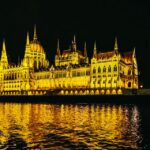




Stop 3: St. Stephen’s Basilica and the reliquary detail
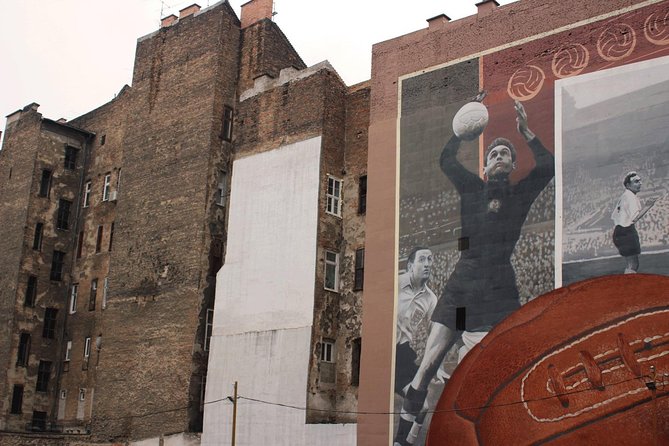
After the House of Terror, you shift toward St. Stephen’s Basilica, the Szent István Bazilika. The tour time here is brief, about 15 minutes, and admission is not included.
The reason to stop anyway is because it adds contrast. In the broader story of Hungary, religion, state power, and national identity often overlap. St. Stephen’s Basilica is named for the first King of Hungary, and the reliquary containing his right hand is part of its significance.
One practical consideration: since admission is not included, you’ll need to decide whether to pay for any interior access on your own. If you’d rather keep it simple, you can still appreciate the exterior and the role the basilica plays in Hungarian cultural memory.
Stop 4: Szabadság tér, where liberation and genocide share the stage
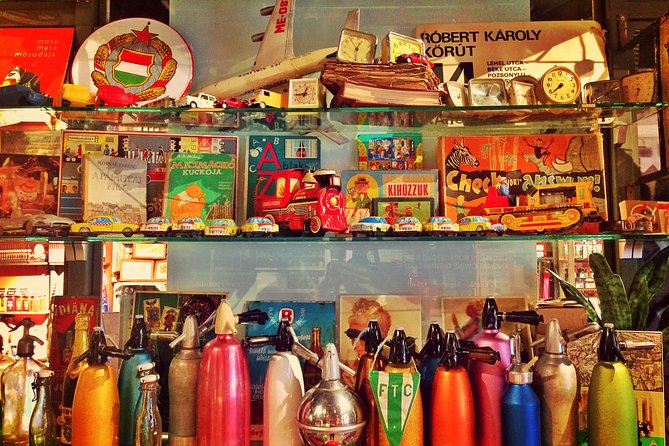
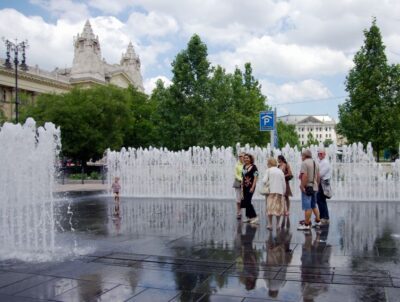
Liberty Square, or Szabadság tér, is famous for controversial memorials. This is one of those places where history doesn’t sit quietly in the past. It gets debated, and it gets built into the public landscape.
The square includes memorials related to Hungarian Jewish victims of the Holocaust, and it also includes monuments tied to Soviet soldiers who liberated Budapest from the Nazis in 1945. On top of that, you’re in an area with major landmarks like the United States Embassy in Hungary and the historicist-style headquarters of the Hungarian National Bank nearby.
This is a valuable stop because it shows how “liberation” and “survival” can be tangled together in public memory. A strong guide helps you notice how different groups and governments use the same space to communicate different meanings.
Keep your eyes open here. The square is wide, and it’s easy to walk past details if you’re not watching for the story the monuments are telling.
The Freedom Statue on Gellért Hill, independence turned into stone
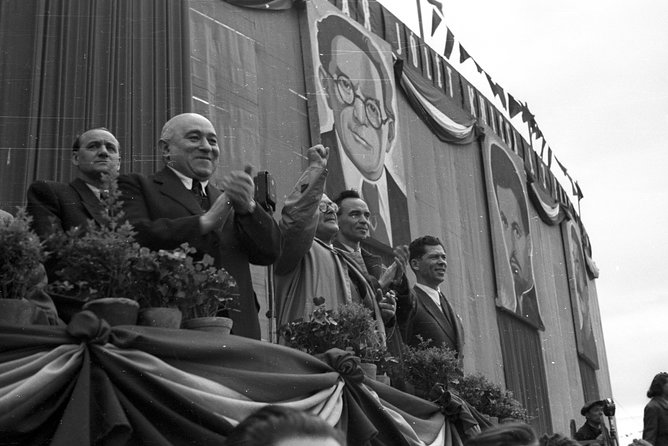
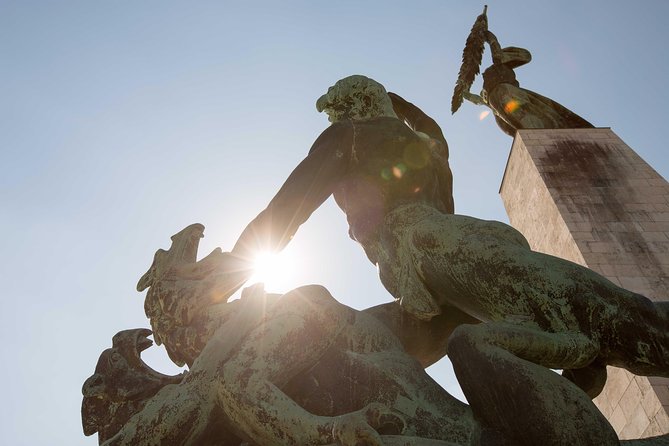
The route also includes the Liberty Statue, known as Szabadság-szobor, located on Gellért Hill. This monument commemorates those who sacrificed their lives for Hungary’s independence, freedom, and prosperity.
Why this matters after Liberty Square: you’ve just seen competing narratives. Now you’re looking at a monument focused directly on national independence. It helps connect the long arc from foreign control and trauma to an eventual push for Hungarian agency.
Even if you don’t go deep into the politics in your head, the positioning of the statue on a hill gives you a strong sense of “looking out” over the city. That physical vantage point pairs well with the tour’s storytelling style.
Stop 5: Hungarian Parliament Building and the politics of power

The next major landmark is the Hungarian Parliament Building, the Országház. This is a seat of the National Assembly of Hungary and one of Budapest’s most recognizable attractions.
But here’s where context makes the difference. The building’s grandeur can make you think you’re just looking at architecture. On this tour, the explanations steer you toward the idea that governments and borders are not abstract. They result from wars, negotiations, and the choices leaders make under pressure.
Admission for the Parliament Building is listed as not included. That means you can either admire it from the outside as part of the tour or add interior access separately if you want. Either way, you’ll still get value from the exterior stop because the political story is the point.
Stop 6: Memorial to the 1956 Hungarian Revolution and War of Independence
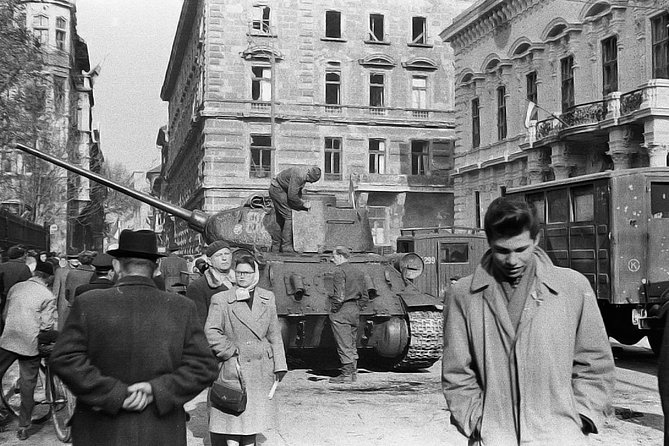
You end at the Memorial to the 1956 Hungarian Revolution and War of Independence. This stop is designed around remembering heroes of the uprising against the communist regime.
This is the emotional close to the tour’s arc. Earlier you saw monuments tied to Soviet involvement and the machinery of terror. Here you’re given a direct answer to the question many visitors carry: what did Hungarians do in response?
Even with a short time on the stop, the dedicated focus helps. It signals that history is not just “what happened to Hungary,” but also “what Hungarians fought for,” even when the outcome was grim.
The retro soda, snacks, and the small breaks that keep you sane
Communism history can feel heavy, so I like that this tour includes breaks that are practical, not distracting. You’ll get a retro soda in a Communist-themed bar, plus snacks.
You might expect this kind of themed stop to feel like a souvenir trap. The way it’s used here is more like a reset button. It gives you a chance to refuel, talk to your guide, and keep your attention from burning out during museum and monument time.
Also, you get maps and further recommendations. That’s the kind of extra that helps after the tour, when you want to follow up on what you learned.
Price and value for $87.27 in about 3 hours
The price is $87.27 per person, and this is typically booked around 26 days in advance.
Is it worth it? For me, the answer comes down to what’s included versus what costs extra.
- Several major stops list free admission: the Soviet Heroic Memorial, the House of Terror Museum, Liberty Square, and the 1956 memorial.
- Two major interior-style attractions are not included: St. Stephen’s Basilica and the Hungarian Parliament Building.
So you’re paying for an organized, guided walk that covers the heavy hitters, and you also get included extras like snacks, a retro soda, and planning support via maps and recommendations.
Add in the small group size (max 15) and the fact the tour lasts about three hours, and the price starts to make sense. You’re not buying a long day. You’re buying focused interpretation.
If you plan to pay for both Basilica and Parliament interiors separately, your overall spend will rise. If you’re fine enjoying them from the outside, you’ll likely keep your budget under control.
Who should book this tour, and who might want another option
This is a strong match if you:
- want a story-led way to understand Hungary’s 20th-century political shift
- like walking tours that connect monuments to real consequences
- want a small-group format where questions are encouraged
- prefer interpretation over reading long books in a hotel room
You might hesitate if:
- you are easily stressed by content about imprisonment, interrogation, torture, or death
- you only want light architecture and scenery with minimal historical framing
- you would rather spend all your time inside major churches and government buildings, since those admissions are not included
My decision guide: should you book?
Book it if you want the Budapest “Red Past” story told through the city itself. The biggest selling point is how the stops link together, and the fact that entry to several heavy-hitting sites is handled for you. Emma’s reputation for answering questions and explaining how war decisions shaped Hungary’s current map and identity is exactly the kind of guide quality that turns a list of landmarks into real understanding.
Skip or consider a different tour if you’re mainly chasing casual views and you do not want the tone to turn dark at the House of Terror. Also, if you know you want to do interiors at St. Stephen’s Basilica and the Parliament Building, budget for those separately, because they are not included.
FAQ
How long is the tour?
The tour lasts about 3 hours.
Where does the tour start and end?
It starts at the Hungarian State Opera House on Andrássy út 22, 1061 Budapest, and ends back at the meeting point.
What is the group size limit?
The tour has a maximum of 15 travelers.
Is admission included for all stops?
No. Some stops list free admission tickets, including the Soviet Heroic Memorial, House of Terror, Liberty Square, and the 1956 memorial. St. Stephen’s Basilica and the Hungarian Parliament Building are listed as not included.
What is included in the price?
Included items are a retro soda in a Communist-themed bar, maps and further recommendations, and snacks.
Is food or drinks included?
Food and drinks are not included unless specified. Snacks are included, and a retro soda is included as part of the tour.
Does the tour use a mobile ticket?
Yes, the tour includes a mobile ticket.
Are children allowed?
Children must be accompanied by an adult.
Is there any guidance on physical fitness or getting around?
The tour is best for travelers with a moderate physical fitness level and is near public transportation.
If you want, tell me your travel dates and whether you plan to pay for Basilica and Parliament interiors. I can help you decide how to time the rest of your day around the tour.
Newest from the Danube banks
- Gödöllö Royal Palace Privately with full board★ 5.0 · 1 review
- Private Budapest Tour with Thermal Bath or Market Visit★ 5.0 · 1 review
- Private Budapest walking tour – 4 hours★ 5.0 · 1 review
- Budapest Half Day Car Tour with Guide★ 5.0 · 1 review
- Budapest Private Transfer from Budapest city centre to Budapest Airport★ 3.0 · 1 review
- Magic Theme Team Adventure Game in the Streets of Budapest★ 5.0 · 1 review
- Budapest: Eat the Street, food tour with wine, 16+ tasting★ 5.0 · 1 review
- Private Transfer Budapest Airport BUD to Budapest by Car or Van★ 5.0 · 1 review
Communist-Era Tours, compared.
Budapest: Communist History Tour with House of Terror Option
Read our review →
Budapest: 3-Hour Walking Tour About Communism (Small Group)
Read our review →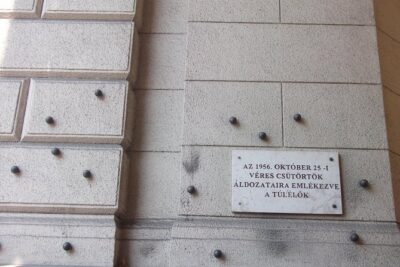
Budapest Hammer & Sickle Communist Times Tour
Read our review →
Memento Park Visit with Private Trabant Transfer
Read our review →
Browse the lists this tour appears in