
Reviewed · JEWISH DISTRICT TOURS
A Journey through Jewish Budapest – Private Walking Tour
Budapest tells its Jewish story best on foot. This private 3-hour walk links the grand synagogues, the old ghetto streets, and WWII remembrance into one clear route, led by a historian guide. I especially love the private, guided pacing, and how you can ask questions as you go.
I also like the focus on real places you can see, from the Dohány Street Synagogue complex to working-class Jewish neighborhoods and the memorial on the riverbank. Stops like the Great Synagogue, Kazinczy Street area, and Rumbach Street synagogue make it easier to understand how faith, community, and history fit together in Budapest.
One thing to consider: there’s moderate walking, and entry to some synagogues is not included in the price (you’ll want to plan for those ticket costs and dress code rules).
In This Review
- Key moments you’ll get on this Jewish Budapest walk
- Jewish Budapest in 3 hours, what you really gain with a private historian guide
- Pickup, meeting points, and how to avoid the first-day confusion
- Stop 1: Dohány Street Synagogue (Nagy Zsinagóga) and the complex you can’t skip
- Stop 2: Kazinczy Street Synagogue, the ghetto wall memorial, and the mikve
- Stop 3: Rumbach Street Synagogue and the Status Quo Ante tradition
- Castle Hill synagogue ruins, working neighborhood streets, and why the walking route matters
- Shoes on the Danube Bank: the WWII memorial stop you end with
- Practical tips so this tour stays comfortable and respectful
- Who should book this private Jewish Budapest tour
- Should you book this Jewish Budapest private walking tour?
Key moments you’ll get on this Jewish Budapest walk
- Private historian guide for just your group, with flexibility based on your interests
- Dohány Street Synagogue (Nagy Zsinagóga) plus the Temple of Heroes, Jewish Museum, and Memorial Park
- Ghetto Wall Memorial and a Kazinczy Street synagogue visit when open to the public
- Rumbach Street Synagogue interior visit when open, tied to the Status Quo Ante tradition
- Shoes on the Danube Bank as a powerful WWII remembrance finale
Other walks through the old Jewish quarter:
- Budapest Jewish Heritage Memorial Walking Tour & Synagogue Entry
★ 5.0 · 568 reviews - Budapest: Jewish Heritage Guided Tour with Synagogue Ticket
★ 4.8 · 533 reviews - German tour in the Budapest city centre & the Jewish quarter
★ 5.0 · 359 reviews
Jewish Budapest in 3 hours, what you really gain with a private historian guide
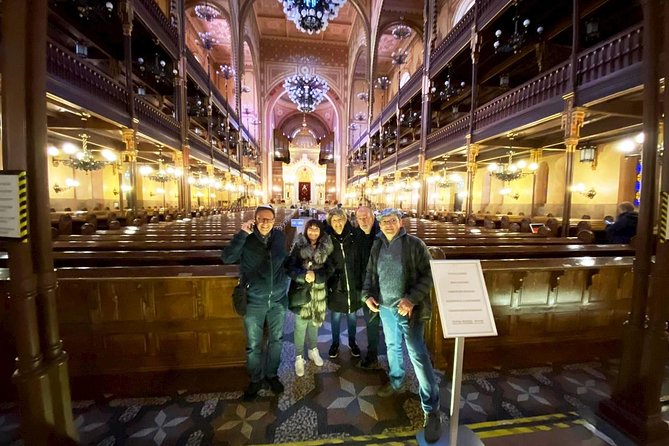
This is the kind of tour that helps you get your bearings fast, because it stays centered on a tight, meaningful route. In about 3 hours, you cover multiple districts tied to Jewish life in Budapest, without the scramble of jumping between far-flung sites.
The big value here is the private historian guide setup. You’re not sharing headphones with a crowd, so questions come naturally. In past group experiences, guides like Andrew, Oshi, and Kati have been praised for pairing solid background with clear explanations, even with mixed-age groups (including teen and pre-teen kids). That matters, because Jewish history can be emotionally heavy and details can overwhelm if your guide only reads facts.
Price-wise, you pay $396.52 per group (up to 10). That can be a strong deal when you travel with friends or family and fill the group size. If you max out at 10 people, it works out to roughly $40 per person, and you’re paying for a specialized guide plus hotel pickup. If you’re traveling just as a couple, it’s still worth considering because the tour remains private, not squeezed into a big bus-style experience.
You also get a sensible structure: morning departures run at 10am year round, and afternoon departures are available in certain seasons. Planning ahead is smart since this is booked fairly often, with an average booking lead time of 11 days.
Pickup, meeting points, and how to avoid the first-day confusion
You have two ways to start. Pickup is offered at your central hotel or flat, and the guide can lead you from there using metro, tram, or walking when the sites are close. This is handy if you’re arriving with luggage, or if you don’t want to spend your first hours hunting for the right tram line.
If you prefer to meet directly, or if pickup isn’t arranged, the default meeting point is Cafe Synago Kavehaz (previously Cafe Zenit), at Dohany utca 1/A. Plan to arrive 10 minutes early so you don’t feel rushed, especially since you’ll be dressing appropriately for synagogue visits later.
This tour also uses a mobile ticket, which tends to speed things up. And because it’s private, you can keep the pace comfortable, with a degree of itinerary flexibility depending on what you care about most.
Stop 1: Dohány Street Synagogue (Nagy Zsinagóga) and the complex you can’t skip
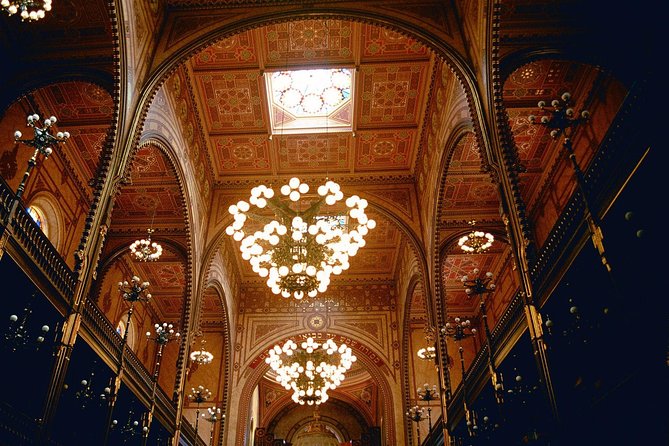
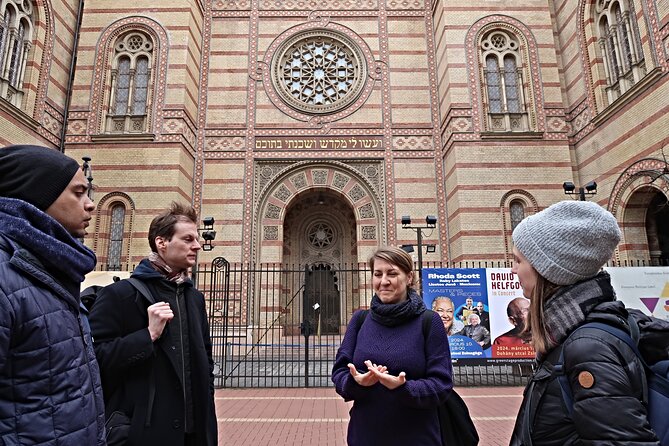
The walk begins with Budapest’s best-known Jewish landmark: Dohány Street Synagogue, also called Nagy Zsinagóga. It’s famous for its Moorish Revival look, and you’ll see it from the outside before going deeper into what makes the whole site important beyond the main building.
The tour includes time to explore with a Jewish Studies Scholar, which is a strong setup if you want more than surface-level description. Inside, the focus is on the Temple of Heroes, the Jewish Museum, and the Memorial Park, all within the synagogue complex. That grouping is valuable because it tells you what each part is for, not just what it looks like.
Two practical notes. First, admission tickets are not included, so you’ll need to budget for entry. Second, there’s a dress expectation at this site: shoulders and knees covered are requested for visitors. I’d treat that as a must, not a suggestion, so you’re not scrambling to find a workaround on the spot.
Why this stop works within a short tour: it gives you the “big picture” of Jewish communal life in Budapest, then the route gradually shrinks from grand public spaces to more intimate, sometimes painful locations.
Stop 2: Kazinczy Street Synagogue, the ghetto wall memorial, and the mikve
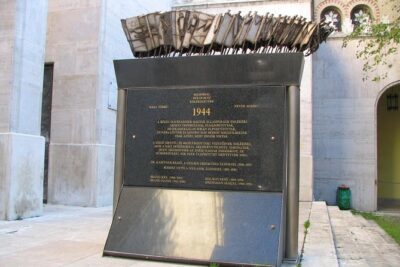
Next you head into the Kazinczy Street area and the neighborhood context that helps the story make sense. The walk includes a stop at the Ghetto Wall Memorial, erected in 2014. This gives you a visible reminder that the ghetto was not an abstract idea, it was real streets and real barriers.
From there, the tour passes a mikve, a Jewish ritual bath. Even if you don’t know much beforehand, it helps you connect religious practice with daily community life. You’re not just looking at monuments, you’re seeing places tied to how people lived their faith.
Then you reach the Art Nouveau orthodox synagogue on Kazinczy Street. The interior is visited when it’s open to the public, which is a key detail to keep in mind. If you’re planning your day around this, it’s smart to understand that some indoor access can vary with opening hours.
Admission tickets for this synagogue are also not included, and dress code rules apply here as well, with shoulders and knees covered requested. If you’re traveling in warmer months, bring a light layer that you can use without making the walk miserable.
More of Pest crossed at walking pace:




Stop 3: Rumbach Street Synagogue and the Status Quo Ante tradition
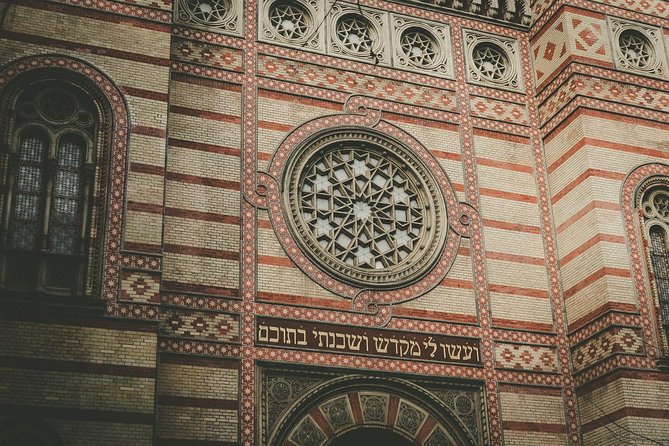
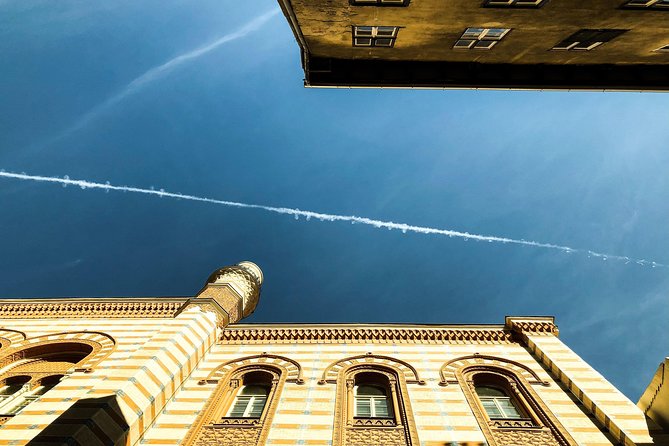
The route continues to Rumbach Street Synagogue, where the exterior gives you an immediate clue that different Jewish communities shaped Budapest’s skyline in their own ways. The tour explains the Status Quo Ante stream of Judaism while you look at the façade, which helps you understand why certain religious practices and community structures can be so tightly protected.
You’ll also visit the synagogue interior when open to the public. Like the Kazinczy stop, that indoor access is dependent on public opening times, so don’t assume every space will be available every day.
Tickets for this synagogue are not included. Still, the value here is how the guide links Judaism as a living system to the buildings themselves. It’s easier to remember the story when you’re standing in front of a place that physically reflects those beliefs.
Castle Hill synagogue ruins, working neighborhood streets, and why the walking route matters
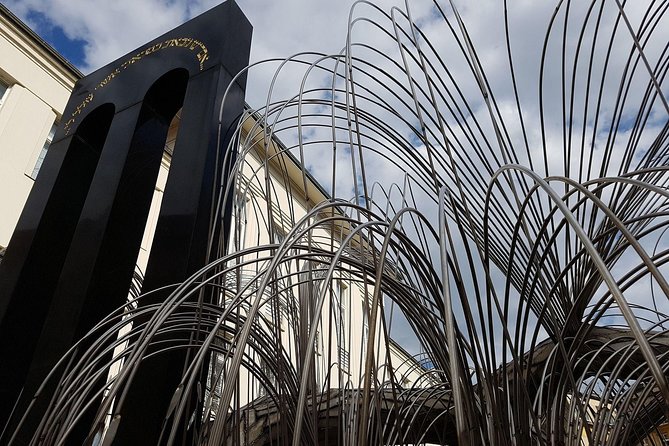
Half the point of this tour is the in-between walking. You’ll move through District VII and District VI areas tied to Jewish working-class neighborhoods in the past. That matters because it keeps the story from becoming only about famous grand monuments.
The walk also includes the area associated with the Pest Ghetto and some ruins of synagogues dating to medieval times on Castle Hill. Those ruins add a sense of continuity, showing that Jewish presence in Budapest did not start in the modern era. Even if you’re only getting a short look at what remains, it’s a powerful prompt to pay attention to the layers of the city.
One drawback here, if you’re the type who hates “walking time,” is that this tour is not a stop-by-stop sightseeing sprint. You’re there to connect dots: grand synagogues to community life, wartime persecution to memorialization, and religious practice to neighborhood change. If that sounds like your style, you’ll enjoy the flow.
Shoes on the Danube Bank: the WWII memorial stop you end with
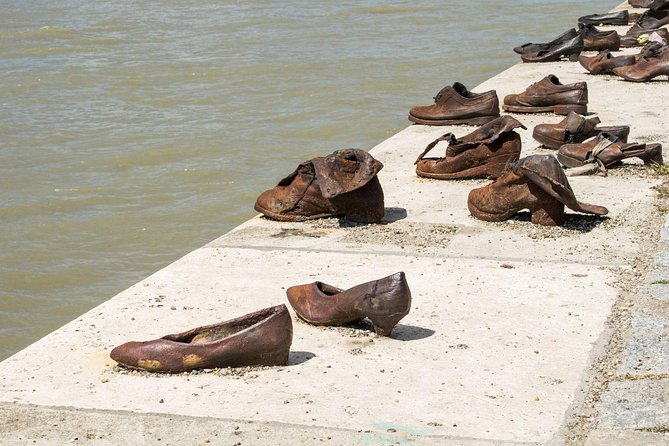
The final stop is Shoes on the Danube Bank, a memorial erected on April 16, 2005. It commemorates Jews massacred there during WWII and centers on a brutal detail: people were ordered to remove their shoes and were shot at the water’s edge so their bodies fell into the river and were carried away.
This is a free stop (admission ticket free), and it lands at the end of the tour for a reason. After seeing synagogue life and ghetto landmarks, you’re ready to face the aftermath with a clearer understanding of what was destroyed.
How you should experience it: don’t treat it like a photo stop. Pause, read carefully, and let the meaning catch up. If you’re sensitive to heavy history, you can ask your guide to set the pace, since it’s a private group and you can take a moment before moving on.
The tour ends at the memorial in Budapest, 1054 Hungary, which is convenient if you want to keep exploring the area on your own afterward.
Practical tips so this tour stays comfortable and respectful
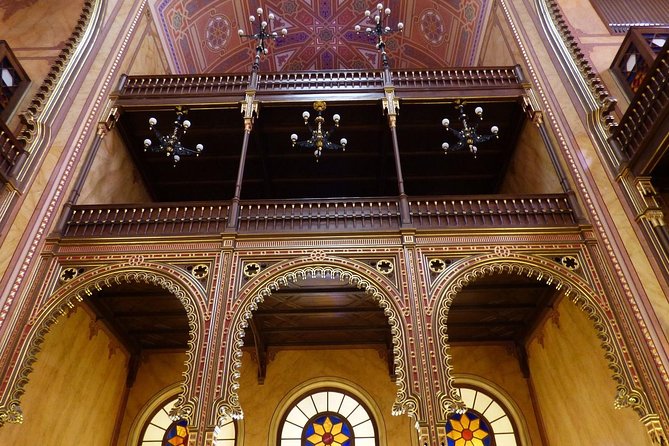
A few small decisions make a big difference on a walking tour like this.
- Wear comfortable shoes. The tour requires moderate walking, and you’ll be on streets for the better part of the experience.
- Plan your outfit for synagogues. For Dohány and Kazinczy, shoulders and knees should be covered. If you’re traveling in hot weather, choose breathable fabric with a light cover-up you can manage quickly.
- Bring a little patience for open interiors. Kazinczy and Rumbach interior visits are when open to the public, so some days may be slightly different.
- Budget for synagogue tickets. Tickets for Dohány, Kazinczy, and Rumbach are not included. The tour notes that tickets are provided if you do not have a pass, which suggests the process is supported, but you should still expect to pay entry fees for places that require admission.
- Use pickup or meet up early. If you take pickup, great. If you meet at Cafe Synago Kavehaz, show up 10 minutes early so you can connect with the guide before walking begins.
On timing, remember the morning tour departs at 10am year round. If you’re trying to pair this with breakfast plans or museum time later, build in a buffer. You’ll finish at the Danube memorial, which is a natural launch point for other nearby sights.
Who should book this private Jewish Budapest tour
This is a good fit if you want a focused, meaningful introduction to Jewish Budapest without bouncing around on your own. It works especially well when you care about understanding not just what happened, but where daily life and religious practice took place.
You’ll also appreciate it if you’re traveling with family, including older kids or teens. Past guides have handled groups with pre-teens and teens while keeping them engaged, which is hard to do on tours that include both beauty and tragedy. A private guide with the ability to adjust pacing helps.
If you’re a first-time visitor to Budapest, this tour is a strong way to learn how the city’s Jewish sites are connected geographically. And if you already know some history, the building-specific details and the discussion of traditions like Status Quo Ante will give you more to think about.
Should you book this Jewish Budapest private walking tour?
Book it if you want a guided route that connects major landmarks, ghetto-era sites, and WWII remembrance, all in a private 3-hour format with historian-level explanation. The price is easiest to justify when your group fills more of the up-to-10 cap, but even smaller groups can still feel worthwhile because you get hotel pickup, a dedicated guide, and a clear sequence you can build on afterward.
Skip it or reconsider if you hate walking, or if you’re not comfortable with synagogue dress expectations and the possibility of indoor access depending on public hours. Also, if you want a purely self-paced experience, private tours mean you’re relying on your guide’s order and pacing.
If your goal is to leave Budapest with a sharper understanding of Jewish life, resilience, and the scars the city carries, this private walk gives you that in a tight, practical package.
Newest from the Danube banks
- Gödöllö Royal Palace Privately with full board★ 5.0 · 1 review
- Private Budapest Tour with Thermal Bath or Market Visit★ 5.0 · 1 review
- Private Budapest walking tour – 4 hours★ 5.0 · 1 review
- Budapest Half Day Car Tour with Guide★ 5.0 · 1 review
- Budapest Private Transfer from Budapest city centre to Budapest Airport★ 3.0 · 1 review
- Magic Theme Team Adventure Game in the Streets of Budapest★ 5.0 · 1 review
- Budapest: Eat the Street, food tour with wine, 16+ tasting★ 5.0 · 1 review
- Private Budapest Christmas Market guided tour and Danube Evening cruise package★ 5.0 · 1 review
Jewish District Tours, compared.
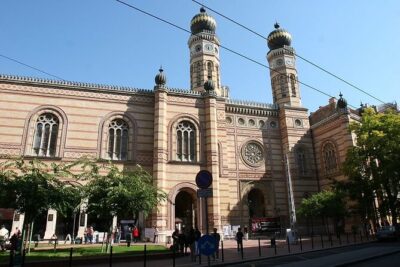
Budapest Jewish Heritage Memorial Walking Tour & Synagogue Entry
Read our review →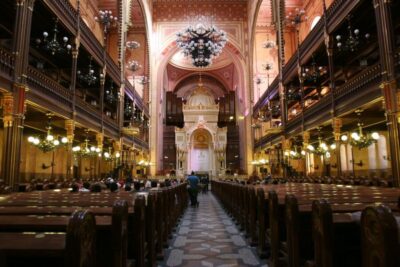
Budapest: Jewish Heritage Guided Tour with Synagogue Ticket
Read our review →
German tour in the Budapest city centre & the Jewish quarter
Read our review →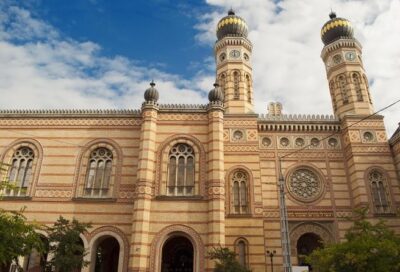
Past and Present of Budapest Jewish District Tour
Read our review →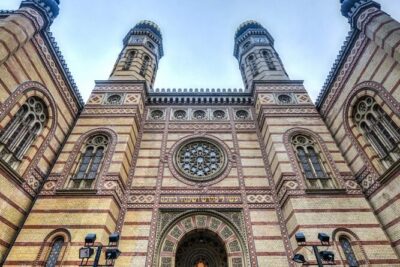
Budapest Dohany Synagogue & Hungarian Jewish Museum & free extras
Read our review →
Budapest: Jewish History Guided Walking Tour with Historian
Read our review →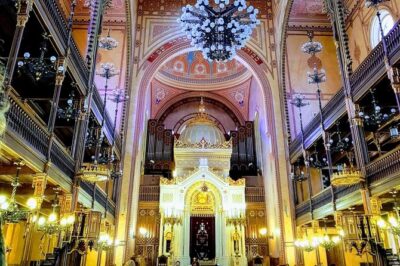
Budapest Dohany, Heroes’, Rumbach synagogues & Jewish Ghetto Tour
Read our review →Browse the lists this tour appears in