
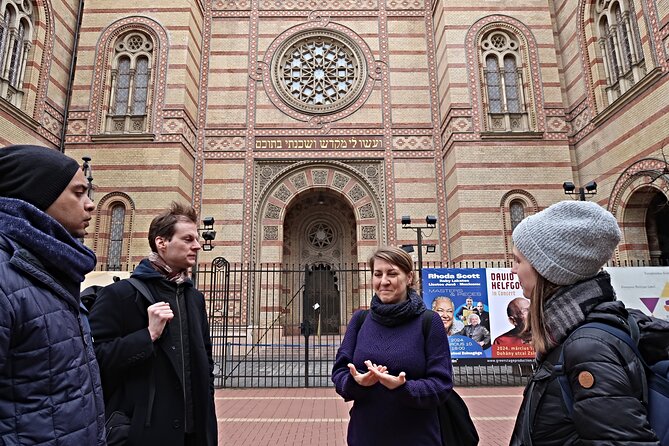
Reviewed · JEWISH DISTRICT TOURS
A Journey through Jewish Budapest – Walking Tour
Jewish Budapest tells its story in stone. This 3-hour walking tour follows the Jewish experience in the city before WWII, linking ideas, architecture, and memory to major sites like Dohány Street Synagogue and the Shoes on the Danube Bank memorial.
I like how the tour is run by an historian, not a casual guide, so the route feels connected instead of piecemeal. You also get a standout highlight at Dohány Street Synagogue, with expert help from a Jewish Studies Scholar as you look around the famous Moorish Revival interior complex.
One practical consideration is that the Dohány Synagogue ticket is extra (14500 Ft per person) and visitors are asked to have shoulders and knees covered.
In This Review
- Key highlights worth marking
- A 3-hour route built for context, not sightseeing checklist
- From Kamara Café to Herzl’s birth square: ideas begin in plain streets
- Dohány Street Synagogue: Moorish Revival grandeur with a lesson attached
- Inside the Dohány complex: Temple of Heroes, Jewish Museum, and memorial space
- Ghetto Wall Memorial and Kazinczy Street: tracing borders you cannot ignore
- Rumbach Street Synagogue and the Status Quo Ante tradition
- Shoes on the Danube Bank memorial: reflection with guidance, not just silence
- Price and value: $123 for a scholar-led route plus one extra ticket
- What you’ll learn by the time you finish
- Who this tour fits best, and who might want a different option
- Should you book this tour?
- FAQ
- FAQ
- How long is the Jewish Budapest walking tour?
- What is included in the price?
- Is the Dohány Synagogue ticket included?
- What are the major stops on the tour?
- Where does the tour meet?
- What language is the tour guide?
- Is the tour private or small group?
- Are there any dress requirements?
- Can I cancel for a refund?
Key highlights worth marking
- Start at Theodor Herzl’s birthplace area, then walk into the story behind modern Zionism.
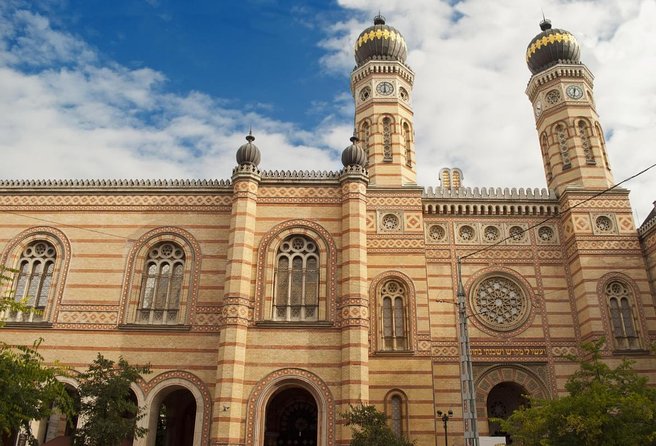
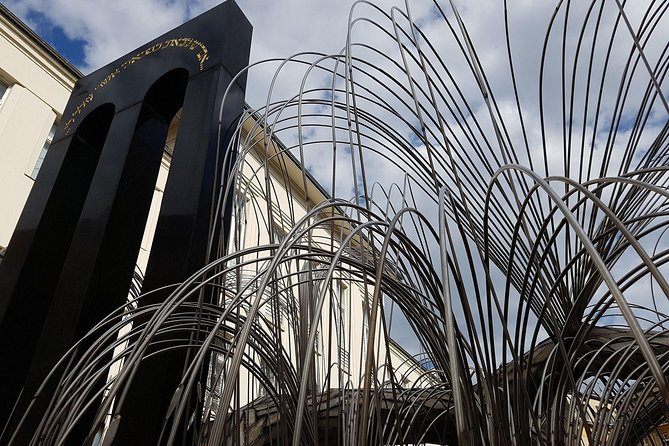
- Dohány Street Synagogue, Europe’s largest, with time inside its Temple of Heroes, Jewish Museum, and Memorial Park.
- The 2014 Ghetto Wall Memorial gives you a clear, focused place to understand Budapest’s segregation and persecution.
- Kazinczy Street and Rumbach Street synagogues add texture, showing different Jewish communities and traditions.
- Shoes on the Danube Bank ends the tour with space for reflection, and your guide may even guide you through a small act of respect like cleansing stumbling stones.
Other walks through the old Jewish quarter:
- Budapest Jewish Heritage Memorial Walking Tour & Synagogue Entry
★ 5.0 · 568 reviews - Budapest: Jewish Heritage Guided Tour with Synagogue Ticket
★ 4.8 · 533 reviews - German tour in the Budapest city centre & the Jewish quarter
★ 5.0 · 359 reviews
A 3-hour route built for context, not sightseeing checklist
This tour works because it’s organized around cause and effect. You don’t just see famous buildings and move on. You connect them to the daily reality of Jewish life in Budapest before WWII, and to how quickly that world was shattered.
The format is a guided walking route with a historian lead, and the company emphasizes that the guides can be professors, doctoral students, historians, journalists, art critics, and published authors. That range matters. It means you’re likely to get art and architecture details at the same time as historical background, so you can understand what you’re looking at without turning the whole thing into a lecture.
You’ll also appreciate the pacing. Groups are private or small, and in past tours, guides like Orsolya have been described as thoughtful and thorough, including checking in before moving to the next segment. When your group is small, you tend to get better discussion and more direct answers.
From Kamara Café to Herzl’s birth square: ideas begin in plain streets
The tour meets at Kamara Café, Dohany utca 1/A. From there, you start moving into the heart of Budapest’s Jewish story, beginning at the square connected to Theodor Herzl’s birth.
Why start here? Because Herzl is one of the big entry points for modern Jewish political thought. Even if you don’t know much about him going in, the tour frames him as part of a larger shift in Jewish hopes and identity at the turn of the 20th century.
Walking from the city’s ordinary street life toward a place marked for Herzl gives you an easy mental trick: it helps you see that this history is not locked behind glass. It’s embedded in everyday geography, and you’re tracing it block by block.
Dohány Street Synagogue: Moorish Revival grandeur with a lesson attached
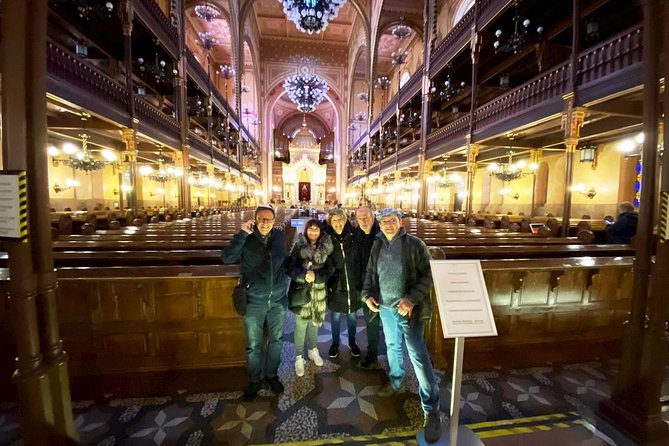
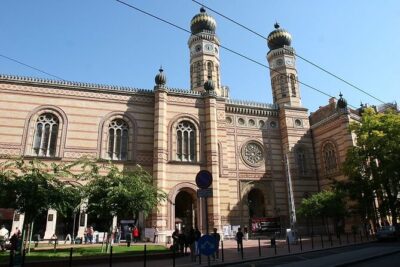
The biggest visual stop is Dohány Street Synagogue, also known as the Great Synagogue. This is the kind of building that instantly changes your scale. You can appreciate it as architecture first, then the guide steers you toward why that architecture mattered to the community that built it.
You’ll tour with a Jewish Studies Scholar assistance, which is a smart setup. It lets you go past the standard talking points and connect artistic choices to Jewish communal life in Budapest. The building’s Moorish Revival style tends to grab attention, and your guide can explain what that kind of style communicated in its time.
What you should know ahead of time: you will want to plan for the separate entry ticket. The Dohány Synagogue tickets are not included, listed as 14500 Ft per person. That doesn’t make the tour a bad deal, but it does mean you should budget for it so you’re not caught off guard on the day.
Also, there’s a dress expectation for entry. Visitors to Dohány Synagogue are requested to cover shoulders and knees. It’s a small thing, but it can save you stress if you arrive prepared.
Inside the Dohány complex: Temple of Heroes, Jewish Museum, and memorial space
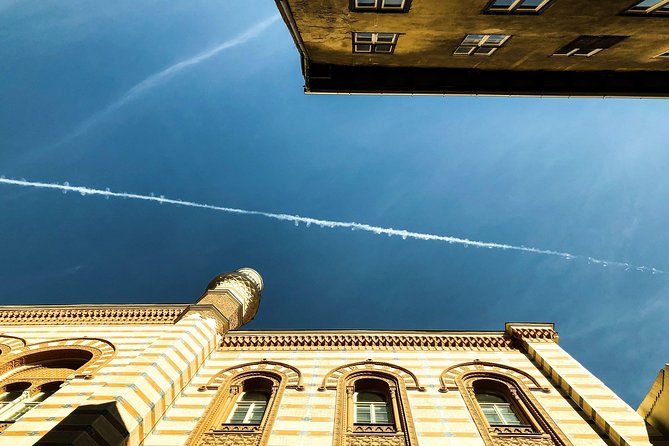
Dohány Street Synagogue isn’t just one room. Your route takes you through the complex, including the Temple of Heroes, the Jewish Museum, and a Memorial Park.
This combination is powerful because each piece works like a different lens:
- The Temple of Heroes connects remembrance and identity.
- The Jewish Museum helps you ground what you’re seeing in artifacts and historical framing.
- The Memorial Park adds a quieter, more reflective layer.
Even if you’re short on background when you start, the guide structure helps you build it. You’re not just looking at a crowd of visitors and chandeliers. You’re learning how Budapest’s Jewish community used these spaces to remember, educate, and stand in public life with confidence.
In past tours, guides such as Endres have been praised for exceptionally detailed historical context around the Great Synagogue and its surrounding environment, especially how life changed for Budapest residents during the Nazi era. That kind of interpretation is exactly what turns a visit into understanding.
More of Pest crossed at walking pace:




Ghetto Wall Memorial and Kazinczy Street: tracing borders you cannot ignore
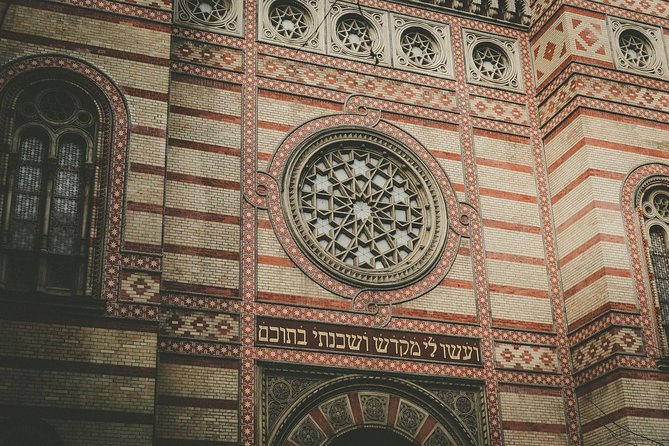
After the Dohány area, the tour shifts from grandeur to boundaries. You’ll walk to the Ghetto Wall Memorial, erected in 2014. This modern memorial placement is important because it keeps the focus on the historical violence that those walls represent, without needing to guess what happened.
From there, the tour continues along the edges of the Jewish neighborhood history. You pass a luxurious mikve, a Jewish ritual bath. Even though you’re not necessarily stopping for a full interior visit, it’s a striking reminder that community life included daily religious practice, not just politics and persecution.
Then you continue to the exterior areas of the Kazinczy Street orthodox synagogue. The building style here is described as Art Nouveau, and that contrast matters. You can see how Jewish religious architecture in Budapest wasn’t one style or one period. It evolved, it adapted, and it reflected the look of the city.
The key value at this stage is direction. The guide’s job is to keep you from treating these stops like random points on a map. The Ghetto Wall Memorial is the anchor, and Kazinczy’s exteriors help you hold onto the sense that people lived, worshiped, and planned lives in these spaces right up until the moment history turned catastrophic.
Rumbach Street Synagogue and the Status Quo Ante tradition
Next up is Rumbach Street Synagogue, where you’ll learn about the Status Quo Ante stream of Judaism while observing the synagogue’s impressive facade.
Why does this matter? Because different Jewish communities were not identical in how they practiced, organized worship, or negotiated change. Status Quo Ante is one of those terms that sounds academic, but on a street-level tour, it becomes practical. Your guide connects that idea to how traditions held their ground and how community leaders managed religious practice and governance.
Seeing the facade in the middle of the walking route also helps you read the city better. You start to notice how religious buildings communicate identity. Even from outside, the style and presence of the synagogue adds meaning to the historical context you’ve been building.
This section is a good reminder that Jewish Budapest was never one monolithic story. It was many communities within one larger urban life, with traditions that could differ while still sharing core values.
Shoes on the Danube Bank memorial: reflection with guidance, not just silence
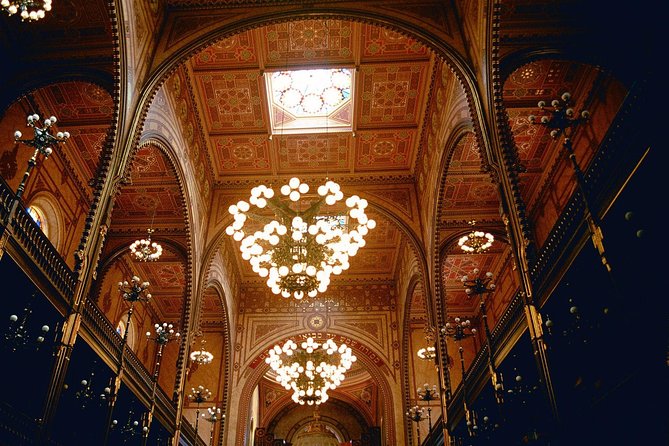
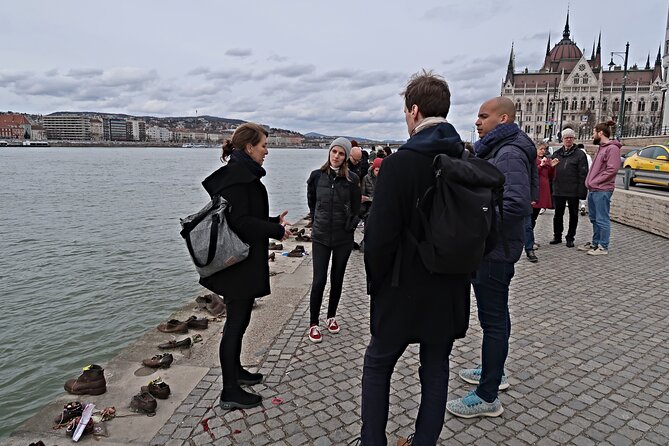
The tour ends at Shoes on the Danube Bank. This is a memorial that hits hard, and it’s designed to make you stop and look instead of just walking by.
Here’s where the tour’s structure earns its keep. Your guide invites reflection on the Jewish lives lost at this site, and this is not framed as a quick photo stop. It’s treated as memory work, with time for your emotions to catch up to what you’re seeing.
One specific detail from an earlier tour stands out for how respectful it can be. A past guide, Endres, was described as encouraging participants to pay respect by cleansing several stumbling stones, and providing the necessary materials and joining in the activity. If your guide offers something similar, it gives you a way to participate in a quiet, tangible act rather than standing there feeling unsure what you should do.
In practical terms, plan to linger. The Danube setting makes you slow down naturally, and that pause is part of the experience’s point. If you prefer your history neat and tidy, this end stop will not be neat. If you can handle emotional weight, you’ll likely find it one of the most meaningful moments of the whole tour.
Price and value: $123 for a scholar-led route plus one extra ticket
The price is $123 per person for a 3-hour walking tour with a historian guide. That cost can feel steep until you look at what you’re getting.
First, the guide is not just a storyteller. The activity emphasizes that guides come from academic and media backgrounds, including professors and doctoral students. Second, you get a route that hits multiple major Jewish landmarks in one sweep, including the Great Synagogue area and both memory-focused and community-focused sites.
The one clear extra cost is the Dohány Synagogue ticket, listed at 14500 Ft per person. Because the tour is explicitly structured around Dohány Street Synagogue as a major highlight, that ticket is part of the true cost of doing the full experience.
If you’re comparing this to a quick city tour that only covers exteriors, the value is stronger here. This is built for interpretation, not just location spotting. And since the tour can be private or small groups, you’re paying for more than movement through space. You’re paying for a guided historical thread.
What you’ll learn by the time you finish
By the end, the tour aims to help you understand the Jewish experience in Budapest before WWII, including how visible Jewish life was in the city before the war. One of the tour’s core framing points is that before WWII, about a quarter of Budapest’s population was Jewish.
You’ll see how:
- Jewish life was organized across religious practice, community institutions, and public presence.
- Architectural landmarks were built with identity in mind.
- Memorial sites like Ghetto Wall Memorial and Shoes on the Danube place modern attention onto older violence with intentional focus.
- Different synagogue traditions and community lines existed side by side, including the Status Quo Ante stream.
This matters because it changes how you read the city after the tour. You start spotting details on the next walk you take, and you understand why those details are there.
Who this tour fits best, and who might want a different option
This is a strong fit if you want history with structure. You’ll like the fact that it’s organized in a real route and anchored to major sites, from Herzl-related beginnings to the end memorial on the Danube.
It’s also a good choice if you value interpretation from serious guides. Reviews highlight that guides like Orsolya can be extremely knowledgeable and careful with pace and group comfort. Another review described a very personalized feel when a couple was the only group on the tour, which supports the idea that smaller groups can lead to better conversation and more comfort.
If you strongly dislike emotional subject matter, the Shoes on the Danube stop might feel too heavy. This isn’t a lighthearted tour. It’s about learning and memory, and it ends exactly where you should be ready to slow down.
Should you book this tour?
I think you should book if you want the Great Synagogue experience plus a guided path that connects Jewish life before WWII to the memorials that outlasted it. The scholar-led approach, the combination of community sites and remembrance sites, and the chance to learn from guides with academic and cultural credentials are the big reasons it works.
Book it especially if you’re the type who likes when your photos have meaning behind them. If you’re happy paying a small extra ticket for Dohány entry and you can follow the shoulder-and-knee covering request, this is a high-value way to understand Jewish Budapest without turning it into a random stop list.
FAQ
FAQ
How long is the Jewish Budapest walking tour?
It lasts 3 hours.
What is included in the price?
The tour includes the 3-hour walking tour and a historian guide.
Is the Dohány Synagogue ticket included?
No. Dohány Synagogue tickets are listed separately as 14500 Ft per person.
What are the major stops on the tour?
The tour includes the Dohány Street Synagogue, Kazinczy Street Synagogue exteriors, the Ghetto Wall Memorial, the Rumbach Street Synagogue, and Shoes on the Danube Bank.
Where does the tour meet?
The meeting point is Kamara Café, Dohany utca 1/A.
What language is the tour guide?
The tour is in English.
Is the tour private or small group?
Yes, private or small groups are available.
Are there any dress requirements?
For visitors to the Dohány Synagogue, shoulders and knees are requested to be covered.
Can I cancel for a refund?
Yes. Free cancellation is available if you cancel up to 24 hours in advance for a full refund.
Newest from the Danube banks
- Pub Crawl Through The Ruin Bars in Budapest with T-shirt Included★ 4.5 · 14 reviews
- Rudas Bistro Premium Brunch★ 3.5 · 14 reviews
- Wine Tasting in the Countryside from Budapest★ 5.0 · 14 reviews
- Buda Castle District and Matthias Church Private Tour★ 5.0 · 14 reviews
- Pest side stories with a Historian★ 5.0 · 14 reviews
- Recirquel Company: Walk My World Immersive Show Entry Ticket★ 4.6 · 14 reviews
- Ram Gorge Hiking Adventure★ 5.0 · 14 reviews
- Budapest Rafting – Sunset Cruise★ 5.0 · 14 reviews
Jewish District Tours, compared.
Budapest Jewish Heritage Memorial Walking Tour & Synagogue Entry
Read our review →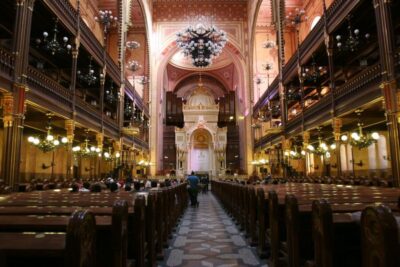
Budapest: Jewish Heritage Guided Tour with Synagogue Ticket
Read our review →
German tour in the Budapest city centre & the Jewish quarter
Read our review →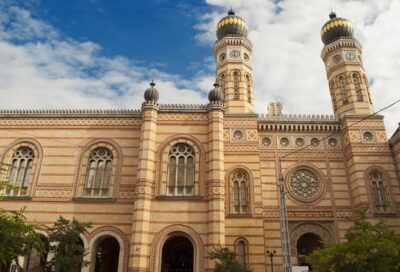
Past and Present of Budapest Jewish District Tour
Read our review →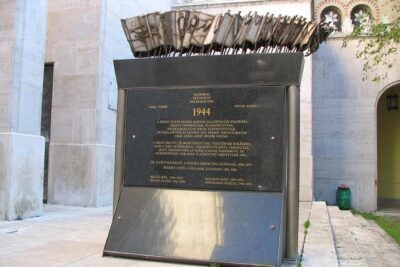
Budapest Dohany Synagogue & Hungarian Jewish Museum & free extras
Read our review →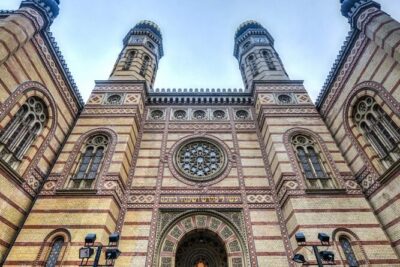

Budapest: Jewish History Guided Walking Tour with Historian
Read our review →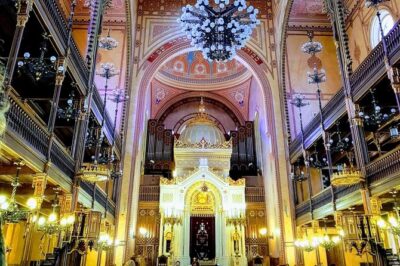
Budapest Dohany, Heroes’, Rumbach synagogues & Jewish Ghetto Tour
Read our review →Browse the lists this tour appears in