
Reviewed · COMMUNIST-ERA TOURS
Born Under The Red Star – The History of Communism in Hungary – Private Tour
Communism has a loud shadow in Budapest. This private tour links key sites, from the Soviet Heroic Memorial to the House of Terror Museum, with a guide who explains what daily life felt like under the regime. I especially like the tight, stop-by-stop structure and the included retro soda moment that keeps the story human, not just theoretical. One drawback to plan for: admission details can be a sore spot, so I’d confirm up front which sites are truly free on your day.
This is the kind of tour where your guide matters. In the guides I saw mentioned, people name teachers of the topic like Julia, Leslie, Brigit, and Norbert, and the common theme is clarity, plus a willingness to handle tough material without making it cold or lecture-y.
In This Review
- Key Highlights You Will Feel on the Ground
- What This Private Communism Tour Really Covers in 3 Hours
- Soviet Heroic Memorial: WWII Memory Before the Politics Heat Up
- House of Terror Museum at Andrássy út 60: When the Story Becomes Personal
- St. Stephen’s Basilica: A Change of Scale, a Different Kind of Hungary
- Szabadság tér and the Double Memory of Liberation and Holocaust Loss
- The 1956 Memorial: Anti-Communist Resistance in a Few Concrete Lines
- Hungarian Parliament Building: Why the Story Ends Near Power
- The Communist-Themed Bar Stop and Other Small Perks That Matter
- Price, Value, and How to Judge What You Get
- Logistics That Affect Your Comfort (Not Just Your Schedule)
- Who This Tour Suits Best
- Should You Book Born Under The Red Star?
- FAQ
- How long is the Born Under The Red Star private tour?
- Is hotel or apartment pickup included?
- Is the tour private, and is it offered in English?
- Which stops include admission tickets, and which do not?
- What is included besides the guided stops?
- What if weather is bad during the tour?
Key Highlights You Will Feel on the Ground
- A sequence of memory sites, from WWII commemoration to postwar repression
- House of Terror Museum as the emotional anchor, with stories of detention, interrogation, torture, and killings
- Liberty Square (Szabadság tér), where Holocaust memory and Soviet liberation memory share the same stage
- The 1956 memorial that keeps the anti-communist uprising personal and concrete
- A Communist-themed bar drink, plus coffee and/or tea to keep you comfortable in a long, heavy subject
- Hotel pickup and maps, which helps you spend more time looking at Budapest and less time figuring out routes
More of the decades behind the Iron Curtain:
- Budapest: Communist History Tour with House of Terror Option
★ 4.8 · 182 reviews - Budapest: 3-Hour Walking Tour About Communism (Small Group)
★ 4.7 · 70 reviews - Communism in Hungary with a Historian
★ 5.0 · 70 reviews
What This Private Communism Tour Really Covers in 3 Hours
This tour is built for focus. You are not getting a full-day, everything-and-the-kitchen-sink history marathon. You are getting a guided route through specific landmarks tied to 20th-century political power, the people caught inside it, and the way Hungary remembers those years now.
The private format is the point. Only your group joins, and the guide can adjust to your pace and questions. That matters because this subject is not just dates and slogans. It is about how regimes shaped daily life, how violence was used, and how memory is displayed in public spaces.
Plan your expectations for “time per stop.” Many stops are brief, around 15 minutes, with one longer square moment. That means you will get strong orientation and context, not a slow, sit-down museum deep dive. If you want long museum reading time, you may want to budget extra time to return later.
Soviet Heroic Memorial: WWII Memory Before the Politics Heat Up
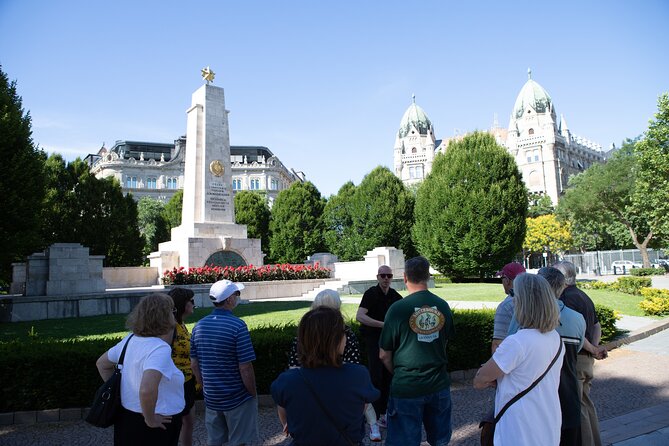
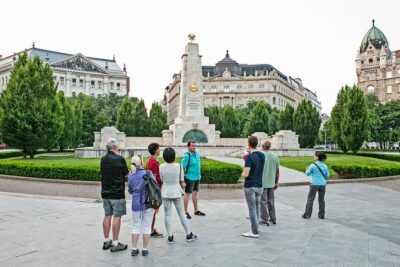
The tour starts in a landscaped park with the Soviet Heroic Memorial, a white obelisk commemorating Russian military who served in WWII. This is a useful opening because it shows how power and sacrifice get framed as public honor before you get into later repression and ideology.
In a short visit, the guide’s job is to connect this monument to what comes next: the shift from wartime alliances and liberation narratives to the communist era that followed. Even if you know very little Hungarian history, you will quickly see how monuments can be political tools, not just decoration.
Because it is outdoors and admission is free, it is a low-stress first stop. You can take a moment to orient yourself and get the storyline from the guide before you move into heavier indoor material.
House of Terror Museum at Andrássy út 60: When the Story Becomes Personal
Then you hit the emotional core: House of Terror Museum on Andrássy út 60. This museum covers exhibits related to both fascist and communist regimes in 20th-century Hungary. It is also a memorial to victims of those regimes, including people detained, interrogated, tortured, or killed in the building.
This is the moment where the tour earns its title. You are not only hearing about ideology. You are seeing the museum’s framing of what happened to real people. Even with a brief stop time, it sets the tone for everything that follows.
Two practical notes help here. First, the subject matter is intense. If you are sensitive to topics involving torture or killings, this is the stop to take slow and ask your guide how the exhibits are organized. Second, admission for the museum is listed as free in the tour details, but there has been confusion for some visitors about what is covered and what ticket type is needed. On a day like this, I strongly recommend you confirm coverage right at the start with your guide.
St. Stephen’s Basilica: A Change of Scale, a Different Kind of Hungary
After the museum, the tour stops at St. Stephen’s Basilica (Szent Istvan Bazilika). This Roman Catholic basilica is named for Stephen, the first King of Hungary, whose right hand is housed in the reliquary. The basilica’s size and long story also come up, including that it was once the sixth largest church building in Hungary before 1920.
Here is why this stop matters for a communism-focused tour. When you talk about authoritarian regimes, you often forget how other institutions and identities survived or were reshaped. A major church building is not the communist story, but it helps you read Budapest as more than just one era.
One more thing: admission is not included for the basilica, so plan on paying if you want to go inside or up to the areas that require a ticket. The tour time is short, so if you care about interior views, it is worth going in with a clear plan.
Other centuries stacked along the Danube:


Szabadság tér and the Double Memory of Liberation and Holocaust Loss
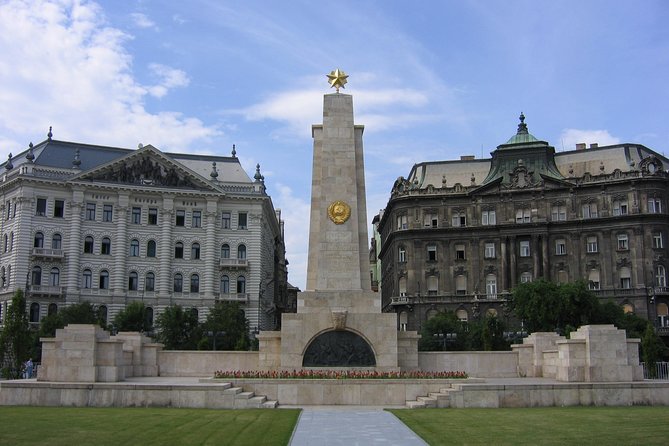
Next comes Szabadság tér, Liberty Square, in the Lipótváros neighborhood. This square is famous for two controversial memorials: one commemorates Hungarian Jewish victims of the Holocaust, and the other remembers Soviet soldiers who liberated Budapest from the Nazis in 1945.
That pairing is not a trivia fact. It is the whole lesson. Memory in public space can hold multiple truths at once, and it can also create friction. Your guide’s explanation makes the square feel less like a photo stop and more like a snapshot of how Hungary wrestles with painful history in the open.
Also, this is one of the longer moments in the route, about 25 minutes. Use it. Slow down just enough to read what is around you and connect it back to the museum theme: regimes use power, and then they try to control the story people tell afterwards.
Admission here is listed as free, so you are not juggling tickets mid-walk. That makes it easier to focus on the guided interpretation.
The 1956 Memorial: Anti-Communist Resistance in a Few Concrete Lines
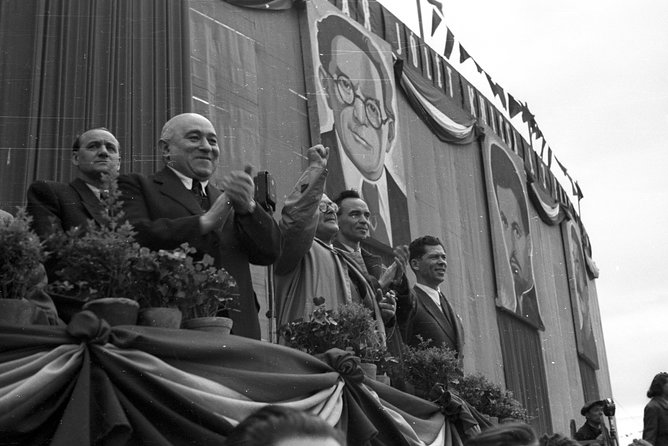
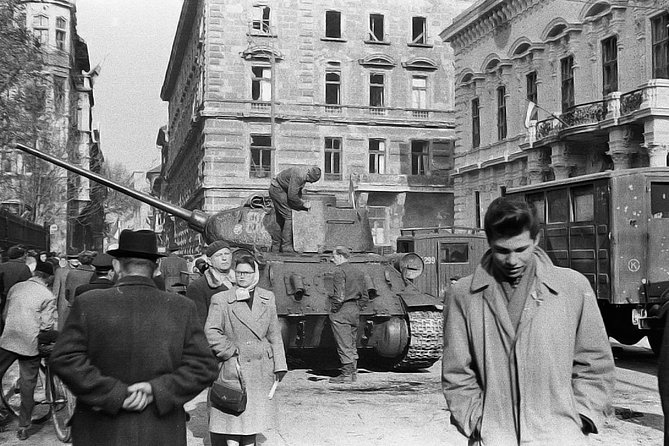
Then you visit the Memorial to the 1956 Hungarian Revolution and War of Independence. This memorial is dedicated to the heroes of the 1956 uprising against the communist regime.
This stop is where the tour turns from describing systems to naming resistance. In a short visit, you will likely get the key idea: that communist rule was not accepted as a permanent condition, and people pushed back with enough force to leave a lasting mark in public memory.
If you have a tendency to think of communism as a single, uniform experience, this memorial helps correct that. It points you toward a Hungary where political change came from conflict and choices, not just slow reforms.
Admission is listed as free, which keeps this stop flexible. It is a good time to ask your guide how they see 1956 fitting into the bigger timeline you just heard.
Hungarian Parliament Building: Why the Story Ends Near Power
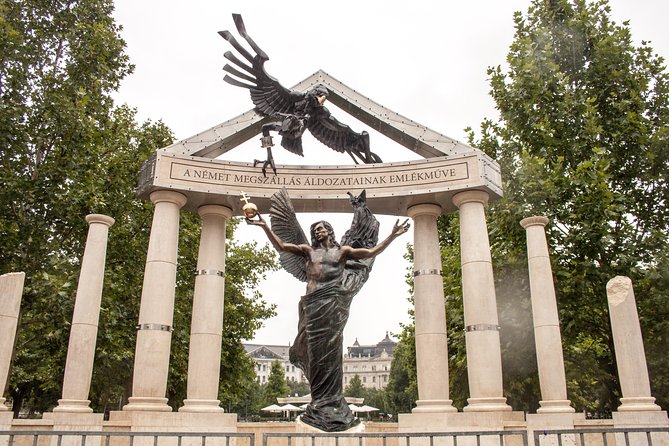
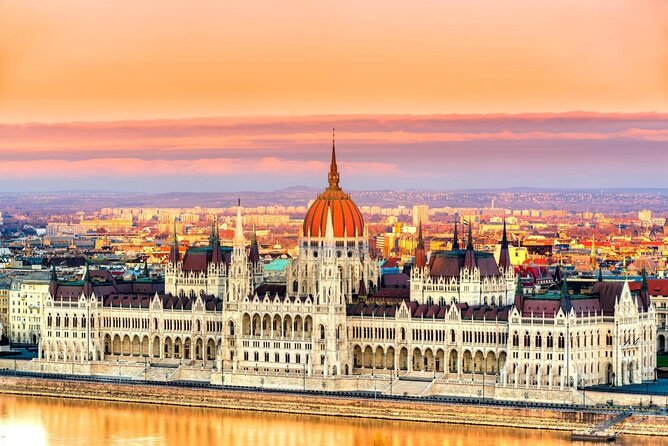
The tour concludes near the Hungarian Parliament Building (Országház). It is the seat of Hungary’s National Assembly and one of Budapest’s major landmarks, a popular tourist destination for good reason.
The practical takeaway is simple: you finish close to the idea of government itself. After spending time at a museum about detention and a memorial about uprising, the Parliament building feels like the visible successor to those struggles.
The tour does not include admission for the Parliament building. If your goal is to go inside, you will need to plan on paying separately. The stop time is about 15 minutes, so if interior access matters to you, you might want to add it as a separate visit later.
The Communist-Themed Bar Stop and Other Small Perks That Matter
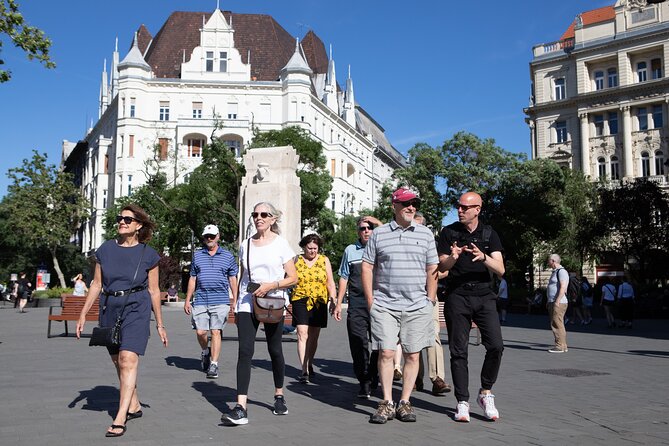
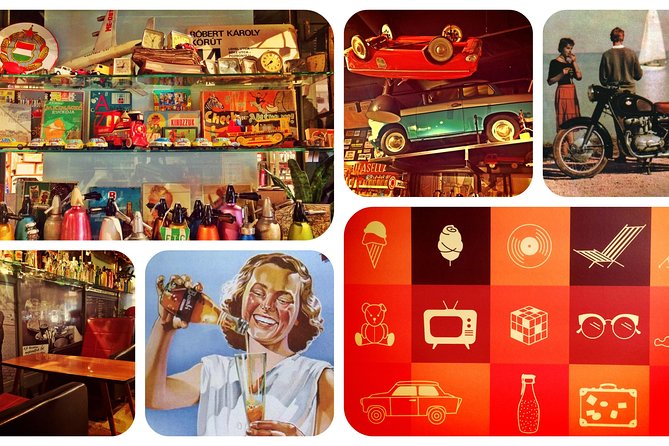
One standout feature is included time at a Communist-themed bar for a retro soda, plus maps and further recommendations. Coffee and/or tea are included too.
This sounds small, but it is not just a cute extra. When you are spending a few hours moving through heavy sites, a quick break helps you reset. It also gives the guide space to explain in a less formal way. One of the comments I saw emphasized that guides sometimes add personal or lived-experience context, which can make difficult material feel less abstract.
Just be aware of expectations around what is included. The tour details say a retro soda is included, but there has been at least one complaint that additional drinks or certain museum-related access were not covered as described. That is not something you should ignore. If you want more than the included drink, plan to pay the difference.
Price, Value, and How to Judge What You Get
The price is listed as $108.14 per person for about 3 hours, private, with pickup offered. That sounds steep compared to a group bus tour, but the private format is where the money goes.
Here is the value logic I would use:
- You are paying for guided interpretation, not only the ability to stand near monuments
- A couple of key places are listed with free admission in the tour details, which helps offset costs
- You also get pickup, plus practical extras like maps and coffee or tea
The tradeoff is also clear. If your guide’s explanations drift toward broader general history, or if the schedule runs short on the time you hoped for, you can end up feeling like you did not get the focus you paid for. One negative experience mentioned an early finish and extra time in a café, with limited detail on daily life under communism. That is the risk with any short, curated route.
If you want the most value, do one simple thing: at the start, tell your guide what you want emphasized, life under the regime, propaganda, resistance, or how memory is presented in Budapest. A good guide can steer the story.
Logistics That Affect Your Comfort (Not Just Your Schedule)
This tour includes hotel or apartment pickup. Your guide meets you at your requested address, and you get a mobile ticket.
The route is described as near public transportation, and it asks for a moderate physical fitness level. In real life, that usually means walking, standing, and short distances between stops, but not anything extreme. Still, because the content is intense, bring a little patience for the emotional rhythm. Indoors and outdoors in a few hours can be mentally taxing.
Finally, consider that the museum area is complex. One guide-style note that showed up in feedback is that at least one group went by subway toward the museum area. That suggests you should expect some transit connection rather than only walking the entire time.
Who This Tour Suits Best
This works especially well if you:
- Want a guided route through communist-era memory without having to map everything yourself
- Like short, focused stops that give you context fast
- Are okay with intense, emotionally heavy material in a condensed time frame
- Prefer private pacing where you can ask questions, not just listen at a distance
It may not be your best match if you:
- Want a long museum session with lots of reading time and no schedule pressure
- Are mainly interested in architecture or religious history, since you will also cover political sites and memorials
- Hate surprises around admissions coverage, in which case you should confirm details at the start
Should You Book Born Under The Red Star?
If you want a smart, private 3-hour way to understand how Hungary remembers communism, this tour is a strong candidate. The standout factor is the combination of House of Terror Museum and the public memory stops, which helps you connect ideology to space, memorials, and how a city tells its story.
Book it if you value guided interpretation and can handle heavy content without needing a slow, deep museum read. Skip or adjust expectations if you want long indoor time or if you feel very strongly about admission coverage details. Either way, do one thing before you start: confirm what each site ticket covers, especially for St. Stephen’s Basilica and the museum access details. That one step protects your money and your peace of mind.
FAQ
How long is the Born Under The Red Star private tour?
It is approximately 3 hours.
Is hotel or apartment pickup included?
Yes. Pickup is offered, and your guide meets you at your requested address.
Is the tour private, and is it offered in English?
Yes, it is a private tour with only your group, and it is offered in English.
Which stops include admission tickets, and which do not?
Admission is listed as free for the Soviet Heroic Memorial, House of Terror Museum, Szabadság tér, and the Memorial to the 1956 Hungarian Revolution and War of Independence. Admission is not included for St. Stephen’s Basilica and the Hungarian Parliament Building.
What is included besides the guided stops?
Included items are a retro soda in a Communist-themed bar, maps and further recommendations, and coffee and/or tea.
What if weather is bad during the tour?
The experience requires good weather. If it is canceled due to poor weather, you are offered a different date or a full refund. The tour also indicates a moderate physical fitness level and that it is near public transportation.
Newest from the Danube banks
- Gödöllö Royal Palace Privately with full board★ 5.0 · 1 review
- Private Budapest Tour with Thermal Bath or Market Visit★ 5.0 · 1 review
- Private Budapest walking tour – 4 hours★ 5.0 · 1 review
- Budapest Half Day Car Tour with Guide★ 5.0 · 1 review
- Budapest Private Transfer from Budapest city centre to Budapest Airport★ 3.0 · 1 review
- Magic Theme Team Adventure Game in the Streets of Budapest★ 5.0 · 1 review
- Budapest: Eat the Street, food tour with wine, 16+ tasting★ 5.0 · 1 review
- Private Transfer Budapest Airport BUD to Budapest by Car or Van★ 5.0 · 1 review
Communist-Era Tours, compared.
Budapest: Communist History Tour with House of Terror Option
Read our review →
Budapest: 3-Hour Walking Tour About Communism (Small Group)
Read our review →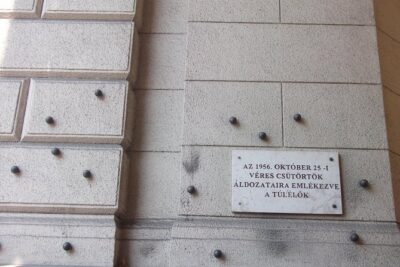
Budapest Hammer & Sickle Communist Times Tour
Read our review →
Memento Park Visit with Private Trabant Transfer
Read our review →
Browse the lists this tour appears in