
Reviewed · COMMUNIST-ERA TOURS
Budapest: Communist History with a local guide
Streets in Budapest carry real weight. This 2-hour guided route uses Budapest’s communist landmarks to tell a human story of terror, propaganda, and resistance. I especially like the mix of big sites and smaller street moments, including gastro-stories tied to Okóber 6 street, plus the chance to connect the Soviet-era narrative to what people in Hungary actually lived through. One thing to consider: you’ll cover a fair bit of ground, including a tram ride and about 1.5 miles of walking, so wear shoes you trust.
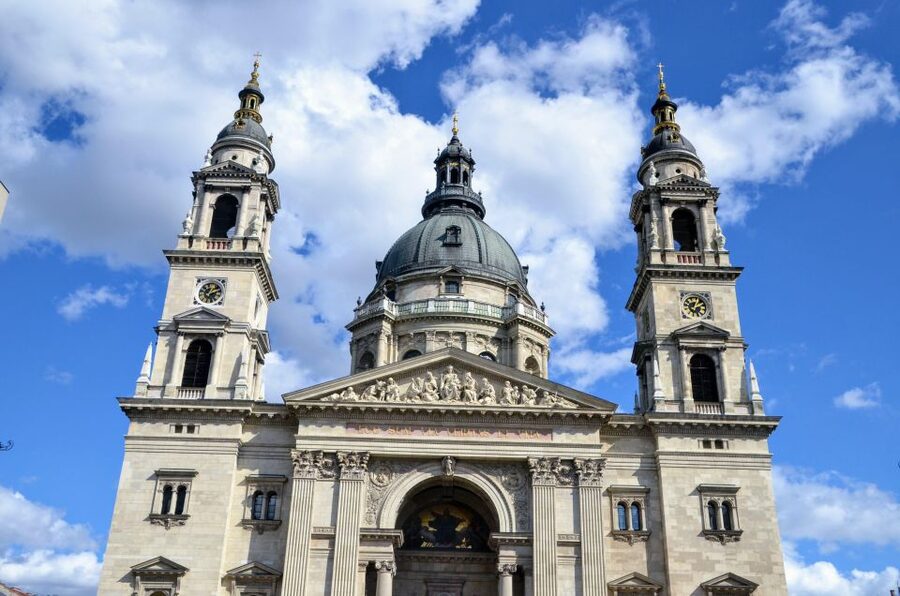
Start at St Stephen’s Basilica, then move through major squares tied to the 20th century, ending at Margaret Bridge and the broader Parliament area before you continue on to the House of Terror. If you want facts, dates, and names, you’ll get them, but the tone stays personal, grounded in what it meant to grow up under Communist rule.
The tour is well paced for a first pass at the theme. Still, because part of it is self-guided inside the House of Terror, you’ll get the most from it if you’re willing to read signs and slow down for a couple of rooms.
In This Review
- Key things I’d circle before booking
- From St Stephen’s Basilica to communism on the street
- Okóber 6 street and the Basilica area, where everyday life gets politicized
- Szabadság Square: Soviet Memorial, propaganda, and what you’re meant to feel
- Kossuth Lajos Square and the Parliament zone, 1956 as lived drama
- Olympics Park and Nagy Imre Memorial, heroism outside the obvious
- Tram ride to Margaret Bridge, then wine tasting with a view
- House of Terror, your 1.5 hours to read, pause, and take it in
- Price and value: why $56 can make sense for this kind of day
- Who this Budapest communist history route fits best
- Should you book this tour?
- FAQ
- How long is the Budapest communist history tour?
- Where does the tour start and end?
- Is the tour wheelchair accessible?
- What language is the guide speaking?
- Does the tour run in bad weather?
- How much walking is involved?
- What is included, and what isn’t?
Key things I’d circle before booking
- St Stephen’s Basilica to Okóber 6 street: food and everyday details used to explain how control seeped into daily life
- Liberty Square Soviet Memorial: see how official stories were meant to shape opinion, then compare that with reality
- Parliament and the 1956 Revolution memorial moments: learn the uprising story with local context and emphasis on drama and sacrifice
- Nagy Imre Memorial area and Olympic Park stops: a less expected angle, where heroism and the human side of change show up
- House of Terror with 1.5 hours self-guided time: you’re not rushed, and you can pace yourself
More of the decades behind the Iron Curtain:
- Budapest: Communist History Tour with House of Terror Option
★ 4.8 · 182 reviews - Budapest: 3-Hour Walking Tour About Communism (Small Group)
★ 4.7 · 70 reviews - Communism in Hungary with a Historian
★ 5.0 · 70 reviews
From St Stephen’s Basilica to communism on the street
This is not just a monuments tour where you check off photos. The guide frames each stop like a chapter. You’re walking through places where power was shown, hidden, and enforced. That matters because Communist rule was not only political. It was about what people could say, what they could learn, and what they had to fear.
I like that the tour starts right at St Stephen’s Basilica, one of Budapest’s most recognizable anchors. It gives you a clear starting point, and it sets up the contrast. A grand religious landmark, then a turn into the 20th century political machinery. You quickly understand that Budapest’s beauty and Budapest’s brutality can sit in the same line of sight.
The tour begins with a short guided look around the Basilica and then heads out on foot. This early segment is your orientation phase. It helps you get bearings fast, so later, when you hit Liberty Square and the Parliament area, you can follow the story without getting lost in the geography.
Okóber 6 street and the Basilica area, where everyday life gets politicized
Right after the initial Basilica stop, you get a brief walk into a “hidden gem” style stretch nearby. Even with only about 15 minutes here, it’s the kind of segment that makes the tour feel local. You’re not just looking at buildings. You’re learning how people talked, lived, and survived around them.
Then comes one of the tour’s more memorable angles: Okóber 6 street gastro-stories of Communism. Food may sound like a side note, but it’s a powerful way to understand control. When shortages, rationing, or propaganda hit daily routines, the effects show up at markets, cafés, and family tables. The guide’s approach turns those ordinary details into a clearer picture of what rule meant day to day.
If you like history that connects to daily life, this is a big plus. If you only want battle scenes and street fighting, you might find this portion more reflective than dramatic. Either way, it gives context you will use later.
Szabadság Square: Soviet Memorial, propaganda, and what you’re meant to feel
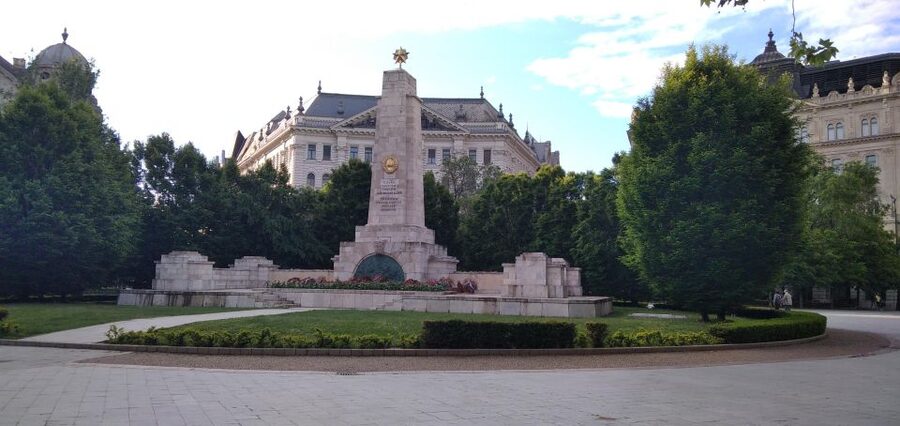
The main action swings into Szabadság Square with about an hour for the guided walk and sightseeing. This is where the tour leans into message and counter-message. You see how public space was used to influence thought.
At the center of this segment is the Liberty Square Soviet Memorial and the story of how the wall came down. The key is not just the historical event. The guide explains why symbols were so important. Under Communism, public art and monuments were not neutral. They were tools. You’re meant to feel small, grateful, or resigned, depending on what the regime wanted.
Then there’s another layer: the tour includes multiple statues in Liberty Square and frames them as propaganda versus reality. That’s a good way to keep your eyes open. Don’t just note what you see. Notice what the guide tells you to question, then look back at the details yourself.
Practical note: squares can be windy and exposed. If you’re visiting in cooler months, you’ll feel it. Bring a light layer even if the day looks mild.
Kossuth Lajos Square and the Parliament zone, 1956 as lived drama
From Szabadság Square, you move toward Kossuth Lajos Square for a short guided segment. Even if it’s only around 15 minutes, this stop helps connect the story to the government landscape. You start seeing how the political centers were set up to project authority.
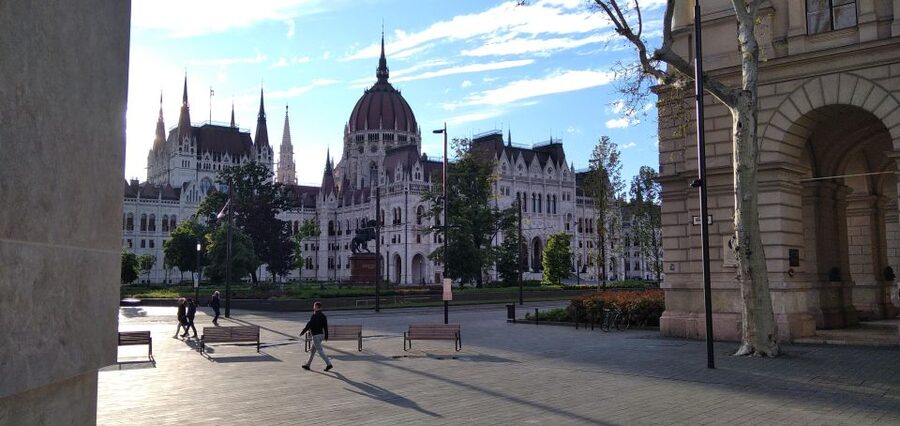
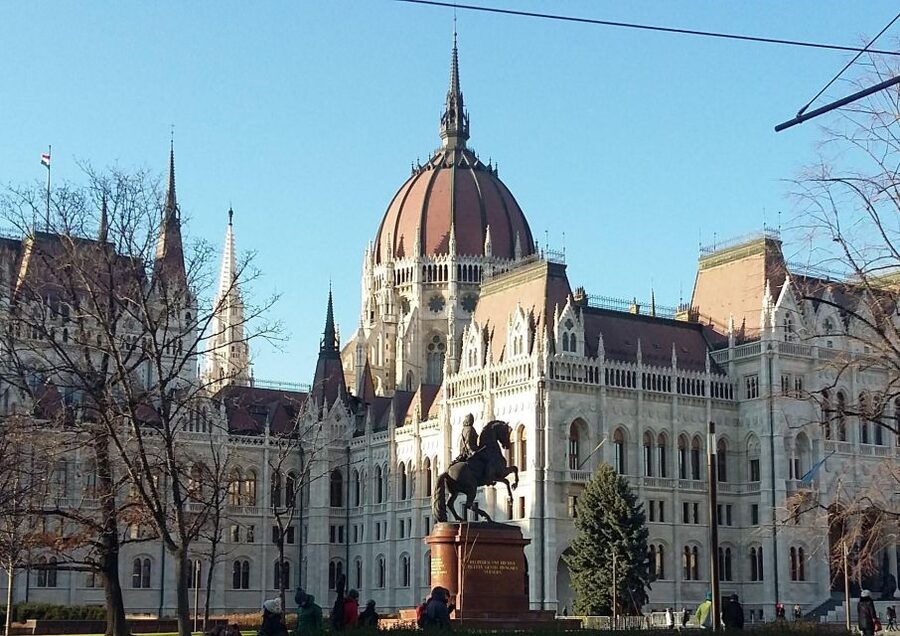
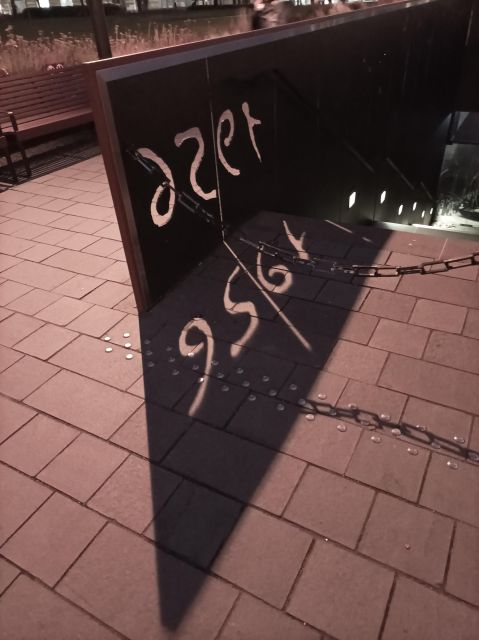
Next you arrive in the Parliament area and around the Memorial of the 1956 Revolution. This is one of the most emotionally heavy parts of the tour. The aim is to explain the uprising, the stakes, and the cost. You’re also shown how the revolution’s story was later remembered, used, or pushed aside, depending on what the era needed.
A nice touch is that the tour builds in a “photo stop” earlier, which lets you pause and frame what you see. That matters here. When you’re learning about events that are still debated and remembered with emotion, having a moment to orient and take visuals can help the details stick.
At this stage, you should be mentally ready for some dark themes. This is not sanitized history. The guide’s focus is on what dictatorship did to people, not just what leaders did in speeches.
Other centuries stacked along the Danube:


Olympics Park and Nagy Imre Memorial, heroism outside the obvious
The tour keeps things from turning into a single-note story. It takes you to the Park of Olimpics area and includes the Nagy Imre Memorial. This is where the route adds a human scale.
Instead of only focusing on the loudest institutions, you get a chance to see how figures tied to reform and resistance are commemorated in public space. The guide’s framing brings in sports and heros themes, which can sound strange until you realize what it’s doing. Under authoritarian systems, even leisure and public recognition become political. How people are celebrated, and what values they symbolize, can reveal what society is trying to preserve.
This is also a good moment to reset your brain. After the intensity around Soviet-era monuments and 1956, the Nagy Imre stop gives you a different kind of emotional gear. It shifts from “what happened to the nation” to “what happens to ideals when people fight for them.”
Tram ride to Margaret Bridge, then wine tasting with a view
You’ll ride a tram as part of the route, then head toward Margaret Bridge. This segment is useful for two reasons. First, it breaks up the walking. Second, the bridge and the river corridor help you understand Budapest’s layout, so the earlier squares don’t feel like disconnected set pieces.
Margaret Bridge is built into the tour in a practical way. You get a guided walk and a short stretch to see how the city opens up around the river. That viewpoint helps you connect earlier stops with later ones, including the Parliament area you encountered before.
Then there’s an included wine tasting at Margaret Bridge. It’s a small extra, not a full meal replacement, but it adds a local-food moment to the political story. For me, this kind of pairing works because it reminds you that the city kept going. Even during times of restriction, people still found ways to mark occasions and share something simple.
If you’re sensitive to alcohol, don’t worry. You’re not committing to a long sit-down. Still, consider how you’ll handle it later, especially if you plan to keep walking after the tour.
House of Terror, your 1.5 hours to read, pause, and take it in
One of the clearest ways to judge value on a history tour is how much time you get where it counts. Here, you get a 1.5-hour self-guided visit to the House of Terror. That’s a long enough window that you won’t feel rushed through the core exhibits.
Because it is self-guided, your job is simple: slow down and pick what you care about. If you like the names and dates, focus on text panels and display timelines. If you’re more drawn to personal impact, spend more time with the human-centered elements of the exhibits.
I like that the tour does not try to force every second into a scripted lecture inside the museum. You can pace yourself based on your mood. After you’ve heard the tour guide’s outside narration, the self-guided time gives you room to confirm details, notice things you didn’t catch in the street stops, and sit with the difficult parts.
Practical tip: the themes are dark. If you’re prone to getting overwhelmed, use the first part to orient, then choose a smaller set of rooms for deeper reading. You still cover plenty within 1.5 hours.
Price and value: why $56 can make sense for this kind of day
The price is listed at $56 per person and the tour runs about 2 to 2.5 hours. On paper, that’s a short day. But what you’re paying for is the combination: a licensed English guide on the street plus meaningful museum time inside House of Terror, plus transport via tram and a wine tasting moment.
You also get a small but useful add-on: an information leaflet with recommendations and a visit to an exhibit focused on the 56 Revolution. Those bits matter because they help you keep learning after the tour, instead of only relying on memory.
Food and drinks are not included, so budget separately for any meal you want before or after. The good news is that the structure includes a wine tasting, not a full dinner, so you’re not stuck paying for a meal just to get something local.
For value, you want to match this tour to your style. If you like guided context before you read on your own, this format is a strong fit. If you prefer purely guided museum narration with no free time, you may feel the self-guided component is a mixed bag.
Who this Budapest communist history route fits best
I think this tour suits three types of travelers.
First, if you want Budapest communist history with local explanations, not generic postcard captions, you’ll like how the guide links landmarks to daily consequences.
Second, if you’re interested in the 1956 Revolution and want it connected to the city’s architecture and memorials, the Parliament and Memorial stops do that work for you.
Third, if you enjoy walking but don’t want an all-day trek, the mix of walking segments, a tram ride, and a 1.5-hour museum window creates a realistic pace.
Who might skip it? If you only want light, feel-good Budapest sights, the House of Terror and the Soviet-era narrative will feel heavy. This route is serious by design. It can still be uplifting in a human sense, but it does not treat the subject casually.
Should you book this tour?
If you’re coming to Budapest and you want to understand the city beyond ruins and river views, book it. The combination of street storytelling, major squares like Liberty Square, and the House of Terror self-guided time gives you both context and space to process what you learn.
Do it especially if you like history with texture: the guide’s focus on how people lived, not just what happened. If you’re short on time, this is a tight way to get the big political story without trying to stitch it together on your own.
If you want a fully guided museum experience with no independent reading, then you might prefer a tour that spends all of its time with a guide inside the exhibits.
FAQ
How long is the Budapest communist history tour?
The tour is listed as 2 hours, and it also notes a tour length of 2.5 hours. Plan for about that time on your schedule.
Where does the tour start and end?
You meet at the front of St Stephen’s Basilica with your guide’s sign. The tour finishes at Jászai Mari tér, with stops that include the Margaret Bridge area.
Is the tour wheelchair accessible?
Yes, it is marked as wheelchair accessible.
What language is the guide speaking?
The tour is guided in English.
Does the tour run in bad weather?
Yes. It takes place rain or shine.
How much walking is involved?
The tour includes tram ride and walking totaling about 1.5 miles.
What is included, and what isn’t?
Included are the English guided tour, an information leaflet, and a visit to an exhibit of the 56 Revolution. Not included are hotel pickup and drop-off and food and drinks.
Newest from the Danube banks
- Gödöllö Royal Palace Privately with full board★ 5.0 · 1 review
- Private Budapest Tour with Thermal Bath or Market Visit★ 5.0 · 1 review
- Private Budapest walking tour – 4 hours★ 5.0 · 1 review
- Budapest Half Day Car Tour with Guide★ 5.0 · 1 review
- Budapest Private Transfer from Budapest city centre to Budapest Airport★ 3.0 · 1 review
- Magic Theme Team Adventure Game in the Streets of Budapest★ 5.0 · 1 review
- Budapest: Eat the Street, food tour with wine, 16+ tasting★ 5.0 · 1 review
- Private Transfer Budapest Airport BUD to Budapest by Car or Van★ 5.0 · 1 review
Communist-Era Tours, compared.
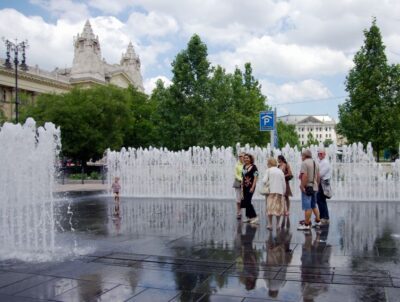
Budapest: Communist History Tour with House of Terror Option
Read our review →
Budapest: 3-Hour Walking Tour About Communism (Small Group)
Read our review →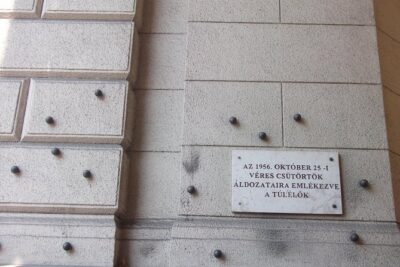
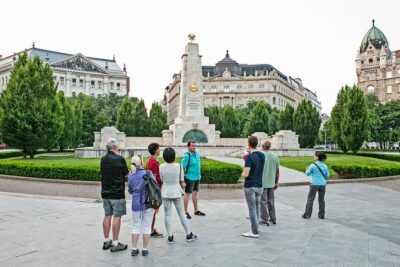
Budapest Hammer & Sickle Communist Times Tour
Read our review →
Memento Park Visit with Private Trabant Transfer
Read our review →
Browse the lists this tour appears in