
Reviewed · JEWISH DISTRICT TOURS
Budapest: Past & Present Jewish District Walk
Memory walks best on foot. This 1.5-hour Jewish District walk turns Budapest streets into a timeline, from the 19th century quarter to WWII remembrance and today’s street life. I like the licensed local guide style, with clear explanations you can actually use as you wander. I also like the mix of synagogues and everyday urban spaces, so the story stays connected to daily life instead of feeling like a history lecture. One possible drawback is that it covers a lot in a short time, so comfortable shoes and a basic fitness level matter.
You start near the Budapest Eye Ferris wheel, in the same general area as the Raoul Wallenberg Memorial, and you quickly build context for what you’re seeing. The pace stays relaxed, and the tour runs in most weather conditions, so you can plan with confidence.
The finish at Szimpla Kert (with a guided visit inside and time for questions) is a smart payoff. It gives you a practical way to keep exploring after the last stop, rather than sending you off mid-thought.
In This Review
- Key points to know before you go
- Starting at Danubius Fountain near the Budapest Eye, with history in the frame
- From 19th-century Jewish Quarter to everyday symbols you can spot fast
- Dohány Street Synagogue exterior: the landmark, plus what it means in context
- Rumbach Street Synagogue: comparing architectural and community cues
- Gozsdu Udvar courtyards: the city’s layered memory shows up in layout
- Kazinczy Street Synagogue: why the tour keeps returning to street-level meaning
- Budapest Ghetto Wall remains: the hardest part, handled with care and usefulness
- Street art and murals: how memory lives in the present
- Ending at Szimpla Kert: your questions, plus a local way to keep going
- Value, timing, and what fits best
- A few practical tips so the walk clicks for you
- Should you book this Budapest Jewish District walk?
Key points to know before you go
- A living neighborhood, not a checklist of monuments
- Past and present connect through courtyards, symbols, and street art
- Ghetto-era history is handled with balance and sensitivity
- You learn what remains exist, and where to look independently
- End at Szimpla Kert for local orientation and a final Q&A
- English tour with a licensed local guide, plus a calm pace
Other walks through the old Jewish quarter:
- Budapest Jewish Heritage Memorial Walking Tour & Synagogue Entry
★ 5.0 · 568 reviews - Budapest: Jewish Heritage Guided Tour with Synagogue Ticket
★ 4.8 · 533 reviews - German tour in the Budapest city centre & the Jewish quarter
★ 5.0 · 359 reviews
Starting at Danubius Fountain near the Budapest Eye, with history in the frame
I like how this tour begins where the city is already moving, not in a remote spot. You meet about 10–15 meters from the Budapest Eye Ferris wheel, next to the Danubius fountain, in the middle of the square. If you’re using transit, the closest metro is Deák Ferenc tér (M1 yellow, M2 red, M3 blue), followed by a short 2–3 minute walk.
Early on, the guide sets you up for the rest of the route. You’re not just walking past buildings. You’re learning how the Jewish Quarter took shape over time, and why the street layout matters. Even the first few minutes around Deák Ferenc tér help you understand where this neighborhood sits within the wider city.
Practical note: this is a walking tour with a lot of short transfers on foot. A basic fitness level is enough, but you will be standing, walking, and looking for details for about 1.5 hours total.
From 19th-century Jewish Quarter to everyday symbols you can spot fast
Once you’re moving, the tour focuses on development from the 19th century onward. The guide explains how Jewish life shaped the area’s architecture, commerce, and social fabric. That framing matters because it changes how you look at the streets. Instead of asking, What happened here long ago?, you start asking, What did communities build, run, trade, and argue about on an everyday basis?
You also get solid context on religion and community life, including the presence of both Ashkenazi and Sephardic traditions. The goal is not to turn you into an expert. It is to help you recognize why different customs and institutions show up in the neighborhood’s visual and cultural clues.
If you enjoy “city reading,” this part is your sweet spot. Courtyards, street layouts, and small symbols become hints that the guide helps you interpret. And since you keep moving, you can test what you learned almost immediately.
Dohány Street Synagogue exterior: the landmark, plus what it means in context
The tour’s first big anchor is the Dohány Street Synagogue exterior, with about 25 minutes set aside for guided discussion. You’re seeing a major landmark, but the real value is how the guide connects it to the district’s broader story.
This is where the tour gives you a clear sense of what Jewish heritage looks like in built form. You’ll also understand how public visibility and community institutions worked in the neighborhood, not just as religion, but as part of city life.
One thing I especially like here is the balance of “here’s what you’re looking at” with “here’s why it matters.” It keeps the tour from feeling like a lecture delivered at the speed of walking.
Rumbach Street Synagogue: comparing architectural and community cues
Next comes the Rumbach Street Synagogue area, with about 10 minutes. Because you’ve already started building context, this stop feels less like a repeat and more like a comparison. The guide helps you see how different spaces reflect different aspects of Jewish communal life.
Even if you only get the exterior viewpoint, you come away with a better sense of why multiple synagogues exist in the same district. That matters for visitors who assume the neighborhood was one uniform thing. Here, you learn it was shaped by lived traditions and community needs, not a single story.
It is also a good breathing point. After longer discussion areas, this shorter stop keeps the energy up without dragging.
More of Pest crossed at walking pace:




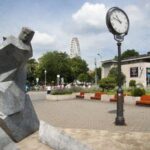
Gozsdu Udvar courtyards: the city’s layered memory shows up in layout
Then you pass by Gozsdu Udvar, with a guided moment of about 5 minutes. This is the kind of stop I love because it’s not only about a big named building. It’s about how urban design carries meaning.
Courtyards and street-facing details help the tour show the district’s layered past and present. The guide points out small features where memory is embedded in the cityscape, and you start spotting the logic of how people likely moved through the area.
If you’ve ever walked through a place and felt like you were missing the “why,” this is where the guide gives you the keys. You understand how spaces support community life, then you notice how modern life occupies those same routes.
Kazinczy Street Synagogue: why the tour keeps returning to street-level meaning
Kazinczy Street Synagogue takes about 15 minutes. By now, you are not simply collecting synagogue names. You’re learning to connect them to the neighborhood’s rhythm and the way identity shows up in the built environment.
The guide uses these stops to keep your understanding practical. You learn how Jewish heritage can be read in everyday spaces and symbols, not only in formal memorial sites. That approach is a strong antidote to “only monuments” tourism, where you see power points in stone but miss what people built around them.
This is also a good segment for questions. With a group moving forward, the guide’s answers help you connect earlier history to what you’re currently standing near.
Budapest Ghetto Wall remains: the hardest part, handled with care and usefulness
No Jewish District tour is complete without the WWII-era story, and this walk addresses the impact of the 20th century and World War II with balance and sensitivity. The guide also places the memory into the neighborhood’s physical reality, including former ghetto streets and where remains of the Budapest Ghetto Wall can still be seen.
What I appreciate most is the practical angle. The guide explains historical background, then shares guidance on how and where you can view these remains independently. That means you’re not only learning facts during the tour. You’re also getting a next-step plan for after the walk, which helps you keep respect and context as you explore on your own.
Because this is sensitive history, the tour’s tone matters. The pacing and phrasing keep it from turning into shock tourism. It stays rooted in place, not sensational detail.
Street art and murals: how memory lives in the present
In the later part of the tour, you shift from “then” to “now,” including urban street art and murals that reference Hungarian history, Jewish heritage, and collective memory. This is a smart move because it prevents the story from ending with WWII.
You’ll also hear how ongoing urban change is reshaping the area. That doesn’t cancel history. It shows how living neighborhoods keep evolving while still carrying visible reminders.
If you like photo-walking, this section is where your camera starts earning its keep. Just remember the tour has rules around noise and recording, so be mindful and follow the guide’s pace.
Ending at Szimpla Kert: your questions, plus a local way to keep going
The tour finishes at Szimpla Kert, Budapest’s first ruin pub, with about 15 minutes set aside. You also get time for remaining questions and a bit of local orientation so you can continue exploring the Jewish District independently.
This ending works well because it gives closure without pretending the story is over. You’re still in the neighborhood. You’re still using your new street-reading skills. And instead of ending in a transit station, you end in a place with a strong neighborhood vibe.
In the feedback I saw, the ruin bar stop was a favorite highlight. One guest specifically praised how the guide handled the ruin pub part, and I like that this tour gives you both history context and a real-world hangout transition.
Value, timing, and what fits best
Let’s talk value. The price is listed at $1.89 per person, and for that kind of budget, you’re essentially buying time with a licensed guide and a structured route through multiple key areas. Even though the tour is short at 1.5 hours, it covers major exterior locations, ghetto-era context, and an ending with guided time inside Szimpla Kert.
What makes the price feel especially reasonable is the guidance component. You’re not just looking at buildings. You’re learning how to interpret what you see, including where to find remaining ghetto wall evidence later on your own.
This tour is a great fit if you:
- Want a focused orientation to Budapest’s Jewish District without needing a full day
- Like guided context that helps you read street symbols and courtyards
- Are visiting synagogues and want history placed into daily-life space
- Prefer a relaxed pace rather than long, nonstop walking
It may feel less ideal if you:
- Need lots of seated time or expect extensive indoor synagogue viewing at multiple sites (this walk emphasizes exteriors and street-level stops)
- Plan to record audio or keep a party-like noise level, since those are not allowed
A small but important note: the tour is conducted in English, and it is wheelchair accessible.
A few practical tips so the walk clicks for you
- Bring comfortable shoes. You’ll be outside, walking in short segments.
- Dress for the weather. The tour runs in most conditions.
- If you want photos, have your camera ready and ask your guide to help with good angles.
- Public toilets are limited at the meeting point and along the route, so plan ahead if you need them.
Also, the tour rules are straightforward. Alcohol and drugs are not allowed, and you cannot make noise or record audio. If you’re traveling with a bachelor or bachelorette party group, this is also not the right fit.
Should you book this Budapest Jewish District walk?
I’d book it if you want a smart, short way to understand how Budapest’s Jewish District connects history to street life. The route has enough landmark time to ground you, and enough everyday spaces like courtyards and courtyards-adjacent areas to keep it real. Ending at Szimpla Kert with guided orientation is the bonus that makes it easier to keep exploring after the walk.
Skip it only if you’re looking for a long, museum-style day with lots of indoor time across multiple sites. This is a walk-first experience. It works best when you like stepping through neighborhoods with your eyes open and letting a guide help you read what you’re seeing.
If you value clarity, respectful context, and a route that helps you continue on your own afterward, this one is an excellent match. And if you meet a guide like Andre, you can expect history to be explained clearly, with room for questions and a good sense of what to notice next.
Newest from the Danube banks
- Pub Crawl Through The Ruin Bars in Budapest with T-shirt Included★ 4.5 · 14 reviews
- Rudas Bistro Premium Brunch★ 3.5 · 14 reviews
- Wine Tasting in the Countryside from Budapest★ 5.0 · 14 reviews
- Buda Castle District and Matthias Church Private Tour★ 5.0 · 14 reviews
- Pest side stories with a Historian★ 5.0 · 14 reviews
- Recirquel Company: Walk My World Immersive Show Entry Ticket★ 4.6 · 14 reviews
- Ram Gorge Hiking Adventure★ 5.0 · 14 reviews
- Budapest Rafting – Sunset Cruise★ 5.0 · 14 reviews
Jewish District Tours, compared.
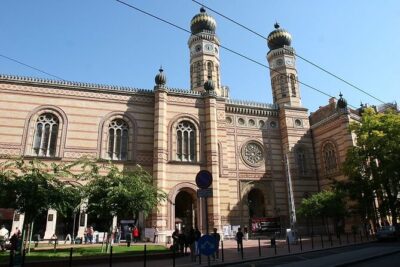
Budapest Jewish Heritage Memorial Walking Tour & Synagogue Entry
Read our review →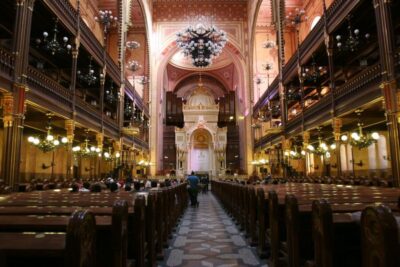
Budapest: Jewish Heritage Guided Tour with Synagogue Ticket
Read our review →
German tour in the Budapest city centre & the Jewish quarter
Read our review →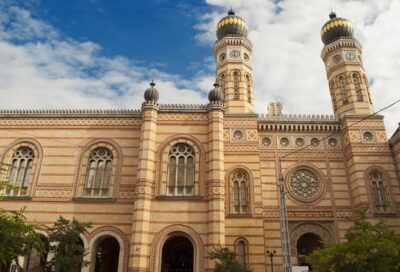
Past and Present of Budapest Jewish District Tour
Read our review →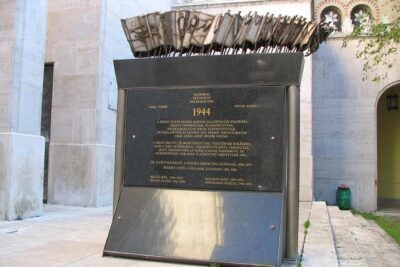
Budapest Dohany Synagogue & Hungarian Jewish Museum & free extras
Read our review →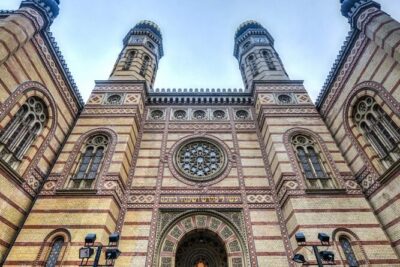

Budapest: Jewish History Guided Walking Tour with Historian
Read our review →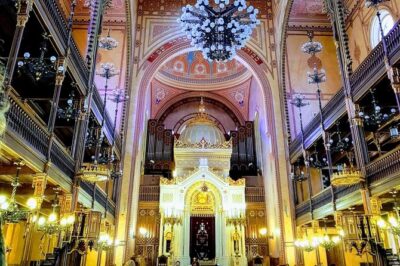
Budapest Dohany, Heroes’, Rumbach synagogues & Jewish Ghetto Tour
Read our review →Browse the lists this tour appears in