
Reviewed · JEWISH DISTRICT TOURS
Jewish Budapest Private City Walk
Jewish Budapest sticks with you. This private half-day walk through the Jewish Quarter pairs synagogues and ghetto-era reminders with Holocaust memorials, so you see how history sits in real streets. You also get a route that can be tailored to your wishes, which makes the experience feel more personal than a standard big-group shuffle.
I love the private guide setup, especially for asking questions at a steady pace instead of feeling rushed. I also like that food tastings are included, which helps you keep moving through a heavy subject without it turning into nonstop standing and staring.
One key consideration: synagogue entry is not included, and Kazinczy Street Synagogue is closed for renovation right now. That means you should expect some buildings to be exterior-only unless your guide can work with access options and any paid tickets.
In This Review
- Key things to know before you go
- Why this private Jewish Quarter walk beats solo wandering
- Price and value: what you get for $342.93 per group
- Stop 1: Jewish Quarter wall remains and yellow-star houses
- Stop 2: Great, Central Synagogue (Nagy Zsinagoga) inside, if you plan for tickets
- Stop 3: Kazinczy Street Synagogue, exterior-only right now
- Stop 4: Rumbach Street Synagogue, renovated with optional interior access
- Stop 5: Carl Lutz Memorial, courage made concrete
- Stop 6: Szimpla Kert, ruin-bar atmosphere in the VII. district
- Stop 7: Shoes on the Danube Bank, remembrance through a stark scene
- Stop 8: Király Street ghetto segment, then a look at what remains
- Guide style, pacing, and who will enjoy this most
- Practical planning tips so you do not get surprised
- Should you book this Jewish Budapest Private City Walk?
- FAQ
- Is this tour private?
- How long is the Jewish Budapest Private City Walk?
- Is hotel or port pickup included?
- Are synagogue entrance fees included?
- Can we enter the Kazinczy Street Synagogue?
- Does the tour include food?
- Is the tour recommended on Saturdays?
Key things to know before you go
- Private half-day format with hotel or port pickup and drop-off, and a group limited to up to 15.
- 4 hours of walking and listening, planned around major sights in the Jewish Quarter and along the Danube.
- Dohány Street Synagogue (Nagy Zsinagoga) is the main interior stop, but its admission is not included.
- Kazinczy Street Synagogue is currently closed, so you will see it from the outside.
- Shoes on the Danube Bank and the Carl Lutz Memorial bring the Holocaust story into vivid, real-world locations.
- Food tastings are included, but lunch and alcoholic drinks are not.
Other walks through the old Jewish quarter:
- Budapest Jewish Heritage Memorial Walking Tour & Synagogue Entry
★ 5.0 · 568 reviews - Budapest: Jewish Heritage Guided Tour with Synagogue Ticket
★ 4.8 · 533 reviews - German tour in the Budapest city centre & the Jewish quarter
★ 5.0 · 359 reviews
Why this private Jewish Quarter walk beats solo wandering
Budapest’s Jewish Quarter can be tough to read on your own. The streets look normal, but the story under them is not. A good guide helps you connect the dots fast, so you understand why a wall segment matters, why a star-shaped building detail is remembered, and why the Danube memorial hits so hard.
This is also one of those tours where the “private” part actually matters. With a smaller group and a route built around your interests, you get more time for the questions that pop up naturally. If you are the kind of visitor who wants context, not just photos, you will appreciate that pacing and attention.
The guide-led approach is especially valuable for sensitive sites. This route includes reminders of wartime persecution and mass murder, and you want someone who can handle those topics carefully. People I noticed from guide names shared for this experience, like Suzy Szoke, Joel, and Bogato, are repeatedly described as patient and thorough, which is exactly the tone you want here.
Price and value: what you get for $342.93 per group
At $342.93 per group for up to 15 people, the math comes down to value per person. If you are traveling as a small family or with a few friends, this can feel like a smart way to buy time with a guide, not just a walking path.
Your money supports several practical items at once:
- a local, professional guide
- hotel or port pickup and drop-off
- a private tour setup (only your group)
What is not included is also important to know up front. Synagogue entry tickets are not included, so you should budget extra for interior access where required. Food tastings are included, but lunch is not. Alcoholic drinks are available to purchase, but they are not part of the tour price.
If you plan carefully, this tour can be a high-value half-day because it combines major historical sites plus food tasting moments, without the usual “pay extra for everything” feeling across every stop.
Stop 1: Jewish Quarter wall remains and yellow-star houses
The route starts in the Jewish Quarter with street-level remnants tied to the former ghetto. You will see what remains of the wall that once surrounded the ghetto area and look at yellow-star houses connected to persecution.
This is a strong opening because it grounds you in the physical reality of control. It is not abstract, you can point to where boundaries existed. Even in a city where you can easily lose track of time, this stop helps you reset your brain to the historical purpose of each street corner.
Expect some explanation and context rather than a quick photo stop. The time here is short, but it is designed to set the emotional and historical framework before you head toward the big religious landmarks.
Stop 2: Great, Central Synagogue (Nagy Zsinagoga) inside, if you plan for tickets
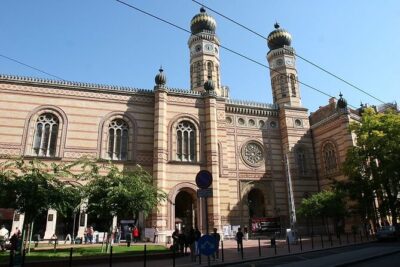
The Dohány Street Synagogue, also called the Great, Central Synagogue or Nagy Zsinagoga, is the star attraction for many visitors. It is described as the biggest functioning synagogue in Europe, and the architecture is dramatic enough that it can feel like a reset after the ghetto-era context.
The best part is the guide-led walkthrough of the whole building, at least as much as you want. There is an extra entrance fee for seeing it in full, so this is one moment where budgeting matters.
If you care about the story behind the building, this is where you will feel the most payoff. The guide is there to connect architecture with the turbulent history connected to the synagogue. Even if you do not go inside at maximum level, the outside and the immediate setting still matter, but interior access is the move if you can manage the extra cost.
More of Pest crossed at walking pace:



Stop 3: Kazinczy Street Synagogue, exterior-only right now
Kazinczy Street Synagogue is currently closed temporarily for renovation, and the community restrictions mean you cannot enter. That changes the feel of this stop: it becomes an exterior look at a synagogue erected in the 1910s, plus discussion of both Jewish community history and Art Nouveau architecture from that era.
This can be a mild frustration if you were counting on an interior visit. But it is still useful because Art Nouveau details are easier to notice when someone points them out. Also, from a history perspective, seeing what is inaccessible right now is part of the reality of how living religious spaces operate.
If you want inside access as many times as possible, plan your expectations and focus on Dohány as the main interior stop.
Stop 4: Rumbach Street Synagogue, renovated with optional interior access
Rumbach Street Synagogue is described as recently renovated, with striking architecture and a key role for the Jewish community in Budapest. In this tour, the default is seeing the site with no included admission ticket.
The good news is that the guide says they can show you inside upon request. That means your experience can vary depending on what is possible that day. If you want maximum access, it helps to be clear with your guide early, so you do not lose time negotiating at the last second.
This stop is a nice bridge between sacred architecture and the lived continuity of community life. Even when interior entry is limited, the exterior experience still benefits a lot from guided explanation.
Stop 5: Carl Lutz Memorial, courage made concrete
Carl Lutz is a powerful figure tied to efforts to help Jewish people avoid the death camps during the Holocaust. The Carl Lutz Memorial is a public statue and memorial site where you will go through his story, including why his actions are remembered as an example of goodness and bravery.
This is one of the tour’s emotional pivots. You go from sites tied to exclusion and violence to a story about protection and moral action. That contrast helps you keep the history from becoming only despair.
If you are the type who likes a clear narrative arc, this is where the guide’s storytelling really earns its place.
Stop 6: Szimpla Kert, ruin-bar atmosphere in the VII. district
Then the tour turns to something lighter, Szimpla Kert in the VII. district. This is a well-known ruin bar area, and Szimpla Kert is described as having unmatched design and atmosphere that draws people from around the world.
Is this a weird break between Holocaust memorials and ghetto remains? It can feel that way at first glance. But it works if you view it as Budapest living culture. Cities are not only their tragedies, they are their continuity.
Use this stop as a short reset. Grab a breath, take a few casual photos, and then get ready for the Danube memorial and more ghetto remnants that follow.
Stop 7: Shoes on the Danube Bank, remembrance through a stark scene
The Shoes on the Danube Bank memorial commemorates people who were shot into the Danube during the time of the Arrow Cross terror. The point here is not subtlety, it is directness.
The guide helps you understand what you are looking at, so it does not become just another statue along a scenic river. Expect an extended explanation in a short window. This is the type of stop where you may find yourself standing quietly longer than the scheduled time, because the story makes the scene stick.
If you want to get the full effect, stay present. Put your phone away for a moment and really take in how this memorial fits the riverbank.
Stop 8: Király Street ghetto segment, then a look at what remains
Under Király Street, specifically around Kiraly str. nr. 15., you will see an original segment of the Budapest Great Ghetto. The guide connects this location to the fact that it was the second largest WWII ghetto of the world.
This final historical stop is valuable because it gives you something tangible at street level. You leave with a clearer mental map of how the ghetto layout connects with the city’s geography.
After so much weight, this ending can be surprisingly stabilizing. It feels like you are closing the loop, not just checking the last landmark.
Guide style, pacing, and who will enjoy this most
The tour runs about 4 hours and includes hotel or port pickup and drop-off, which helps a lot in Budapest when you do not want to think about transit. It is offered in English and you get a mobile ticket. It is also flexible in terms of route, based on your wishes.
From the guide performance that comes up in the experiences shared, a few traits show clearly. The guides are praised for passion, serious yet sensitive explanations, and patient answers. When you are dealing with older participants, it matters. One person noted their group included visitors over 70, and they appreciated the guide being patient. That is exactly what you want if your group includes seniors or anyone who needs a slower pace.
This tour also has a clear rule for your planning: it is not recommended on Saturdays, because Jewish holidays can mean synagogues are closed. If your dates include a Saturday, you should pick another day if you want the best chance of interior access.
It is also a good fit for:
- couples and families who want a private guide
- history-minded travelers who like context and explanations
- visitors who can handle a somber topic with care
It may be less ideal if you want a casual stroll with minimal talking. This is a listening tour as much as a sightseeing one.
Practical planning tips so you do not get surprised
Here are the main “plan it once, enjoy it more” notes.
First, budget for synagogue entry tickets. Dohány Street Synagogue interior access is the biggest one, and tickets are not included. Kazinczy Street Synagogue is closed, so you should not plan your expectations around entering it. Rumbach Street Synagogue may allow inside viewing upon request, but it is not guaranteed as an included ticket.
Second, plan for walking. The time at stops is short but the route adds up. Wear comfortable shoes, and if you have mobility concerns, check with the provider ahead of time.
Third, understand what “food tastings included” means in real life. Lunch is not included, and alcoholic drinks are not included. Tastings can help bridge gaps between meals, and at least one guide-led version includes a stop for something like strudel, so you are likely to get a sweet and local break rather than a full meal.
Lastly, if you are arriving by cruise ship, pickup is offered but you need to provide specific port details like ship name, docking time, disembarkation time, and re-boarding time. That kind of detail keeps pickup smooth.
Should you book this Jewish Budapest Private City Walk?
I think you should book it if you want a guide to connect the Jewish Quarter with Holocaust memorials and still bring in the architecture and city layout details that are hard to spot alone. The private format, hotel pickup, and included food tastings add real convenience and value for a half-day.
You should think twice if interior synagogue access is your top priority and you are traveling on a Saturday, or if you hate the idea of paying extra entrance fees for key sites. Also, if renovation closures would bother you, remember Kazinczy Street Synagogue is currently exterior-only.
For the right traveler, this tour is one of those experiences where the guide quality really changes the outcome. If you want answers, not just sights, it is an easy yes.
FAQ
Is this tour private?
Yes. It is a private tour/activity, and only your group participates.
How long is the Jewish Budapest Private City Walk?
The tour lasts about 4 hours.
Is hotel or port pickup included?
Yes. Hotel or port pickup and drop-off are included. Cruise ship passengers need to share port details at booking.
Are synagogue entrance fees included?
No. Entrance fees are not included. The Dohány Street Synagogue admission is not included, and Kazinczy Street Synagogue is closed temporarily.
Can we enter the Kazinczy Street Synagogue?
No. Kazinczy Street Synagogue is closed temporarily due to renovation works, so you cannot enter it right now.
Does the tour include food?
Yes. Food tastings are included. Lunch and alcoholic drinks are not included.
Is the tour recommended on Saturdays?
No. It is not recommended on Saturdays because Jewish holidays can mean synagogues are closed.
Newest from the Danube banks
- Wine Tasting in the Countryside from Budapest★ 5.0 · 14 reviews
- Pub Crawl Through The Ruin Bars in Budapest with T-shirt Included★ 4.5 · 14 reviews
- Rudas Bistro Premium Brunch★ 3.5 · 14 reviews
- Buda Castle District and Matthias Church Private Tour★ 5.0 · 14 reviews
- Pest side stories with a Historian★ 5.0 · 14 reviews
- Recirquel Company: Walk My World Immersive Show Entry Ticket★ 4.6 · 14 reviews
- Ram Gorge Hiking Adventure★ 5.0 · 14 reviews
- Budapest Rafting – Sunset Cruise★ 5.0 · 14 reviews
Jewish District Tours, compared.
Budapest Jewish Heritage Memorial Walking Tour & Synagogue Entry
Read our review →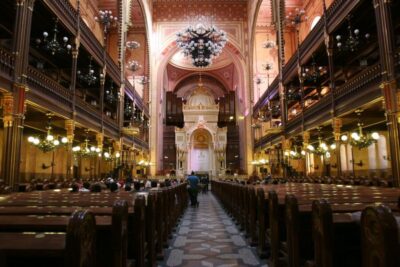
Budapest: Jewish Heritage Guided Tour with Synagogue Ticket
Read our review →
German tour in the Budapest city centre & the Jewish quarter
Read our review →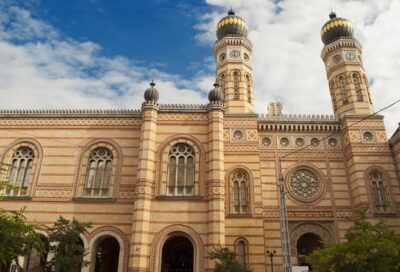
Past and Present of Budapest Jewish District Tour
Read our review →
Budapest Dohany Synagogue & Hungarian Jewish Museum & free extras
Read our review →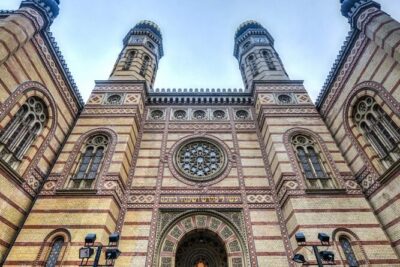
Budapest: Jewish History Guided Walking Tour with Historian
Read our review →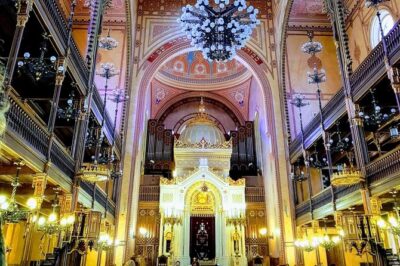
Budapest Dohany, Heroes’, Rumbach synagogues & Jewish Ghetto Tour
Read our review →Browse the lists this tour appears in