
Reviewed · JEWISH DISTRICT TOURS
Jewish Quarter tour: skip the line Great Synagogue ticket
Budapest tells its Jewish story on foot. This 3-hour Jewish Quarter walk links synagogues, ghetto wall fragments, and memorial stops, with the ghetto wall exhibition included. I like how the guide connects buildings to real choices people faced, and I like the small group size that keeps things moving at a human pace.
Quick caution: even though the title mentions a Great Synagogue skip-the-line ticket, this version does not include ticketed entry to the Dohány Street Synagogue. If you want time inside that landmark, you should book the version that explicitly includes entry, or plan to buy separately.
You meet at the Ferris Wheel of Budapest near Erzsébet tér and finish near Dohány u. 2. Expect a fair amount of walking, but you will leave with a clear mental map of the quarter, so you can keep exploring after the tour ends.
In This Review
- Key things to notice before you go
- What you really get for $18.06 in the Jewish Quarter
- Meeting at the Ferris Wheel, moving with a small group
- Raoul Wallenberg Statue: the suitcase memorial that sets the tone
- Madách Imre Square: the gateway feel of the Jewish Quarter
- Rumbach Street Synagogue: Moorish-style architecture in 1872
- The ghetto wall fragment and exhibition you can actually enter
- Gozsdu Udvar and Király Street: where the quarter eats and hangs out
- Kazinczy Street Orthodox Synagogue: Art Nouveau details and a living community
- Ghetto Memorial Wall and Dohány Street Synagogue area
- Guide quality is the real differentiator: Brigi Malik and Claudia
- Choosing the right booking when the title mentions Great Synagogue skip-the-line
- Who this tour suits best
- Should you book it?
- FAQ
- Is this tour really a skip-the-line Great Synagogue ticket?
- How long is the Jewish Quarter walk?
- What language is the tour offered in?
- Where do I meet and where does the tour end?
- Is a mobile ticket included?
- How many people are in the group?
- Is admission included for the ghetto wall exhibition?
- Are the synagogue tickets included for all synagogues on the route?
- Can I get a full refund if I cancel?
Key things to notice before you go
- Ticket wording matters: this option is the more affordable one that does not include entry to the Great Synagogue.
- One stop is fully worth planning around: admission is included for the Ghetto Wall Exhibition at the ghetto wall fragment.
- Architecture lovers get a full sampler: Moorish-style and Art Nouveau synagogue designs show up back-to-back.
- The guide drives the story: I saw consistent praise for clear explanations and pace, including guides Brigi Malik and Claudia.
- Memorials set the tone early: the Raoul Wallenberg suitcase memorial frames the rest of the walk.
- You still get real “quarter” atmosphere: Gozsdu Udvar puts you next to the area’s modern food and ruin-bar culture.
Other walks through the old Jewish quarter:
- Budapest Jewish Heritage Memorial Walking Tour & Synagogue Entry
★ 5.0 · 568 reviews - Budapest: Jewish Heritage Guided Tour with Synagogue Ticket
★ 4.8 · 533 reviews - German tour in the Budapest city centre & the Jewish quarter
★ 5.0 · 359 reviews
What you really get for $18.06 in the Jewish Quarter
For about $18.06, you are buying three things: a guided route, context that makes the places make sense, and smart use of time in an area where you can otherwise feel lost. The tour runs about 3 hours, and it is offered in English. It is also small, with a maximum of 10 travelers, which matters because many of these streets can get narrow and busy.
A practical perk is the mobile ticket. You are not scrambling for paper at the meeting point. Another small detail that helps value is that this tour is commonly booked ahead, with an average of 50 days in advance, so it is usually better to reserve early rather than waiting until the last minute.
The one place where value depends on your expectation is the Great Synagogue topic. Some versions include entry to the Great Synagogue, and some do not. If your main goal is to step inside the big landmark, check the exact version you book before you show up at Erzsébet tér.
Meeting at the Ferris Wheel, moving with a small group
The tour starts at the Ferris Wheel of Budapest by Erzsébet tér, then ends near Dohány Street Synagogue at Dohány u. 2. That end point is convenient, because once you finish you are already in the right area to keep going, grab coffee, or take a tram back to your hotel.
With a group size capped at 10, you should expect a calmer rhythm than the huge “line up and shuffle” style tours. One review specifically praised a guide who moved at the group’s pace, and that lines up with how this kind of Jewish Quarter route actually works best. There are photo stops, but there is also time to listen and absorb.
One consideration: reviews also flag that there is a lot of walking. That is normal for a route that crosses multiple sites on foot, but it does mean you should wear comfortable shoes and keep some water handy. If you come in thinking it will be mostly “viewing from a bus,” you will be disappointed.
Raoul Wallenberg Statue: the suitcase memorial that sets the tone
The first stop is the Raoul Wallenberg Suitcase Memorial. It is the kind of monument you understand even before you read anything, because the suitcase image is so clear. The message is about Raoul Wallenberg, the Swedish diplomat who saved thousands of Hungarian Jews during World War II, and the statue ties that story to his mysterious disappearance.
This first stop matters, because it prepares you for what comes next. The rest of the walk is not just about beautiful synagogues and old streets. It is also about survival, rescue, and what happened when people were trapped. A good guide here will point out how memorials like this one use symbolism to hold emotion and history at the same time.
You will only spend around 10 minutes here, and admission is free. Use the time well. Look at what the memorial emphasizes, then let the story shape how you see the later stops.
Madách Imre Square: the gateway feel of the Jewish Quarter
Next you pass through Madách Imre Square (Madách Imre Ter). It is a small square, but it has a lived-in quality. There are cafes and bars around it, and the square works like a gateway into the wider Jewish Quarter.
This is a good pause point. After a heavy start at the Wallenberg memorial, Madách Imre Square gives you a quick reset without losing the thread of the day. A guide should help you understand why the quarter feels both historical and modern at the same time, since the streets around here are used by real people today.
You should budget about 10 minutes. Admission is free, and at this stage you are not paying for anything. You are just getting your bearings.
Some other Danube days worth pricing up





Rumbach Street Synagogue: Moorish-style architecture in 1872
The route then brings you to Rumbach Street Synagogue. This one is a standout for architecture. It is Moorish-style, designed by Otto Wagner in 1872. It is also recently restored, and it functions as a cultural space and memorial.
Plan for this stop to be more about recognition and interpretation than ticking an admission box. The synagogue’s admission ticket is listed as not included on this version. That means you may be able to see and learn from the space, but if you want a deeper inside visit with a paid entry, you might need to arrange that separately.
What makes this stop special is the contrast. You are looking at a religious building that also carries memory. The exterior style can look theatrical, but the guide’s job is to show you how the design language connects to identity, community pride, and the social role synagogues played.
Expect about 15 minutes. This is a good time to slow down and notice details that a quick photo never captures, like the building rhythm and how the restored features read compared to older stonework.
The ghetto wall fragment and exhibition you can actually enter
Stop four is the heart of the tour: the Ghetto Wall Fragment and the nearby Ghetto Wall Exhibition. Admission is included here, and you get about 30 minutes.
This is the most practical “must plan for” stop, because it is the one place on the walk where the admission ticket is explicitly included. You are not just looking at a marker and moving on. You are getting historical context through photos, documents, and personal stories, which is exactly what turns a wall into something you can understand.
Why this matters for you: Budapest has many layers, and it is easy to focus only on the grand synagogues. This exhibition anchors the day in the reality of confinement and survival. Even if you already know some Holocaust-era history, the human stories make it feel specific to place and people, not just a general timeline.
Then you move on with your brain better sorted. After the exhibition, you will see later memorial sections as part of a system, not as random pieces of stone.
Gozsdu Udvar and Király Street: where the quarter eats and hangs out
After the heavier material, the route shifts to Gozsdu Udvar near Király Street. This is one of the oldest and most dynamic streets in the Jewish Quarter. You will notice historic buildings alongside modern cafes and ruin-bar culture.
This stop is shorter, around 15 minutes, and there is no admission. It is less about museums and more about learning how the quarter functions today. It helps you avoid a common mistake: thinking Jewish Budapest is only frozen in time.
If you want to make the most of this section, use it as a quick meal or snack pause. Your guide can give you direction for what is near, and you can decide whether you want to linger after the tour.
Kazinczy Street Orthodox Synagogue: Art Nouveau details and a living community
Next is the Kazinczy Street Orthodox Synagogue, an Art Nouveau religious center tied to the Orthodox Jewish community. It was built in the 1910s and you should expect attention to craftsmanship: stained glass, intricate woodwork, and a richly decorated interior.
As with Rumbach Street Synagogue, admission is listed as not included for this stop on this version. That does not mean the stop is worthless. It means you are more likely to focus on exterior context, guide explanations, and what you can see without a paid interior entry. If you strongly want inside time here, plan to buy separately.
This stop gives you a different kind of perspective. Instead of only looking at synagogues as memorial objects, you also see them as active spaces shaped by tradition. A good guide will help you connect architectural flourishes to the role of worship and community life.
Plan for about 10 minutes. It is short, but the visual details are the kind you remember later when you pass similar buildings elsewhere in Europe.
Ghetto Memorial Wall and Dohány Street Synagogue area
The route ends with two connected stops that sit close to the Dohány Street Synagogue area.
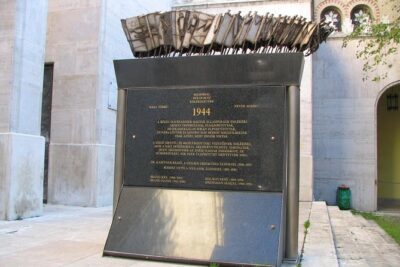
First, you visit the Ghetto Memorial Wall, a solemn tribute that preserves a section of the original ghetto wall. It is meant to keep the tragedy visible. This stop is about 10 minutes and admission is free.
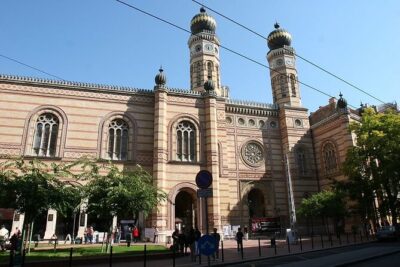
Then comes the big one: Dohány Street Synagogue. It is the largest synagogue in Europe and built in 1859 in Moorish Revival style. The building is not only a religious center. It also functions as a Holocaust memorial, a cemetery, and a museum. On this version, the admission ticket is listed as not included, so do not assume your ticket covers interior museum or cemetery areas.
This is where the title confusion can hurt. If you are booking with the expectation of ticketed Great Synagogue entry, double-check the exact tour version. A more affordable version exists, and it excludes Great Synagogue entry.
One extra practical note: I have found it makes sense to add the Shoes on the Danube memorial on your own after this walk, because the geography and time usually do not line up for it to be part of the same route. If you want it, just map it out once you are already finished near Dohány.
Guide quality is the real differentiator: Brigi Malik and Claudia
The sites are impressive, but what makes this tour work is how the guide tells the story. Praise was consistent for guides who share history with great stories and who keep a comfortable pace.
In particular, Brigi Malik earned direct mention for moving at the group’s pace and explaining history through vivid storytelling. Claudia also got standout praise for explaining the history of the people and for making the synagogues feel beautiful without turning them into a simple photo stop.
You can use that pattern to set your own expectation. If you are the type who wants facts only, you might skim the guide and miss the point. If you like context and interpretation, you will probably feel that the extra detail adds real value, especially at memorial and ghetto-related stops.
Choosing the right booking when the title mentions Great Synagogue skip-the-line
Here is the simplest rule: decide whether your priority is inside entry to the Great Synagogue complex.
- If your must-see is ticketed time inside the Great Synagogue, make sure you book the version that explicitly includes that entry.
- If you are okay with a route that focuses on the Jewish Quarter walk and includes at least one paid site, then this lower-cost version can still be a strong choice because the ghetto wall exhibition is included.
That mismatch is not a small detail. It changes what you experience. The tour is still meaningful without the Great Synagogue ticket because you will cover other synagogues and multiple memorial components. But if your heart is set on the Dohány Street interior museum and related areas, you will want to pay for the right option.
Who this tour suits best
This works best for you if:
- You want a guided route around Budapest’s Jewish Quarter without trying to piece together directions on your own.
- You enjoy architecture and symbolism, especially when it is explained in plain language.
- You care about the ghetto story and want an included stop where you can enter the exhibition.
It might be less ideal if:
- You are mainly hoping for extensive indoor time at the Great Synagogue building.
- You do not want to walk much. This route moves on foot through multiple streets and stops.
Should you book it?
I would book this tour if you want a focused 3-hour walk that turns the Jewish Quarter into a clear story, not just a list of sights. The best reason is the combination of memorial context and the included Ghetto Wall Exhibition. Even with ticket limitations at other synagogues, the included stop gives you something tangible you cannot easily replicate on your own without extra planning.
Just make the small effort of confirming which version you booked. The title may sound like it includes Great Synagogue skip-the-line entry, but the actual experience depends on the option you chose. If you align your expectations with the ticket includes, you will likely come away feeling informed and ready to explore the area further.
FAQ
Is this tour really a skip-the-line Great Synagogue ticket?
The tour title mentions that, but this specific option does not include ticketed entry to the Great Synagogue. There is a separate version that includes entry, so you should confirm which option you selected before you go.
How long is the Jewish Quarter walk?
The duration is approximately 3 hours.
What language is the tour offered in?
The tour is offered in English.
Where do I meet and where does the tour end?
You start at the Ferris Wheel of Budapest near Erzsébet tér (1051 Hungary) and end at Dohány Street Synagogue near Dohány u. 2 (1074 Hungary).
Is a mobile ticket included?
Yes, the tour includes a mobile ticket.
How many people are in the group?
The tour has a maximum of 10 travelers.
Is admission included for the ghetto wall exhibition?
Yes. Admission is included for the stop that covers the Ghetto Wall Exhibition alongside the ghetto wall fragment.
Are the synagogue tickets included for all synagogues on the route?
No. The itinerary lists ticketed admission as not included for Rumbach Street Synagogue, Kazinczy Street Synagogue, and Dohány Street Synagogue on this version.
Can I get a full refund if I cancel?
Yes. You can cancel up to 24 hours in advance for a full refund.
Newest from the Danube banks
- Gödöllö Royal Palace Privately with full board★ 5.0 · 1 review
- Private Budapest Tour with Thermal Bath or Market Visit★ 5.0 · 1 review
- Private Budapest walking tour – 4 hours★ 5.0 · 1 review
- Budapest Half Day Car Tour with Guide★ 5.0 · 1 review
- Budapest Private Transfer from Budapest city centre to Budapest Airport★ 3.0 · 1 review
- Magic Theme Team Adventure Game in the Streets of Budapest★ 5.0 · 1 review
- Budapest: Eat the Street, food tour with wine, 16+ tasting★ 5.0 · 1 review
- Private Transfer Budapest Airport BUD to Budapest by Car or Van★ 5.0 · 1 review
Jewish District Tours, compared.
Budapest Jewish Heritage Memorial Walking Tour & Synagogue Entry
Read our review →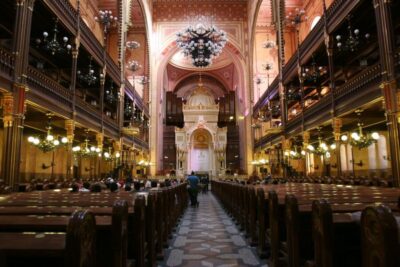
Budapest: Jewish Heritage Guided Tour with Synagogue Ticket
Read our review →
German tour in the Budapest city centre & the Jewish quarter
Read our review →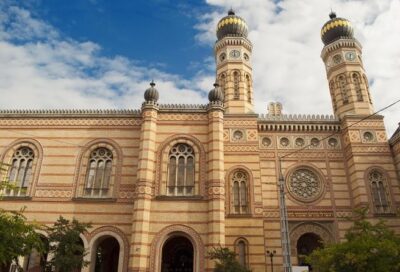
Past and Present of Budapest Jewish District Tour
Read our review →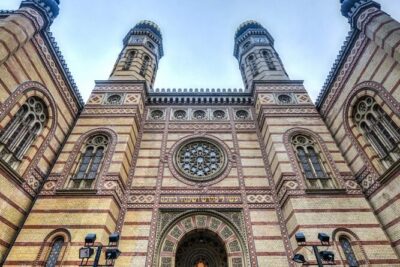
Budapest Dohany Synagogue & Hungarian Jewish Museum & free extras
Read our review →
Budapest: Jewish History Guided Walking Tour with Historian
Read our review →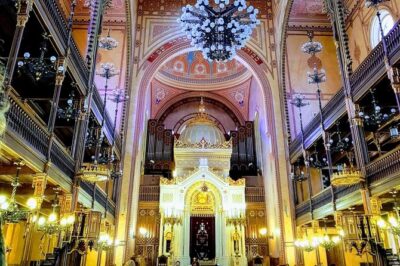
Budapest Dohany, Heroes’, Rumbach synagogues & Jewish Ghetto Tour
Read our review →Browse the lists this tour appears in