
Reviewed · JEWISH DISTRICT TOURS
Budapest: Jewish Heritage Walking Tour with Historian Guide
A quiet walk through Budapest can hit like history class, but with better stories. This small-group, historian-led tour connects Jewish life in Pest from the 18th century through the Holocaust, using real sites, real monuments, and street-level context.
What I especially like is the field-expert guidance that turns buildings and streets into understandable chapters, not just sightseeing stops.
My second big favorite is the mix of beautiful synagogue architecture and the sober Holocaust memorial stops, including the Carl Lutz Memorial and the Memory Wall. One thing to consider: Kazinczy Street Synagogue is temporarily closed for entry, so you’ll see it from the outside and focus on what you can observe and learn there.
In This Review
- Key things you’ll notice on this Budapest Jewish heritage tour
- Where this walk starts, and why Deák Square matters
- Rumbach Street Synagogue: the stop that makes the district feel real
- Gozsdu Passage and the Jewish Quarter streets you can actually walk
- Holocaust remembrance on foot: ghetto wall remnant, Carl Lutz Memorial, Memory Wall
- Kazinczy Street Synagogue: what you see when entry is closed
- The historian guide experience: why Kálmán Dániel changes the feel
- Timing and pacing: how to get the most from just two hours
- Value for $62: what you’re paying for, and what makes it fair
- Should you book the Budapest Jewish Heritage Walking Tour?
- FAQ
- How long is the Budapest Jewish Heritage Walking Tour?
- Where do I meet for the tour?
- What language is the tour guide?
- How large is the group?
- Which synagogues are visited?
- Is entry included for both synagogues?
- What Holocaust memorial sites are included?
- What is included in the ticket price?
- Is hotel pickup or drop-off included?
- Is food and drink included?
Key things you’ll notice on this Budapest Jewish heritage tour
- A real historian guide, Kálmán Dániel, leading the walk in English with clear, human stories
- Rumbach Street Synagogue visit with a ticket, so you’re not just photographing from the sidewalk
- Holocaust remembrance built into the route, including the ghetto wall remnant, Carl Lutz Memorial, and Memory Wall
- Gozsdu Passage time, a quick pause that helps you read the district beyond the synagogues
- Kazinczy Street Synagogue exterior stop, because restoration affects what you can enter right now
- Small group size (up to 10), which makes questions and follow-ups feel normal
Other walks through the old Jewish quarter:
- Budapest Jewish Heritage Memorial Walking Tour & Synagogue Entry
★ 5.0 · 568 reviews - Budapest: Jewish Heritage Guided Tour with Synagogue Ticket
★ 4.8 · 533 reviews - German tour in the Budapest city centre & the Jewish quarter
★ 5.0 · 359 reviews
Where this walk starts, and why Deák Square matters
The tour meets at Deák Square at the entrance of the Deák téri evangélikus templom (a Lutheran church). It’s near the M2 metro entrance, which makes the start easy to reach without planning a complicated transit puzzle.
From the jump, this route works because it anchors you in a real meeting point first, then moves you into the Jewish Quarter area on foot. In two hours, that matters. You get enough time to see the core sites without feeling like you’re constantly sprinting between far-apart neighborhoods.
The meeting setup also tells you what kind of tour this is: guided walking, not a bus tour. You’ll have moments for photo stops, but the main event is the story behind each place. And with a group limited to 10, you’re not shouting over anyone’s audio app. You can actually follow the guide.
If you like history you can point to, this format is for you. If you prefer a slow meander with no structure, you might still enjoy it, but you’ll probably feel the pace.
Rumbach Street Synagogue: the stop that makes the district feel real
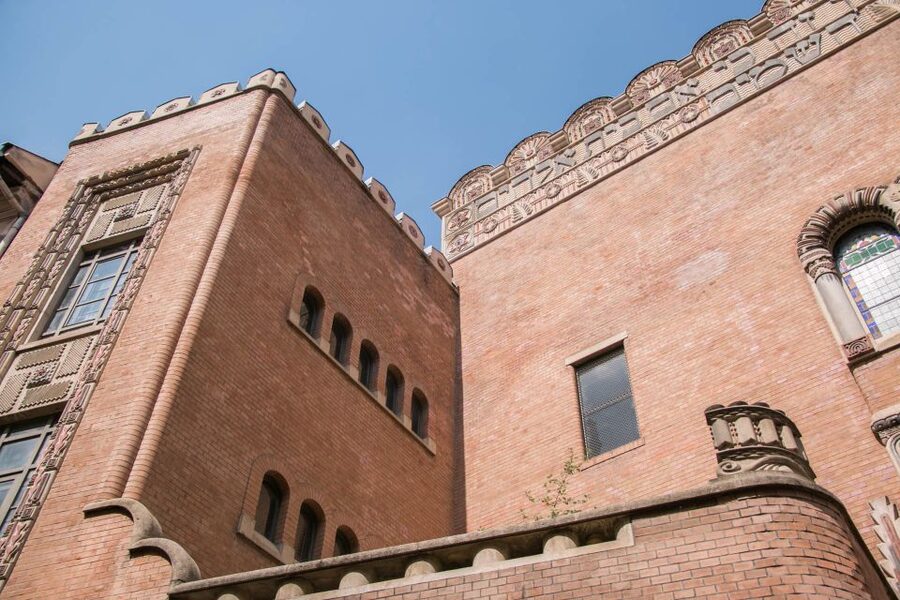
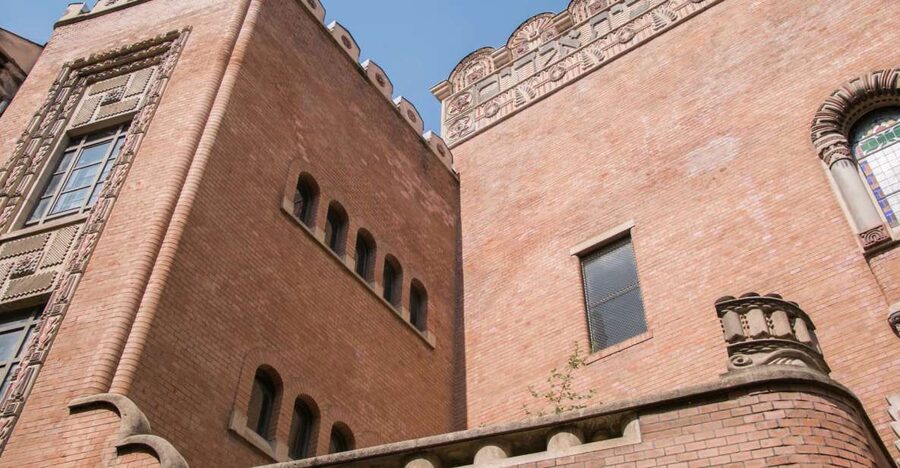
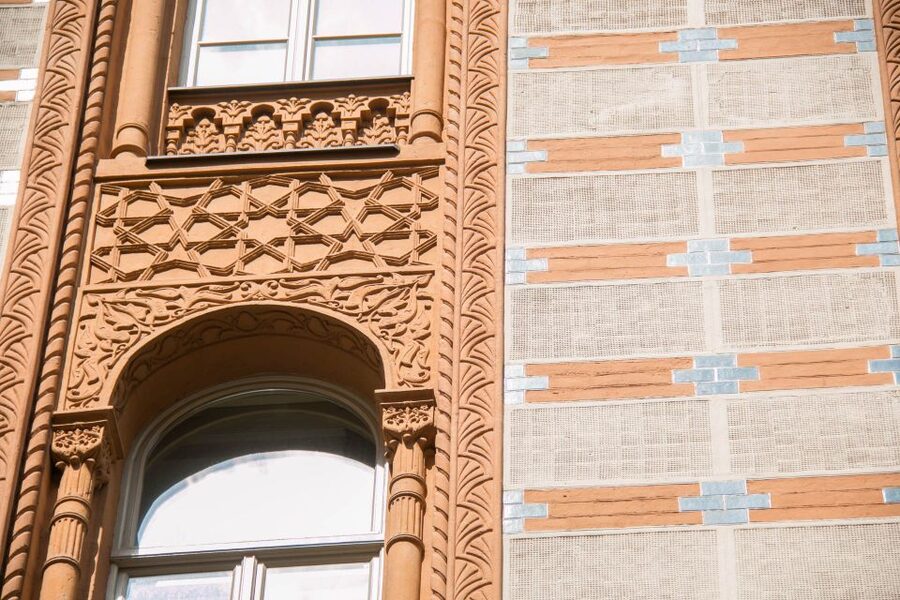
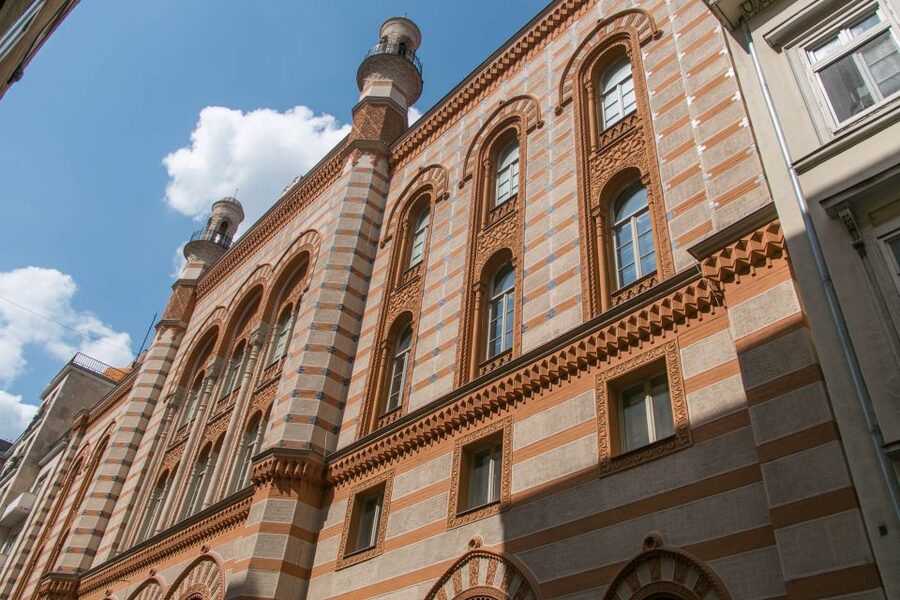
The walk brings you to the Rumbach Street Synagogue early in the experience, with time for a photo stop and then a guided visit inside. The key here is that entry is included for Rumbach, so you’re not stuck with exterior views only.
What I like about this kind of visit is that synagogues are more than religious buildings. They are also community landmarks, art-historical statements, and evidence of how a neighborhood organized itself. The tour frames Rumbach as one of those “mementos of its own time,” meaning you learn to look at what you’re seeing rather than treating it like a generic stop.
Even if you know little about Budapest’s Jewish past, the guide helps you connect dots. You’ll pick up the timeline and the significance of why these buildings were placed where they were, and how the community in Pest grew and changed over time.
One practical thought: synagogue interiors can feel more formal than typical tourist sites. Dress in a respectful way, and plan to listen as much as you look. You’ll get more from the experience that way.
Gozsdu Passage and the Jewish Quarter streets you can actually walk
After Rumbach, the tour shifts into street mode. You move through the Jewish Quarter area with guided walking, and you also stop around Gozsdu Passage for photos and context.
I like this section because it breaks the pattern of “building, then building.” Streets are where history becomes readable. The guide talks about what life looked like in the district across decades, and you start noticing how the neighborhood layout shapes stories. Even when you don’t recognize a landmark, you learn how to ask the right question: Who lived here? What brought people here? What changed, and when?
The tour also highlights less-obvious sights, not only the famous targets. That matters because a neighborhood becomes more than a list of attractions. You start to understand why the area was important and how it connected to wider Budapest life.
And here’s a small tip I’d give you: wear shoes that can handle uneven pavement and short pauses. This is a walk with multiple photo moments, guided turns, and “look over there” directions. If your feet are comfortable, your brain can stay in learning mode.
Holocaust remembrance on foot: ghetto wall remnant, Carl Lutz Memorial, Memory Wall
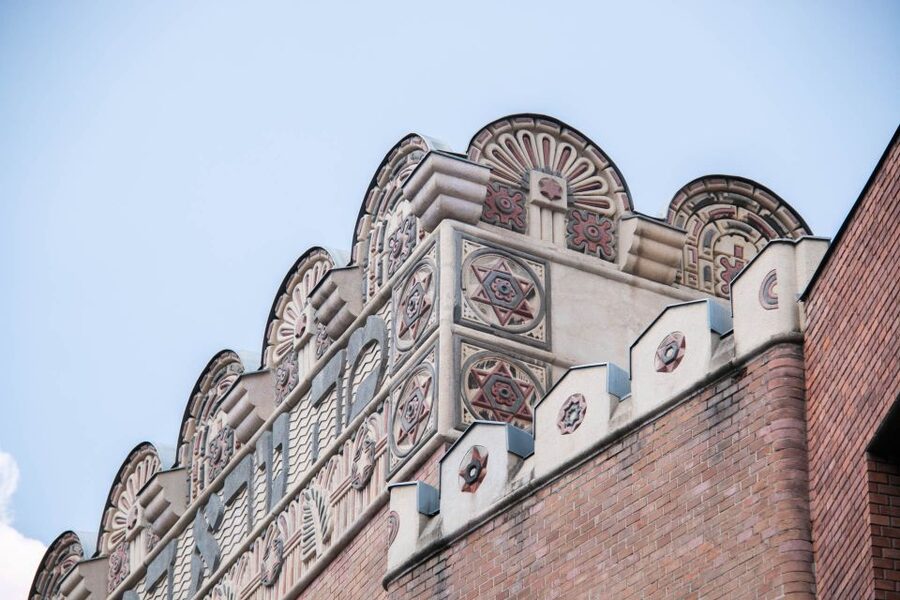
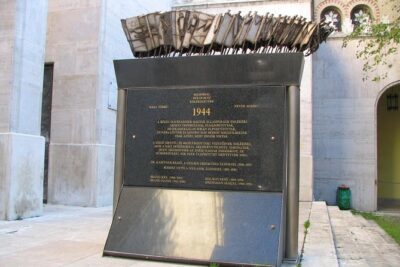
Then the tour turns serious in a way that feels grounded, not theatrical. You visit Holocaust remembrance points, including a remnant of the ghetto wall, the Carl Lutz Memorial, and the Memory Wall.
This is one of the highest-value parts of the route because it gives you physical reference points. When you stand near memorials, your understanding shifts from abstract facts to real places where people lived, hid, or hoped. The tour includes entry to the ghetto wall memorial area, so you’re able to spend time with the interpretation rather than just rushing past it.
What you’ll hear is focused on survival stories and the people who helped others. The tour highlights miraculous survivings and miracle-making helpers, which matters because it avoids turning the period into only dates and numbers. You learn to see human decisions and human courage inside the larger tragedy.
There’s also a practical dimension here: memorial sites require a slower mind. Keep your pace quiet. Don’t rush the stops. If you go in expecting that every moment will feel heavy, you’ll be ready for the emotional weight in a respectful way.
More of Pest crossed at walking pace:



Kazinczy Street Synagogue: what you see when entry is closed
Next comes the Kazinczy Street Synagogue area. Right now, it’s temporarily closed for restoration, and the tour reflects that. You get a photo stop and guided sightseeing, but you do not get included entry for Kazinczy during the closure.
What I like about handling closure this way is that the tour doesn’t pretend the building is irrelevant. Even as an outside-only stop, the guide helps you learn how to observe. You’ll get context for what the synagogue represented and why it matters to the district’s story.
You’ll also hear about the other synagogue sites in the area that were demolished by the 1930s. That detail is important. It reminds you that history is not only preserved in restored structures. Some parts are gone, and the route helps you understand what stood there and why that loss changes how today’s street view reads.
If you were hoping for two full synagogue interiors in a single two-hour tour, this might be the only letdown. But because Rumbach is included indoors, you still get at least one key interior experience. In addition, you’re not sacrificing memorial time for more synagogue time.
The historian guide experience: why Kálmán Dániel changes the feel
This tour is led by Kálmán Dániel as the historian guide, and the experience is conducted in English. Based on the guide’s style and how the tour is set up, the goal is simple: you leave knowing what you saw, not just having photos.
People often talk about “history tours” like they’re lectures on the go. This one is more practical than that. The guide connects the facts to the streets, then ties those facts to what people did and experienced. You’ll get stories that help you remember dates because you associate them with places.
Another plus is the small group size, limited to 10 participants. That keeps the tour more personal. You can hear the guide clearly, and the guide can adjust based on how the group is responding.
Also, the tour includes multiple guided segments with walks, not only a series of stops. That makes the narration easier to follow. Instead of hearing a fact, then scrambling to catch up, you move as the story develops.
The result feels balanced: art-historical attention for the synagogues, and human attention for the Holocaust memorial stops.
Timing and pacing: how to get the most from just two hours
Two hours in Budapest can disappear fast, but this one stays focused. You start around Deák Square, then you cover Rumbach Street Synagogue, Gozsdu Passage, the Jewish Quarter walks, and Kazinczy Street Synagogue exterior views, plus the Holocaust memorial stops.
The pacing is built around short guided walks and photo moments. That’s good news if you enjoy structure. It also means you should plan to arrive on time at the meeting spot at the Lutheran church entrance. In a two-hour tour, arriving late can cut into the most meaningful sections.
Since food and drinks are not included, think of this tour like a concentrated cultural appointment. If you’re hungry, grab a snack before you go, or plan something after. Also, because the route is mostly walking, comfy shoes are a must.
Who is this for?
- If you want Jewish heritage in Budapest with context you can actually use, not random facts
- If you like guided storytelling that connects architecture to daily life and major historical events
- If you prefer a small group and an English guide you can understand easily
- If you’re visiting for a short time and still want the Holocaust memorial sites included in the same walk
Who might want a different option?
- If you specifically want two synagogue interiors and can’t handle an outside-only stop at Kazinczy due to restoration
- If you want a long, slow museum-style experience instead of a walking tour
Value for $62: what you’re paying for, and what makes it fair
At about $62 per person for a two-hour guided walk, the question is value: what do you actually get for that money?
Here’s what the tour includes that carries real weight:
- Entry for the Rumbach Street Synagogue
- Entry for the ghetto wall memorial portion
- A historian guide (not just a general guide)
- Visits to Carl Lutz Memorial and the Memory Wall
- A structured walking route through the Jewish District with guided context
When you compare that to the cost of individual entries plus the cost of a guided explanation, the price starts making sense. You’re also paying for time. In a city like Budapest, two hours guided by a historian can save you from piecing together a complicated story on your own.
The only value tradeoff is Kazinczy being outside-only right now due to restoration. But because Rumbach and the memorials include entry, you’re still getting key experiences rather than a “mostly exterior” route.
Should you book the Budapest Jewish Heritage Walking Tour?
I think you should book this tour if you want the Jewish story of Budapest in a tight, well-guided two-hour format. The combination of Rumbach Street Synagogue interior, the street-level Jewish Quarter walking, and the Holocaust remembrance stops makes it feel both meaningful and practical.
Skip it only if you strongly need entry into Kazinczy Street Synagogue during your visit, because restoration limits what you can do there. If you can accept an exterior stop there, you’ll still get a lot, especially with a historian guide leading the way and the smaller group size keeping things clear.
FAQ
How long is the Budapest Jewish Heritage Walking Tour?
The tour lasts 2 hours.
Where do I meet for the tour?
Meet right at the entrance of the Lutheran Church at Deák Square, near the M2 metro entrance of Deák Square.
What language is the tour guide?
The tour is conducted in English.
How large is the group?
The tour is a small group limited to 10 participants.
Which synagogues are visited?
The tour includes a visit to Rumbach Street Synagogue and a sightseeing stop at Kazinczy Street Synagogue.
Is entry included for both synagogues?
Entry ticket for Rumbach Street Synagogue is included. Kazinczy Street Synagogue is temporarily closed, so entry is not included, and you will visit it outside only.
What Holocaust memorial sites are included?
You visit the ghetto wall memorial remnant and also stop at the Carl Lutz Memorial and the Memory Wall.
What is included in the ticket price?
Included items are a field expert historian guide, visiting Rumbach Street Synagogue with entry, entry ticket to the ghetto wall memorial, and visiting Kazinczy Street Synagogue outside only.
Is hotel pickup or drop-off included?
No, hotel pickup and drop-off are not included.
Is food and drink included?
No, food and drinks are not included.
Centuries Stacked Along the Danube
- Budapest: Historic Cruise with Welcome Drink
★ 4.7 · 6,512 reviews - Budapest Historical Sightseeing – Free Walking Tour
★ 5.0 · 1,302 reviews - Buda Castle District Dark History, Legends and Vampire Night Tour
★ 4.5 · 1,240 reviews - BloodThirsty Hungary: Walking tour & Dark Historical Stories
★ 4.9 · 633 reviews
Newest from the Danube banks
- Gödöllö Royal Palace Privately with full board★ 5.0 · 1 review
- Private Budapest Tour with Thermal Bath or Market Visit★ 5.0 · 1 review
- Private Budapest walking tour – 4 hours★ 5.0 · 1 review
- Budapest Half Day Car Tour with Guide★ 5.0 · 1 review
- Budapest Private Transfer from Budapest city centre to Budapest Airport★ 3.0 · 1 review
- Magic Theme Team Adventure Game in the Streets of Budapest★ 5.0 · 1 review
- Budapest: Eat the Street, food tour with wine, 16+ tasting★ 5.0 · 1 review
- Private Transfer Budapest Airport BUD to Budapest by Car or Van★ 5.0 · 1 review
Jewish District Tours, compared.
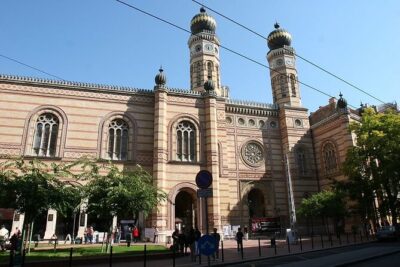
Budapest Jewish Heritage Memorial Walking Tour & Synagogue Entry
Read our review →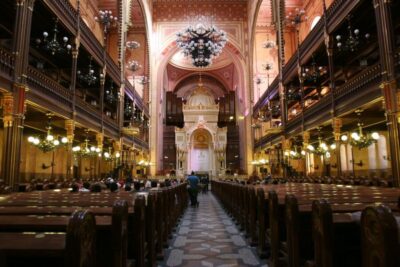
Budapest: Jewish Heritage Guided Tour with Synagogue Ticket
Read our review →
German tour in the Budapest city centre & the Jewish quarter
Read our review →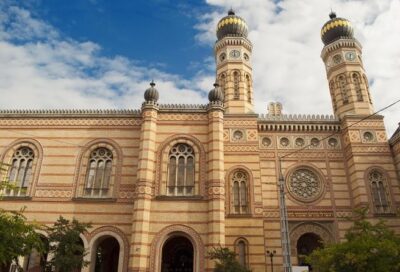
Past and Present of Budapest Jewish District Tour
Read our review →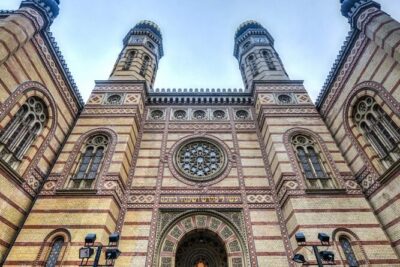
Budapest Dohany Synagogue & Hungarian Jewish Museum & free extras
Read our review →
Budapest: Jewish History Guided Walking Tour with Historian
Read our review →
Budapest Dohany, Heroes’, Rumbach synagogues & Jewish Ghetto Tour
Read our review →Browse the lists this tour appears in