
Reviewed · JEWISH DISTRICT TOURS
Budapest Old Jewish Quarter History Private Walking Tour
Jewish Budapest hits you fast. In about two hours, this private walk connects Roman-era roots to the Black Death, the Holocaust, and Jewish life today, with key stops in the Old Jewish Quarter. I particularly like the licensed history guide who keeps the story clear, and I like that the route includes the Ghetto Memorial Wall so the lesson has weight. One consideration: entry into synagogues is not included, so you mainly see the buildings from the outside.
The format is private, so you can ask questions without feeling rushed, and it runs with a realistic walking pace. You get a mobile ticket, plus practical recommendations at the end, which is handy if you want to keep exploring on your own afterward. The only real drawback is the walking itself, it is a moderate route with some uneven surfaces and steps, so comfortable shoes matter.
If you want Budapest history with context, not just photos, this tour fits the bill. You also get multiple language options, which helps if your group includes someone who prefers German, Spanish, French, Italian, English, or Hungarian. Expect it to run rain or shine, because the calendar does not pause for cloud cover.
In This Review
- Key highlights worth your attention
- Starting at Madách Imre tér 7, near Sissi Statue
- The 2-hour structure, and what you gain from it
- Stop 1: a quick orientation on Madách Imre tér
- Stop 2: Rumbach Street Synagogue, where the streets speak
- Stop 3: Synagogue Astoria Central Residence, connecting old and new
- The Ghetto Memorial Wall stop, where the tone changes
- Stop 4: Kazinczy Street Synagogue story, plus Klauzál tér
- Stop 5: Klauzal Market Hall, ending on daily life
- The private guide effect, and why it changes everything
- Languages, tickets, and what is included
- Walking reality: pace, shoes, and comfort
- Price and value at $156.50 per person
- Should you book this Budapest Old Jewish Quarter tour?
Key highlights worth your attention
- A focused Old Jewish Quarter route that stays concentrated around the Jewish Triangle and nearby streets
- Synagogues linked as part of one story, with Dohány, Rumbach, and Kazinczy woven into the timeline
- The Ghetto Memorial Wall visit with entrance fee included, so you are not scrambling for tickets
- Klauzál tér and Klauzal Market Hall for a sense of everyday life after the heavy parts
- A private group experience (1 to 25 guests per guide) that is easier to personalize than a big bus tour
- Guide-led context beyond one landmark, including wider themes tied to Jewish history in Hungary
Other walks through the old Jewish quarter:
- Budapest Jewish Heritage Memorial Walking Tour & Synagogue Entry
★ 5.0 · 568 reviews - Budapest: Jewish Heritage Guided Tour with Synagogue Ticket
★ 4.8 · 533 reviews - German tour in the Budapest city centre & the Jewish quarter
★ 5.0 · 359 reviews
Starting at Madách Imre tér 7, near Sissi Statue
The tour begins at Madách Imre tér 7, right by the Sissi Statue area. It is an easy spot to find, and the meeting point is close to public transportation, so you are not stuck with a complicated first leg. If you are staying nearby, there is also hotel or accommodation pickup within 1.5 km, and the route can be adjusted to match.
What I like about this start is that it gives you an anchor before the history starts stacking up. You get orientation in a lively city setting, not in a museum hallway. Then you walk into the Old Jewish Quarter streets where the buildings and street layout start doing some of the storytelling for you.
If you are traveling with kids, older parents, or anyone who walks slowly, mention it early so the guide can shape the pace. The tour is not long, but it is not perfectly smooth either, with some uneven surfaces or steps.
The 2-hour structure, and what you gain from it
This is a two-hour walking tour, designed to feel complete without turning into an all-day ordeal. You cover roughly 2.5 to 3.5 km, which is a good distance for a city walk where you also want to absorb details. Since it runs rain or shine, plan for weather layers and keep an umbrella ready if that is your style.
What you gain from the timing is a proper arc. The guide is set up to explain Jewish history in Budapest from Roman times through the Black Death, then into the Holocaust, and finally to Jewish culture and heritage today. That timeline can sound huge on paper, but in a tight route like this, it becomes manageable. You are not trying to read everything yourself on the fly.
This is also the kind of tour where you can get more out of your photos. When the guide points to a building and explains what happened around it in different eras, your pictures stop being just architecture shots. They turn into proof that you were paying attention.
Stop 1: a quick orientation on Madách Imre tér
Stop 1 is a short orientation segment near Madách Imre tér 7, with the guide pointing you toward the story that will unfold through the neighborhood. You typically have about 10 minutes here, with no admission needed.
Use this time to get your questions ready. If you are unsure about the differences between communities, the way synagogues functioned historically, or how the neighborhood changed over time, ask early. The tour is built to answer, and the guide’s explanations work best before you are standing in front of multiple religious landmarks and trying to keep track.
It is also a good moment to do the small things that make the rest of the walk easier: water sip, bathroom check, and a quick look at the shoes you decided to wear.
Stop 2: Rumbach Street Synagogue, where the streets speak
Next comes Rumbach Street Synagogue. This part of the walk takes about 30 minutes, and it is one of the core steps of the Old Jewish Quarter experience. The big value here is that you are not just viewing a synagogue as a standalone monument. You are seeing it as part of a broader community presence in Budapest.
You will walk the surrounding streets where history sits in the street pattern and the building mix, not only in one single plaque. That matters because the Jewish Quarter story is layered. Different periods left different marks, and the guide helps you connect those layers instead of treating each era like an isolated chapter.
One practical note: since entry to synagogues is not included, you should treat this as mostly an exterior viewing stop. That can still be satisfying if you enjoy architecture and context, but it is not the same as being inside for prayer room details.
More of Pest crossed at walking pace:




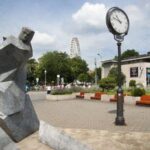
Stop 3: Synagogue Astoria Central Residence, connecting old and new
The next stop is Synagogue Astoria Central Residence, with about 30 minutes here. This is a pivot point in the tour, because the guide is set up to connect old and new. Jewish life is not just a past-tense story, and this kind of stop helps you see that continuity.
Again, synagogue entry is not included due to restricted access, so you will likely focus on what the building represents and what the guide can explain from the outside. If you are someone who likes to understand why something looks the way it does, this stop can be a strong one because the guide can connect architectural form with historical function and change over time.
This section is also where you may start to notice how the tour balances heavier material with human-scale details. The goal is not to scare you away from the subject, it is to give you understanding you can carry into the next stop.
The Ghetto Memorial Wall stop, where the tone changes
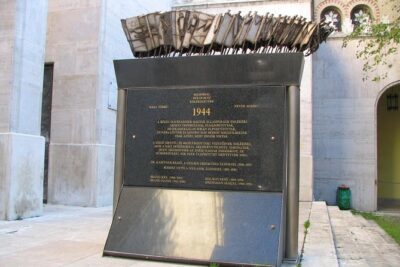
The highlight list specifically calls out the last remaining section of the Ghetto Memorial Wall, and the tour includes the entrance fee. Even if you are not a museum person, this is the moment most people remember, because it turns the story from background into lived consequence.
What makes this stop valuable is that it is not just a checkmark on a walking itinerary. It gives you a physical place to anchor the Holocaust-era narrative in Budapest. The guide’s job is to explain what you are looking at and why it matters, and it is easier to absorb when you are standing there, not reading from a screen.
Because the tour is only about two hours, the wall visit is a controlled dose. You do not lose the group in long exhibit rooms, and you can keep walking while your understanding settles. The best part is what comes next: the tour does not keep you stuck only in sorrow.
If you want a tip, it is this: slow down a bit during the wall stop. You are allowed to step back from the group for a moment. Take in the names and layout if they are visible, and then return when you are ready to keep moving.
Stop 4: Kazinczy Street Synagogue story, plus Klauzál tér
After the Ghetto Memorial Wall moment, the route continues into the neighborhood spirit. Stop 4 is listed around the Kazinczy Street Synagogue of Miskolc for about 20 minutes, and the guide uses it to show a glimpse of living Jewish culture.
Even if you are thinking, why Miskolc when we are in Budapest, the point is to broaden your picture. The guide helps you see that Jewish communities across Hungary shared experiences, but also had local expressions. That connection can make the Budapest story feel more complete instead of boxed into one neighborhood.
During this part of the walk, you also connect to Klauzál tér, the square that the tour highlights as a lively public space. This is important because it stops the timeline from feeling like it ended in the past. Jewish community history in Budapest is tied to everyday life, not only memorial sites.
And yes, you will still be in walking mode, so if you are sensitive to crowds or traffic sounds, pick a spot along the curb where you can hear the guide clearly.
Stop 5: Klauzal Market Hall, ending on daily life
The final stop is Klauzal Market Hall, with about 30 minutes at the end. This is where the tour’s “then and now” approach pays off. After memorial and synagogue architecture, the market hall gives you a sensory contrast: movement, smells, and the rhythm of food shopping.
This ending works for your memory. If your only exposure to the Jewish Quarter is solemn stops, the story can feel heavy in a way that is hard to process. Ending at a place of daily life helps your brain file the history in a bigger folder. People lived here, shopped here, gathered here. History is human, not abstract.
Since food and drinks are not included, you can decide what you want to do next. If you would like a snack, keep it simple and go for something you can carry easily. If you prefer to skip food, just enjoy the scene and use the time to take a few market photos before you move on.
The private guide effect, and why it changes everything
This is a private walking tour, meaning only your group participates. That alone is a big deal in a subject like this, because you can tune the pace to your comfort level. You can ask about the differences between synagogues, the timeline of events, or what life looked like before and after major disruptions.
One small detail that stands out from the guide feedback is the emphasis on attentiveness and warmth. In particular, one guide named Angel is described as experienced, generous, attentive, and smiling, and the group felt she could have kept going longer. Even if your guide is different, that tells you what Rosotravel appears to prioritize: not just facts, but delivery.
Here is what you should expect from a strong guide on this kind of route:
- You will get a clear timeline, not a list of disconnected facts
- You will be pointed toward the right buildings, not lost in street corners
- The guide will respond to questions instead of speaking at you the whole time
And because the tour is in multiple languages, you are more likely to understand the nuances, even when the subject matter is heavy.
Languages, tickets, and what is included
You can book the tour in English, Hungarian, German, Spanish, French, and Italian. The guide is described as licensed and fluent in your chosen language. If your language skill is limited, do not hesitate to choose what you are most comfortable with. Jewish history terms can be easier when you are not trying to translate them in real time.
The tour includes:
- Private walking tour of the Old Jewish Quarter
- A licensed guide fluent in your language
- Facts and context about Jewish history in Budapest
- Entrance fee to the Ghetto Memorial Wall
- Recommendations on things to do in Budapest
The tour does not include:
- Entry to synagogues
- Food and drinks
You will also receive a mobile ticket, which tends to make day-of verification less stressful.
If you are planning your day around this tour, the simplest move is to schedule it earlier, then let the rest of the day be flexible. After the walk, you will likely want to keep exploring nearby streets or return to a place that stood out to you.
Walking reality: pace, shoes, and comfort
The tour is a moderate walk, roughly 2.5 to 3.5 km, and includes some uneven surfaces or steps. The guide will adapt the pace to your group, which matters if you have mixed abilities.
I would plan for:
- Comfortable walking shoes with decent grip
- Weather-appropriate layers, because it runs rain or shine
- A slower mindset for the memorial stop, so you can absorb rather than rush
Most travelers can participate, and there is interest in accommodating disabilities whenever possible. If that is relevant for you, message customer support in advance so the team can suggest the best approach.
Price and value at $156.50 per person
Let’s talk money in a practical way. At $156.50 per person, this is not a cheap “see everything by foot” deal. You are paying for a private, licensed history guide, plus the inclusion of the Ghetto Memorial Wall entrance fee. That is part of what you are buying: guided context in a tightly designed route.
So is it worth it?
- If you are traveling as a small group and you want a true private experience, the value often looks better because you can spread the guide cost across multiple people and keep the pace personal.
- If you are solo, the price can feel steep compared to group tours, but the subject matter might be exactly why you choose private. Jewish history in Budapest is detailed, and a guide can make it clearer, which saves you time later when you would otherwise be researching.
The other value angle is time. Two hours is long enough to feel like you learned something real, but short enough that you can still enjoy the rest of your Budapest day without exhaustion.
If price is your main concern, compare your alternatives thoughtfully. Any option without a guide usually means more reading on your own, and you might miss the connections between Roman-era references, medieval-era events like the Black Death, and the Holocaust-era sites.
Should you book this Budapest Old Jewish Quarter tour?
Book it if you want a short, private, guide-led walk that connects multiple major Jewish sites into one coherent story. It is especially a good fit if you care about context, not just landmarks, and you prefer a small-group experience where questions are welcome.
Skip it or adjust expectations if your top priority is going inside synagogues. This tour focuses on the area and the buildings in context, and synagogue entry is not included due to restricted access. You will still learn a lot, but it is not a “do not miss this interior tour” situation.
If you want an easy way to decide, ask yourself one question: do you enjoy history when it is explained clearly in person while you walk? If the answer is yes, this is a strong use of your time in Budapest’s Old Jewish Quarter.
Centuries Stacked Along the Danube
- Budapest: Historic Cruise with Welcome Drink
★ 4.7 · 6,512 reviews - Budapest Historical Sightseeing – Free Walking Tour
★ 5.0 · 1,302 reviews - Buda Castle District Dark History, Legends and Vampire Night Tour
★ 4.5 · 1,240 reviews - BloodThirsty Hungary: Walking tour & Dark Historical Stories
★ 4.9 · 633 reviews
Newest from the Danube banks
- Gödöllö Royal Palace Privately with full board★ 5.0 · 1 review
- Private Budapest Tour with Thermal Bath or Market Visit★ 5.0 · 1 review
- Private Budapest walking tour – 4 hours★ 5.0 · 1 review
- Budapest Half Day Car Tour with Guide★ 5.0 · 1 review
- Budapest Private Transfer from Budapest city centre to Budapest Airport★ 3.0 · 1 review
- Magic Theme Team Adventure Game in the Streets of Budapest★ 5.0 · 1 review
- Budapest: Eat the Street, food tour with wine, 16+ tasting★ 5.0 · 1 review
- Private Transfer Budapest Airport BUD to Budapest by Car or Van★ 5.0 · 1 review
Jewish District Tours, compared.
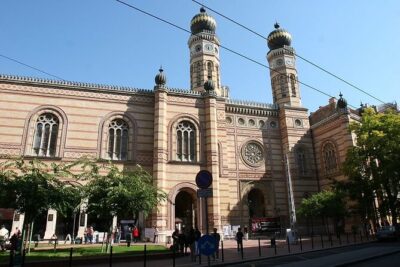
Budapest Jewish Heritage Memorial Walking Tour & Synagogue Entry
Read our review →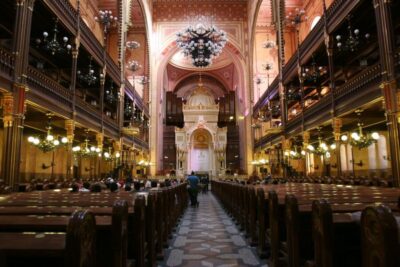
Budapest: Jewish Heritage Guided Tour with Synagogue Ticket
Read our review →
German tour in the Budapest city centre & the Jewish quarter
Read our review →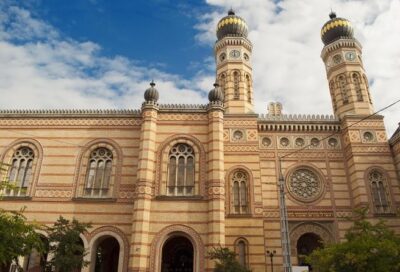
Past and Present of Budapest Jewish District Tour
Read our review →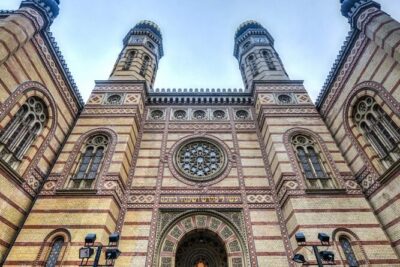
Budapest Dohany Synagogue & Hungarian Jewish Museum & free extras
Read our review →
Budapest: Jewish History Guided Walking Tour with Historian
Read our review →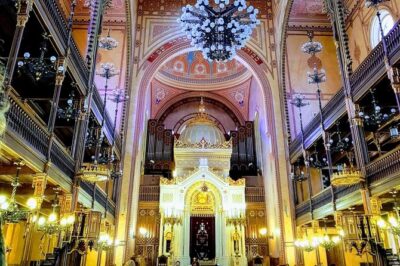
Budapest Dohany, Heroes’, Rumbach synagogues & Jewish Ghetto Tour
Read our review →Browse the lists this tour appears in