
Reviewed · JEWISH DISTRICT TOURS
Budapest Jewish Heritage: Synagogues, Shoes, Secrets & Flódni
Synagogues and wartime memory, in one smart walk. You get an expert-led Jewish heritage route that moves from the grand Dohány Street synagogue to smaller prayer spaces, with personal stories that make the past feel human. I also like how the tour ends with a proper taste of the tradition, flódni, right after the heavier stops. Guides you might meet include Gabriella and Miklós, and the tone stays thoughtful, not lecture-y.
My one caution: some of the synagogue entrances cost extra. The tour includes the Danube Shoes memorial moment, plus free stops like the Carl Lutz memorial and parts of the ghetto area, but you should budget for entry to the major synagogues. In a short 2 hours 45 minutes, that also means a bit of pacing on site, so you’ll want to keep your questions tight and specific.
In This Review
- What Makes This Tour Special (Synagogues, Shoes, Secrets, and Flódni)
- Starting at Dohány Street, Then Walking Into Budapest’s Jewish Quarter
- Entering the Great Synagogue on Dohány Street (Nagy Zsinagóga)
- Rumbach Street Synagogue and Otto Wagner’s “Moderate Conservative” Design
- Carl Lutz Memorial: When a Swiss Diplomat Became a Lifeline
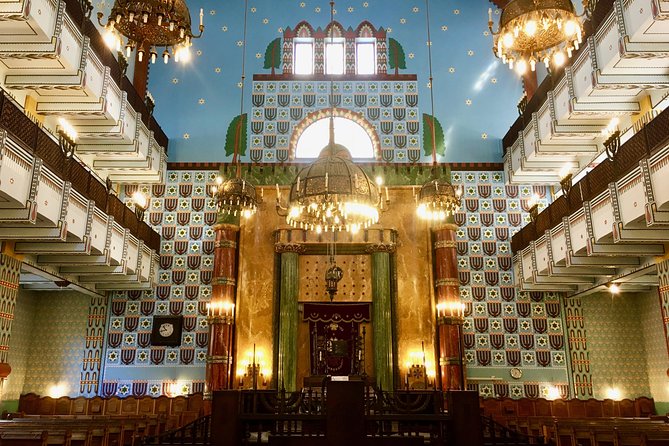
- Kazinczy Street Orthodox Synagogue and Miksa Róth’s Stained Glass
- Shoes on the Danube Bank: A Memorial That Forces Stillness
- The Ghetto Wall in the City Center, and Why It Still Matters
- Ending with Flódni on Dohány Street
- Price and Value: What $102.95 Buys You in Real Time
- Who Should Book This Tour (and Who Might Want a Different Format)
- Should You Book Budapest Jewish Heritage: Synagogues, Shoes, Secrets & Flódni?
- FAQ
- How long is the Budapest Jewish Heritage tour?
- Does the tour include hotel pickup?
- Are the synagogue entrance tickets included?
- What is included at the end of the tour?
- Where do I meet, and where does the tour end?
- Can I cancel for a full refund?
What Makes This Tour Special (Synagogues, Shoes, Secrets, and Flódni)
- A private, guide-led route that keeps the focus on meaning, not rush
- Three different synagogue styles that reflect different Hungarian Jewish communities
- Carl Lutz Memorial stop for a reminder of rescue amid deportation pressures
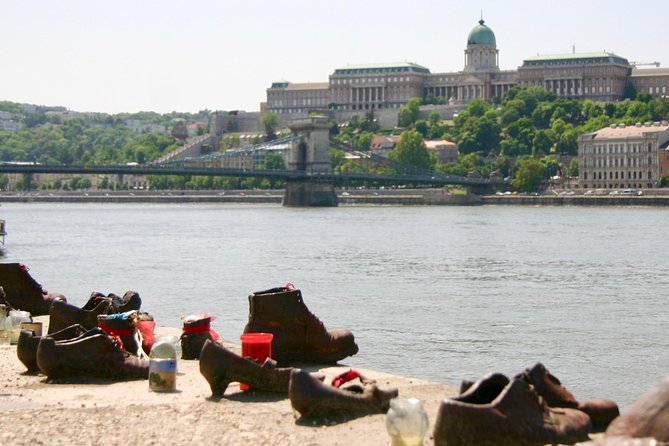
- Shoes on the Danube Bank memorial, including the key story behind the sculpture
- A ghetto-wall visit in the city center, so you can connect streets to history
- Flódni at the end, a tradition you can actually taste, not just read about
Other walks through the old Jewish quarter:
- Budapest Jewish Heritage Memorial Walking Tour & Synagogue Entry
★ 5.0 · 568 reviews - Budapest: Jewish Heritage Guided Tour with Synagogue Ticket
★ 4.8 · 533 reviews - German tour in the Budapest city centre & the Jewish quarter
★ 5.0 · 359 reviews
Starting at Dohány Street, Then Walking Into Budapest’s Jewish Quarter
Most people visit Budapest for architecture and ruin bars. This tour adds something else: the Jewish story of the city, told street by street. You start at Dohány u. 1, 1074, and the tour ends back at the meeting point, which keeps things simple if you’re on a tight schedule.
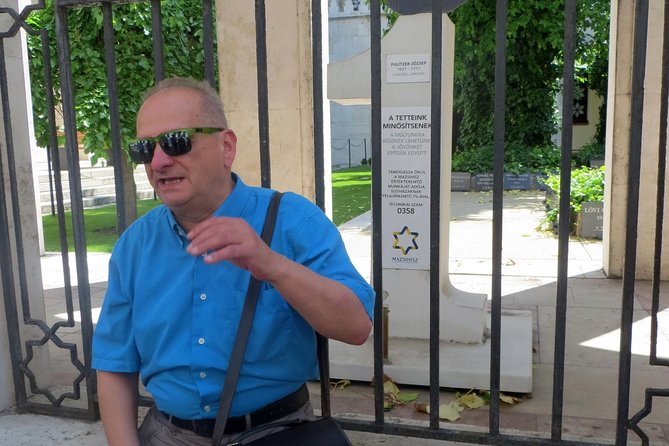
Hotel pickup is offered, so if you’re staying outside the center, this can save time and stress. You’ll also get a mobile ticket, which is handy when you’re moving between stops and don’t want to shuffle papers. And since it’s conducted by a Jewish guide with a historian, you get that rare mix of community-specific context and clear historical framing.
The pacing is built around a walking route with short stops that actually let you look and then talk. That balance is what makes this feel more like a guided conversation than a checklist.
Entering the Great Synagogue on Dohány Street (Nagy Zsinagóga)
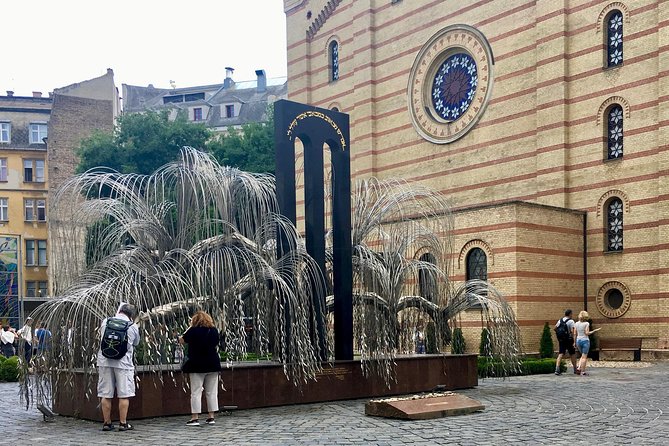
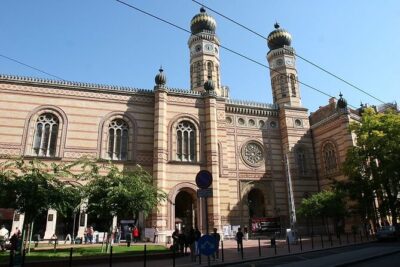
The star stop is the Great Synagogue, or Nagy Zsinagóga, on Dohány Street. It’s the largest synagogue in Europe, with seating for about 3,000 people, and it served as a center of Neolog Judaism. You’ll learn why the building is architecturally unique, but the tour doesn’t treat it as just an impressive exterior.
The guide also brings in what happened to Hungarian Jewry during the Second World War, including references to internationally known Hungarian Jews. The effect is that you see the synagogue as more than a museum piece. It becomes a witness to a community’s rise, everyday life, and later destruction.
Practical note: the synagogue entry ticket is not included, so plan a little extra budget for that. Also, because this is one of the biggest and most famous sites, you should expect a structured visit. It’s worth it, but don’t assume you’ll linger forever inside when the group is moving on.
Rumbach Street Synagogue and Otto Wagner’s “Moderate Conservative” Design
Next comes the Rumbach Street Synagogue, the Moorish-style space on Sebestyén utca. This one was built in 1872 by Austrian Secessionist architect Otto Wagner for a “moderate Conservative” community. The interior is described as bright and graceful, especially after a long-overdue facelift, so it’s not just an old shell. You get to see what the restoration effort means in real light.
What I like about this stop is that it puts religious architecture into human terms. Different communities shaped different choices. Different choices shaped different buildings. You’re not just collecting photos of ornate walls. You’re learning how identity shows up in space, down to how rooms are decorated and used.
Entry ticket is also not included here, so treat both major synagogues as paid adds-on. Still, the pay is usually justified because you’re getting contrast, not repetition.
Carl Lutz Memorial: When a Swiss Diplomat Became a Lifeline
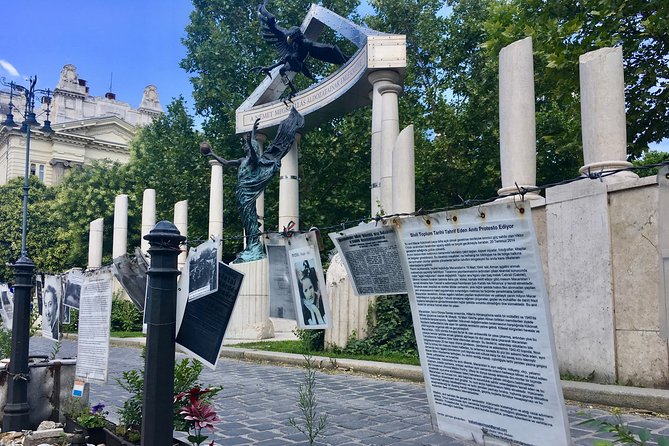
Right in the former ghetto area, you pause at the Carl Lutz Memorial. During the war, Carl Lutz, a Swiss diplomat, helped save tens of thousands of Jews in Budapest from persecution and deportation. Even if you already know the name, this is the kind of stop where it lands differently because you’re standing where the terror unfolded.
The memorial is free to visit, and it works as a necessary shift in tone. After synagogues and architecture, you get a focus on action and survival. It’s also a helpful counterweight to the concentration camp story that often dominates Holocaust education. Here, the story includes what rescue looked like, not just what destruction was.
If you care about the “how did anyone live through it” question, this is one of the answers.
Other centuries stacked along the Danube:



Kazinczy Street Orthodox Synagogue and Miksa Róth’s Stained Glass
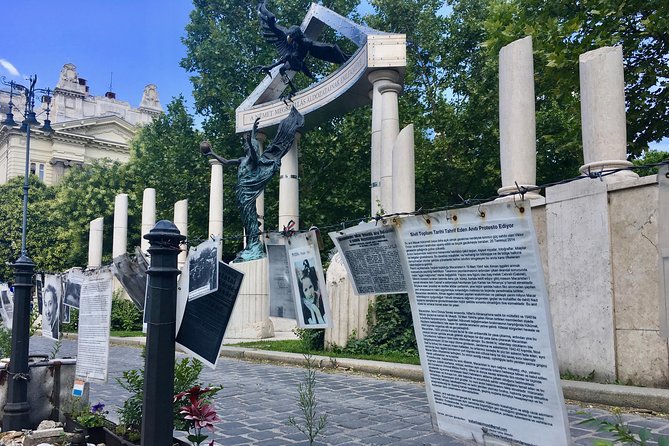
Budapest’s Orthodox synagogue on a small side street is the Kazinczy Street stop. It was built in 1913 in what was considered very modern design for its time, with late Art Nouveau touches and bright colored decoration throughout.
Another detail that makes this stop memorable is the ceiling stained-glass windows designed by Miksa Róth. You’re looking up as much as you’re looking around, and that changes the feeling. Instead of power coming only from scale, you get power from color, craftsmanship, and the sense of a community making a space for devotion in the present tense.
Entry ticket is not included here either, so again, budget matters. But since the stop is short, you’ll likely feel you’re learning something focused even without spending hours inside.
Shoes on the Danube Bank: A Memorial That Forces Stillness
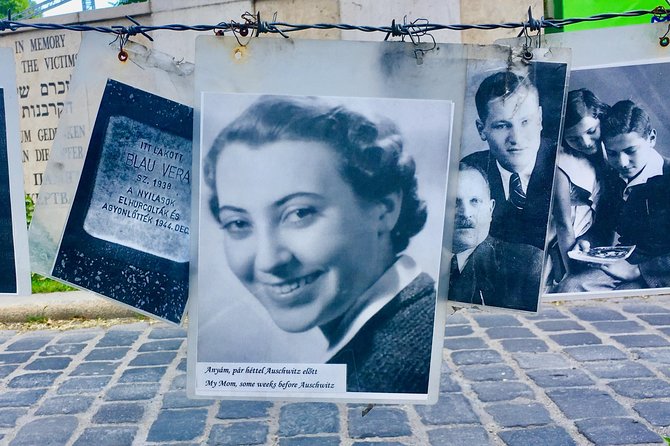
Then the tour turns to the Danube: Shoes on the Danube Bank. This memorial was unveiled on April 16, 2005, and it remembers Jewish victims who were murdered there during World War II.
The core story is hard but specific. People were forced to remove their shoes before being shot at the riverbank, and their bodies were carried away by the Danube. The sculpture, showing shoes left behind, is small in size but huge in emotional weight.
This is the moment I consider essential on this route. The guide’s job here is not to sensationalize. It’s to slow you down and make you understand why a simple object can hold a whole crime scene.
Good news for planning: the stop includes admission where required. It’s part of the tour’s pricing package, not an extra you need to buy.
The Ghetto Wall in the City Center, and Why It Still Matters
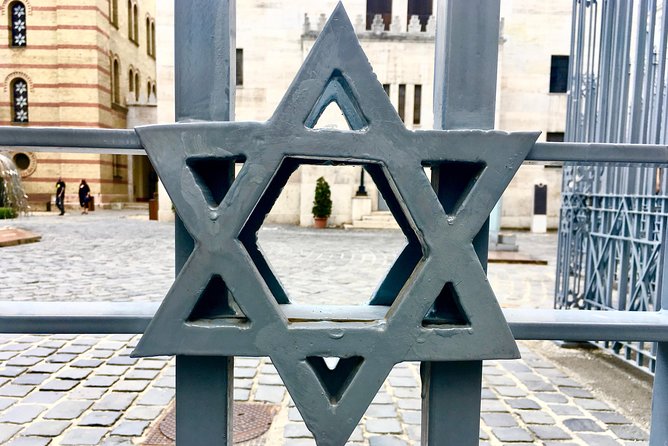
Near the end, you move into the Jewish Quarter area and talk about the ghetto. Toward the end of World War II, Jews in Budapest were herded into a ghetto, and a small section of the ghetto’s wall still stands in the heart of the city.
Even though much of what visitors expect to see is gone or hidden by later development, you still get something real: a physical line on the map of Budapest that helps you connect memory to street layout. It’s one thing to read that a ghetto existed. It’s another to stand close to a surviving remnant and let the guide put daily life and eventual fate into context.
This stop is free, and that’s nice, because it gives you a meaningful pause without pushing you into another paid entry.
Ending with Flódni on Dohány Street
After the memorial weight and the ghetto context, the tour ends with food. You finish with flódni, a traditional Jewish pastry and a heritage of flavors.
This is more than a snack. It’s a way to end on the continuity side of culture, not only the rupture side. You’ve spent the walk following buildings, victims, and policies. Now you’re tasting something that connects to tradition and everyday life.
In the reviews I saw, people consistently responded to this ending. It’s a final cue that the story isn’t only about loss. It’s also about community life, food, and how culture survives.
Note: this stop is listed as free in terms of admission, and the tour includes snacks as part of the experience.
Price and Value: What $102.95 Buys You in Real Time
At $102.95 per person for about 2 hours 45 minutes, the cost is not “cheap,” but it does make sense if you compare what’s included versus what’s extra.
Included in your price:
- A historian guide and a Jewish guide
- Hotel pickup (where available)
- A flódni dessert snack
- The Shoes on the Danube Bank stop with admission included
Not included:
- Entrance tickets to multiple synagogues on the route (including the major Great Synagogue)
So your total spend depends on how many paid interiors you want to enter and how your schedule lines up with ticketing. If you’re someone who wants to see all the key rooms inside the synagogues, you should expect additional cost for entry.
Where this tour feels like good value is the guide time. You are paying for expert framing and a personal pace. The stops are not random. They are built to compare community styles, then connect architecture to wartime reality, then end with food.
Also, being a private tour means your guide can adjust. In the stories I read from past experiences, guides like Kata and Edith were highlighted for answering questions and tailoring the conversation to what people cared about, whether that meant Hungarian Jewish identity or the emotional weight of the memorial sites.
Who Should Book This Tour (and Who Might Want a Different Format)
This tour fits best if you want:
- A guided walk through multiple synagogues with explanation of differences
- A clear wartime path that includes both memorial sites and ghetto context
- A guide who can handle the subject matter with sensitivity and also answer questions
It’s also a good choice if you’re short on time. In under three hours, you cover several key stops that many self-guided trips split across half a day.
If you only want synagogue interiors and you hate any wartime context, this may feel too heavy for your taste. And if you want long, step-by-step detail about resistance or specific events beyond what the guide chooses to include, you might find the pacing more interpretive than exhaustive. This is a heritage and remembrance route, not a court transcript.
For most people though, the mix lands well: architecture, identity, loss, survival context, and then flódni.
Should You Book Budapest Jewish Heritage: Synagogues, Shoes, Secrets & Flódni?
If your goal is to understand Budapest’s Jewish story beyond postcard photos, I think this is a strong pick. The route makes smart connections: big and small synagogues side by side, then the Danube memorial, then the ghetto wall remnant, and finally a cultural ending with flódni.
Book it if you like a guide who can explain what you’re seeing and also talk about why it mattered. Skip it, or consider a different tour, if you want strictly lighter sightseeing with minimal Holocaust context, or if you dislike paying extra synagogue entry fees.
FAQ
How long is the Budapest Jewish Heritage tour?
It runs for approximately 2 hours 45 minutes.
Does the tour include hotel pickup?
Yes, hotel pickup is included.
Are the synagogue entrance tickets included?
No. Entrance tickets are not included for the synagogues listed on the route. The Shoes on the Danube Bank memorial stop includes admission.
What is included at the end of the tour?
You end with flódni, a traditional Jewish pastry.
Where do I meet, and where does the tour end?
The tour starts at Budapest, Dohány u. 1, 1074 Hungary, and it ends back at the same meeting point.
Can I cancel for a full refund?
Yes. You can cancel up to 24 hours in advance for a full refund.
If you want, tell me your travel dates and whether you have synagogue entry experience already, and I can help you budget which stops are most worth paying for.
Newest from the Danube banks
- Budapest: Private Custom Walking Tour with A Guide (Private Tour)★ 5.0 · 12 reviews
- Luxury Danube Water Limousine Cruise★ 4.2 · 12 reviews
- Budapest Private Airport Transfer to City or to BUD Airport Door 2 Door★ 4.5 · 12 reviews
- Budapest: Dandar Thermal Bath Full-Day Admission★ 4.0 · 12 reviews
- Hungarian Gin and Tonic Tasting and Workshop★ 5.0 · 12 reviews
- 8-hour private Budapest city tour by car / minivan★ 5.0 · 12 reviews
- Budapest Exoskeleton Robotics Powered Nature Hike★ 5.0 · 12 reviews
- Budapest Private Airport Transfer in a Luxury Minivan★ 4.5 · 12 reviews
Jewish District Tours, compared.
Budapest Jewish Heritage Memorial Walking Tour & Synagogue Entry
Read our review →
Budapest: Jewish Heritage Guided Tour with Synagogue Ticket
Read our review →
German tour in the Budapest city centre & the Jewish quarter
Read our review →
Past and Present of Budapest Jewish District Tour
Read our review →
Budapest Dohany Synagogue & Hungarian Jewish Museum & free extras
Read our review →
Budapest: Jewish History Guided Walking Tour with Historian
Read our review →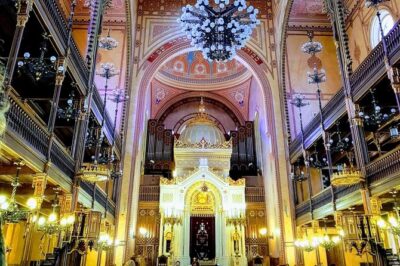
Budapest Dohany, Heroes’, Rumbach synagogues & Jewish Ghetto Tour
Read our review →Browse the lists this tour appears in