
Reviewed · JEWISH DISTRICT TOURS
Jewish Heritage in Hungary with a Historian
Budapest’s Jewish story is on every corner. This 2.5-hour walk strings together the big names of Jewish Budapest in a way that feels human, not academic, led by a historian who explains how the city changed over centuries. Along the way you pass Rumbach, Kazinczy, and Dohány street synagogues, plus a few modern landmarks tied to how Budapest lives today.
I especially like two things: the small group size (up to 10 people) keeps it interactive and personal, and you finish with an included taste of the Jewish cake Flódni at Solinfo Café. The historian also makes room for questions, including the not-so-comfy parts of Hungary’s past and how people survived and adapted.
One consideration: you do learn about the synagogues, but you do not go inside the Great or Central Synagogue, and synagogue admission is not included for the Kazinczy Street stop either.
In This Review
- Key highlights you will actually care about
- A 2.5-hour walk through Pest’s Jewish landmarks
- Meeting at Kempinski Corvinus, then walking to Dohány Street
- Erzsébet tér: from medieval market square to modern Pest center
- Raoul Wallenberg’s statue: one diplomat’s impact
- Szimpla Kert: how a ruin bar became part of Budapest’s identity
- Gozsdu Udvar: an international street in the middle of history
- Kazinczy Street Synagogue: learning about the Orthodox community
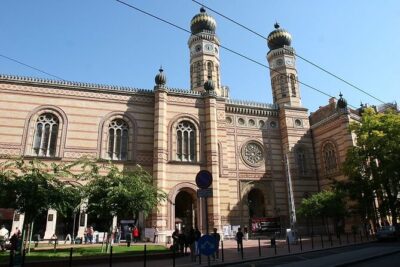
- Great or Central Synagogue (Nagy Zsinagóga): why you are stopping outside
- Solinfo Café and Flódni: your included Jewish cake break
- What the historian guide adds (and which guides you might get)
- Price and value: what $64.71 buys you
- Who should book this tour
- Should you book Jewish Heritage in Hungary with a Historian?
- FAQ
- How long is the Jewish Heritage in Hungary with a Historian tour?
- Where does the tour start and what time does it begin?
- Where does the tour end?
- Is the tour in English?
- How big is the group?
- Is a mobile ticket provided?
- Are synagogue admissions included?
- Does the tour include entering the Great or Central Synagogue?
- What food is included, and is it part of the price?
- Can I cancel for a full refund?
Key highlights you will actually care about
- Historian-led storytelling that connects centuries of Jewish life to what you see on the streets
- Up to 10 people, so it does not feel like a rushed line
- Real stops, not just photos, including Erzsébet tér and Raoul Wallenberg’s statue
- Szimpla Kert, Budapest’s early ruin bar scene, where history rubs shoulders with nightlife culture
- Gozsdu Udvar, a street that shows Budapest’s international side
- Flódni is included, plus it is a sweet, salty conversation starter for the walk
Other walks through the old Jewish quarter:
- Budapest Jewish Heritage Memorial Walking Tour & Synagogue Entry
★ 5.0 · 568 reviews - Budapest: Jewish Heritage Guided Tour with Synagogue Ticket
★ 4.8 · 533 reviews - German tour in the Budapest city centre & the Jewish quarter
★ 5.0 · 359 reviews
A 2.5-hour walk through Pest’s Jewish landmarks
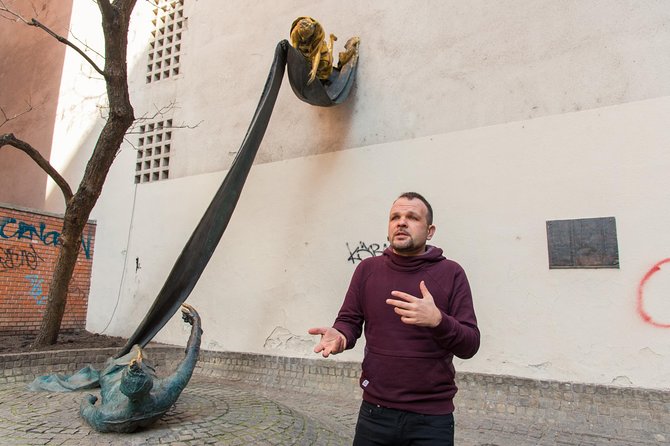
This tour is built for a comfortable pace. It lasts about 2 hours 30 minutes and you are mostly on foot in central Pest, so you can connect the dots between street names, buildings, and what the historian explains.
You start with the idea that Jewish history in Budapest is not one chapter. It is a long story with good, bad, and complicated turns, and the best part is that you see how that story sits right where modern life keeps moving.
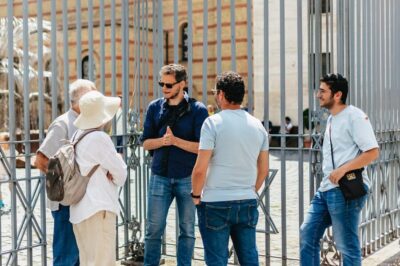
The group stays small, with a maximum of 10 people. That matters because the guide can slow down for your questions, and you are not stuck watching a guide speak to the back row.
Meeting at Kempinski Corvinus, then walking to Dohány Street
You meet at Kempinski Hotel Corvinus Budapest, at Erzsébet tér 7-8. The tour starts at 10:00 am, and you end outside Dohány Street Synagogue, at Wesselényi utca 1.
That end point is handy. It means you finish near one of the key Jewish landmarks in the city, so you can keep exploring after the walk without backtracking.
Also, you get a mobile ticket, and the tour is near public transportation. If you are already using transit around Pest, it fits smoothly into a normal sightseeing day.
Erzsébet tér: from medieval market square to modern Pest center
Your first stop is Erzsébet tér, a medieval market square that has become one of Pest’s main squares. Seeing it this early in the tour is smart, because it gives you a sense of what the area was like as a lived-in neighborhood, not just a museum district.
Your historian guide uses this kind of starting point to set the frame: where people gathered, traded, worked, and worshipped. You start to understand that the Jewish quarter was not a sealed bubble. It was part of the wider city.
Time here is about 20 minutes, so you get enough for context and orientation without feeling stuck.
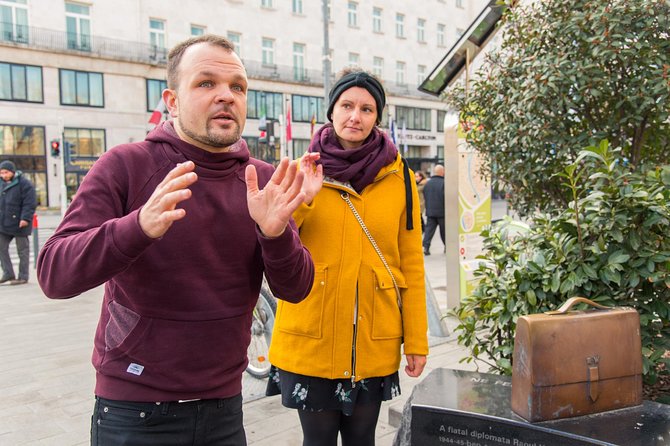
Raoul Wallenberg’s statue: one diplomat’s impact
Next you stop for Raoul Wallenberg’s statue. The focus is the human story of a diplomat who saved Jewish lives, and the guide ties Wallenberg’s work to broader themes of rescue, risk, and moral choices during dark times.
This stop is short, around 10 minutes, but it is memorable. A statue is a simple object, yet it helps you understand why certain names matter so much in Hungarian and European Jewish history.
If you like stories with clear stakes, this is a good moment to ask questions. With the small group format, the historian can actually respond instead of giving a generic answer.
Other centuries stacked along the Danube:



Szimpla Kert: how a ruin bar became part of Budapest’s identity
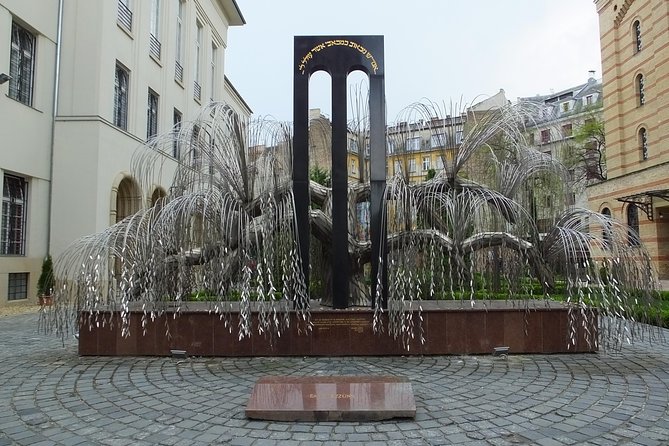
Then you hit Szimpla Kert, about 20 minutes. The tour treats it as more than a quirky nightlife stop. It is presented as Budapest’s first ruin bar, which helped kick off the trend.
Here is why you will probably enjoy this part: you get a modern Budapest moment without losing the historical thread. The building and the street vibe tell you something about how people reuse old structures, and how a city carries memory while still reinventing itself.
One practical tip: ruin bars can be busy and loud outside peak hours too, so keep an eye on where you are standing. You want a clear spot for the guide to point out details, then you can grab a quick look around.
Gozsdu Udvar: an international street in the middle of history
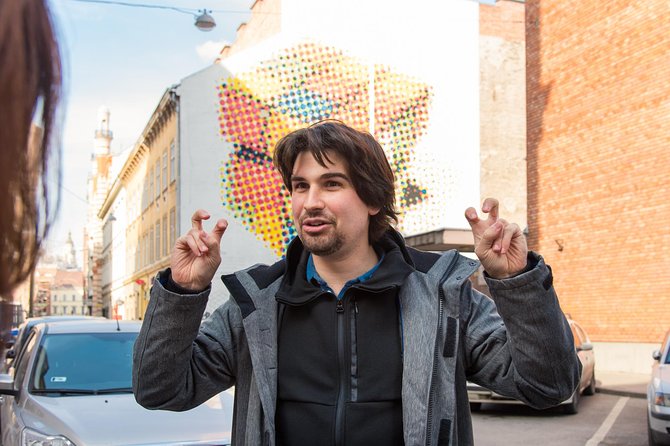
After that, you stop at Gozsdu Udvar for about 10 minutes. This is one of Budapest’s most international streets, which works as a contrast to the solemnity of the synagogue area.
Think of it as a palate cleanser, but also as a reality check. Budapest is not only a place of tragedy and memorial. It is also a place where people live, mingle, and build communities in real time.
Even with limited time here, the historian uses it to explain how the neighborhood’s character has shifted over the years.
Kazinczy Street Synagogue: learning about the Orthodox community
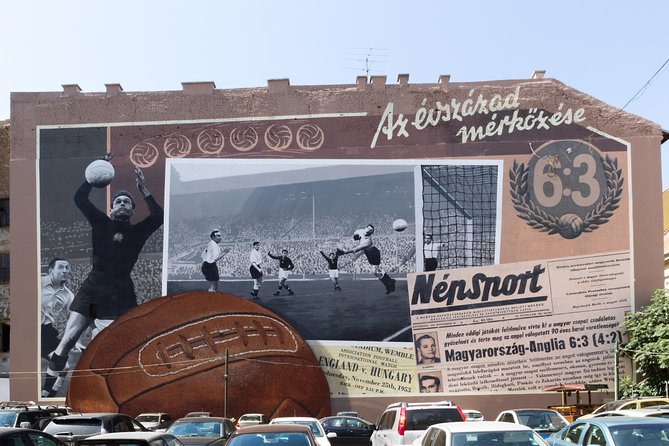
You then move to Kazinczy Street Synagogue, with about 20 minutes on site. You learn about the Orthodox Jewish community tied to this area.
Admission for the synagogue is not included. In other words, you should expect to focus on the exterior and the explanation, not an inside visit. If you want to go inside, you will need extra planning beyond this tour.
Still, this stop is valuable because it helps you understand that Jewish life in Budapest was diverse. It was not only one style of worship or one community identity.
Great or Central Synagogue (Nagy Zsinagóga): why you are stopping outside
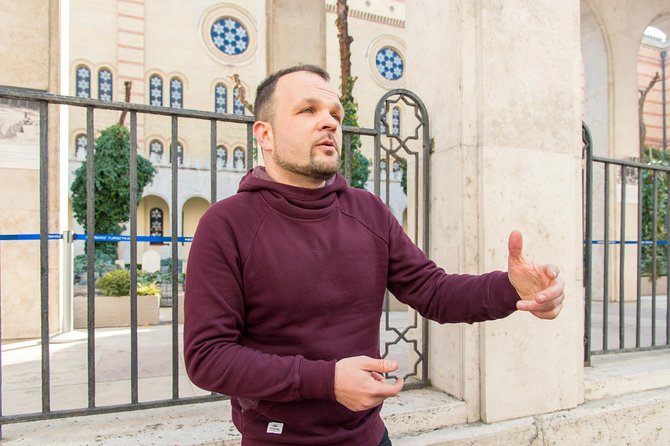
The tour includes the Great or Central Synagogue on the route, with about 45 minutes allocated to this part. But here is the key detail: the tour does not visit the Great Synagogue inside.
Admission is not included, and you will not go inside. The guide uses the outside setting and the surrounding context to explain the synagogue’s historical weight over roughly the last 200 years and why it matters in the story of the city.
If you are the type who loves architectural details and want to read the building like a text, this stop can still be great. Just set your expectations: the focus here is historical understanding from the street level, not an interior viewing.
Solinfo Café and Flódni: your included Jewish cake break
Finally, you stop at Solinfo Café, about 20 minutes, where you try the local Jewish cake Flódni. This is included in the tour price.
Flódni is a crowd-pleaser for a reason. It is a well-known Hungarian Jewish favorite, and it is described as loved by both Jews and non Jews in Hungary. So even if you do not know Hungarian Jewish food, you are likely to get a flavor you can recognize and remember.
This stop is also a smart break in the middle of a history-focused walk. After several stops with serious context, you get a sensory reset that makes the information stick.
What the historian guide adds (and which guides you might get)
A big reason this tour rates so highly is the way the historian guides handle both comfort and discomfort. Andrea, Gabor, Barbi, Noémi, and Andras are names you may see associated with this experience, and the common thread is a calm approach that answers questions patiently.
I like that the storytelling is not only about the worst chapters. You get a wider timeline, with attention to everyday life, community structures, and how people lived with change over centuries.
The historian also does not pretend history was all one color. You learn about Hungary’s Jewish experience alongside honest context about broader Hungarian history, including the good and bad parts, and how the tragic 1940s fit into the larger story.
That balance is useful for you because it helps you avoid the common Budapest mistake of learning only one era. When you leave, you understand the city as a continuous place, not a collection of unrelated sights.
Price and value: what $64.71 buys you
At $64.71 per person for about 2 hours 30 minutes, this is not a budget snack tour. You are paying for a historian-led walk, a small group, and an included food stop.
Here is the value math that matters:
- The group stays capped at 10, so you get real back-and-forth, not just a lecture.
- The Flódni at Solinfo Café is included. Food stops on tours often cost extra, and here it is part of the ticket.
- You also get multiple named landmarks in one route, including major synagogue streets and the Raoul Wallenberg statue.
What is not included:
- Synagogue admission is not included for the Kazinczy Street stop.
- The Great Synagogue inside is not visited, and admission is not included for that either.
If you mainly want interior access to synagogues, this may not be your best match. If you want street-level context, clear explanations, and a thoughtful route that links history to what you see, the price makes more sense.
One more practical note: the tour is often booked ahead, with an average booking window of about 42 days. If your dates are firm, reserving earlier reduces stress.
Who should book this tour
This fits you best if:
- you want a guided walk that explains why the buildings matter, not just where they are
- you like asking questions and getting direct answers in a small group
- you care about Jewish history in Hungary beyond only one time period
- you want an included food stop that is actually part of the culture
You might skip it if:
- your top priority is going inside synagogues, since the Great or Central Synagogue interior is not visited and synagogue admission is not included
- you prefer purely social sightseeing with minimal historical context
Should you book Jewish Heritage in Hungary with a Historian?
I would book it if you want a well-paced, street-based history lesson that feels grounded in the city itself. The small group format and historian-led explanations make it easy to understand the big themes without feeling overwhelmed.
The included Flódni is a nice bonus that keeps the experience human. And because the route ends outside Dohány Street Synagogue, you can keep exploring on your own right after the tour.
Just go in with the right expectation about entrances. You are learning from the streets and the buildings you can see, not doing a checklist of indoor synagogue time.
FAQ
How long is the Jewish Heritage in Hungary with a Historian tour?
It lasts about 2 hours 30 minutes.
Where does the tour start and what time does it begin?
The tour starts at Kempinski Hotel Corvinus Budapest, Erzsébet tér 7-8, at 10:00 am.
Where does the tour end?
You end outside Dohány Street Synagogue, at Wesselényi utca 1.
Is the tour in English?
Yes, it is offered in English.
How big is the group?
The tour has a maximum of 10 travelers.
Is a mobile ticket provided?
Yes, the tour uses a mobile ticket.
Are synagogue admissions included?
No. Admission is not included for the Kazinczy Street Synagogue and the Great or Central Synagogue.
Does the tour include entering the Great or Central Synagogue?
No. The tour does not visit the Great Synagogue inside.
What food is included, and is it part of the price?
You try the local Jewish cake Flódni at Solinfo Café, and that admission is included.
Can I cancel for a full refund?
Yes, free cancellation is available if you cancel up to 24 hours in advance of the experience start time.
Newest from the Danube banks
- Pub Crawl Through The Ruin Bars in Budapest with T-shirt Included★ 4.5 · 14 reviews
- Rudas Bistro Premium Brunch★ 3.5 · 14 reviews
- Wine Tasting in the Countryside from Budapest★ 5.0 · 14 reviews
- Buda Castle District and Matthias Church Private Tour★ 5.0 · 14 reviews
- Pest side stories with a Historian★ 5.0 · 14 reviews
- Recirquel Company: Walk My World Immersive Show Entry Ticket★ 4.6 · 14 reviews
- Ram Gorge Hiking Adventure★ 5.0 · 14 reviews
- Budapest Rafting – Sunset Cruise★ 5.0 · 14 reviews
Jewish District Tours, compared.
Budapest Jewish Heritage Memorial Walking Tour & Synagogue Entry
Read our review →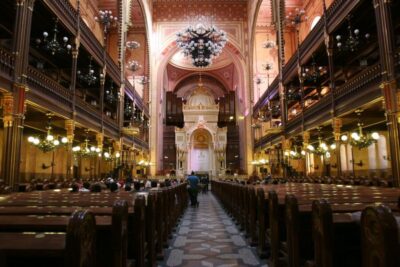
Budapest: Jewish Heritage Guided Tour with Synagogue Ticket
Read our review →
German tour in the Budapest city centre & the Jewish quarter
Read our review →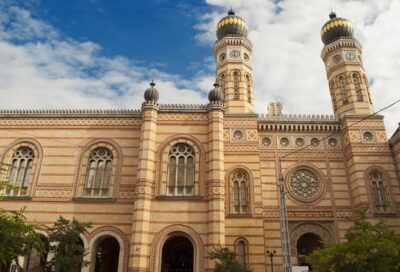
Past and Present of Budapest Jewish District Tour
Read our review →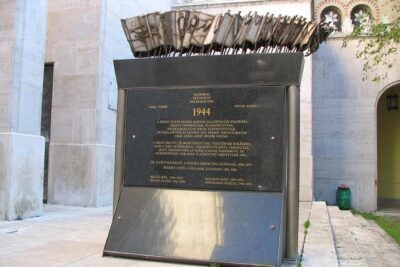
Budapest Dohany Synagogue & Hungarian Jewish Museum & free extras
Read our review →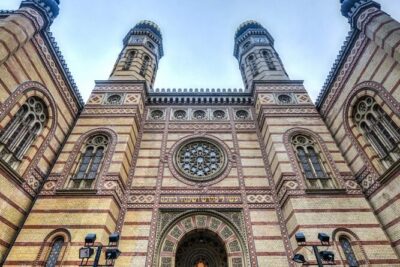
Budapest: Jewish History Guided Walking Tour with Historian
Read our review →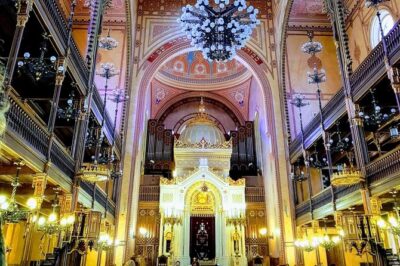
Budapest Dohany, Heroes’, Rumbach synagogues & Jewish Ghetto Tour
Read our review →Browse the lists this tour appears in